


WheelTug: A Nose-Wheel Revolution Targeting Aviation’s Most Persistent Ground Delay

Share
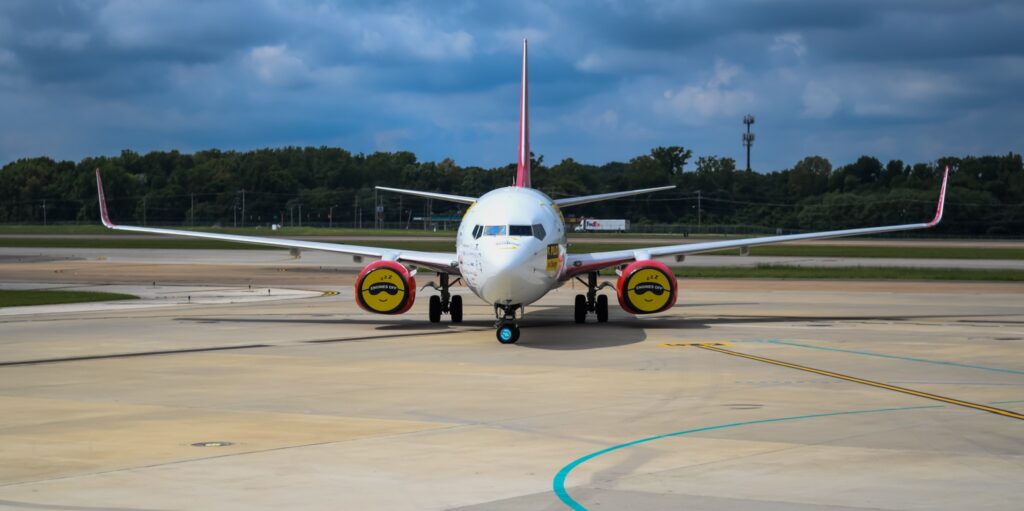
Some of the most frustrating moments in air travel happen when passengers believe their trip is finally underway. The cabin door shuts, everyone takes their seats, and the crew prepares for departure. Yet the aircraft remains parked while workers coordinate tugs, wing walkers, engine starts and ramp clearance before movement can begin.
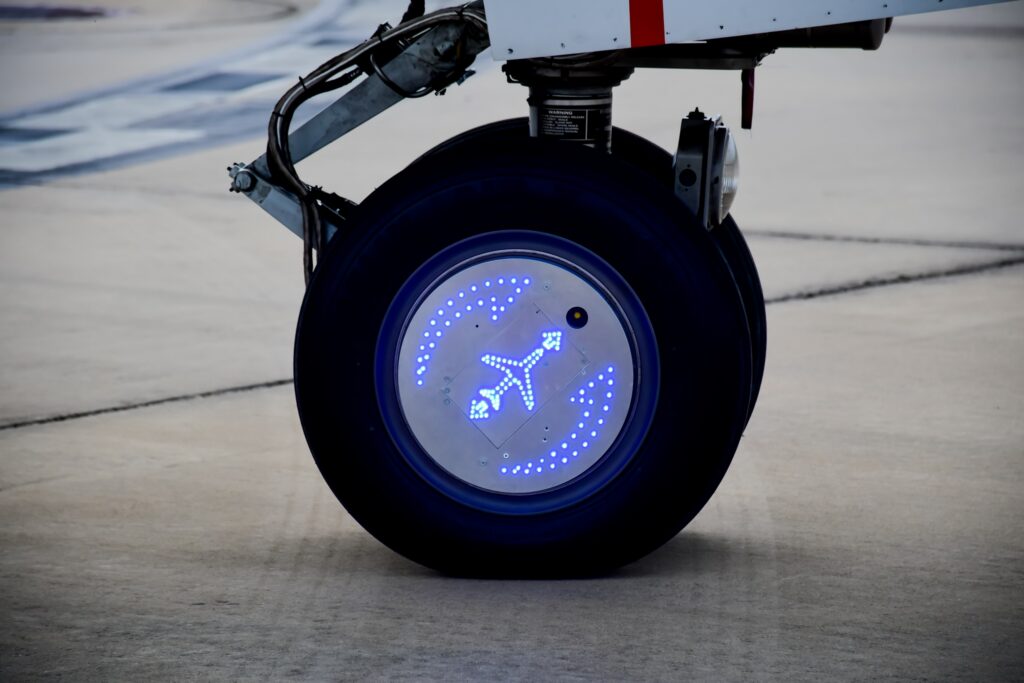
WheelTug aims to eliminate that bottleneck using ground-movement technology. Its system is designed to allow pilots to move commercial aircraft forward, backward and around the gate area using electric motors built directly into the nose wheels. WheelTug CEO Isiah Cox describes it as an “in-wheel electric motor system” that does not rely on any other systems or people on the ground.
“The advantage of retaining a lower-speed system is that we can use the auxiliary power unit as it is.”
It has the potential to make ground operations run more quickly and efficiently. By reducing congestion, fuel consumption, and turnaround times, the system lowers costs while increasing airport throughput. As airports continue to face growing traffic, WheelTug offers a practical and innovative solution for the future of aviation.
The company’s technology has existed since 2010, but it is still pursuing certification and manufacturing approval from the Federal Aviation Administration (FAA), which has now accepted its engineering and quality plans.
Packaging the Elephant Inside the Nose Wheel
One of WheelTug’s largest challenges was fitting its system into a space never intended to hold large equipment: the nose wheel. Cox emphasized the scale of the challenge with a vivid comparison: “What we have today actually fits inside the nose wheel itself,” he explained. “It is an electric motor less than three-inches wide that drives a 185,000-pound aircraft. Or, as we like to say, we managed to find a way to package the elephant into the nose wheel.”
Other companies that tried to create similar systems opted to utilize the main wheels due to their larger available space and increased traction; but WheelTug’s electric motors generate too much electromagnetic interference, which could cause other gears near the main wheel – housing many essential processes including the brakes and anti-skid sensors – to not work properly.
A benefit of focusing on the nose wheel is quick access for installation of equipment by WheelTug to almost any aircraft, and avoidance of the requirement to certify its technology for new aircraft designs. Cox clarified that retrofitting the solution on an existing aircraft takes two overnight maintenance periods, while it can be removed in just one night.
Ground-Time Uncertainty and Passenger Frustration
Passengers rarely think about delays in technical terms; they simply experience waiting. Frustratedly sitting in their seats as the boarding door closes, but no movement starts, they watch minutes tick by while their flight stays stagnant.
Cox described that stressful ambiguity as one of aviation’s biggest operational problems on the runway. “The biggest uncertainty of aviation on the ground is the time between approval for pushback and when the aircraft actually starts taxiing forward to the runway,” he explained. “That can be anywhere from five minutes to half an hour.”
For airlines, those delays become passenger-experience problems. Travelers often judge an airline not just by whether it arrives on time, but by whether the overall experience feels organized and respectful of their time. The longer the aircraft is still, the worse travelers feel. “The wheel tug itself can save an extra seven to 20 minutes,” Cox noted; enough to potentially change a passenger’s flight experience.
“The slowest part of turning the aircraft is getting passengers off and on the airplane.”
Capitalizing on Warm-Up Periods
Most aviation technology prioritizes speed, but WheelTug approached the problem differently. Cox explained that WheelTug’s system utilizes the engine’s warm up time as a cap on speed.
Most engines need to warm up for three to five minutes before they can take off, so Cox and his team abandoned the “need” dictated by airlines that the tug operate at thirty miles-per-hour. Instead, its tug operates between five and eight miles-per-hour, which is the speed the aircraft is required to stay at in highly congested areas of the airport. Moreover, it means that airlines can reach the runway with fully warmed up engines, rather than speeding there and still having to wait until the engines are ready to take off.
Focusing on efficiency rather than speed saved the company a large amount of money and time. “The advantage of retaining a lower-speed system is that we can use the auxiliary power unit as it is,” Cox explained. “We do not have to make any upgrades to the power system.” Doing so also revealed an even greater win: the ability to add a hybrid taxi.
The hybrid taxi operates on a simple philosophy: while the engines need to warm up, they don’t need to accelerate on the ground. Omitting acceleration lessens fuel consumption, so hybrid taxiing leads to compounding returns for airlines. It also prevents an intake vortex from forming. Intake vortices form when the engines are above idle, and can result in debris like gravel and sand being drawn into the engine, reducing overall engine life.
WheelTug provides the breakaway thrust for the aircraft, which allows the engines to sustain the velocity on the ground while staying at idle. “Wheel tug is only providing the starting thrust,” Cox clarified. “Then you don’t have to have any of the engine throttle up in order to break away.”
“The wheel tug itself can save an extra 7 to 20 minutes.”
Simple Pilot-Controlled Aircraft Movement
Inside the cockpit, Cox described WheelTug’s controls as intentionally simple. The control panel, which is around 3.5-inches wide, replaces a cup holder near the pilot’s right knee. “The twirl is executed by using the control panel,” he explained. “The pilot controls the tiller (the steering) with the left hand.” Cox added that in order to teach pilots to use the wheel tug and electric taxi system, it will likely require just 45-minutes of computer-based training.
A maneuver known as the WheelTug Twist could become one of the system’s most defining features on entering into full commercial service. Instead of relying on tugs and wing walkers to push aircraft backward into active ramp areas, it allows aircraft to rotate near the gate and depart under direct pilot control.
Cox argued that traditional pushback procedures often place aircraft directly into congested movement lanes. “With WheelTug turning around, pirouetting 10 or 20 feet back from the gate, we do not cross the active flight line,” he said. “So you do not end up adding that congestion to the airport.”
The Two-Door Opportunity
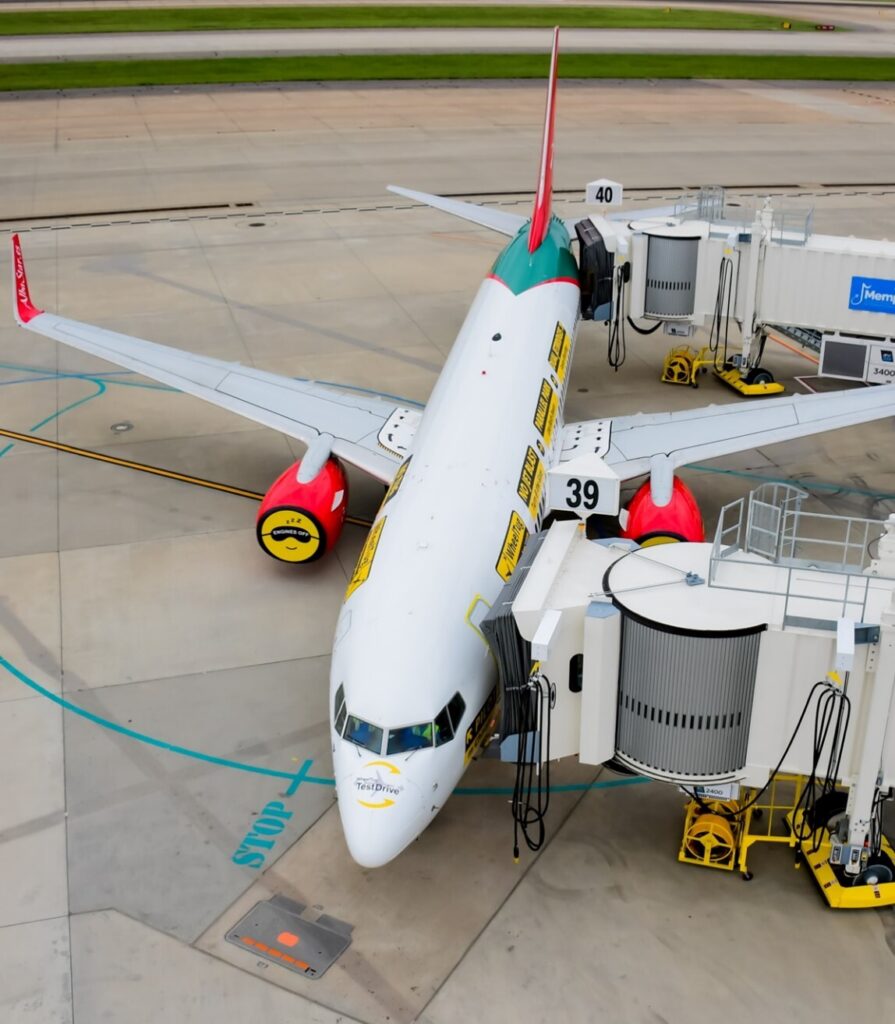
Cox predicts that one of WheelTug’s most noticeable benefits for passengers will involve boarding and deplaning, with the WheelTug Twist also allowing aircraft to use both front and rear jet bridges more consistently.
“The WheelTug Twist saves an extra 15-plus minutes every flight because you have access to the rear door as well as the front door,” he explained. “The slowest part of turning the aircraft is getting passengers off and on the airplane.”
WheelTug states on its website that removing tug dependency and pre-taxi engine starts can save an average of seven minutes per flight. Furthermore, it claims two-door operations could save 20 minutes per flight.
Cox foresees future rear-bridge systems could automate baggage handling. “It will also mean that, in time, the baggage will go on a conveyor belt underneath or alongside this rear jet bridge, and it will be touchless from check-in to the belly of the airplane,” he said.
“With [the] WheelTug [twist], we do not cross the active flight line, so you do not end up adding that congestion to the airport.”
Safety, Visibility and Retrofit Economics
Cox argued that ground collisions remain a problem because airport operations involve multiple vehicles, blind spots and coordination under pressure. “There is about one collision on the ground every single week somewhere in the world, where an aircraft collides with another aircraft,” he cautioned. WheelTug’s response includes cameras and a cockpit visual-awareness system. According to the company, its vision system gives pilots better visibility behind and underneath the aircraft.
Thus far, the company has signed letters of intent with 26 airlines covering over 2,000 aircraft. Although it has not yet been deployed in commercial service, Cox framed the technology as part of aviation’s broader push toward automation and efficiency. “The first thing to do is to get it into service,” Cox said. “Once the technology gets adopted, it gets adopted everywhere.”