


Safety Cards: Then and Now
Share

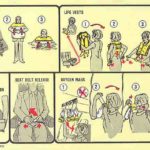
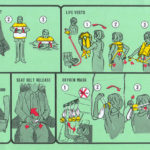
Safety cards are just as sought after as other airline memorabilia such as posters, pins, aircraft models and even sick bags. Entire books are devoted to the topic and web museums, such as Kevin Cleynhens’ Airline Safety Cards and Sergei Novikov’s Safety Mania that require hours to scan, upload, caption and archive, are signs of loving devotion to the emergency procedures that are captured in an infographic.
In Design for Impact: Fifty Years of Airline Safety Cards, a compendium of safety card style and evolution, authors “Airline safety cards are one of the most collectable and unique sources of everyday information graphics. From the most classic examples, the first text-based cards of the 1930s, to the meticulously illustrated cards produced for aircraft such as Concorde, safety cards display a wide variety of aesthetic approaches, ranging from late-1950s optimism to contemporary graphic minimalism. Far from complying with a universal graphic standard, safety cards reflect the culture in which they were produced.”
In comparison to the evolution of in-flight safety videos that have been transformed into mini-movies, packing high entertainment value that are meant to be informative as well as represent an airline’s brand, safety cards have more or less stayed the same. For more on the briefing-card challenge of being both captivating and informative, read “Entertaining Safety” in The Entertainment Issue.
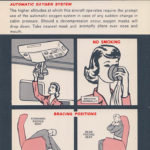
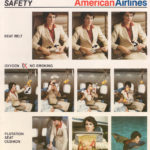
American Airlines
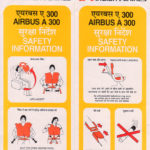
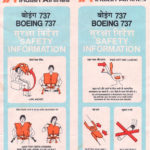
Indian Airlines

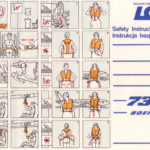
LOT Polish Airlines

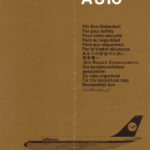
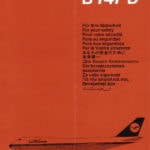
Lufthansa


Malaysian Airlines
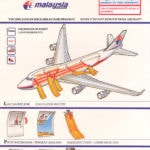
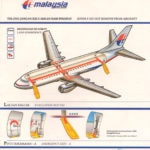
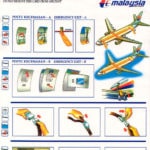
Northwest Airlines
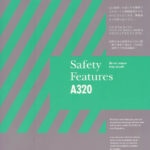


Pan American World Airways

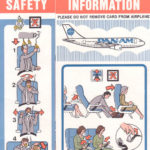
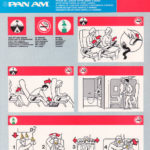
Royal Air Maroc
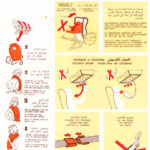
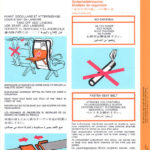
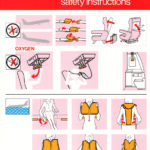
Sabena
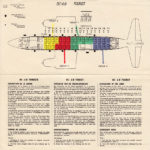


Turkish Airlines
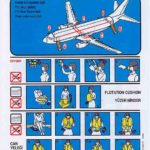
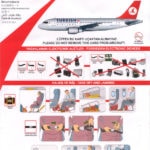
Trans World Airlines (TWA)


Watch MrDROMADIX flip through his collection of airline safety cards:
Safety cards images not captioned are from Airline Safety Cards.