


ThinKom Supports Neo Space Group’s Multi-Orbit Connectivity Expansion

Share
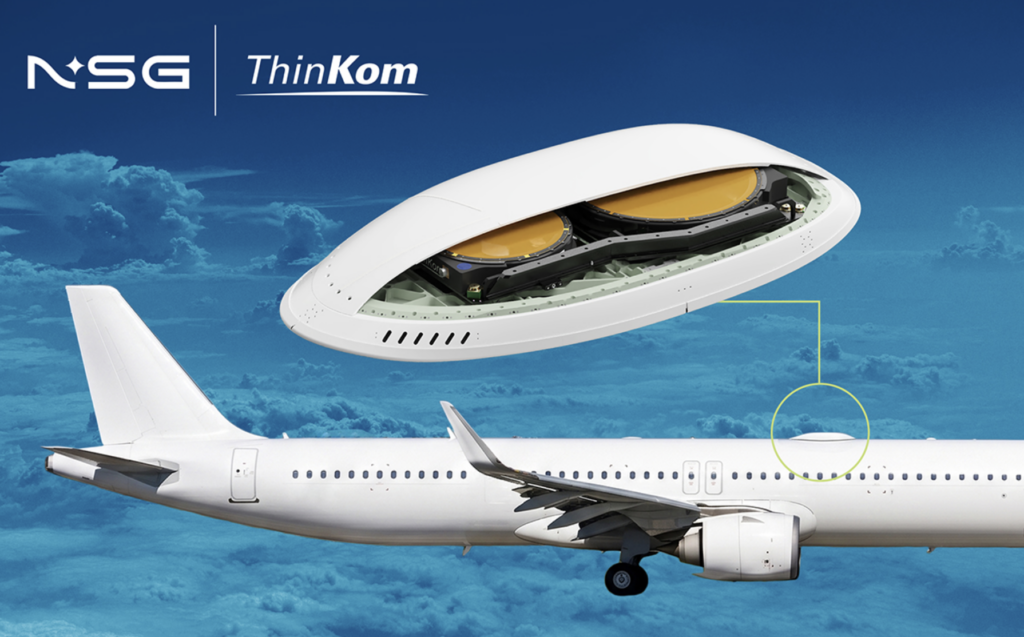
ThinKom Solutions is supporting Neo Space Group (NSG) as the latter company expands its global inflight connectivity (IFC) offering across multiple airline fleets. Through the partnership, ThinKom’s ThinAir Ka2517 antenna technology will help deliver high-speed, multi-orbit connectivity for airlines including Saudia and Riyadh Air.
Powering NSG’s Multi-Orbit Connectivity Strategy
Under the agreement, ThinKom’s ThinAir Ka2517 antenna will be deployed across narrowbody fleets at multiple airlines as part of Neo Space Group’s broader inflight connectivity installation plans. The antenna will be integrated by RAVE Aerospace through a turnkey solution designed to make fleet deployment easier.
“We are proud to partner with NSG to enable the next generation of inflight connectivity for Saudia, Riyadh Air, and others.”
– Jeff Sare, ThinKom Solutions
Initial rollouts have already started. Saudia is installing the technology across its Airbus A320 fleet, while Riyadh Air’s Airbus A321neo aircraft will arrive from Airbus with the systems already installed. Both airlines will use multi-orbit connectivity supported by ThinKom hardware, Neo Space Group services, and SES Open Orbits technology.
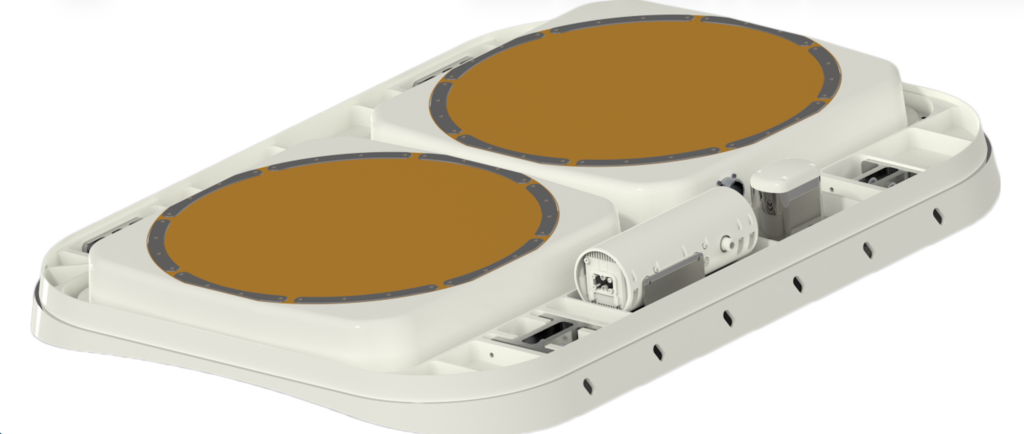
“Our flight-proven ThinAir antennas bring unmatched throughput, spectral efficiency and reliability to the skies,” said ThinKom Chief Commercial Officer Jeff Sare. “We are proud to partner with NSG to enable the next generation of inflight connectivity for Saudia, Riyadh Air, and others, seamlessly harnessing the power of SES’s Open Orbits multi-orbit and multi-constellation services.”
At the center of the deployment is NSG’s Skywaves platform, which uses a multi-orbit architecture that combines geostationary (GEO) and non-geostationary (NGSO) satellite networks.
The system is designed to deliver speeds of up to 300 Mbps while automatically managing traffic across different satellite networks. Instead of relying on one satellite layer, the platform can shift traffic based on route conditions and available network capacity, helping improve performance and reliability as passenger expectations for onboard internet continue to grow.
The rollout also supports broader aviation goals under Saudi Arabia’s Vision 2030 plan, which aims to help move more than 300 million travelers through and within the country.
Airlines Accelerate the Shift Toward Multi-Orbit Connectivity
The ThinKom partnership reflects a broader shift happening across the inflight connectivity industry, where airlines are increasingly moving toward more flexible systems rather than relying on a single satellite network.
For years, most airlines depended on one satellite provider operating within a single orbit. While those systems helped expand onboard internet access, rising passenger usage, growing streaming demand, and expectations for stronger and more reliable performance have pushed the industry toward multi-orbit solutions that can combine resources across different satellite networks.
ThinKom has continued positioning its product strategy around that transition. Earlier this year at AIX 2026, the company expanded its multi-orbit strategy with two major announcements: SES Open Orbits type certification for its ThinAir Ka2517 antenna and the introduction of its new ThinAir Nexus platform.
The Ka2517 antenna was designed specifically for multi-orbit operations and currently holds certification across SES Open Orbits services, including geostationary satellites as well as SES O3b Classic and O3b mPOWER medium Earth orbit constellations. It carries regulatory certifications from the European Union Aviation Safety Agency (EASA) and General Authority of Civil Aviation (GACA), allowing deployment across multiple global markets, and is available as a line-fit option on Airbus and Boeing aircraft.

“We’re bringing the strength and versatility of NSG’s multi-orbit connectivity solutions to life, backed by the SES Open Orbits program,” said Neo Space Group EVP Aviation Tarek El Mitwalli. “We are excited to leverage ThinKom’s best-of-breed antenna hardware in the solution, ensuring industry-leading performance across all orbital planes.”
The technology already supports a growing list of airline customers. In addition to Saudia and Riyadh Air, Neo Space Group has also announced connectivity agreements with Thai Airways, Uzbekistan Airways, and Turkish Airlines, all using the Ka2517 platform across different fleet types.
ThinKom says its ThinAir product family has now accumulated more than 65 million flight hours and over 2,000 aircraft installations globally. The low-drag design also reduces power requirements and heat generation while helping lower operational fuel impacts.