


AIX 2026: Amazon Leo Unveils Gigabit-Speed Aviation Antenna

Share
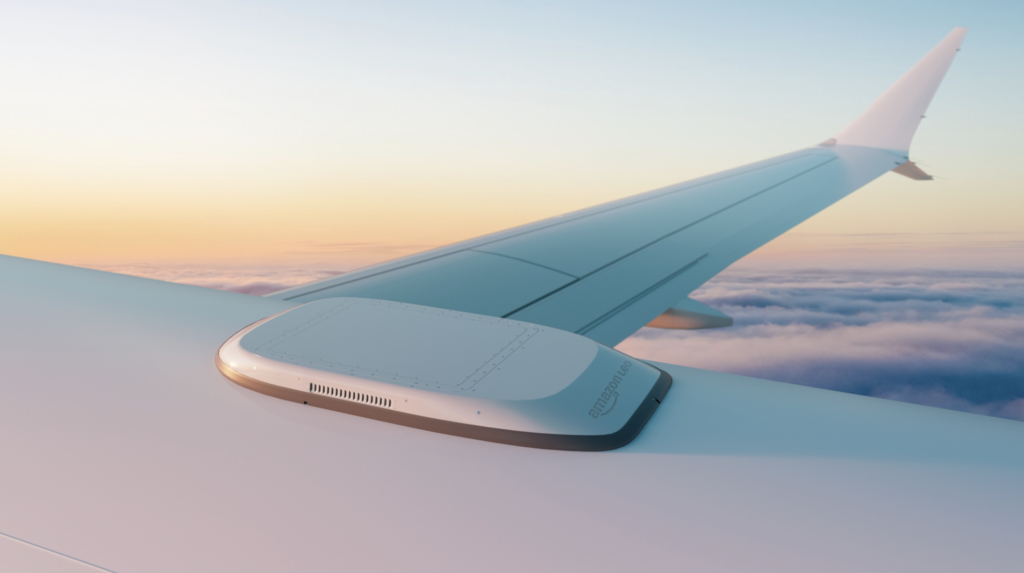
At Aircraft Interiors Expo (AIX) 2026, Amazon Leo introduced a new gigabit-speed aviation antenna designed for commercial airlines. The system promises up to 1 Gbps download speeds and 400 Mbps upload speeds, bringing a new level of performance to onboard connectivity. The announcement signals growing momentum in the race to deliver faster, more reliable internet in the cabin.
Gigabit Speeds Aim to Redefine the Passenger Experience
The new Amazon Leo Aviation Antenna is designed to connect an entire aircraft using a single terminal, supporting both passengers and crew at the same time. According to Amazon, the full-duplex phased array antenna can provide simultaneous speeds of up to 1 gigabit per second download and 400 megabits per second upload.
That level of bandwidth would allow passengers to stream video, browse the web, play games, join video calls, and work online without the slowdowns that have historically limited inflight Wi-Fi. At the same time, crew members could use near real-time data to improve onboard service and daily operations.
Amazon says the antenna is suitable for a broad range of aircraft types, from regional jets to large widebody aircraft. This flexibility could help airlines standardize connectivity products across mixed fleets while maintaining a consistent customer experience.
Amazon Leo Director of Global Business Trevor Vieweg, said the goal is to make connectivity strong enough that it influences booking decisions. “Amazon Leo can connect a full plane of passengers and crew with speeds that handle any activity seamlessly,” he said. “We expect our service to be so fast and reliable that passengers will seek out flights featuring Leo connectivity.”
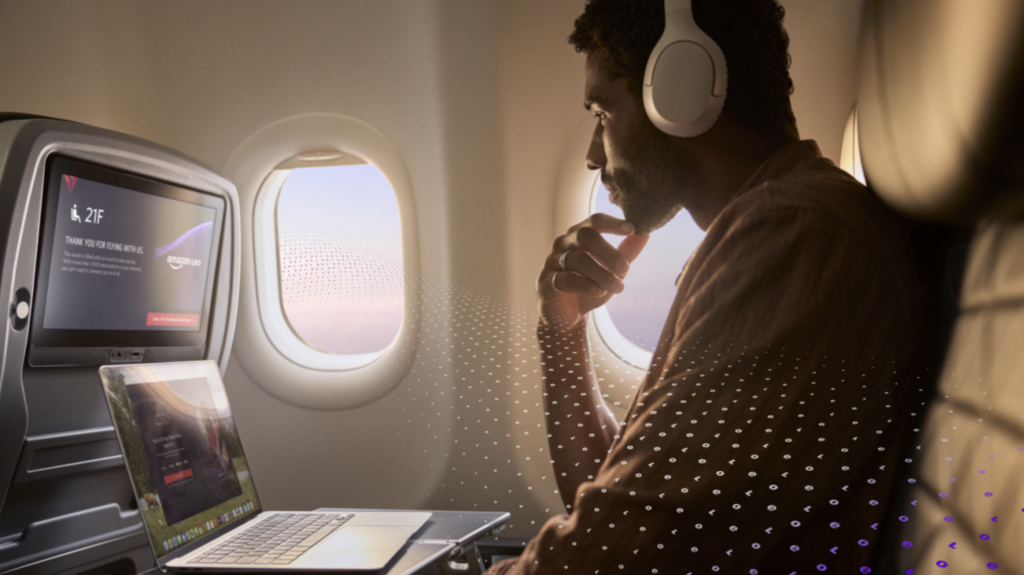
That statement reflects how important connectivity has become in modern aviation. What was once seen as an optional extra is now becoming a key part of the travel experience, especially for premium and business travelers who expect reliable access throughout the journey.
According to Amazon, the service is designed to remain active from departure gate to arrival gate, rather than only once the aircraft reaches cruising altitude. Gate-to-gate service can create more value for passengers while also opening new possibilities for airline operations, crew communications, and real-time updates.
As more carriers move toward free Wi-Fi or loyalty-based access models, bandwidth capacity is becoming more important than ever. Systems that can support hundreds of simultaneous users without noticeable slowdown are likely to have a competitive advantage.
Built for Simplicity, Reliability, and Global Coverage
Beyond raw speed, Amazon is emphasizing operational efficiency in the antenna’s design. The Leo Aviation Antenna has no moving parts, using electronically steered technology instead of mechanical systems. That reduces wear over time and can help lower maintenance requirements.
The antenna is also low profile, measuring 58 inches long, 30 inches wide, and just 2.6 inches high. This slimmer design helps reduce drag, which is important for airlines focused on fuel burn and emissions. Amazon says the system includes an integrated modem and simplified setup that allows installation in one day.
That easy installation could be a major advantage. Retrofitting aircraft often means downtime, engineering work, and lost revenue. Faster installations make it easier for airlines to upgrade fleets quickly with less disruption.

The global network behind the antenna is just as important. As aircraft fly, the terminal connects to passing low-Earth-orbit (LEO) satellites, then hands off seamlessly between satellites as the aircraft and satellites move. Those satellites route traffic through ground gateways and fiber networks to the internet, cloud services, or private networks.
Amazon says it is building more than 300 ground gateways worldwide to improve reliability and reduce latency. For routes over oceans, polar regions, and remote areas where traditional gateway access can be limited, the satellites will use laser inter-satellite links to relay traffic across the network.
That matters because some of the biggest historical gaps in in-flight connectivity (IFC) have come on long-haul international routes. Flights over oceans and polar regions often see weaker service than domestic flights. A network built to keep strong performance in those areas could be very attractive to global airlines.
Amazon also said it already has agreements with Delta Air Lines and JetBlue Airways, showing early momentum for the platform. Both airlines have been aggressive in using connectivity to stand out, making them notable launch partners.