Log in    (Log in help)
APEX
IFSA
FTE
APEX Logo
  • Join
  • About
  • Events
  • Industry News
  • Membership
  • Awards
  • Join
  • About
  • Events
  • Industry News
  • Membership
  • Awards
   Log in

Secondary News Article Categories: 40TH ANNIVERSARY SPECIAL

Women on Board: The Female Leaders of APEX, Then and Now

Women on Board: The Female Leaders of APEX, Then and Now

In an industry as traditionally male-dominated as aviation, APEX exists as an enclave where women have made their mark.

Attend the Women Leaders in Aviation Networking Lunch at APEX EXPO 2019

There are a number of names tied to the beginnings of the Airline Entertainment Association (AEA). But none more to thank than Cindy Tarver of Billboard Music In The Air, who John N. White, past president and esteemed editor of Avion magazine, called “the greatest hero of that time.”

Once the idea for an annual in-flight entertainment (IFE) meeting was cemented over lunch with Claus Jensen of Thai Airways International, Tarver dedicated herself to the cause of organizing and securing sponsorships (mainly from her own company) for the initial 1979 event. She then persuaded Billboard to underwrite the many miscellaneous costs of founding the association. As the years passed, she served on the board numerous times, spearheaded the creation of the association’s Technology Committee, and took up positions at various member companies, including Avicom, Rockwell Collins and Transdigital Communications.

Of course, if you asked Tarver about the early days of AEA, she’d wax poetic about how instrumental people like White, John McMahon of Inflight Services, and Harriet Korn of Trans World Airlines, were. And she’d be right – it was a family effort. But if that family were to name a matriarch, it would likely be her.

In later years, Tarver served as an inspiration to younger generations of women in the industry. “I was impressed by her knowledge of the industry and the respect others had for her,” says Mary Rogozinski, who served as World Airline Entertainment Association (WAEA) president from 2002 to 2004 and as a board member in the years preceding and following that period. “I have always considered Cindy a mentor and a friend,” she continues. “For many years, I fondly referred to her as my mom.”
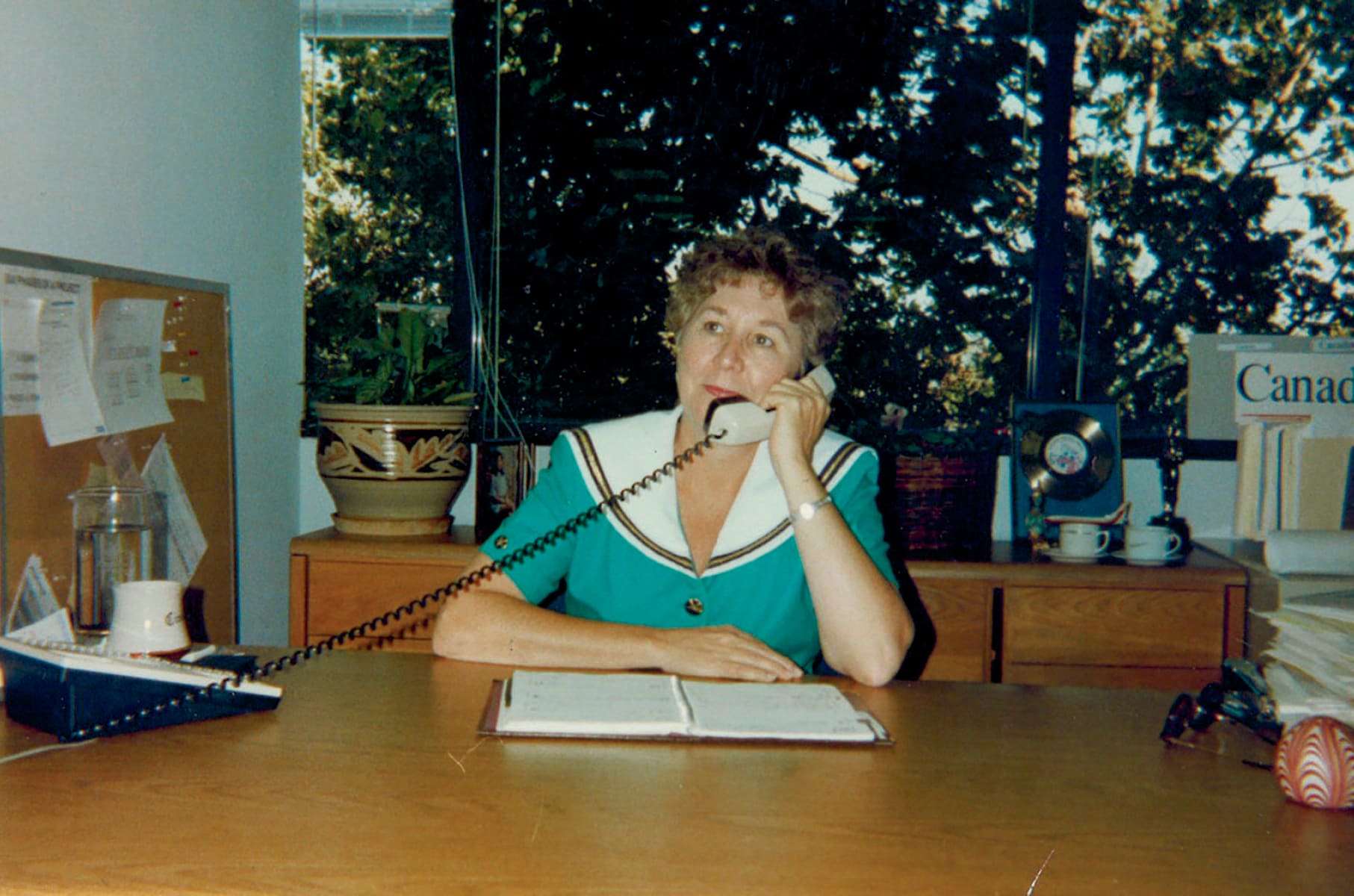
Cindy Tarver
Cindy Tarver during her days at Avicom. Image via APEX Archives

Despite the airline industry’s notoriously male-dominated culture, Tarver was joined by a number of high-ranking female board members. Over the years, more than one-third of the association’s boards have been led by female presidents, with women making up at least half of the boards most years between the late 1980s and mid-2000s. At their most visible, women outranked men nine-to-four in 2000.

While today’s association management team makes a concerted effort to level the gender playing field, back in the day, equal representation was more circumstantial than intentional. “IFE had been more of an afterthought for the airlines, which, quite frankly, allowed women the opportunity to grow and excel in leadership,” explains Tarver. 

Until the advent of IFE, few women were part of airline leadership, because few women had studied engineering. But with IFE initially falling under the purview of customer care, the path was cleared for women, Tarver explains. “This brought, and still brings, a lot of women to the association’s events and was likely the reason so many women joined the board,” she says. Christine Ringger of Swiss International Air Lines, who served on the board from 2006 to 2011 and as president in 2008-2009, agrees, adding that there may have been more women in the content part of the industry than in most other parts because “choosing content wasn’t always seen as such a sexy, blokey thing to do.”

Ringger speculates that there may be one more reason female leadership took root on the board. “The way I see it, you will always have more women in these positions because women are the ones who do; they are the ones who make things happen,” she says. “It was the women of the association who were rolling up their sleeves and getting things done. I’m not saying there weren’t men doing a lot of work, but there was an attitude among the women to move things forward, to progress.”
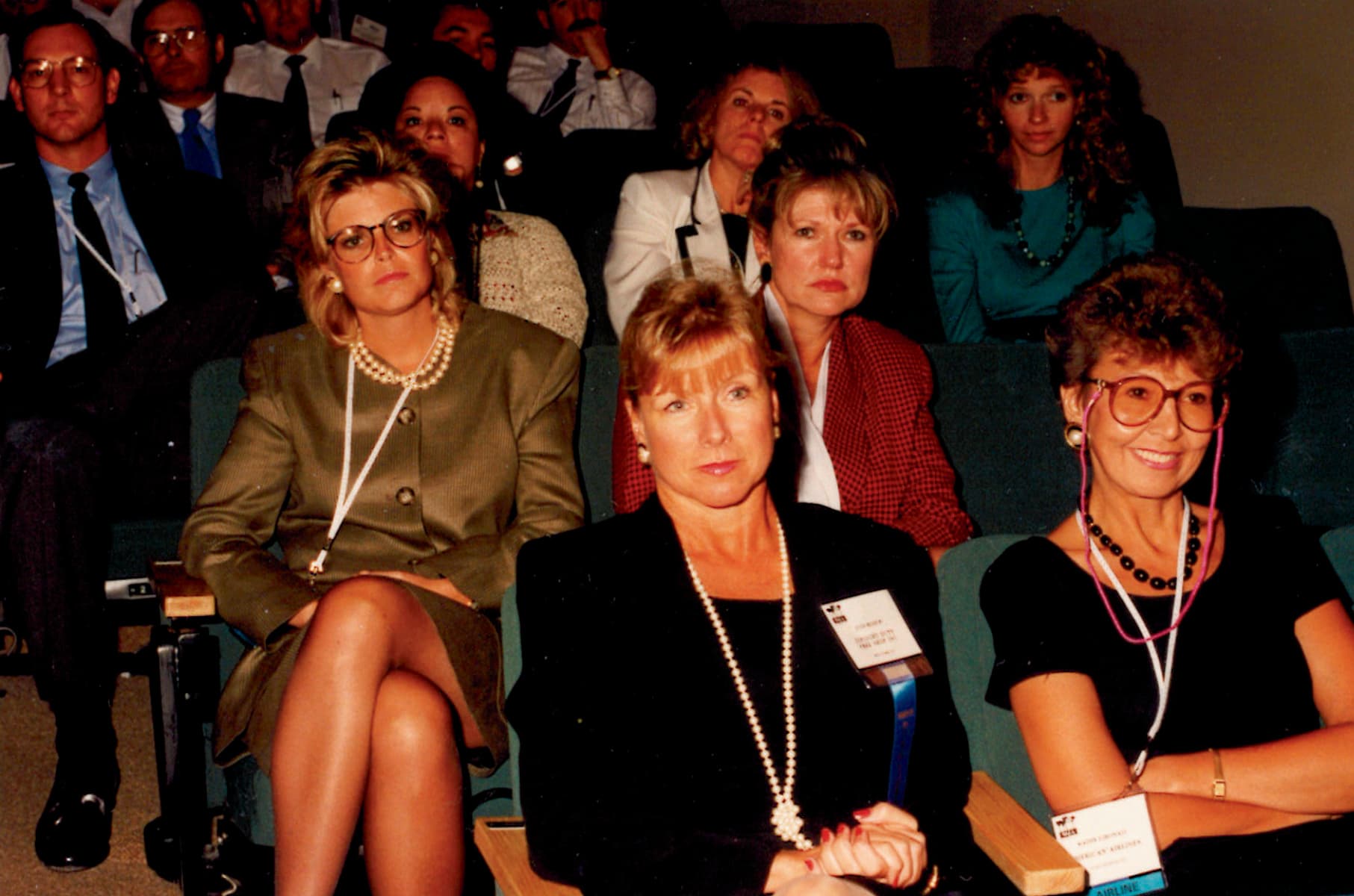
Judi Bishop and Kathy Libonati at a WAEA conference session. Image via APEX Archives

The view, it seems, was even shared by White, says Karen Schipper of El Al Israel Airlines, who served as president of the 1999-2000 board. “John used to say to me, ‘If you want a job done well, give it to a woman,'” she recalls. “In those days, there were a lot of women on the board and in the higher positions.”

In one case, Pam Ryan of Sony Trans Com and then Spafax, who served on the board from 1990 to 1993, remembers being at one of the conferences and a male colleague looking around the room in amazement. “‘Wow,’ he said. ‘Look at all these women and all the notes they’re taking. What will they do with so many notes?’ And he wasn’t taking any notes,” Ryan laughs.
In the early days, before the association was professionally managed and was still very much community-driven, being part of the board meant doing a fair amount of administrative legwork – taking notes, booking venues, organizing floorplans. And perhaps this sort of housekeeping wasn’t seen as especially “sexy, blokey” work, to borrow Ringger’s words.

Whatever the case, being a member of the board also gave women the chance to hone their leadership skills. “This was a place where they could plant their feet. They knew the business and could focus on leading, rather than just being another worker bee,” Ringger says. Schipper agrees, adding, “I learned so much from being an active participant on the board and especially as president. You learn to speak in front of large audiences, run board meetings and get many opportunities to prove yourself.”

Sophie Vossenaar of KLM, who served as president in 2000-2001, says her experience on the board proved useful later in life. (She left the airline in 2003 and went on to hold senior management positions in the nonprofit sector.) “My membership on the WAEA board was, for me, an alternative to management training,” she explains. “Being part of a board made up of people from very culturally diverse backgrounds was interesting, and I also learned a lot from going through a tender process for the management of the association.”

Under such female stewardship the association did grow, but not without the hurdles endemic to the time. “There were glass ceilings everywhere in the world, which explains why it took us so long [eight years] to have a female president,” Tarver says. “We were still a product of our times.”

The glass ceiling remains to this day, and perhaps has been felt even more acutely in recent years as airline company structures evolve. “As IFEC decision-making moves from marketing to tech ops and tech procurement teams, I’m seeing more men represented and fewer women,” Rogozinski says. Although women at airlines are still more prominent in marketing departments, more and more are joining technical departments, she notes. As for APEX’s member vendors, Rogozinski says they aren’t quite as women-centric as the association itself.

It is over a decade since women outnumbered men on the association’s board of directors, but balance is being slowly restored. In 2018, of the six members on the newly inaugurated Board of Governors (a group of airline CEOs appointed to help the industry define its goals) only one was a woman: Claudia Sender of LATAM. “This year, we already have four female CEOs confirmed for the Board of Governors,” says Maura Chacko of Spafax, who’s been on the board of directors since 2015.

At this year’s EXPO, Chacko hopes to see the male CEOs address how they plan to encourage more women into leadership roles – a question that was directed solely to Sender last year. “I don’t think the onus should always be on the other women leaders,” Chacko says. “We all need to take ownership of it.”

“Women on Board” was originally published in the 9.4 September/October issue of APEX Experience magazine.

Social Club: How an Industry Association Became a Community

Social Club: How an Industry Association Became a Community

At its most basic, APEX has always been about relationships – the ones that built it, the ones that nurtured it and the ones born out of cocktails at its networking parties.

Join the club and celebrate 40 years of APEX EXPO at this year’s networking event!

On the front page of a 1983 issue of the Airline Entertainment Association (AEA) newsletter, then-president John N. White writes, “It’s become very obvious that the airline representatives, vendors and suppliers want the AEA to be a truly business and professional organization: an association with a conference that abandons the social aspects of many similar groups…” In the following newsletter, he puts it even more bluntly: “If you’re attracted to lightweight conferences that are heavy on the social… you ought to let this one pass.”

Until the year before, AEA conferences stressed socialization, with themed costume parties in the evenings – think Western hayrides and Hawaiian luaus – and golf and tennis tournaments during the day. But at the 1982 conference in Phoenix, several of these gatherings were dropped from the official agenda and the closing event became formalized as the gala banquet, a much-loved black-tie function that went on until 2006.

ALL THAT GLAMOUR

Despite White’s insistence that the conference continue on a more sober, professional path, the ’80s and ’90s are remembered by members as a time of revelry and downright swanky affairs. In 1989, the year the conference was held in Basel, Switzerland, then-president Italo Poli, of Swissair, was intent on making it one to remember with a riverboat cruise up the Rhine and a visit to the Feldschlösschen Brewery. Bryan Rusenko, a member of the APEX Technology Committee, recalls, “There was just an amazing amount of treating us like royalty. Italo really made sure that we got the highest protocol.”

At the 1991 conference in London, there actually was some royalty. That year’s president, Mark Horton of British Airways, raised the bar with a champagne welcome reception at the House of Commons and Avion Awards bestowed by His Royal Highness Prince Edward at Grosvenor House. “It was a glittering affair and one of the most memorable conferences to date,” says Steve Harvey, VP Client Services at Global Eagle, who’s been attending the conferences since 1981.

APEX-v9e4-APEX-Networking-3
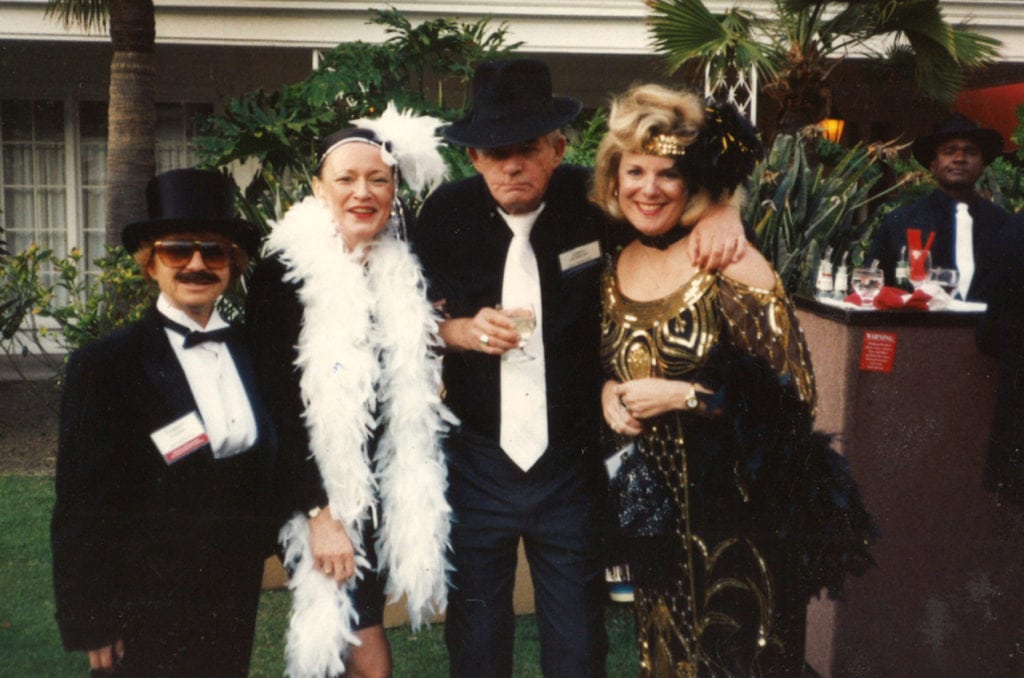
Evelyn Gordon, Pam Ryan, John Landstrom and Linda Palmer decked out in 1920s attire. Photo: APEX Archives

Even with this seeming extravagance, the headlining finale, the gala banquet, still lacked the verve of a Hollywood blowout, which some members believed would be suitable for an industry so rooted in show business. Kent Harrison Hayes, who attended his first conference in 1988 and was on the association’s board of directors from 1992 to 1998, says, “The glamour of the entertainment industry seemed to be missing. The only thing I remember them having was a small platform that the president stood on with a microphone.” During his stint on the board, Hayes managed to veer the gala in the direction of a Hollywood-style award show.

At the time, there was also a program that allowed conference delegates to travel with their spouses, who would enjoy off-site activities during business hours. (An advertisement in a 1987 issue of the association’s newsletter promises spouses a trip on a DC-3 spent “sipping champagne and nibbling on a chicken leg,” for instance.) During the evenings, spouses would attend the networking events, something Rich Salter, a longtime member of the APEX Technology Committee, says really helped with business. “Bringing my wife was especially useful given that there were a lot of women running things on the content side and the airline side.”

BUDDING RELATIONSHIPS

It was under such festive circumstances that airline delegates finally crossed paths with their counterparts at other carriers and vendors became acquainted with their competitors. But given its lack of precedence, mingling with competitors was frowned upon. AEA co-founder Cindy Tarver recalls her “boss would get apoplectic if I deigned to say hello to, for instance, John McMahon [at Inflight Services at the time], who later became one of my best friends in the industry.”

Peter Daniello, who began attending the show in 1981, with Trans Com, and continued until retiring in 2012, explains that the rivalry wasn’t about disliking each other as much as it was similar to the competition you’d get between two baseball teams. “Think of it like the Giants and the Dodgers. We just didn’t sit on the same side.”

But when the workday was over, the rigidity thawed. On one occasion, Daniello recalls heading into the hotel jacuzzi following cocktail hour. “Lo and behold, weren’t some of our competitors in there, too. That started some dialogue, and led us to thinking, ‘These people aren’t that bad after all.’ To this day we have a very good friendship. There’s no question the association and its social events had a hand in helping us get on a talking basis with our competitors.”

“A lot of business can be done without actually mentioning the word ‘business.'” €” Leigh Mantle, Formerly of Inflight Productions

After-hours camaraderie was also key to deepening bonds with clients, says Leigh Mantle of Inflight Productions, who attended the conferences from 1987 to 2018. “I’m a big believer in the fact that you can get a lot of business done without actually mentioning the word ‘business,’ and the evening get-togethers were brilliant for that,” Mantle says. “When you would go to the event for the whole week, you couldn’t just talk business 24/7. If you enjoy entertaining and being with people, you can open up doors that you maybe haven’t opened before.”

And sometimes, no matter how unconventional it may seem today, business took place in the most informal of circumstances. “My first ‘conference’ was in Palm Springs, where meetings disintegrated into pool parties with large quantities of beverages being consumed,” says Linda Palmer of Walt Disney Studios, who served nearly 20 terms on the association’s board of directors in the time between 1985 and 2012. “It was an era when this sort of behavior was the norm.”

Michael Manstein of Lufthansa, who began attending in 1986, similarly writes in Avion: “The networking was as valuable to me as were the scheduled appointments. Even sipping a glass of champagne by the pool at night with new acquaintances produced interesting conversations: ‘Wouldn’t it be great to have an individual screen for each passenger?’ ‘Can’t something be done about the horrible quality of the audio system?’ … ‘Can advertising really pay for all those investments?'”

APEX-v9e4-APEX-Networking-4
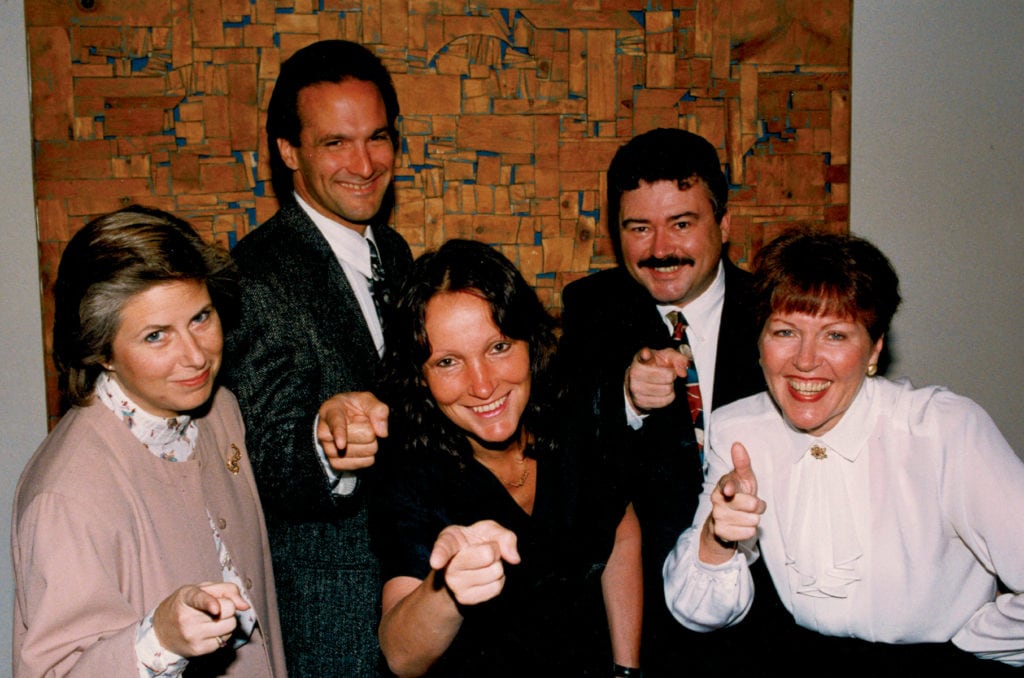
Here’s looking at you: Carol Gregoire, Bill Grant, Marianne Sammann, John Courtright and Phyllis Bagdadi. Photo: APEX Archives

CHANGE OF SCENE

As the years went on, the frequency and size of networking events gradually diminished, giving way to larger exhibition floors and a generally more buttoned-up attitude in their stead. Global Eagle’s Harvey describes the first 15 to 20 years of the conference as “under the radar,” with airline IFE managers putting in requests to attend, and superiors doling out approvals without having more than a vague notion that the event had something to do with putting movies on planes. “It was a little closed family affair, so we could more or less do what we wanted on these occasions,” he says.

But with the advent of seatback screens, IFE became a bigger-budget item and airlines began paying millions of dollars to deck out their aircraft with hardware that could screen hundreds of movies. “Suddenly people like chief executives were paying attention, even attending themselves,” Harvey says. Palmer also points to increased attention from upper levels of airline management as a catalyst for the change. “That radically shifted the culture,” Palmer says. “As fun as the early days were, money talks and it was timeto change.”

“As fun as the early days were, money talks and it was time to change” €” Linda Palmer, Formerly of Walt Disney Studios

According to West Entertainment’s  Rick Warren, who began attending the conferences in 1993 while working with Sony Trans Com, another major cultural shift took place once the association expanded to encompass a wider breadth of industry players beyond IFE, eventually being renamed the Airline Passenger Experience Association in 2010.

From the early-’90s until then, it really was a content and entertainment show, with comedians like Paula Poundstone and even the Beach Boys making appearances to drive that home. “Once the focus was more on the technology, it became less of a Hollywood show, and that hurt it a little bit in terms of the networking,” Warren says. “But it also meant the show had gotten bigger and better, especially in terms of high-quality airline attendance.”

The general consensus seems to be that rather than a clear departure – despite White’s explicit attempt at one in 1983 – exchanging stories over beers and fraternizing over tee time never really ended; it’s only evolved. “Some of the initial hijinks of the early days are no longer there, but it’s like growing up, really,” Harvey says. “The first few years it was like a newborn baby, people trying to figure out what it was all about. Then we had our toddler years and our teenage delinquent years, and now we have become responsible parents.” But parents still play golf together and listen to the Beach Boys – it’s just not on the official agenda.

“Social Club” was originally published in the 9.4 September/October issue of APEX Experience magazine.
Industry Visionaries: A Spotlight on Some of the Brightest Minds in Aviation

Industry Visionaries: A Spotlight on Some of the Brightest Minds in Aviation

There’s been much to applaud in the past 40 years, but it’s all for naught if we don’t know where we’re heading. Some of the industry’s brightest minds are recognized here for their vision of the passenger experience of the future.

Meet some of our industry’s thought leaders at this year’s APEX EXPO
Photo: Joke Schut

MARTINE VAN DER LEE – DIRECTOR OF SOCIAL MEDIA, KLM
For Walking the Talk on Direct Customer Communications Online

KLM piloted the use of artificial intelligence (AI) in its customer-service operations three years ago, and 50 percent of its social interactions are now supported by the technology – something Martine van der Lee says makes her team of 350 (the largest social media team in the world) twice as productive.

Conversational interfaces – be they social media, messaging apps or voice-activated systems – will continue to play a major role in the passenger experience of the future, and when combined with AI, they’ll yield entirely new user experiences and commercial opportunities, van der Lee says. “We believe service will become real-time and proactive, with complete trips being booked and planned through conversational interfaces,” she says. “Building your brand and business with conversation is the future.”

APEX-v9e4-APEX-Visionaries-Hutchinson
Photo: Clyde Hutchinson

CLYDE HUTCHINSON – HEAD OF INNOVATION, VIVA AIR LABS
For Rooting Out Regional Travel Deterrents

In Latin America, the journey to the airport could cost a traveler just as much as the airfare itself, says Clyde Hutchinson, identifying one of the pain points low-cost carrier Viva Air sought to address with the inauguration of South America’s first aviation innovation lab last year. Regarding the question of urban mobility, Viva Air Labs is slated to run a pilot project this fall at José María Córdova International Airport in Colombia to deliver a multimodal solution that would allow passengers to get to and from the airport inexpensively and efficiently.

Another segment of the journey begging to be reconsidered, according to Hutchinson, is the airport, which in addition to long queues and baggage woes offers food that “is typically unhealthy and lacking character or a sense of place” and a “duty-free bargain that is now more expensive than you can buy at home online.” Hutchinson envisions airports of the future taking cues from models like WeWork and Selina “rather than the declining shopping mall,” and as one of the lab’s only full-time employees, he is eager to prototype new solutions from innovators and entrepreneurs in the region.

APEX-v9e4-APEX-Visionaries-Hiller
Photo: Recaro

DR. MARK HILLER – CEO, RECARO AIRCRAFT SEATING
For Not Resting Until Passengers Can Do So Comfortably, Too

Space and comfort are compromised in the aircraft cabin, but the application of new materials and technologies could mitigate the impact flying has on sleep, posture and pressure points – even in the main cabin, says Dr. Mark Hiller. Recaro was awarded the 2019 Crystal Cabin Award for “Passenger Comfort Hardware” for a trio of comfort elements designed for long-range economy-class flying, and recent partnerships with jetlite for human-centric lighting that reduces the effects of jet lag, and Airbus for an Internet of Things-enabled cabin environment, show that Dr. Hiller isn’t resting on his accomplishments.

When it comes to his vision for the future of the passenger experience, Dr. Hiller expects seats to be fully customizable and adaptable. “Passengers will be able to determine how their seat will look, which comfort options will be available and what additional services they will receive,” he says, adding, “There is also a growing trend to increase the sustainability of a product and reduce its environmental impact – efficiency is a key consideration.”

APEX-v9e4-APEX-Visionaries-King
Photo: Harry Richards

STEVE KING – CEO, BLACK SWAN DATA
For Making Sense of Today’s Numbers for Tomorrow’s Reality

“It’s shocking, really, when you look at all the airlines that are going bankrupt these days. I think it’s a moral responsibility for all of us working in the business to help them out, because without them we simply don’t have any business,” says Steve King, explaining why Black Swan Data’s aviation arm, Fethr, isn’t just about creating pioneering artificial intelligence (AI) tools for airlines, but also pairing these with business models that allow airlines to keep flying. “Right now, airlines are being penalized with everything new they are trying to do. They shouldn’t be paying for things when they’ve got loads of passengers sitting idle-thumbed,” he adds.

A self-proclaimed geek, King believes airlines can harness the growing ubiquity of in-flight connectivity – and the resulting onslaught of data – to better understand passenger behavior patterns and create personalized and profitable in-flight experiences. Armed with strong industry alliances – Panasonic Avionics has helped it get airline exposure and Gate Gourmet has allowed it to experiment with menus and crunch data on waste – Fethr is well-positioned to make that happen. “I can talk as much as I want about algorithms and AI, but we need the people who can actually implement the change on our side,” he says.

APEX-v9e4-APEX-Visionaries-Omar
Photo: Getty Images

AIREEN OMAR – DEPUTY GROUP CEO, TECHNOLOGY & DIGITAL, AIRASIA
For Building the Digital Airline of This Generation’s Dreams

It seems like every airline these days is pontificating on plans to become the “Amazon of travel,” but AirAsia is actually doing something about it, having just this spring announced plans to erect an e-commerce lifestyle app it hopes will surpass the size of its airline business. CEO Tony Fernandes intends to spend up to $22.5 million a year to transform the low-cost carrier into a technology-first company, and the woman tasked with the job of heading digital strategy and encouraging innovation and collaboration across the business is Aireen Omar.

Nearly two decades after becoming the first in the region to issue e-tickets, AirAsia – fortified by a mega-pool of consumer data from its booking engine – is now primed to take on non-airline companies, too. “Any startup, or even the existing players, would love the data that we have on our consumers and their behavior,” Omar told Nikkei Asian Review. To expand its core business, AirAsia this year launched a venture-capital arm, called RedBeat Ventures, of which Omar is its CEO, to invest in startups operating in travel, lifestyle, logistics, cybersecurity, artificial intelligence, fintech and more.

APEX-v9e4-APEX-Visionaries-Barlett
Photo: Panasonic Avionics

DAVID BARTLETT – CHIEF TECHNOLOGY OFFICER, PANASONIC AVIONICS
For Realizing the Possibility of Wellness on Board

Not long ago, mobile phones did little more than make calls – now they are personal devices containing entire worlds. Panasonic Avionics is planning a similar shift for the humble in-flight entertainment experience: “We are transitioning IFE systems to be digital platforms that drive new outcomes in addition to just playing movies,” says Bartlett.

The company’s Wellness solution is a great example of how an open framework could deliver entirely new and personalized experiences for passengers. It integrates with external apps such as Calm, myNoise and Mimi, and can also combine with an Internet of Things endpoint to provide better noise reduction, lighting and air cleansing. The company is even working with ecosystem partners such as wellness retreats to deliver new content. “Because of advances like these, I’m a firm believer in our aspiration that tomorrow’s passengers will leave the plane feeling even better than when they boarded,” Bartlett says.

APEX-v9e4-APEX-Visionaries-West
Photo: Jason Hales

GIL WEST – SENIOR EVP AND CHIEF OPERATING OFFICER, DELTA AIR LINES
For Fostering Technological Innovation From the Inside Out

They say if you want something done right, you ought to do it yourself. This might be what Gil West had in mind with the creation of Delta Air Lines’ wholly owned subsidiary Delta Flight Products (DFP), which began as a vision to help the airline take control of the most complex aspects of aircraft interiors. In addition to facilitating mid-life interior modifications, DFP has already yielded its own wireless streaming in-flight entertainment technology, enabling the reduction of about one pound (half a kilogram) of wiring per seat, the company reports. As a result, Delta’s modified Boeing 767-400 fleet will eliminate about 1,330 metric tons of carbon emissions annually.

DFP, along with The Hangar, Delta’s global innovation center, are “key channels we’re using across the business to constantly explore new ways to turn air travel into a part of the journey to get excited about,” West explains. “Customers expect their experiences with Delta to align with those of other great brands, so as technology advances at warp speed, we will continue innovating to transform flying in the ways customers and employees tell us are most important.”

APEX-v9e4-APEX-Visionaries-Abiola
Photo: Dupsy Abiola

DUPSY ABIOLA – HEAD OF GLOBAL INNOVATION, INTERNATIONAL AIRLINES GROUP
For Believing in a Sustainable, Technology-Enabled Future

As a young barrister, Dupsy Abiola found herself abandoning her career and setting up her own intern recruitment company: an online meeting place where students and graduates could be matched with employers. To get Intern Avenue off the ground, she delivered the pitch of a lifetime on Dragons’ Den, where she was offered an investment of £100,000. Several years later, she now sits on the opposite side of the pitch table for Hangar 51, International Airlines Group’s (IAG) accelerator program, which gives startups the chance to rapid-pilot their ideas on an airline’s global scale. (Past participants have included Volantio, Inflight VR and Mototok.)

“Most corporate accelerator programs are externally based, but we’ve really committed to having startups working side by side with our c-level, senior executives and everyone in our offices for 10 weeks. This level of engagement gets the best value for us and for them,” Abiola says. Her ultimate vision for the future of travel? “Seamless, sustainable and powered by technology.” This year’s iteration of the Hangar 51 innovation program includes a sustainability category, with a focus on carbon offset, carbon capture and innovative waste management, giving weight to Abiola’s vision.

APEX-v9e4-APEX-Visionaries-Liddell
Photo: Teague

DEVIN LIDDELL – PRINCIPAL FUTURIST, TEAGUE
For Innovating at the Seams of Transport Industries

While industry insiders are touting the need for seamless air travel, Liddell is busy imagining a future for the seams surrounding that journey – be they the transition from city to airport, security checkpoint to gate, or aircraft cabin to hotel room. “These in-between moments, these handoffs, are the real opportunities for breakthrough design that delivers better passenger experiences and better aviation-based businesses,” Liddell says.

As a regular contributor on Fast Company, Liddell has written about the looming effects of lost airport parking revenue at the hands of ridesharing and autonomous vehicles, the role of artificial intelligence in airport processing and radical alternatives to current airline practices, such as the introduction of Amazon-style subscriptions. Through regular work with clients like Toyota, Amazon and Google, Liddell bolsters his intermodal focus with intimate knowledge, not blanket assumption. “People will sometimes ask me why I’m so active within both commercial aviation and autonomous vehicles, for example. The reason is super-straightforward,” he says. “Both of their futures are deeply intertwined.”

APEX-v9e4-APEX-Visionaries-Edwards
Photo: Airbus

PAUL EDWARDS – HEAD OF CREATIVE DESIGN, AIRBUS
For Flexing Imagination Inside the Confines of the Cabin

The parameters of comfort, service, ambience and design in the cabin are undergoing a process of expansion, says Paul Edwards, the main creative architect behind Airbus’ Airspace. “Airlines will offer passengers in all classes much more choice and flexibility, including the ability to select a flight experience based on their personal needs, which are very different for business or leisure, for old or young or for traveling alone or with family,” he says. And while in the past, the cabin experience was punctuated by stand-alone cabin elements – seats, galleys and lavatories, for instance – with greater digitization these will conjoin, and an Internet of Things-enabled environment will become the standard.

“IoT is about so much more than just voice-activated controls,” Edwards says. “We will see the merging of lighting and display technology to create truly unique, inspiring spaces and atmospheres where ambience and functionality combine, enhanced by augmented reality and supportive multimedia technologies such as surface lighting, OLED screens and artificial outside views.” A visualization of these digitally enhanced spaces was made public at this year’s Paris Air Show, where Airbus released its Airspace Cabin Vision 2030. Like the airframer’s Concept Cabin 2050, the vision for 10 years out is driven by passenger needs, Edwards says, but is “just a little closer to reality!”

APEX-v9e4-APEX-Visionaries-Ibbitson
Photo: Xavier Ansart

MICHAEL IBBITSON – EVP, TECHNOLOGY AND INFRASTRUCTURE, DUBAI AIRPORTS
For Daring to Find a Simpler Way Through the Airport

The fact that passengers still have to queue at check-in, passport control and the gate to prove who they are when they’ve already provided all that info weeks or even months out “is just bizarre,” says Michael Ibbitson. A system that ensures traveler identities are made available to all the entities before they arrive would improve the experience for travelers and reduce the amount of space dedicated to processing in airports, Ibbitson says. The reallocation of space is something that would certainly benefit an airport like Dubai’s, which saw 22 million travelers pass through its doors in the first quarter of 2019 alone.

“It’s not a simple task because it’s cross-border, cross-jurisdiction and it covers many ideologies and governments,” Ibbitson says. But Dubai Airports is working closely with IATA, as well as other airports and airlines, to create a system that is standardized across the entire industry, with trials already completed between London and Dubai and pending for London-Dubai-Australia. Ibbitson insists this type of industry-wide collaboration isn’t unprecedented: Widespread standardization of barcode boarding and e-ticketing have already been achieved, for example. “Surely we can do the same with identity and biometrics,” he says.

“The New School” was originally published in the 9.4 September/October issue of APEX Experience magazine.

On the Record: Photos From the APEX Archives

On the Record: Photos From the APEX Archives

Somebody had the good sense to record what was happening at the conferences. How rare was it to have competing airlines and vendors in one room working out the kinks of poor audio quality? When best to serve a meal during a movie? And what are the merits of boarding music? The airline entertainment community was on the verge of something new, and it was about to make history!    

Picture this: 5,000+ aviation industry professionals celebrating 40 years of innovation. Register for this year’s APEX EXPO!

It was always planned as a three-part entity: conference, association and newsletter. If you read the article on how the Airline Passenger Experience Association came to be on page 68, you would know that the newsletter was imperative to members for exchanging information, keeping abreast of conference discussions and establishing the association as a professional organization. In 1979, before the newsletter began, a report was released offering only “a thumbnail sketch” of what happened in Palm Springs. But looking back today at the paraphernalia of past conferences and old pictures that were used (or intended for use) in WAEA newsletters and issues of Avion opens a window into what it was like to be in the hotel lobbies, conference rooms and networking parties at various times over the years.

Flipping through the archives, one gets a sense of what it was like to sit in on sessions about state-of-the-art programming and how different a time it was, with panelists dangling cigarettes between fingers while engaged in constructive discussions. With regard to fashion, some of the men wore widespread collars without ties, revealing chest hair (a sign of disco’s influence or of having chosen a hot, desert conference destination), while some of the women teased their hair far from their heads and wore sparkly jewel-tone dresses and suits.

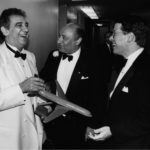
Events in the 1990s and early 2000s were quite glamorous. There are photos of conference gophers dressed in airline flight attendant uniforms and entertainers who illuminated the evening ceremonies! In one photo, Spanish opera singer Plácido Domingo is holding a United Airlines model jet. (Alas, we couldn’t find anyone to situate the photo.)

Some of the photos were submitted to late editorial director John N. White with press releases, typewritten captions, instructions and handwritten thank-yous attached. These messages carry a sense of familiarity. And you can tell by the way White allowed profile articles about his peers to wander far into the personal or included offbeat anecdotes about them in the “Turntable” section, that he knew them all, too.

Do you have a good story about one of these photos? E-mail editor@apex.aero.

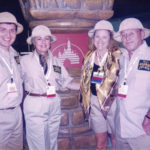
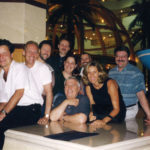
Miami, 2006. Photoshoot with cocktails.
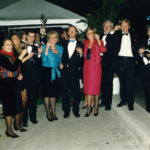
London, 1991. Italo Poli, Swissair (second from left); and Mark Horton, then with British Airways (fourth from right).
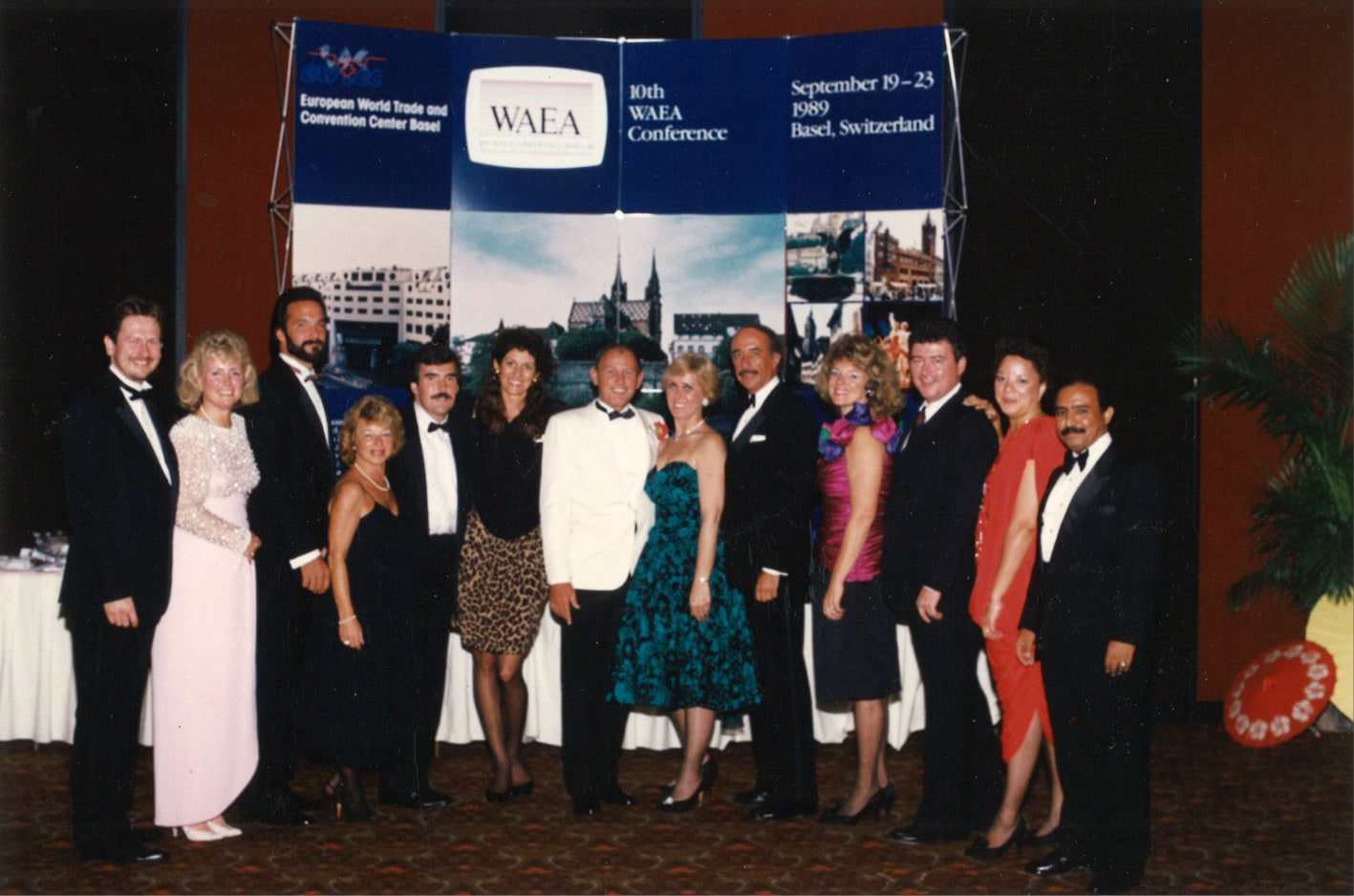
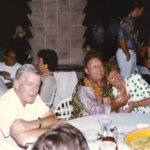
Basel, Switzerland, 1989. At the 10th WAEA conference.
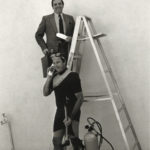
San Diego, 1983. At a B/E Aerospace demonstration.
Bob Williams, United Airlines; Denise Massaro, America West Airlines; Diane E Boush, AEI Inflight; Ruth Rosenbrock, South African Airways. Image: Courtesy of Diane E Boush
Lori Krans, Sony Trans Com
Durban, 1998. Image: Courtesy of Leigh Mantle
Orlando, 1997. At a George of the Jungle-themed party.
Cheers! To another great conference.
Michael Covell and Roy Cox, founders of Entertainment in Motion
Lean on me – Italo Poli, Swissair; and friend (embracing), and John Landstrom, Trans Com (left).
Sir Richard Branson with the Airvision IFE system in view.
Long Beach, 2010. Daphne Braam-Rodgers, Global Eagle; Doug Backelin, American Airlines; and Patrick Brannelly, Emirates
Munich, 1985. John McMahon, Inflight Services; Marianne Sammann, Lufthansa; Gabriel Desdoits, Gades Films; Gay Lynn Hege, Inflight Services, Bert Diener, Swissair
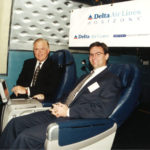
Promoting Delta Air Lines Horizons with Turner Inflight Services
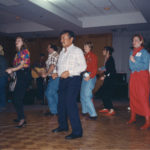
Dallas, 1993. At an offshoot WAEA event.Get in line – for dancing!
Cindy Tarver, co-founder of AEA
Gerard Shadrick, Garry Peter Morris and Kent Harrison Hayes, Intersound; Karen Schipper, El Al; Jim Snyder, Sony Trans Com; and peers.
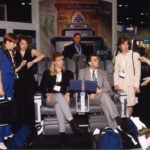
Orlando, 1997. On the conference show floor.
Helen Irvine, Stellar Group; and broadcaster Margaret Throsby with their Avion Award trophies, in 1992.
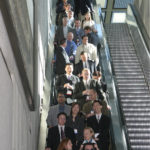
Escalators, crucial for navigating convention centers.
Kerry Covey, America West Airlines
Technology Committee friends Mary Rogozinski and Rich Salter
Spanish opera singer Plácido Domingo (left), holding a United Airlines model jet.

“On the Record” was originally published in the 9.4 September/October issue of APEX Experience magazine.

Celebrating the 40th Anniversary of APEX EXPO

Celebrating the 40th Anniversary of APEX EXPO

The World Airline Entertainment Association (WAEA) – now the Airline Passenger Experience (APEX) Association – held its first annual conference in 1979. This year’s event, now known as APEX EXPO, will mark the 40th anniversary since its inception. To celebrate reaching this milestone, we’re looking back at the most significant achievements of APEX members over the past 40 years. We’ll be publishing one success story each weekday leading up to the 40th APEX EXPO, taking place in Los Angeles from September 9 to 12.
Register for APEX EXPO (Los Angeles, September 9-12)


  • Leadership
  • APEX Staff
  • Committees
    • Committees
    • Working Groups
  • Sponsorship & Advertising
  • Partners
  • Pressroom
  • Contact Us

Connect With Us

APEX Logo
  • About
  • Events
  • Awards
  • Industry News
  • Membership

Daily Newsletter

©Airline Passenger Experience Association (APEX) . All rights reserved.
Code of EthicsPrivacy PolicySite Map