Log in    (Log in help)
APEX
IFSA
FTE
APEX Logo
  • Join
  • About
  • Events
  • Industry News
  • Membership
  • Awards
  • Join
  • About
  • Events
  • Industry News
  • Membership
  • Awards
   Log in

Secondary News Article Categories: Aircraft Interiors

Southwest Selects Starlink to Deliver Next-Generation In-Flight Connectivity

Southwest Selects Starlink to Deliver Next-Generation In-Flight Connectivity
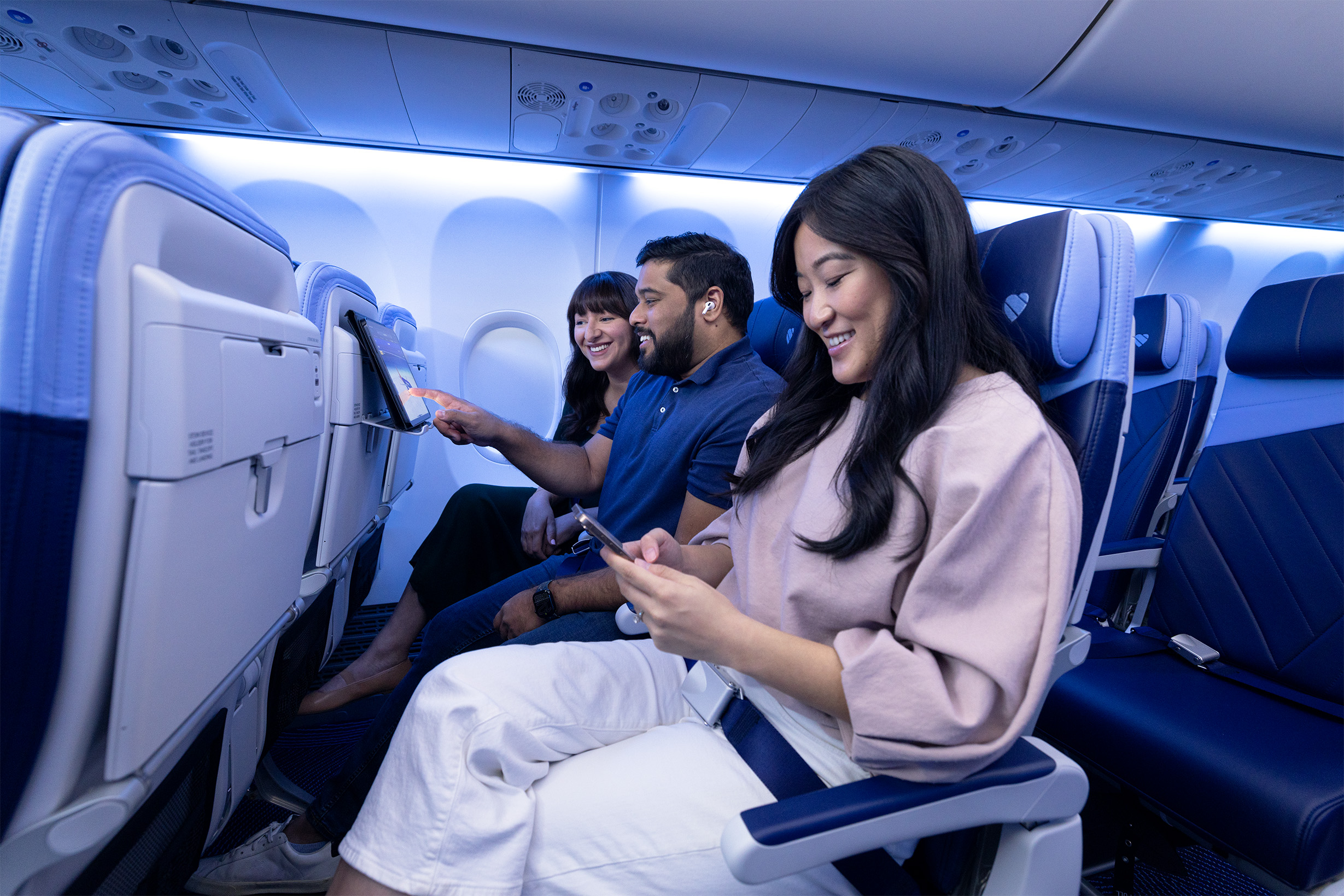
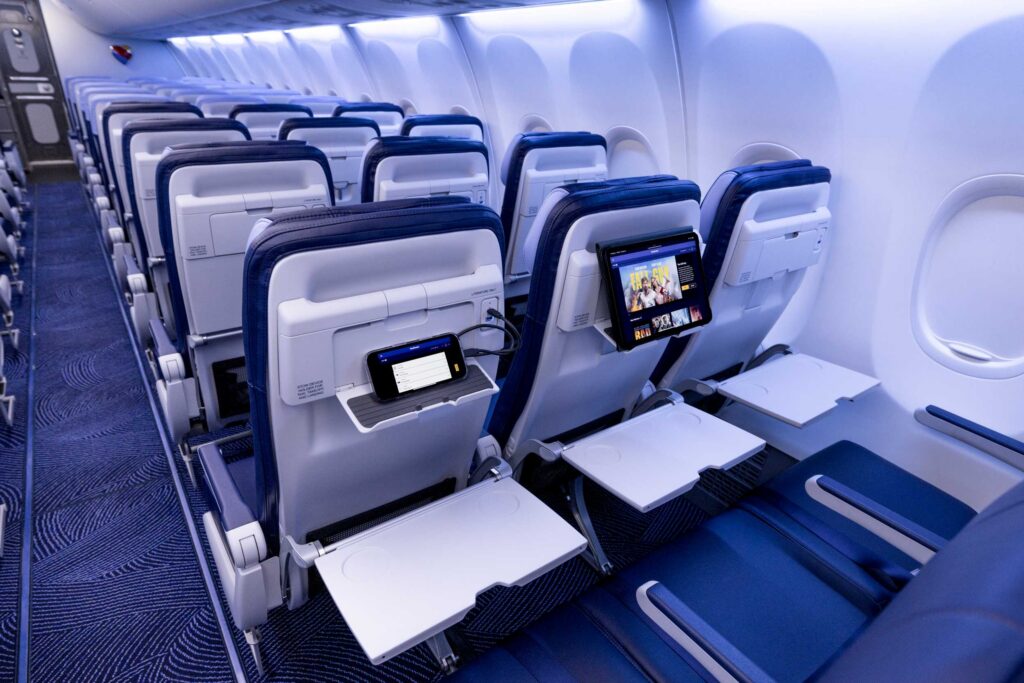
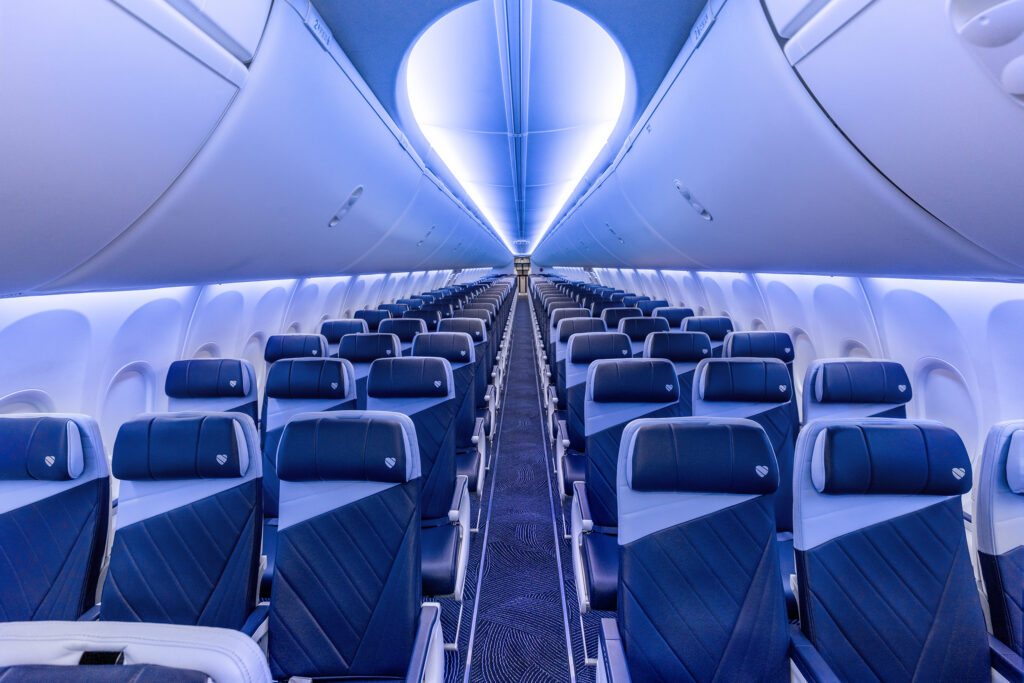
All photos via Southwest Airlines

Southwest Airlines has announced it will introduce Starlink Wi-Fi across its fleet, marking one of the most ambitious connectivity upgrades in the carrier’s history. The carrier plans to bring next-generation satellite internet to hundreds of aircraft beginning this summer, aiming to deliver an at-home digital experience in the cabin. The roll-out positions in-flight connectivity (IFC) as a core part of Southwest’s broader strategy to modernize the passenger journey.

Building a Fleetwide High-Speed Network

Southwest’s Starlink program centers on speed, reliability, and scale. Engineered by SpaceX, the low-Earth orbit (LEO) satellite network allows passengers to stream, message, and work in real time across the airline’s route network , which spans 11 countries. Instead of incremental upgrades, Southwest is moving toward a fleet-wide transformation designed to support modern digital behavior.

“We’re thrilled to deliver a connectivity experience to Southwest Airlines and its Customers that really is similar, if not better, than what you can experience in your own home.”
– Jason Fritch, SpaceX

“Free Wi-Fi has been a huge hit with our Rapid Rewards Members, and we know our Customers expect seamless connectivity across all their devices when they travel,” said Southwest Airlines EVP, Chief Customer & Brand Officer Tony Roach. “Starlink delivers that at-home experience in the air, giving Customers the ability to stream their favorite shows from any platform, watch live sports, download music, play games, work, and connect with loved ones from take-off to landing.”

The airline expects the first Starlink-equipped aircraft to enter service this summer, with more than 300 aircraft planned to be online by the end of 2026. Starlink’s constellation includes more than 9,000 satellites orbiting close to Earth, reducing latency compared to traditional geostationary (GEO) networks. For passengers, that difference translates into smoother streaming, faster uploads, and more stable real-time communication.

“We’re thrilled to deliver a connectivity experience to Southwest Airlines and its Customers that really is similar, if not better, than what you can experience in your own home,” said SpaceX VP Starlink Enterprise Sales Jason Fritch. “Starlink is the future of connected travel, making every journey faster, smoother, and infinitely more enjoyable.”

Connectivity also strengthens Southwest’s existing loyalty ecosystem. The airline already offers free Wi-Fi to Rapid Rewards Members through its partnership with T-Mobile, and Starlink raises the performance ceiling of that offering. Instead of basic browsing access, members gain a platform capable of supporting full digital lifestyles in the air.

Redefining the Cabin as a Digital Environment

The Starlink rollout sits within a larger effort to elevate Southwest’s cabin experience. Connectivity is no longer treated as an add-on feature. It now functions as core infrastructure that supports entertainment, productivity, and personalization across the flight.

Southwest is pairing the connectivity upgrade with physical cabin improvements. The airline is introducing assigned and premium seating options, installing new RECARO seats, adding in-seat power at every position, and expanding overhead bin capacity. Seat-backs include holders for personal devices, reinforcing the shift toward device-centric in-flight ecosystems.

The new Extra Legroom experience adds another layer of segmentation. Passengers purchasing these seats receive enhanced snacks, priority boarding benefits, and more personal space. Combined with faster Wi-Fi, these changes position the cabin as a more flexible environment that adapts to different passenger needs.

High-speed connectivity also expands what in-flight entertainment can look like. Streaming platforms, live sports, and cloud-based content become accessible without the constraints of traditional onboard servers. The cabin begins to resemble a connected media space rather than a closed system.

Letronics Closes in on Launch Customer for WiseLift PRM Transfer Lift

Letronics Closes in on Launch Customer for WiseLift PRM Transfer Lift
All images via Letronics

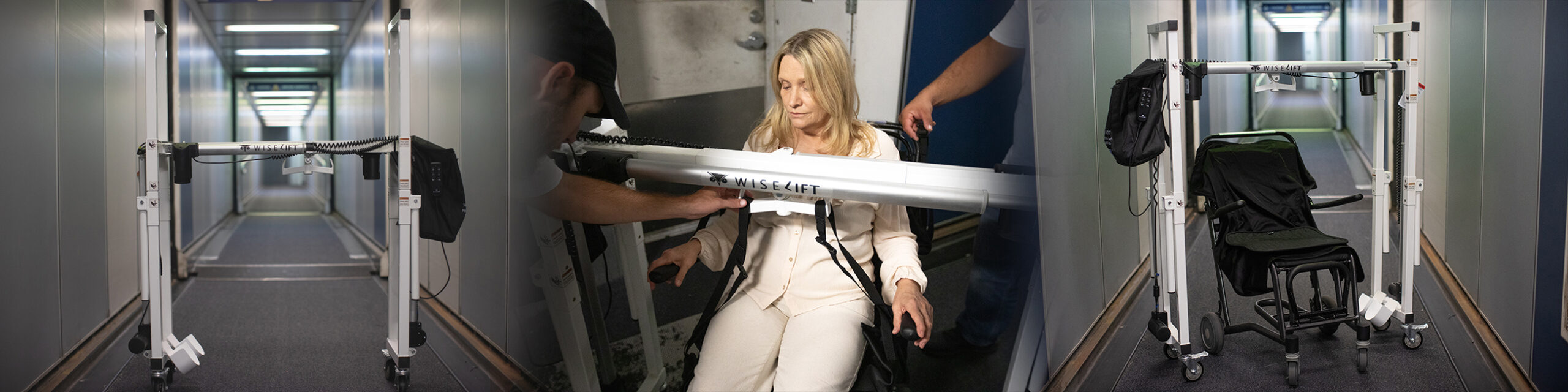
At the 2024 APEX Global EXPO, Letronics debuted its WiseLift PRM Transfer Lift. The company is now working closely with a couple of airlines and hoping to close its first deal by the end of the year. 

Letronics has been providing the airline industry with a broad range of in-flight solutions from headphones to earbuds, cases and catering cart security seals for 25 years, but the venture into products relating to passengers with reduced mobility (PRM) is a more recent venture.

Letronics CEO Gregg Cohen explained, “The WiseLift brand started about six years ago with our recliner lift chairs, which were designed to help seniors or people with reduced mobility stand up safely and comfortably. Not long after, an airline approached us looking for a better way to help PRM passengers transfer from a wheelchair to their aircraft seat. That’s what inspired the WiseLift PRM Transfer Lift.”

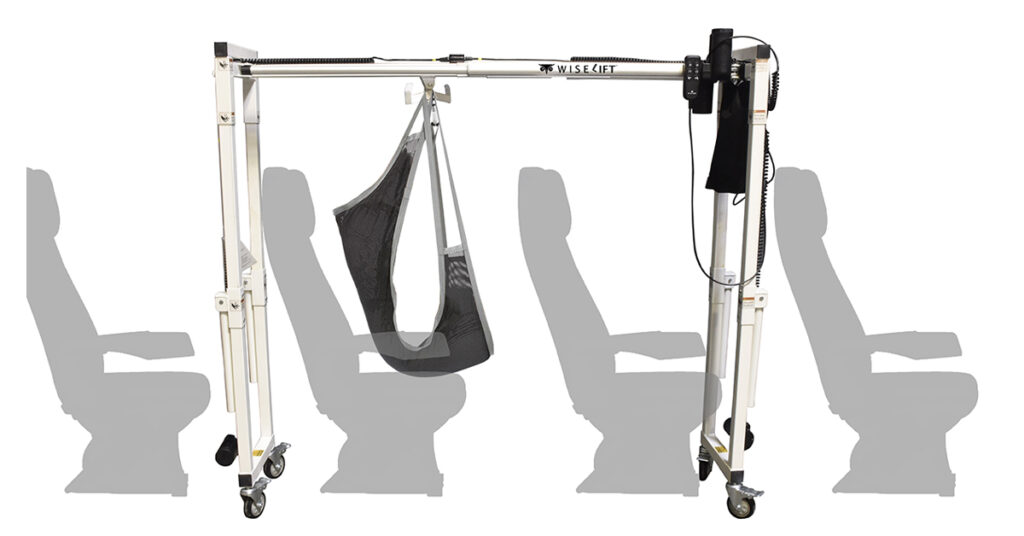
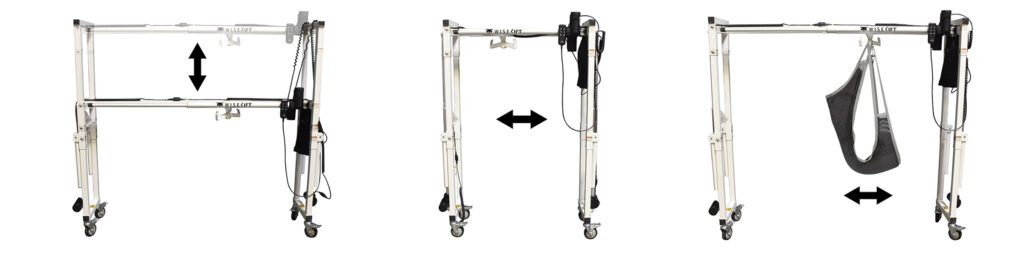
The battery-operated lift works by fitting a sling underneath the passenger in their wheelchair at the gate, which they are lifted in before being maneuvered down the aisle to their seat. The passenger can then be positioned and lowered down into their seat. The maximum weight the sling can accommodate is 204 kilograms. 

According to PAX International, the sling can also “have an incontinence pad inserted into it for passengers to sit on during the flight.”

“By reducing stress and physical strain, the lift helps make boarding smoother and more comfortable for everyone involved.”
– Gregg Cohen, Letronics

The length of Letronics’ WL780 PRM Lift can be adjusted down to a mere 48-inches wide, small enough to turn in the entryway corner of regional jets. Its 14-inch width fits in all commercial aircraft. The company has also developed a wider version, the WL790, that is also suitable for use with business-class seats in a herringbone layout. Cohen elaborated: “The original WL780 model extends to 99-inches [long, while] the WL790 model extends to over 105 inches.” 

The solution has manifold benefits. Cohen stated, “The WiseLift PRM Transfer Lift eliminates all manual lifting, making transfers safer for both crew and passengers. It’s designed to provide maximum comfort during the transfer process, with ergonomic features and quiet operation that create a reassuring environment. By reducing stress and physical strain, the lift helps make boarding smoother and more comfortable for everyone involved.”

Furthermore, Cohen said the process will allow for faster boarding of passengers with reduced mobility, a win-win for the passenger experience and airline turnaround times. 

Based on feedback from several advocates it works with, the company returned to showcase both of its WiseLift products at the 2025 APEX Global EXPO, this time with colored handles on the sling. “They were originally black to match the sling, but colored handles are easier to find when positioning the passenger in the seat,” said Cohen. 

Since it does not attach to or interface with the aircraft structure or systems, there is no certification required for the solution. In terms of operational logistics, Cohen said the PRM Lift will stay located at the airport: “It depends on the airline and airport how many are stored there, but you need one at each end for boarding and de-boarding the passenger.”

AIX 2025: Air Canada to Launch Airbus A220 Airspace Cabin; Amazon’s Project Kuiper LEO Network Joins HBCplus

AIX 2025: Air Canada to Launch Airbus A220 Airspace Cabin; Amazon’s Project Kuiper LEO Network Joins HBCplus
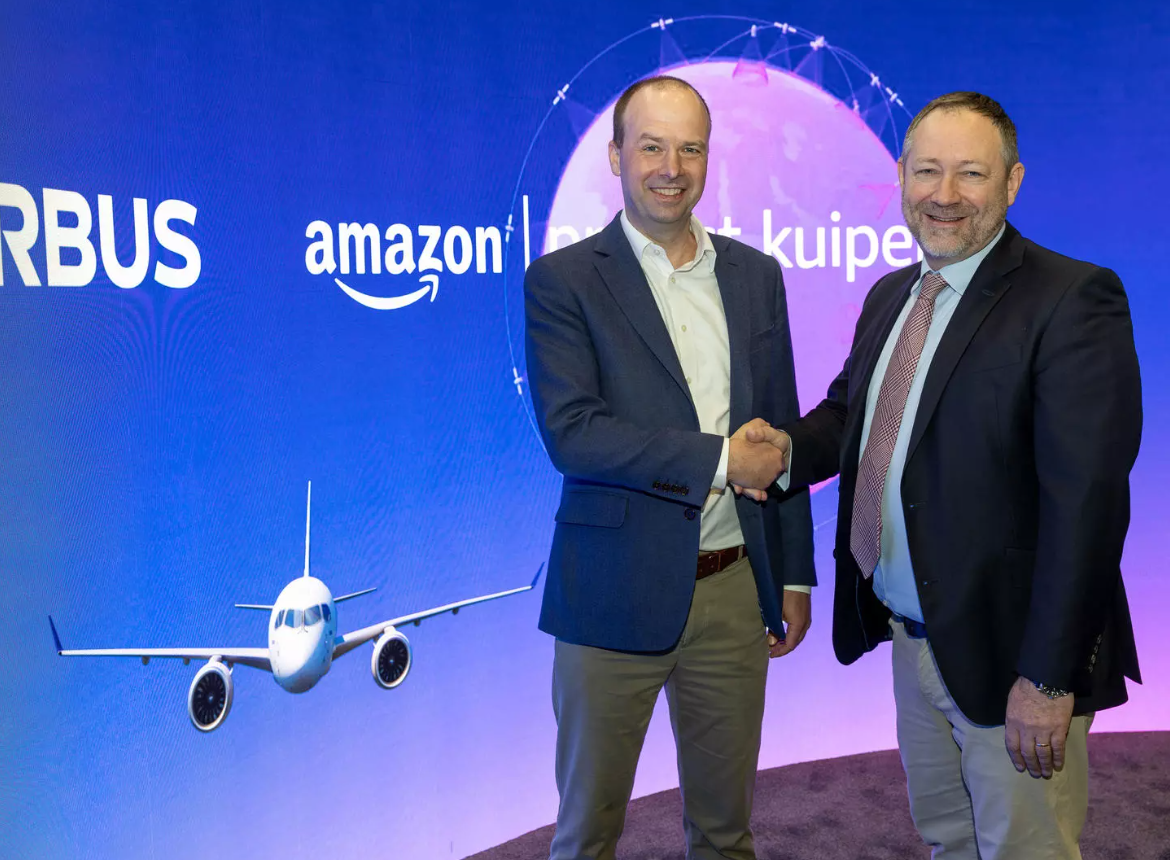
Pictured (left to right): Airbus VP & Head of Connected Aircraft Program Tim Sommer; and Dr. Dylan Browne, Amazon Project Kuiper’s Global Head of Mobility Connectivity. Image via Airbus

As usual, Airbus made multiple announcements during its media briefing at Aircraft Interiors Expo covering cabin interiors, connectivity and maintenance. 

XL Bins are Coming to Air Canada’s A220s in 2026

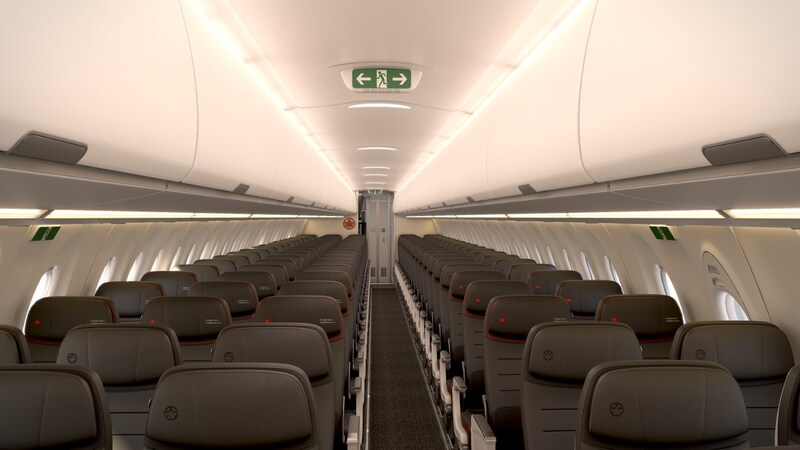
This year, the OEM revealed Air Canada as the launch customer for the Airbus Airspace cabin on the A220 family of aircraft, which includes new XL bins offering 15 percent more storage capacity. 

Air Canada will retrofit the A220 Airspace cabin in a two-class confuguration. The upgrade will encompass a new ceiling design and lighting together with additional updates to include new cabin interiors, seatback in-flight entertainment and high-speed in-flight Wi-Fi.

The Canadian flag carrier currently operates 34 A220-300s and has a further 31 of the type on order with Airbus. The first aircraft to receive the new bins are scheduled to be delivered early in 2026.

A render of an Air Canada Airbus A220-300 featuring the A220 Airspace Cabin. Image via Air Canada

Airbus VP Cabin Marketing Ingo Wuggetzer said,”Through the introduction of the A220 Airspace cabin, we now enable a fully consistent passenger experience on all our platforms providing widebody comfort on single aisle aircraft.” 

“The A220 has already become a favourite among our customers, and we’re thrilled to be the launch customer for the next cabin evolution of this Canadian-designed and assembled aircraft,” added Managing Director for Onboard Product at Air Canada John Moody.

HBCplus Adds Another LEO Satellite Network to HBCplus

In another update at the show, the OEM shared that a recently signed Memorandum of Understanding (MoU) will see Airbus integrate Amazon’s Project Kuiper low-Earth orbit (LEO) satellite network into its line-fit and retrofit aircraft catalogue of managed service providers as part of its High Bandwidth Connectivity Plus (HBCplus) program. 

According to Amazon, Project Kuiper’s IFC services will offer downlink speeds of up to one gigabit per second, allowing passengers to unlock faster browsing, HD streaming and enhanced productivity.

“We are excited to […] harness Amazon’s planned constellation of more than 3,200 LEO satellites.”
– Tim Sommer, Airbus

VP Sales and Marketing for Project Kuiper Chris Weber said: “Providing inflight connectivity rivalling that available on the ground is the type of complex challenge well-suited for Amazon and Project Kuiper. By building on our relationship with Airbus, we’ll enable more airlines to offer richer onboard passenger experiences and access critical flight operations information, keeping them at the forefront of the transformation in commercial aviation.”

“We are excited to work together with Amazon’s Project Kuiper, to bring the newest satellite connectivity to the aviation market, harnessing Amazon’s planned constellation of more than 3,200 LEO satellites,” concluded Tim Sommer, Airbus VP and Head of Connected Aircraft Program. 

The news builds on Airbus’ announcement at the 2024 APEX EXPO about an MoU signed with Telesat as a Ka band/LEO satellite network operator (SNO).

Collins Aerospace Joins Airbus’ Digital Alliance

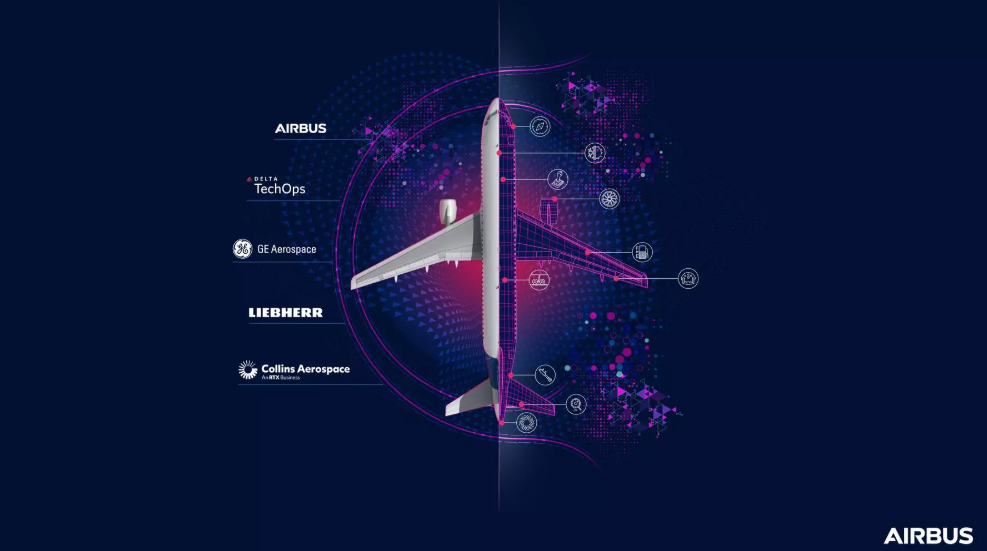
Finally, Airbus welcomed Collins Aerospace as a new member of the Digital Alliance for Aviation, which is now in its fifth year. It focuses on the joint development of digital solutions for airline operations powered by the Airbus Skywise platform, which supports structured data management for maintenance and repair operations. 

Image via Airbus

Collins joins existing members including Airbus, Delta TechOps, GE Aerospace and Liebherr, bringing additional expertise for predictive maintenance solutions for a wide range of components and aircraft types covering areas such as avionics, aircraft interiors, enhanced communication and navigation systems and innovative solutions for flight landing systems and gears.

APEX Global Airlines Push the Boundaries of Cabin Design at RedCabin Event in Tokyo

APEX Global Airlines Push the Boundaries of Cabin Design at RedCabin Event in Tokyo

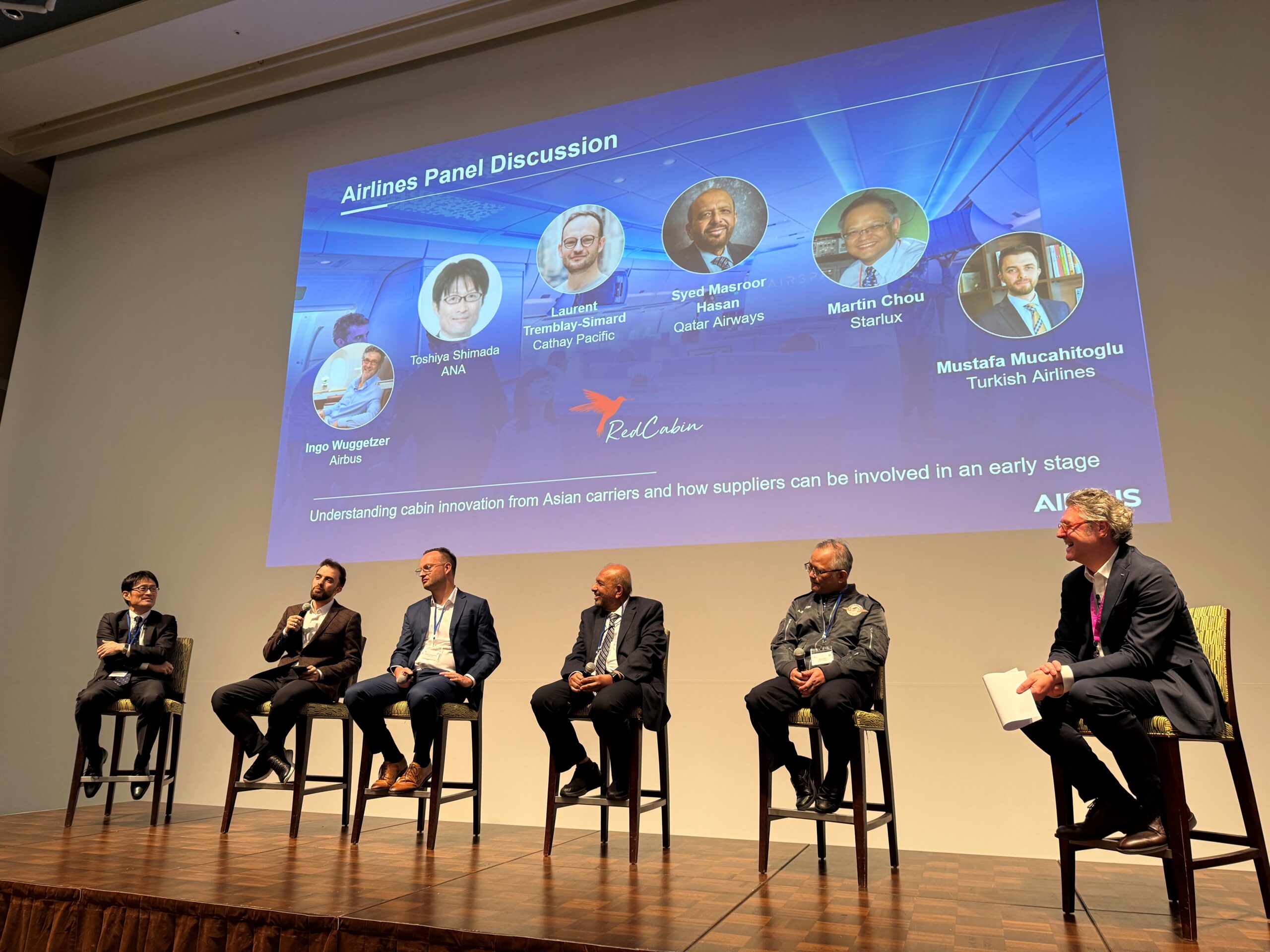
At the RedCabin Airlines Panel Discussion today in Tokyo, aviation leaders shared bold visions for the future of cabin design and passenger experience. Moderated by Airbus Vice President of Cabin Marketing Ingo Wuggetzer, the discussion revealed strategies shaping innovation in the industry, with an emphasis on personalization, sustainability, and collaboration.

Turkish Airlines Vice President of Customer Experience Mustafa Mucahitoglu responds to a question from Airbus Vice President of Cabin Marketing Ingo Wuggetzer, explaining how Turkish Airlines balances hardware innovation, digital integration, and personalized service to elevate passenger experience while maintaining its unique brand identity.

“Segmentation, differentiation, and sustainability are transforming cabin products,” declared Airbus Vice President of Cabin Marketing Ingo Wuggetzer. “From premium seating with enhanced privacy to lighter materials that reduce environmental impact, the future of cabin design lies in anticipating passenger needs and integrating forward-thinking solutions.”

Wuggetzer and Turkish Airlines Vice President of Customer Experience Mustafa Mucahitoglu, both members of the APEX Board of Directors, emphasized the importance of industry-wide collaboration to drive meaningful advancements.

Passenger-Centered Design as a Cornerstone

All Nippon Airways Vice President of Customer Experience Management and Planning Toshiya Shimada highlighted the airline’s customer-first approach as a driving force behind its acclaimed products. “Understanding customer expectations is essential,” remarked Shimada. “Our goal is to create fans of ANA by delivering experiences that resonate with their needs and desires.”

ANA’s flagship product, “The Room,” represents this philosophy with its spacious and seamless design. “Every step of the passenger journey, from lounges to cabins, reflects a commitment to consistency and excellence,” he added.

Cathay Pacific Head of Customer Experience and Design Laurent Tremblay-Simard detailed how the airline leverages its premium products to strengthen brand differentiation. “At Cathay Pacific, we focus on what we call ‘killer differentiators,’” explained Tremblay-Simard. “From world-class lounges to refreshed cabins across all classes, every detail reflects our dedication to passenger satisfaction.”

The Evolution of Premium Cabin Experiences

Qatar Airways Senior Vice President Aircraft Program Masroor Hasan emphasized the importance of privacy and innovation in shaping the airline’s industry-leading products. “The Qsuite redefined business class by creating a home-like experience for passengers,” stated Hasan. “Privacy, comfort, and forward-thinking design drive our ability to remain at the forefront of the industry.”

Turkish Airlines Vice President of Customer Experience Mustafa Mucahitoglu shared how the airline balanced privacy and open cabin aesthetics in its new business class suites. “Our design philosophy preserves the connection between passengers and the cabin atmosphere while offering enhanced personal space,” observed Mucahitoglu. “This reflects Turkish Airlines’ unique approach to hospitality and innovation.”

Airbus Vice President of Cabin Marketing Ingo Wuggetzer outlines key trends in premium cabin design, emphasizing the growing demand for privacy, segmentation, and differentiated products, with innovations such as sliding doors and enhanced features driving passenger comfort and personalization.

Mucahitoglu noted that Turkish Airlines’ focus on personalization and passenger feedback has been recognized globally, including its designation as an APEX World Class airline. “We gather around 100,000 passenger feedback submissions monthly,” he revealed. “This volume of data allows us to identify trends, improve areas of concern, and build on what passengers already love about Turkish Airlines.”

Starlux Director of Cabin Interiors Martin Chou explained how the young airline has rapidly established itself as a premium player. “Our modern fleet and attention to detail ensure that passengers experience luxury from the moment they board,” commented Chou. “Collaboration and teamwork are key to delivering a product that exceeds expectations.”

Technology and Real-Time Personalization

Turkish Airlines Vice President of Customer Experience Mustafa Mucahitoglu elaborated on how technology enables personalization at scale. “Our Customer 360 program integrates passenger data into real-time systems,” said Mucahitoglu. “This enables our cabin crew to deliver surprises like favorite beverages or respond immediately to disruptions, creating lasting positive impressions.”

Mucahitoglu emphasized that such systems are critical for staying competitive in the modern aviation landscape. “Personalization is the new luxury,” he declared. “Passengers expect recognition and engagement, and our systems allow us to deliver that in real time.”

Starlux Director of Cabin Interiors Martin Chou echoed this sentiment, highlighting the role of technology in creating seamless passenger experiences. “Advanced tools enable us to enhance every aspect of the journey, from cabin interiors to inflight services,” stated Chou. “Technology bridges the gap between vision and execution.”

Leader’s Insightful Question to Turkish Airlines

During the audience Q&A, APEX CEO Joe Leader posed a thought-provoking question to Turkish Airlines Vice President of Customer Experience Mustafa Mucahitoglu. “As Turkish Airlines introduced suites with lower walls compared to some competitors, what drove that decision, and how does it align with your design philosophy?” asked Leader.

Mucahitoglu’s response reflected Turkish Airlines’ thoughtful approach to balancing privacy with cabin atmosphere. “We wanted to create personal space without isolating passengers from the overall cabin experience,” he explained. “Turkish Airlines is known for its generosity in hospitality—whether it is our desserts, ice creams, or beverage carts, we want these elements to remain visible and accessible.”

He added, “Our design philosophy prioritizes both privacy and connection. This is part of what makes Turkish Airlines unique and why we have been recognized as an APEX World Class airline.”

Sustainability and Industry Collaboration

The panelists agreed that sustainability is a key driver of innovation, with collaboration across the supply chain playing a critical role. “Lighter materials and efficient designs are essential for reducing environmental impact,” explained Airbus Vice President of Cabin Marketing Ingo Wuggetzer. “These innovations are not just about meeting regulations but about creating a more sustainable [cabin solution] future for the industry.” He further emphasized that accessibility innovations go beyond simply meeting regulations, focusing on a proactive approach to creating solutions for all passengers.

Cathay Pacific Head of Customer Experience and Design Laurent Tremblay-Simard shared how the airline integrates sustainability into its decision-making processes. “Every design change must be assessed for its carbon impact,” Tremblay-Simard highlighted. “This ensures that sustainability is embedded into everything we do.”

Qatar Airways Senior Vice President Aircraft Program Masroor Hasan emphasized early engagement in product development as key to addressing sustainability goals. “The first six months of a program are critical,” emphasized Hasan. “During this time, we define specifications, collaborate with suppliers, and address potential challenges to ensure a sustainable product lifecycle.”

Challenges and the Path Forward

The discussion also touched on the challenges of working with suppliers and the need for industry-wide improvements in certification and innovation timelines. “The aviation industry must catch up with the speed of consumer technology,” stressed Qatar Airways Senior Vice President Aircraft Program Masroor Hasan. “By embracing new materials, processes, and certifications, we can deliver innovations that meet passenger expectations.”

Shown in the RedCabin session, the “comfort canyon” illustrates how evolving cabin classes, including business and premium economy, cater to diverse passenger preferences by balancing luxury, personal space, and cost efficiency. The APEX member airlines on stage discussed shaping the future of differentiated seating options across modern aircraft.

All Nippon Airways Vice President of Customer Experience Management and Planning Toshiya Shimada underscored the importance of trust in supplier relationships. “Strong partnerships are essential to meet customer expectations consistently,” Shimada pointed out. “Collaboration ensures that innovations can be delivered on time and with the highest quality.”

Airbus Vice President of Cabin Marketing Ingo Wuggetzer closed the discussion by urging the industry to embrace bold ideas and new approaches.

He highlighted that the next major innovation waves for the passenger experience and the industry will focus on digitalization.  “The future of aviation lies in personalization, [cabin solution] sustainability, and innovation,” Wuggetzer concluded. “By working together, we can set new benchmarks for the passenger experience.”

The APEX member airline panelists’ insights at RedCabin revealed a shared commitment to redefining cabin design and elevating the passenger journey, underscoring the collaborative and innovative spirit that continues to shape the aviation industry.

From Single-Use Plastics to Edible Spoons: How Airlines Transform Cabin Waste

From Single-Use Plastics to Edible Spoons: How Airlines Transform Cabin Waste

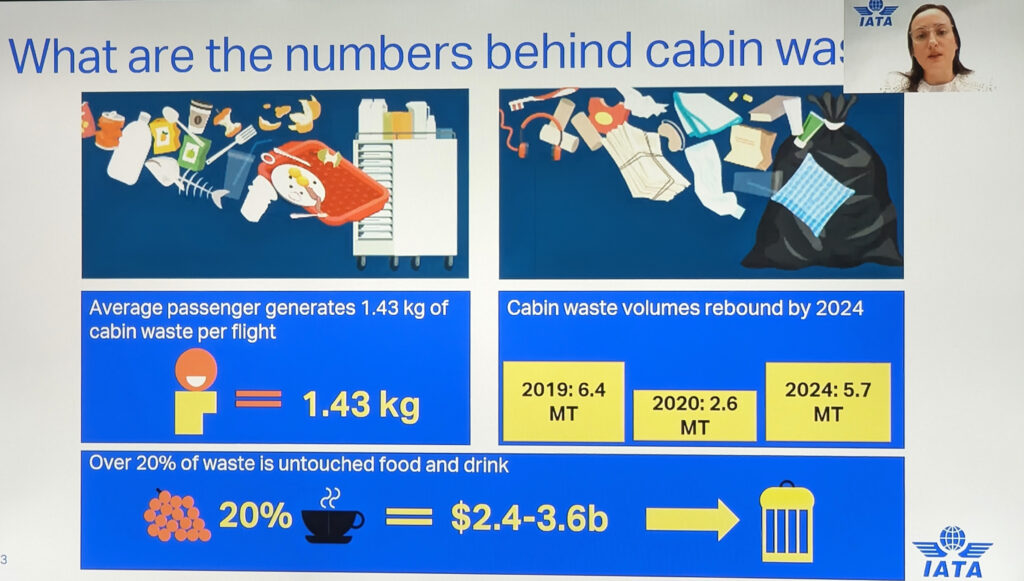
A panel discussion called REvolutionize = REinvent + REcycle at IFSA / APEX EXPO kicked off with a virtual presentation from IATA Sustainability Manager Daniela Stange, showing the results of a study involving 4700 passengers worldwide.

Almost three quarters of respondents were either concerned or very concerned about the use of single use plastics in aircraft cabins, while four in five would be happy to see a reduction in food and beverage options in order to reduce single use plastic usage.

This comes as IATA figures show that on average, every passenger accounts for 1.43kg of cabin waste per flight, with over 20% of waste being untouched food and drink.

In her presentation, Stange touched on a number of initiatives IATA is undertaking to look at how in cabin waste can be reduced.  

This includes transatlantic recycling trials on a series of flights from the European Union into the USA to pilot different on board segregation measures.  The aim of this is to show EU policymakers in particular that the segregation of uncontaminated recyclables on board is feasible, “and then to provide harmonisation guidance on reuse and recycling.”

To this end, Stange says that IATA is already developing a single use plastic handbook, which will provide an overview of the current regulation, guidance for single use plastics and alternative replacements, and recommendations for different stakeholders in the industry.

Sustainable Skies and Responsible Travel: Alaska Airlines’ Recycling Resurgence

Also present on the panel were Todd Traynor-Corey, Managing Director, Guest Products, Alaska Airlines and Thorunn Guðmundsdóttir, Onboard Service Implementation Specialist, Icelandair.

Traynor-Corey said that the pandemic caused Alaska Airlines to take stock of its recycling efforts.  That’s because:

“Right before Covid, about 80% of the things that we could recycle were being recycled on board the aircraft, which is pretty good. But then during Covid, everything stopped. As we know, everything came off the aircraft. And when we did bring back items like plastics, for example, we were not recycling it for a variety of reasons. Number one, we didn’t know what the impact was of sorting trash and touching things. But quite frankly, recycling places shut down, and so there was no place to send it.”

As a result, Alaska Airlines had to “restart recycling and composting.”  Traynor-Corey says that they then realised that “there are a lot of products that we think are getting recycled that actually aren’t.”

This resulted in an increased focus on measurement and in looking at every stage of the process, including in involving cabin crew and suppliers. “The most important thing in the inflight recycling part is to measure, to look at that information and then communicate and work with all the parties involved to say, hey, you know, our flight attendants, what tools can we give you to help? Is it more bags? Is it a cart that’s dedicated to sorting your recycling and coming up with a process?”

Traynor-Corey says that once there is a process in place, cabin crew will follow the recycling process, “just like they do at home”, where it’s now second nature for many people to sort their recyclables.”

Two other factors that Traynor-Corey emphasised was the importance of both challenging the status quo, and getting passengers involved.

When it comes to introducing more in-cabin sustainable materials, “I have to be ready for it, and we could be forced into it.  We can be told that we have to do it by a regulator, or we can just take a leadership position and do it.”

Traynor-Corey admitted that, “it’s hard, it’s more money, some people don’t like it, but it’s the right thing to do.”

Traynor-Corey additionally emphasised that the “customer call to action is really important. We want to get our guests involved in recycling”, for example in encouraging them to bring their own water bottles and refill them before they fly. 

Here, Traynor-Corey mentioned an initiative undertaken with Coca-Cola, to help provide reusable bottles that were given out to all employees and a lot of guests.

Innovative Recycling and Upcycling: Icelandair’s Approach to Waste Reduction

Looking at Icelandair’s recycling efforts,  Thorunn Guðmundsdóttir said that the airline had this year persuaded the Icelandic Government to change the relevant regulations, to allow for more in-cabin recycling.

The result, according to Guðmundsdóttir is that “after six months, we have reached our goal and more for 2023 … .we have 37% of our waste coming from our aircraft being recycled today.”

Guðmundsdóttir said that Icelandair is additionally constantly looking for new solutions on minimising waste.  One example was a children’s box, where the single use plastic spoon was replaced with an edible vanilla spoon.

According to Guðmundsdóttir, the airline also, “tried to find some fun upcycling projects.  We work with designers during Design Month in Iceland every year, and they make, for example, bag tags and golf-tees” from Icelandair materials.

The company is even making furniture out of old uniforms to put in the company’s new Iceland headquarters.  

Exploring the future of aviation textiles with John Horsfall

Exploring the future of aviation textiles with John Horsfall

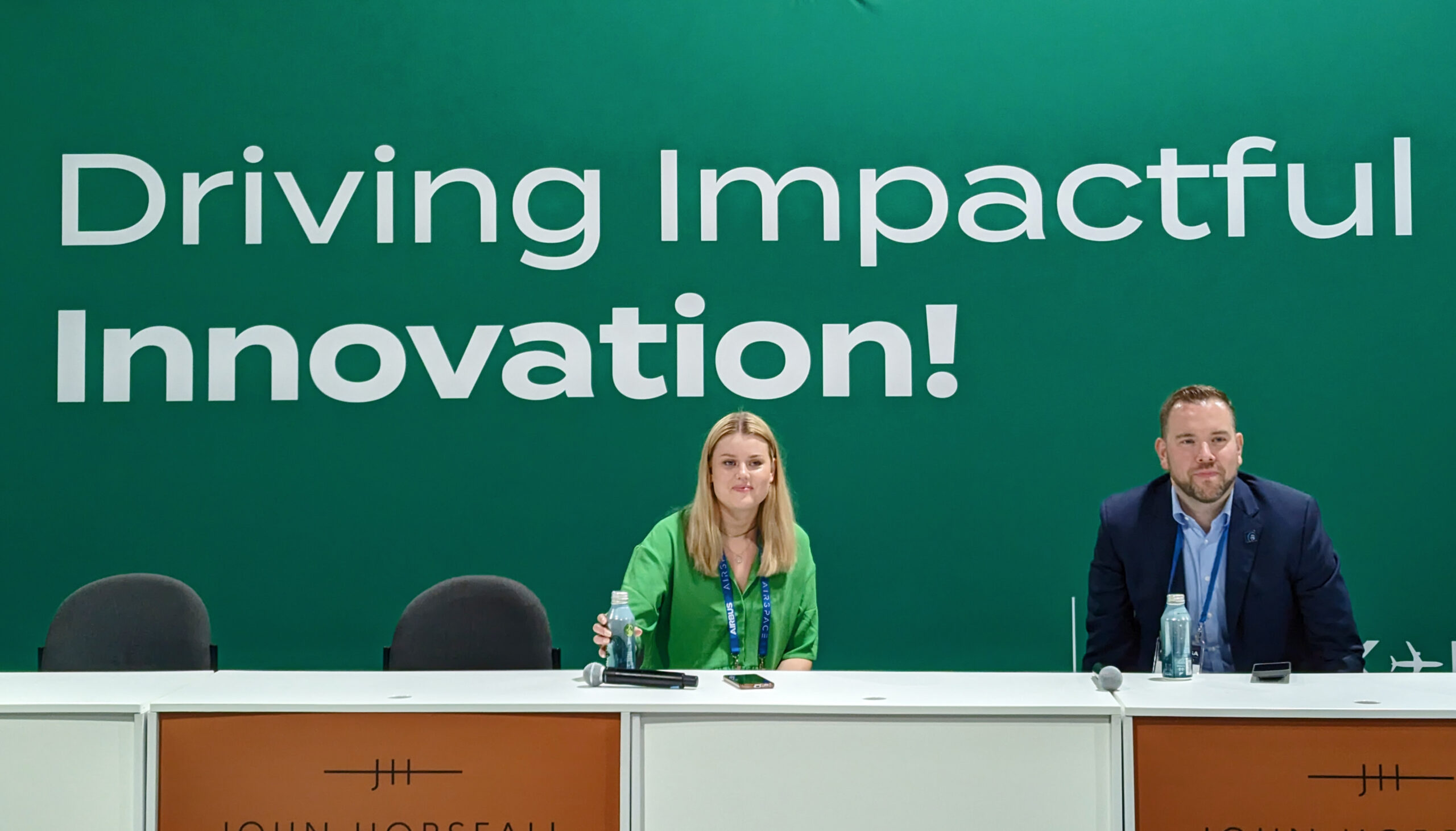
With a history dating back to 1863, John Horsfall has transformed itself into a leading name in aviation textiles. In an interview at the IFSA/APEX EXPO, we delved into the company’s journey and vision for the future.

From Woollen Blankets to Aviation Textile Specialists

Founded in 1863 in West Yorkshire, UK, John Horsfall originally specialised in producing woollen blankets.  However today the company is focused purely on the aviation industry.

The company’s transition began in the 1970s when they found an unexpected opportunity in supplying blankets to British Airways. Ellie Parkes, the Global Business Development Manager, recalls that “some clever salesperson sold a few blankets to British Airways.  That really changed the whole focus of our business.” John Horsfall has now been supplying in-cabin textile items to British Airways for 45 years.

According to Parkes, the company today has a “global reach in terms of manufacturing and customers.”  At the same time, the company stays close to its origins by continuing to focus only on textiles. “We haven’t diversified into crockery, cutlery, headsets, that sort of thing”, says Parkes. “We keep textiles as our focus, and our team are predominantly textile or design graduates.”

The challenge of durability and longevity

One of the foremost challenges in producing textiles for airlines is ensuring they withstand the rigours of being washed over and over. As a result, design manager Alexandra Allen, says that the company tests its products to ensure beauty and durability. “When we’re designing all of our products, we utilise all of our knowledge on aviation laundries, which differ all across the world.”

This is important, as Allen says that airlines use “very robust laundries”, where the “product is getting washed again after every flight.  So we want to make sure that our products are beautiful when they start, and that they stay beautiful throughout.”

Sustainability under the ReThread brand

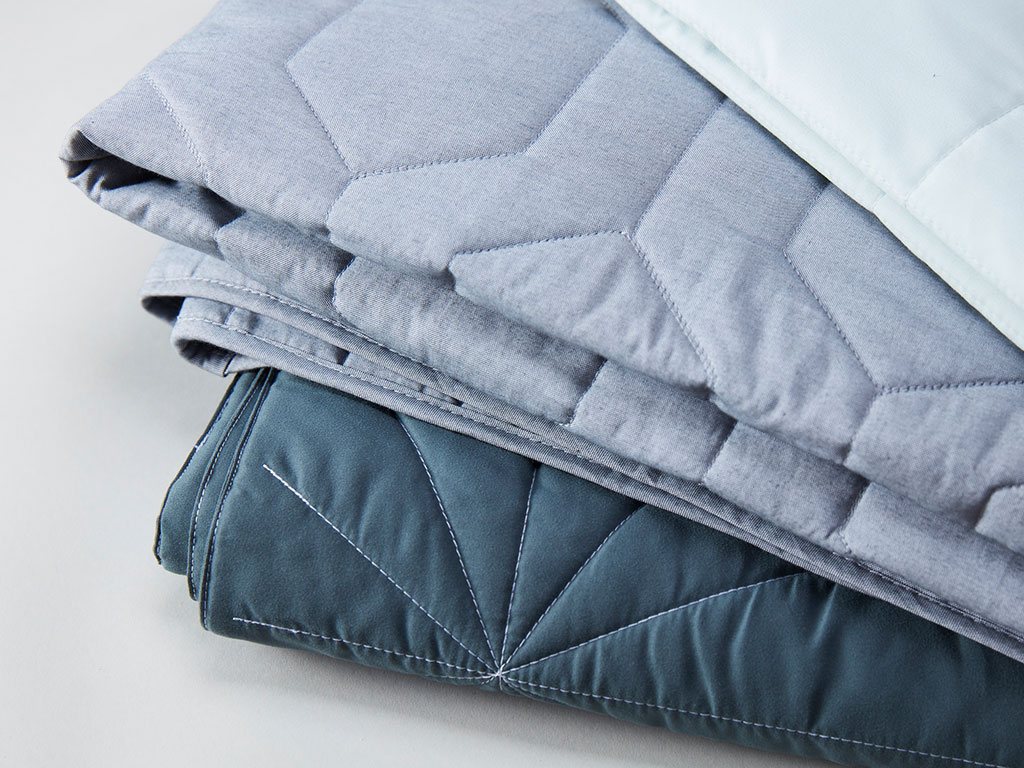
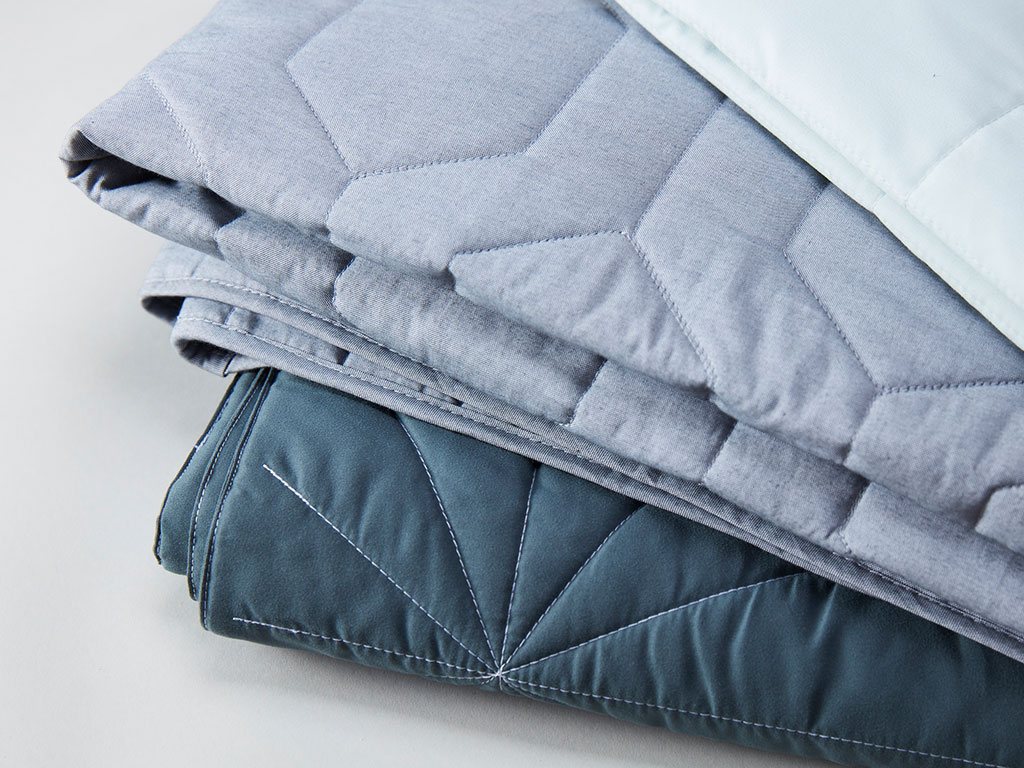
With in-cabin sustainability becoming increasingly important, John Horsfall has introduced its ‘ReThread’ brand, featuring products made from recycled materials such as GRS certified polyester and reclaimed cotton. 

The new branding serves two purposes. Parkes says that it’s “important to put these things in place for ethical reasons.” However, the branding is also there to inform and educate the customer. “As a passenger you want to feel good about your airline experience”, says Parkes.  “You can say, you’ve flown with a blanket made of recycled polyester, and it makes you feel better.”

However, the company also encourages airlines to consider sustainability from a holistic perspective. 

While plastics-based polyester is often seen as less sustainable, it offers advantages in terms of energy-efficient laundering and reduced transportation emissions when compared to traditional cotton.

In contrast, Allen says that while cotton is perceived to be more sustainable the reality is that, “you have a lot of water usage in the manufacturing, there are problems with deforestation”, because of land use to grow cotton.  

According to Allen, “there are so many aspects to think of in the whole world of sustainable textiles. But that knowledge can help us just create better products where everything we know, all the information we have, can just keep helping us improve.”

However, Parkes and Allen did say that the cost of polyester made from recycled plastics is slowly dropping down to be more competitive compared to regular polyester, which opens up scope for more airlines to use these materials in future.

Parkes also says that the company now “proposes a recycled or at least an option that has 50% recycled fibre in it” to customers.  In addition, with “all of our filled products, we now offer recycled filling as standard.”

Using different materials to customise the passenger experience

At the IFSA / APEX Global EXPO, John Horsfall has showcased a number of new concepts, including a cooling pillow designed to dissipate heat naturally through specialised yarn. This technology is being explored for use in duvets, offering passengers a personalised climate-controlled experience.

Another innovative product is a dual-sided pillow, featuring memory foam on one side for optimal support and fiberfill on the other. 

“One side is a memory foam side that’s really supportive, you can kind of have lumbar support”, says Allen. “But the other side is just fiberfill. That’s something that’s a cosier sleep pillow.. And much softer. So the customer can choose exactly which side they want, depending on what they’re doing in the journey, whether they decide to sleep or sit.”

As a result, the company is increasingly looking at how to use smart fabrics to customise a passenger’s experience, in a natural way without recourse to chemical treatments.

To find out more about John Horsfall, visit their website, or come to stand 643 at IFSA/APEX EXPO.

Opinion: Flying Most Direct Route is Key to Airline Sustainability

Opinion: Flying Most Direct Route is Key to Airline Sustainability

Tim Wakeford became CEO at breathing technology startup Caeli Nova in 2018 and has since overseen the successful public launch of the company. Prior to joining Caeli Nova, he spent three years at Boston Consulting Group as a project leader and consultant. He also held supply chain positions at Rolls-Royce, which saw him spending time in the UK, Germany and China while working with aerospace suppliers around the world.

“When people consider sustainable air travel, carbon offset programs and sustainable aviation fuels likely come to mind. While these are certainly valuable elements of an airline’s sustainability strategy, flight path optimization presents another major opportunity for carriers to lower their environmental footprint and increase operational efficiency.”

Tim Wakeford, Caeli Nova

Caeli Nova launched Cordillera, its passenger emergency oxygen system in March 2021. How did the idea come about, and how does an oxygen system affect flight path optimization?

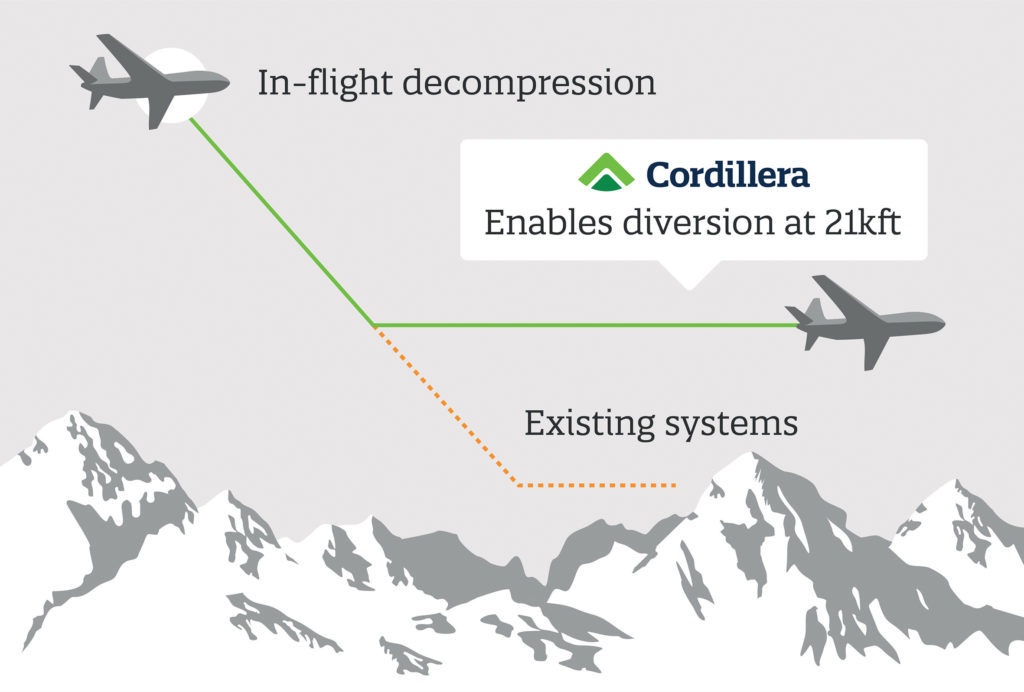
While on a trip from Hong Kong to Europe in 2010, our founders realized the aircraft was not taking the most direct route. They discussed the flight path with the pilot, who was a former colleague, and discovered the limiting factor in the route selection was the aircraft’s oxygen system. Existing systems typically protect passengers for only 22 minutes. In the event of decompression, pilots are required to make a steep descent to a safe breathing altitude of around 10,000 feet within this timeframe. As a result, operators have had to avoid high terrain routes, where a descent to 10,000 ft within 22 minutes is not possible.

Having had their interest was sparked, Caeli Nova’s founders carried out extensive research into improving passenger oxygen levels at altitude. They drew upon established medical learnings to create a solution that would open up the most efficient flight paths, while keeping passengers safe. The result was the development of Caeli Nova’s patented breathing technology, which is implemented in Cordillera, a reinvention of the emergency passenger oxygen system.

Cordillera will enable the safe navigation of the most challenging high-terrain airways, such as L888 in the Himalayas. Opening up more direct routes over high-terrain regions allows airlines to operate shorter flights, resulting in reduced fuel consumption and lower emissions.

You mention L888 over the Himalayas – how would Cordillera enable aircraft to fly on that route? And how many commercial air services are there that could benefit from using Cordillera so that they can fly between destinations more directly? 

Caeli Nova’s technology can keep the passengers safely oxygenated at 21,000ft for a prolonged period. If a rare decompression event occurred over the Himalayas at the furthest point from a safe diversion to 10,000ft, passengers would be required to be on supplemental emergency oxygen for around 100 minutes. Cordillera is designed to meet that requirement and have further contingency.

Regarding how many flights could benefit from our technology, our 2019 flight schedule data shows that during times of normal air travel, around 48,000 flights each year operate route W191, a longer flight path to the north of the Himalayas where the terrain is lower. There are several other mountainous regions that we are also investigating with airline operators, such as the Andes and the Rocky Mountains. 

Image via Caeli Nova

Do you give an idea of how much time airlines will be able to shave off flights when using Cordillera, and how much fuel they might be able to save?

The routes which benefit from the technology will have a 30-minute shorter sector time. Cordillera is also lighter than existing emergency oxygen systems, delivering additional weight-saving benefits. As such, we estimate that Cordillera has the potential to save the airline industry $360 million annually.

What’s involved with installing Cordillera? How do you suggest that airlines communicate vital information about the product to their passengers? 

Cordillera is installed into the aircraft cabin in a similar way to existing systems and operates in the same way. In the event of a cabin decompression, Cordillera will automatically trigger the release of oxygen masks from the overhead panels, which passengers will wear for the duration of the diversion to a safe altitude. 

The product can be easily retrofitted onboard in-service commercial or military passenger fleets with minimal downtime. We have collaboration agreements in place with several international airlines and will shortly conclude a Memorandum of Understanding with a potential launch customer that has already completed a full benefit verification analysis on Cordillera. The first installations have been scheduled for the end of 2021. 

What is next for Caeli Nova?

We received initial Design Organisation approval from EASA for Cordillera in December 2020 following an intensive eight-month process. Throughout this period, we also worked closely with the regulator to undertake research and development of our technology. With design authority in place, we are now able to continue the development and installation of the product under an in-house supplementary type certificate.

Our next step is to demonstrate to more operators how Cordillera can be a key element in their sustainability strategy, whilst reducing operational costs. We’re also looking at applying our patented breathing technology beyond the aerospace industry to a broader range of sectors.

Opinion: Airlines Need to Communicate Duty of Care Standards to Passengers

Opinion: Airlines Need to Communicate Duty of Care Standards to Passengers
Anthony Harcup

Anthony Harcup has been senior director of Airline Experience at Teague for two years, where he informs the passenger experience design strategy and builds the company’s growing roster of airline customers. During his career he has led some of the industry’s most significant aircraft interior developments for the likes of Etihad, Delta, and JetBlue.

“The next 18 months are expected to be a time of austerity for the air travel industry. Yet with no domestic air travel restrictions currently in place in the US, why are passenger numbers stuck at 40% capacity? With research suggesting more can be done to improve passenger confidence and stimulate the market to increase passenger numbers, and revenues, beyond what is forecast, design innovation is the best way to accelerate the recovery.”

Anthony Harcup, Teague

What was your biggest takeaway after reading the research on passenger confidence shortcomings?

A report by US travel insurance comparison site Squaremouth cited a drop in the average age of travelers from 50 in 2019 down to 38 in 2020, indicating that boomers and seniors comprise a much larger proportion of non-travelers than younger generations. We cross-checked this with another 10,000-respondent survey by Gallup that said 69% of American air travelers aged 55 and older – the demographic most likely to spend money on high-value travel experiences – revealed they wouldn’t be comfortable flying during the pandemic.

Even though it is widely acknowledged that aircraft cabins are statistically very safe, the primary reason for loss of passenger confidence in the cabin (according to a November IPSOS survey) is the fear of airborne infection. Passengers are clearly not entirely comfortable with the status quo. We believe that new technologies and visual safety cues in the cabin will increase confidence and accelerate the recovery by increasing peace of mind.

Airlines in crisis are looking for short-term solutions. What are some things they can do to improve confidence and revenue?

Communicating “duty of care” and creating peace of mind onboard is huge. Global airlines, especially those serving the corporate travel market, understand that duty of care standards are critical during the pandemic and have made health, sanitization and wellbeing both a brand promise and point of differentiation. To this point, middle seat-blocking and mandating the use of face masks have been the core visual safety cues underpinning their brand promise, and these measures will be relaxed this year.

Even when the worst of the pandemic is behind us, infection anxieties will remain at large, leaving many passengers feeling exposed about traveling with these safety measures relaxed. Moving forward, customers will favor airlines that demonstrate a meaningful commitment to initiatives and innovations that ensure duty of care standards are upheld long-term and that ensure better resilience in the face of future pandemics.

Teague came up with AirShield as a solution to these problems. Can you explain how the product works?

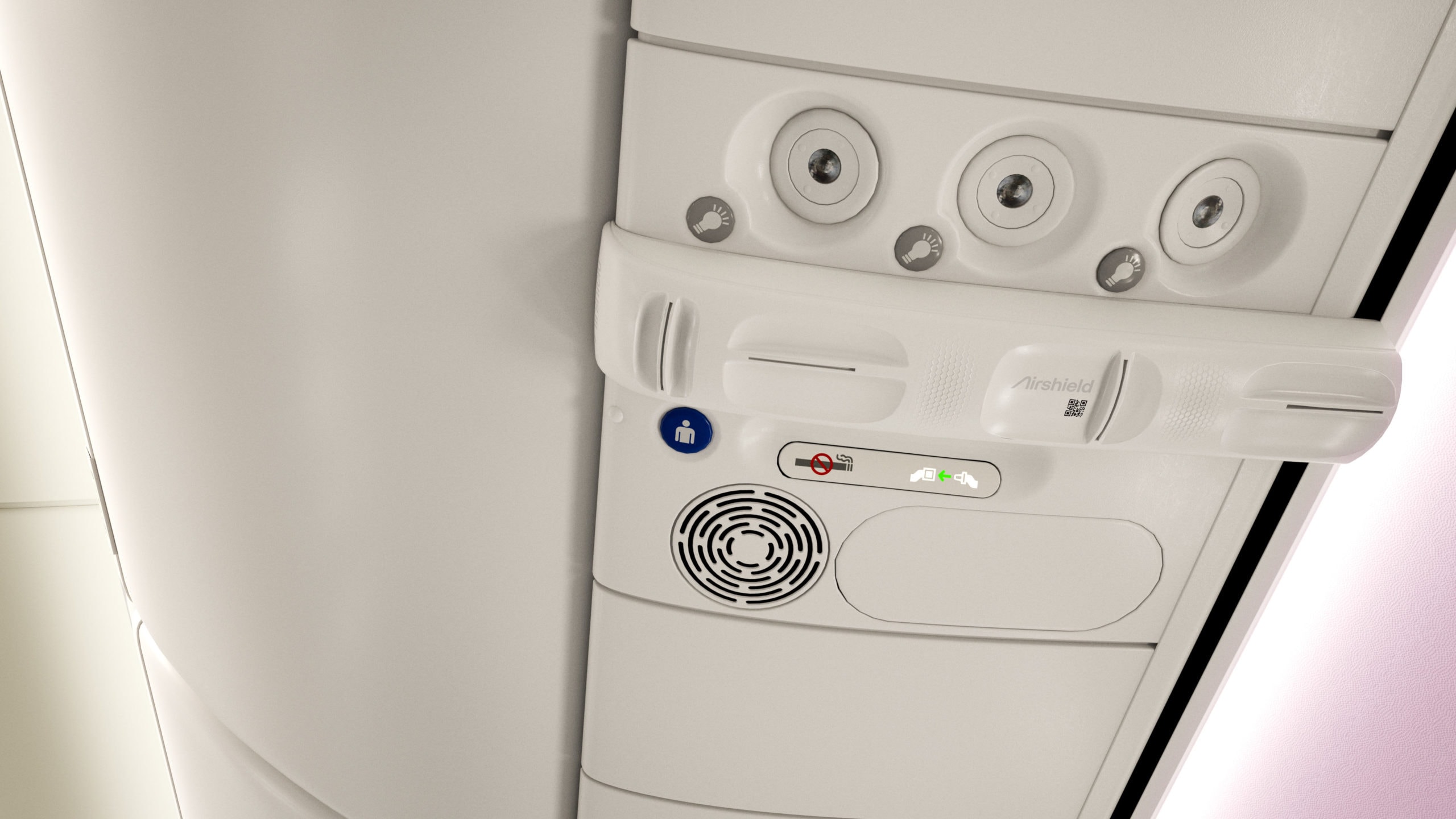
AirShield is a new device that extends the reach of the aircraft’s HEPA filter into a passenger’s living space, cocooning them in a personal supply of freshly filtered air. It is permanently installed on top of existing overhead passenger air vents to reshape the air into curtains around and in-between each passenger. It is designed to amplify the benefits of the HEPA filtration system by both optimizing the flow of purified air around the passenger and adding an additional line of defence against the spread of viruses in the cabin. The patented technology is a highly visible addition to the passenger’s living space, delivering extra piece of mind about returning to flight.

Image via Teague
Image via Teague

Can you share any further development/deployment updates?

The product has been developed and tested on-wing with four US airline partners for both the Airbus A321 and Boeing 737 family of aircraft, and we are very excited to announce that we will be launching globally with our engineering supply partner in a few weeks. AirShield is the latest product to spring from our homegrown research and innovation arm of the company. We have a handful of new ideas in the hopper, but our next to market is going to be a next-generation economy-class seat upgrade kit, so keep your eyes out for more on that!

Op-Ed: Reimagining Economy Class Will Bring Passengers Back, Says RedCabin CEO

Op-Ed: Reimagining Economy Class Will Bring Passengers Back, Says RedCabin CEO
Monica Wick

In this instalment of Expert Opinions, APEX Media’s Op-Ed series, Monica Wick, CEO of aviation summit series RedCabin, returns with a new piece about the importance of elevating the economy-class experience to woo leisure travelers. This cohort may emerge as the most important customer segment once the pandemic subsides and travel ramps up.

As vaccination programs are rolled out and some travel restrictions are tentatively lifted, current predictions suggest leisure travelers will return to the skies first and drive the aviation industry’s initial recovery in 2021.

Most of these passengers will likely be flying in economy class, where typically passenger density is high and ticket costs are low. With some travelers anxious to step back onboard, using this time to reimagine the economy-class cabin could be the catalyst our industry needs to encourage passengers back to the skies.

Evolution vs. Revolution

During the last few decades, economy cabins have largely remained the same. The proliferation of low-cost carriers has seen the market become driven by price, and small margins have made it difficult to justify innovation on a grand scale, especially when passenger numbers were increasing year-over-year prior to the pandemic.

That is not to say the economy cabin has not evolved during that time. Many new cabin innovations have come to market, from headrests with improved head and neck support to the introduction of antimicrobial materials and inclusive lavatories. Each idea represents an incremental step forward.

But as we look beyond the pandemic, what do we want the future economy-class experience to be like? And how can we create it?

To illustrate the technical challenge: economy class seating has 10 times less space and 12 times less weight allowance than in first class. Economy products are also usually restricted to between three and five square feet of space in the cabin. But as more long-range single-aisle aircraft come into service, and new technologies and materials emerge, there is a real opportunity for a new wave of cabin innovations to be introduced to the onboard experience. Innovation will set the bar for the next generation of passengers in three core areas: hygiene, privacy and comfort.

A Blank Canvas

New aircraft types create space for new ideas. While airlines already operate stringent cabin sanitization routines, privacy and comfort are areas of the cabin that can be enhanced.

For instance, the notion of ‘cocooning’ passengers has long been a key design principle behind business-class cabins – one which takes on extra relevance in a post-COVID-19 world. Divider screens, curved seat shrouds and suite doors are commonplace, so the logical next step is to build on this and feed these ideas into the back of the plane.

When many passengers think of an economy-class cabin, compromise – and not comfort – may be the first word that comes to mind. For some passengers, comfort will always mean a lie-flat bed. But for others, it means freedom and flexibility to use personal space in their own way.

The good news is that the tide is turning, and in the last 12 months several new ideas – born out of collaboration – have come to the fore that could radically enhance both privacy and comfort in economy. The Interspace Seat by New Territory and Safran, as well as the Aurora Borealis (A/B) seatback from Sekisui Kydex, TrendWorks and Rollon, are proof that more transformative ideas can make it from concept to reality.

Collaborate to Innovate

The willingness of all parts of our industry to work together to bring about change has been one of the positive things to come out of the pandemic. If we can keep this collaborative mindset alive and harness it to its full potential – putting aside competitive advantage at times – we can enhance air travel for all.

History proves that creating a revolution in economy class takes more than just a single, radical idea. It will take honesty, partnerships, knowledge sharing and a determination to work across multiple industries to get it done.

Aviation is full of creative and resilient pioneers, and I have been incredibly fortunate to witness first-hand the amazing things that can be achieved when we all pull together, especially in the last year. While allowing passengers to fly again will ultimately depend on governments around the world, giving them a reason to want to get back on a plane is our challenge. And we must embrace it.

Read Monica’s previous Op-Ed.

Opinion: Innovation Needed for Premium Narrow-body Products Imminently

Opinion: Innovation Needed for Premium Narrow-body Products Imminently
In the Hot Seat-Richard DCruze-1

Richard D’Cruze is business development manager at JPA Design, a firm that specialises in “mastering spaces” in the travel and hospitality sectors using cutting-edge materials and technologies. His career in aviation spans over 30 years, and includes working with British Airways to develop new aircraft cabin interiors as part of the customer experience team. He’s of the opinion that:

There’s going to be a slowdown in the market for wide-body aircraft as airlines shift their strategy towards narrow-body fleets operating over longer ranges. This will finally create the need for innovation in premium narrow-body product offerings that the market has been crying out for.

Richard D’Cruze, JPA Design

You talk about a slowdown in the market for wide-body aircraft. Do you see this as a permanent trend or something that will change as the pandemic fades into memory?

Data from IATA currently predicts a return of air travel to pre-COVID-19 levels from 2024, with the leisure market picking up before business travel. There is pent-up demand, and when this starts to materialize we will see wide-bodies making a return. However, the fact that airlines have invested in premium-equipped narrow-bodies will mean they continue to be flown on select routes where they can offer better economics, especially routes where competition is low. We will also start to see wide-bodies operating on shorter routes as airlines look to optimize schedules, slots and aircraft utilization.

Images via JPA Design

What does this mean for single-aisle cabin design in the short- and long-term?

As with any customer product change, quick time to market is what airlines want, so in the short-term we are seeing short-haul adaptations of long-haul business class products as a stop-gap. Longer term, we will see seats that are more spatially efficient developed for narrow-body airframes. 

Prior to the pandemic, there was much focus on single-aisle business class configurations. Is this still the case or have requirements shifted?

Definitely – this is still considered the new battleground for many airlines and is the market sector that many seating vendors are focusing on. We are already seeing evidence of this with announcements from the likes of Stelia, Adient and Aviointeriors, whose latest products are all lie-flat business-class seats specifically for narrow-bodies. 

We are currently working on two narrow-body business-class concepts for airlines with more in the pipeline, which is a clear indication of the demand in this segment of the market.

Richard D'Cruze
Richard D’Cruze, business development manager, JPA Design

The market is crying out for innovation, yes, but airlines are cash-strapped and fighting for survival. Why should they be encouraged to maintain a focus on innovation regardless?

There have been many studies into what it’s best to focus on during a downturn. Quite rightly, many airlines have focussed on cash preservation, but there is evidence from a recent McKinsey report that companies who prioritize innovation today will be the ones to unlock post-crisis growth. 

Our industry suffers from long lead-times for product change –  development, certification and scheduling aircraft downtime all have an impact, so setting aside budget to start as early as possible, even during a downturn, means you are able to benefit from your investment faster, as soon as business returns.

What are some narrow-body cabin concepts from JPA that will best cater to airlines and passengers coming out of this crisis?

Right now, it’s obviously all about giving customers confidence that they’re in a hygienic environment. Our materials and finishes team are now working with a growing number of suppliers that are offering specialist antimicrobial finishes to inhibit the growth of  bacteria. We offer a service to airlines whereby we work closely with their product teams and their seat vendor to apply these finishes to their existing products sympathetically – our aim is to incorporate positive change and avoid the ‘patchwork’ effect that can be evident after numerous minor interior upgrades.

One of the learnings from COVID-19 is that customers need to “see” hygiene. If a surface is dark with numerous crevices, it can raise concerns. We are starting to look at how colour palettes, as well as form, can impact a customer’s sense of hygiene. Our AIRTEK programme, which uses monocoque technology to reduce the amount of internal structure a seat requires, has the benefit of opening out the seating area to allow improved cleaning and permit customers to see more of the surrounding cabin area.

What are airlines telling you is most important to them right now?

Short time to market is key, but airlines also want to differentiate their products based on their customer’s requirements. Platform seats are great for faster rollouts, but not always as flexible as airlines would like when it comes to changes. This is where a design agency can help: Our understanding of industrial design allows us to work with seat vendors to push the boundaries of customization while minimizing the impact on the program timescales, a win-win for all.

The Hands-Off Passenger Journey

The Hands-Off Passenger Journey
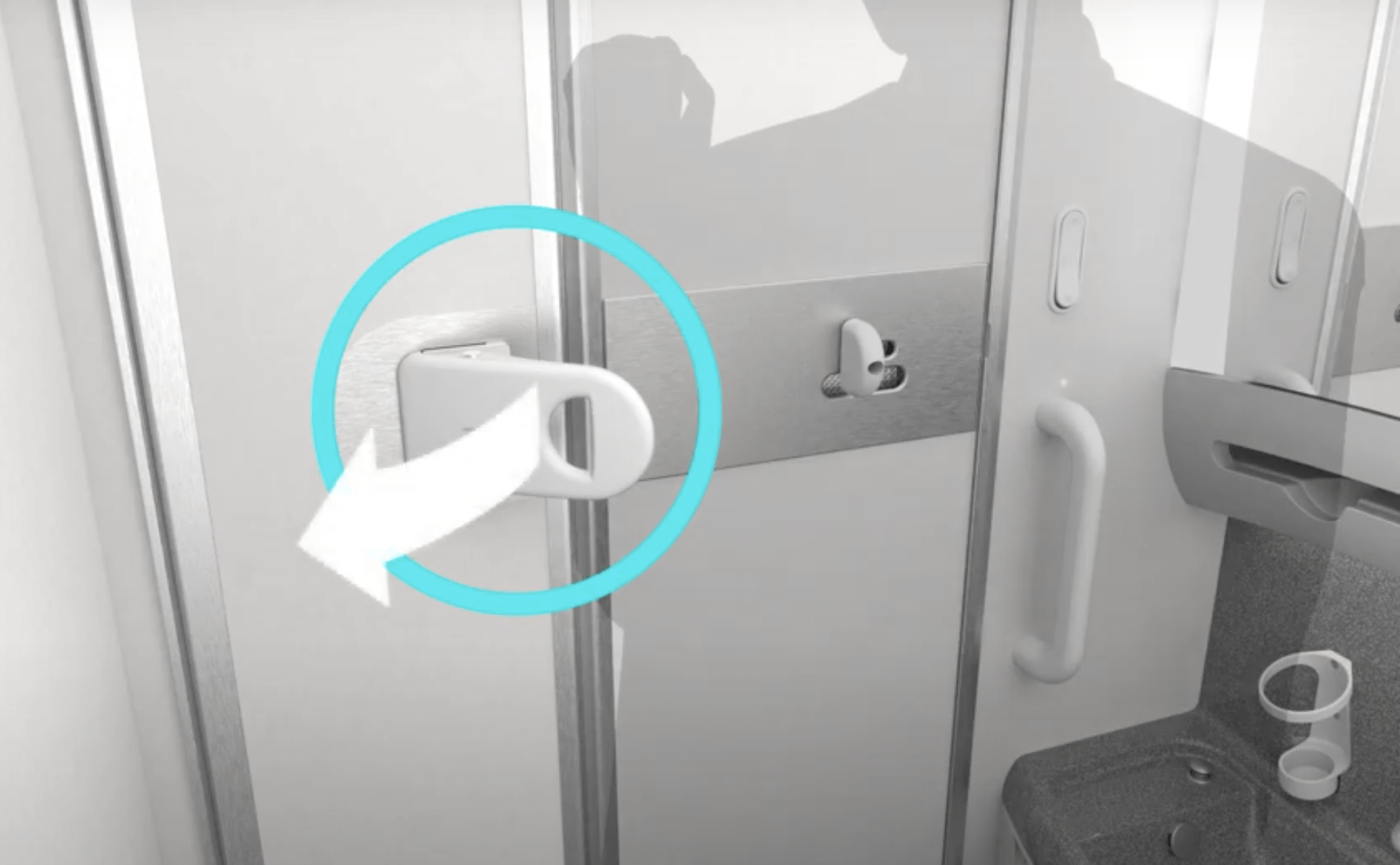
ANA was inspired by touchless door innovations at Haneda Airport to trial an elbow-powered doorknob for aircraft lavatories, developed in collaboration with JAMCO. Image via JAMCO

As airlines and airports work to ensure customer and employee safety amidst the coronavirus pandemic, they’re finding new ways to stay connected to customers by removing the touch from touchpoints. This article originally appeared in the Expo Daily Experience: Preview. Read the full issue and register for FTE APEX Virtual Expo.

Apps Get it Right From the Start 

Airlines have been promoting their digital platforms for years as a way to book travel, pay for ancillary services and obtain paperless boarding passes. With COVID-19, they’re expanding these digital interfaces to inform customers about pandemic-related travel restrictions and new travel requirements in real time. Innovations like the SITA Flex cloud service help travelers and airport staff interact with airport touchpoints using their smartphones to print bag tags and check in luggage. Airlines and airports are also adding new biometric identification features and trialing digital health passports that will allow passengers to document their COVID-19 status electronically as they travel across borders. 

Airports Go Touchless Everywhere

While digital check-in and baggage drop-off kiosks and electronic boarding passes were once optional, they’re now becoming mandatory at airports. Along with biometric identification, these tools allow passengers to clear security and board their flight while minimizing document exchange. Other innovations meant to minimize contact include app-based ordering at airport restaurants and contactless elevator buttons at Abu Dhabi International Airport, which are activated with a wave of a hand. To maintain a close connection with travelers, even customer surveys have gone touchless. The Gestures touchless customer feedback solutions system, developed by Avius, allows travelers to rate their experience with a simple “thumbs up or thumbs down” in front of a kiosk at Atlanta Hartsfield-Jackson International Airport.  

A New Cabin Experience

Airplanes were designed to create a sense of place and to offer travelers comfort, entertainment and safety through elements like seatback screens, in-flight magazines, amenities and meals. In other words, in the cabin, almost everything is high-touch. In response to COVID-19, airlines and their suppliers are accelerating new features that have been in the pipeline like touchless faucets, soap dispensers and flush controls; antimicrobial surfaces and textiles; UV lighting for disinfection; personal device-driven digital entertainment solutions; and specially packaged meals. Amenity kits have been upgraded for COVID-19 with airlines including Delta, Emirates, Etihad, Malaysia and Singapore offering items like antiseptic wipes, hand gel and face masks. ANA was inspired by touchless door innovations at Haneda Airport to trial an elbow-powered doorknob for aircraft lavatories, developed in collaboration with JAMCO. We’ll have to wait and see if that flies, but it’s a clever hands-off solution. 

Virtual Expo Connection – Event Agenda

Digital Transformation in Air Travel, a keynote with Mark Sargent, Worldwide Industry Transportation Lead, Apple

Dec. 8, 3:30 a.m. GMT

Adapting the ‘Smart Airport’ vision in order to thrive in the post-pandemic world

Dec. 8, 5:00 a.m. GMT

What are the onboard innovations resulting from COVID-19, and changing passenger priorities, that will stand the test of time?

Dec. 8, 10:30 a.m. GMT

How the Airline Industry Survived SARS, 9/11, the Global Recession and More

How the Airline Industry Survived SARS, 9/11, the Global Recession and More

How has the airline industry recovered from mass disruptions in the past?

The coronavirus crisis came without notice. On January 9, Chinese officials announced the outbreak, with 44 confirmed cases and counting. The first major travel restriction came into effect in China two weeks later. On January 23, 15,072 flights carried passengers to the country in time for Lunar New Year, the world’s busiest travel rush, as cases climbed past 570 and a total shutdown of Wuhan, the center of the outbreak, was imposed. By February 13, daily flights had dropped to around 2,000 as more lockdowns were enforced and international airlines canceled trips to mainland China. On flights that did operate, magazines, pillows, hot meals and trolley service gradually disappeared.

By the time Wuhan’s 76-day lockdown was lifted on April 7, China experienced an air traffic disruption at least 15 times greater than the two-day closure of US airspace during 9/11. Worldwide, there were just 32,221 passenger jets left in the sky. Global coronavirus cases soared above two million the following week, and the airline industry as a whole was on pace to shoulder the adjusted economic impact of more than 30 SARS outbreaks by the end of the year. Economists projected the overall financial shock of COVID-19 would be three times greater than the steepest downturn of the 2008 global financial crisis.

“We have never shuttered the industry on this scale before. Consequently, we have no experience in starting it up.”

“We have never shuttered the industry on this scale before,” said Alexandre de Juniac, director general and CEO of the International Air Transport Association (IATA), during an April briefing. “Consequently, we have no experience in starting it up.” There’s no single past event that provides a roadmap for recovery from this pandemic. But a combined understanding of lessons learned after 9/11, SARS and other shock events will help chart a way forward.

THE WAY BACK
Every few years or so the airline industry gets rattled by a “black swan” event or economic downswing. After the Gulf War and the recession in the 1990s came the dot-com bust. That was followed by 9/11 and then mid-upturn, the SARS outbreak jolted East Asia and Canada between November 2002 and July 2003. A couple years later, the H5N1 avian influenza swept through Southeast Asia. The years following the 2008 global financial crisis were particularly turbulent, with the H1N1 swine flu pandemic in North America, and the eruption of Iceland’s Eyjafjallajökull volcano bringing European airspace to a standstill. The avian flu returned in 2013, then came Ebola, MERS and Zika.

Despite these downturns, world airline traffic has shown stable long-term growth since the 1970s. According to a 2015 report published by IATA called Global Air Passenger Markets: Riding Out Periods of Turbulence, it generally takes at least five years for the industry to recover after a short-term upheaval. “Approximately 72 percent of the impact of the initial shock persists one year after the event,” write co-authors David Oxley and Chaitan Jain. “Two years on, the effect of the shock on global air traffic is down to just over half of the initial effect, while after five years the effect is just under one-fifth of the initial impact.” When travel demand drops, the typical airline playbook reads as follows: decrease capacity, increase load factor, lower fares.
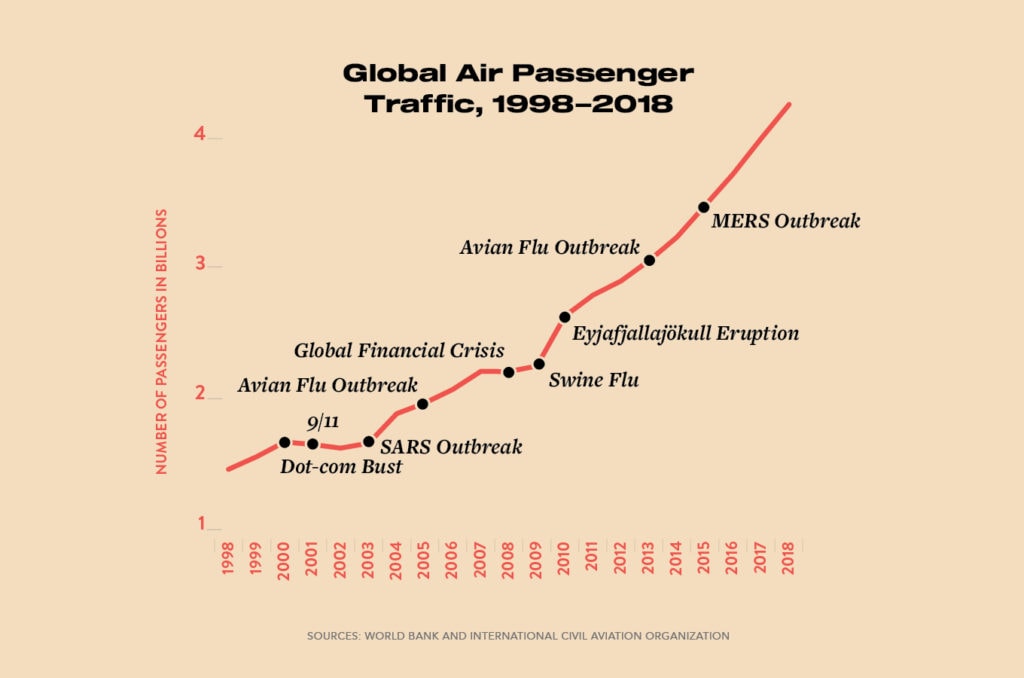
It took about six years for airlines to recover capacity after the 9/11 terrorist attacks, which before the COVID-19 crisis, caused the steepest historic decline in air traffic. In the immediate aftermath of 9/11, travel demand in the US fell by more than 30 percent. The slump was met with significant capacity reduction and the loss of more than 62,000 airline jobs – 11 percent of the US industry’s employment at the time. Legacy carriers shifted some capacity to international markets and slashed airfares to compete with low-cost carriers that closed in on short-haul networks and benefited from deeply reduced aircraft prices. (In January 2002, Ryanair scooped up 100 Boeing 737-800s at a 53 percent discount.)

The COVID-19 crisis cuts much deeper. By April, more than 140 airlines slashed capacity down to 10 percent or less. Both Etihad Airways CEO Tony Douglas and IAG Group’s outgoing chief Willie Walsh have said they don’t expect to see meaningful demand return before July. Long-haul travel will be hit hardest, since domestic travel restrictions will relax before international bans are lifted. “For airlines, revenues are more dependent on passenger kilometers flown,” explained IATA’s chief economist Brian Pearce during the association’s April briefing. “Domestic [flying] represents one-third of passenger revenue kilometers, so obviously the slower opening of international borders is more problematic for the airline industry.”

The shutdown has also accelerated aircraft retirements, hastening the end of the jumbo jet era. Lufthansa plans to leave 32 aircraft permanently grounded, retiring six Airbus A380s, seven long-haul A340-600s and five Boeing 747-400s ahead of schedule. Germanwings, which operated under the low-cost Eurowings brand with 33 aircraft, will cease operations. And Austrian Airlines plans to downsize its fleet from 80 to 60 aircraft by 2022: “The entire airline industry is pessimistic,” executive board member Andreas Otto commented. “We have to assume that we will reach the ‘pre-corona level’ again in 2023 at the earliest.”

Load factors, meanwhile, could stay low if airlines adopt distancing measures such as keeping middle seats empty, as Delta Air Lines, Southwest Airlines and easyJet have offered. But carried out in the long term, a complex balancing act ensues. Lower-occupancy flights eventually require higher ticket prices – up to 54 percent above average in North America – while low demand and financial insecurity caused by a recession necessitate lower fares.

THE WAY FORWARD
Regaining revenue hinges on convincing travelers it’s safe to fly again. “And we don’t want to repeat the mistakes made after 9/11 when many new processes were imposed in an uncoordinated way,” said de Juniac. “We ended up with a mess of measures piled on top of measures. And nearly 20 years later we are still trying to sort it out.”

In the aftermath of the 9/11 attacks, businesses froze non-essential travel and interstate traffic went up as Americans chose to drive instead of fly. To restore safety and confidence, the Transportation Security Administration went on a spending and hiring spree, adding some 40,000 border patrol agents, and electronic bag screening machines to airports. Travelers were asked to arrive on average two hours before takeoff, remove shoes while agents rummaged through their carry-ons and trust that checked bags would make it through labyrinthine screening belts.

“When people feel confident… that’s when the recovery will take shape.” – Ed Bastian, Delta Air Lines

Heightened security assured travelers, but the added hassle became its own deterrent, contributing to further decline in demand. Studies estimate this cost the industry an additional $1.1 billion in lost revenue, hitting the short-haul market hardest. While the economy bounced back, the inconvenience posed by security prolonged recovery for the travel industry. It took some five years for average airfares to return to pre-9/11 levels. While the Air Transportation Safety and System Stabilization Act (2001) provided $5 billion in compensation and $10 billion in loan guarantees, it took five years for US airlines to get out of the red, according to data from the US Bureau of Transportation Statistics.

Most economists agree that the industry’s recovery from the coronavirus pandemic will be U-shaped. Risk perception, and how it is addressed, will play a decisive role in determining just how wide and inclined that U will be. “Demand will be there when it’s safe to travel,” said Delta’s chief executive officer, Ed Bastian, on the airline’s first quarter earnings call this year. “When people feel confident… that’s when the recovery will take shape.” Several preliminary studies, including social media analysis by Fethr, have shown that safety and sanitation will be key priorities.

“At the end of the SARS crisis, temperature screening was a key factor in returning the sector to normal,” said de Juniac. “We need to find the equivalent process to take us to when a COVID-19 vaccine is available.” Measures will need to be authoritative and persuasive, while not too prohibitive or invasive as to pinch rebounding short-haul markets, where transportation alternatives are readily available.

International travelers have other risks to contend with, such as sudden travel bans and restrictions. “I fully understand the hesitation many people feel at the moment when deciding whether to book a flight or not,” said KLM’s chief executive Pieter Elbers in a letter to customers. According to IATA, 86 percent of travelers are concerned about being quarantined and 69 percent will avoid traveling altogether if a 14-day quarantine is required. To mitigate these risks, flexible rebooking policies could become a long-term expectation. Based on 2018 US airline reservation change fee revenues, that amounts to a $2.7-billion bid for leniency to stem reservation hesitancy.

As revealed by the impact of the SARS epidemic, which resulted in some 8,000 cases worldwide, predominantly in China, Hong Kong, Taiwan, Singapore and Canada, advisories and false starts can cause fear to linger. Rapid spread of the virus via international travel prompted the World Health Organization (WHO) to issue its first SARS-related travel advisory on March 15, 2003. When Toronto was added to its list on April 23, the knock-on effect was immediate: At least 11 countries followed suit, recommending their citizens stay away. The advisory was lifted six days later, but non-US travel to all of Canada still dropped by 33 percent the next month. News of a second wave in late May wrought the most long-term damage. It took a full year, including $128 million dollars from the Ontario provincial government spent on marketing campaigns and a “SARS-a-palooza” concert before tourists returned to the city in pre-outbreak numbers.

Consumer confidence may be the biggest hurdle for the industry. According to a recent survey by IATA, 69 percent of travelers say they will need to feel more financially secure before they’re ready to fly again. Meanwhile, 60 percent say they would travel within one to two months of the pandemic being contained, and some 40 percent plan to wait six months or longer.

For airlines, the more immediate challenge is to stay solvent. Airlines were in good fiscal shape when the crisis began, but IATA expects them to burn through $61 billion in cash reserves by the end of June and add $120 billion to the industry’s global debt, totaling to $550 billion by year-end. Solutions airlines used after the 2008 global financial crisis, such as consolidation, higher densities and eventually ancillary fees, aren’t as readily accessible now as they were then. But other revenue ideas have emerged in their place, such as carrying cargo in the cabin.

While many airlines, including Delta, Southwest and Singapore Airlines, have raised considerable capital, Flybe has shuttered, and Virgin Australia and Air Mauritius have entered voluntary administration. Government aid, voluntary pay cuts and leave options have helped to abate some job losses, but rising furlough figures underscore the need for further financial support, say APEX and IATA.

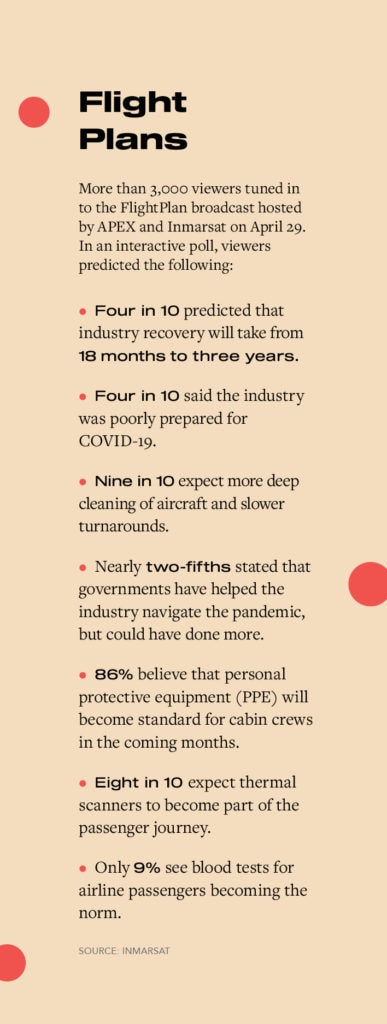
Some pages of the airline crisis management playbook are yet to be written. Fortunately, it’s a challenge many are rising to meet. The COVID-19 pandemic may have “no parallel to draw upon in recent memory,” said Nick Careen, senior vice-president of Airport Passenger Cargo and Security at IATA, during FlightPlan, a global broadcast hosted by APEX and Inmarsat. But “the airline industry has illustrated time and time again that if there’s any industry in the world that knows how to deal with a crisis, it’s this one.”

“Aftershocks” was originally published in the 10.3 June/July issue of APEX Experience magazine.

What We’re Made Of: Rick Lockhart, SkyPaxxx Interior Repairs

What We’re Made Of: Rick Lockhart, SkyPaxxx Interior Repairs

Rick Lockhart, SkyPaxxx Interior Repairs, at his regular office.

What We’re Made Of is a Q&A series that looks at how companies in the aviation industry are tackling challenges brought on by the COVID-19 pandemic. We’ve had to adapt to changes in where, when and how we work, but we are resilient. If you would like to share your experience, e-mail editor@apex.aero.

—

Rick Lockhart
President, SkyPaxxx Interior Repairs
Location: Jacksonville, Florida
Day 0 of working from home
Date of writing: April 27, 2020

Where are you writing from?
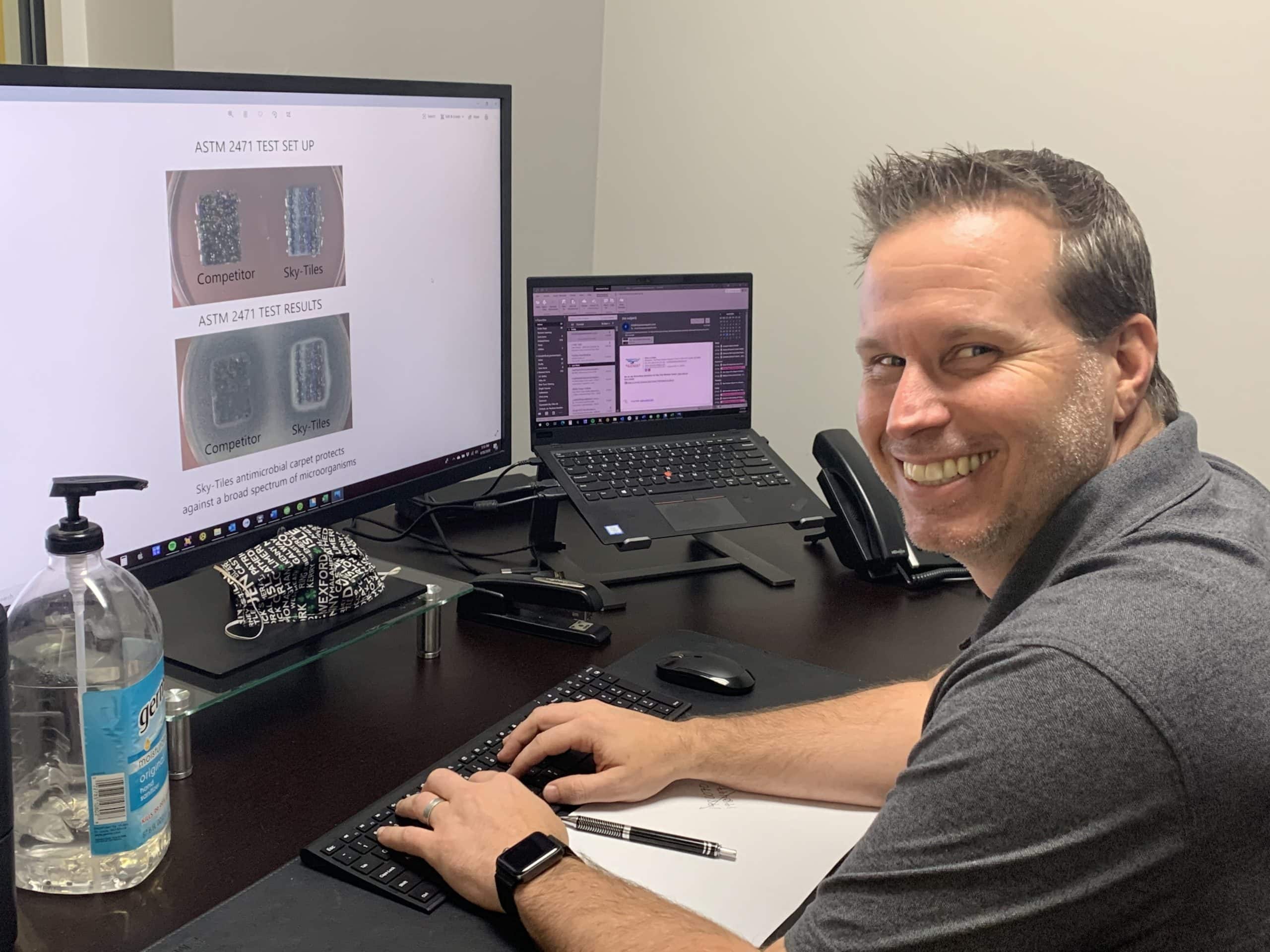
As an essential business, we are still operating at full staff and in the shop every day so I am writing this from my office. There is a bottle of hand sanitizer and a mask on my desk with a nice lingering scent of sanitizing wipes. Other than that, it hasn’t changed.

Have you or anyone you know been directly affected by COVID-19?
We have a very good customer who has lost a couple of family members. There is so much worry and tragedy from those with loved ones who are sick, and then stress and worry from those who have lost jobs or who worry they could lose their job. We also have to look at those who are suffering in isolation. We have been very lucky in keeping our team and their families healthy and being able to enjoy some socialization with the SkyPaxxx family every day.

“Rising to seemingly impossible challenges for customers earns us their loyalty. Each challenge that has been turned into a positive helps to keep morale high.”

How are you passing time?
My sister in Tennessee has arranged a weekly family game night over video chat with as many of the extended family as possible. Last week we had 17 people on. It was a great distraction and a lot of fun.  She kept score and won, so I am sure there was some cheating.

Can you share some specific challenges your business has faced as a result of the outbreak? How did you overcome them and how can the industry learn from your experiences?
Have you ever tried moving two aircraft worth of 777 seats from Dubai to the US when there is no commercial air traffic and all the cargo flights are full? Every day there is a new challenge. We can either shrink from it or embrace it. Rising to seemingly impossible challenges for customers earns us their loyalty. Each challenge that has been turned into a positive helps to keep morale high.

Can you give an example of generosity or kindness displayed by your company or one of your colleagues during this crisis?
We have turned our sewing department into a mask making department. So far, we have donated over 1,500 reusable masks to various hospitals and assisted living facilities. We have had to purchase some of the material, but a bunch of the high school kids have been helping to gather material for us to use in the production. It is great to see the community coming together to support our healthcare heroes.

Can you describe any new working procedures that you have/will implement in light of new health and safety guidance?
Our crew is the key to providing great service to our customers, so their health and mental well-being is directly tied to our success. We have an open shift where anybody who misses time can make it up, so they don’t lose hours. Flexibility is the key. Each shift, now, starts and ends with a temperature check. Every common surface is cleaned multiple times a day, the break room headcount is limited and we added picnic tables outside to create more space, and we are all wearing masks all the time. I do expect some of this to stick around once the situation improves.

Some companies may have been inspired to create new product lines, or redesign existing product or services as a result of the pandemic. How is it driving innovation?
Our Sky-Tiles modular carpet has always had a permanent antimicrobial in the backing. With the focus on aircraft cabin cleanliness – think about everything that gets tracked into the airplane, what your bag is sitting on when you put it under the seat and then what you are bringing home – this benefit has been brought to the front of discussions. We also provide Sky-Tiles cleaning support with a high energy, dry foam, which ensures proper coverage and contact time for the detergent.

Where do you see your company or the industry in six months from now? One year?
SkyPaxxx was started during the great recession, so we were born fighting and learned a great many lessons from that experience. I believe our delayed projects will start moving again in the next six months. A year from now, I expect us to return to record generating form. We have a one of a kind product in Sky-Tiles that is designed to change the status quo. There is no better time for change than when we are all trying to understand the new normal.

Read more about the coronavirus impact on the air travel industry, including APEX’s position on the matter, and subscribe to the APEX Daily Experience newsletter to stay up to date.

What We’re Made Of: Helena Teichrib, AIM Altitude

What We’re Made Of: Helena Teichrib, AIM Altitude

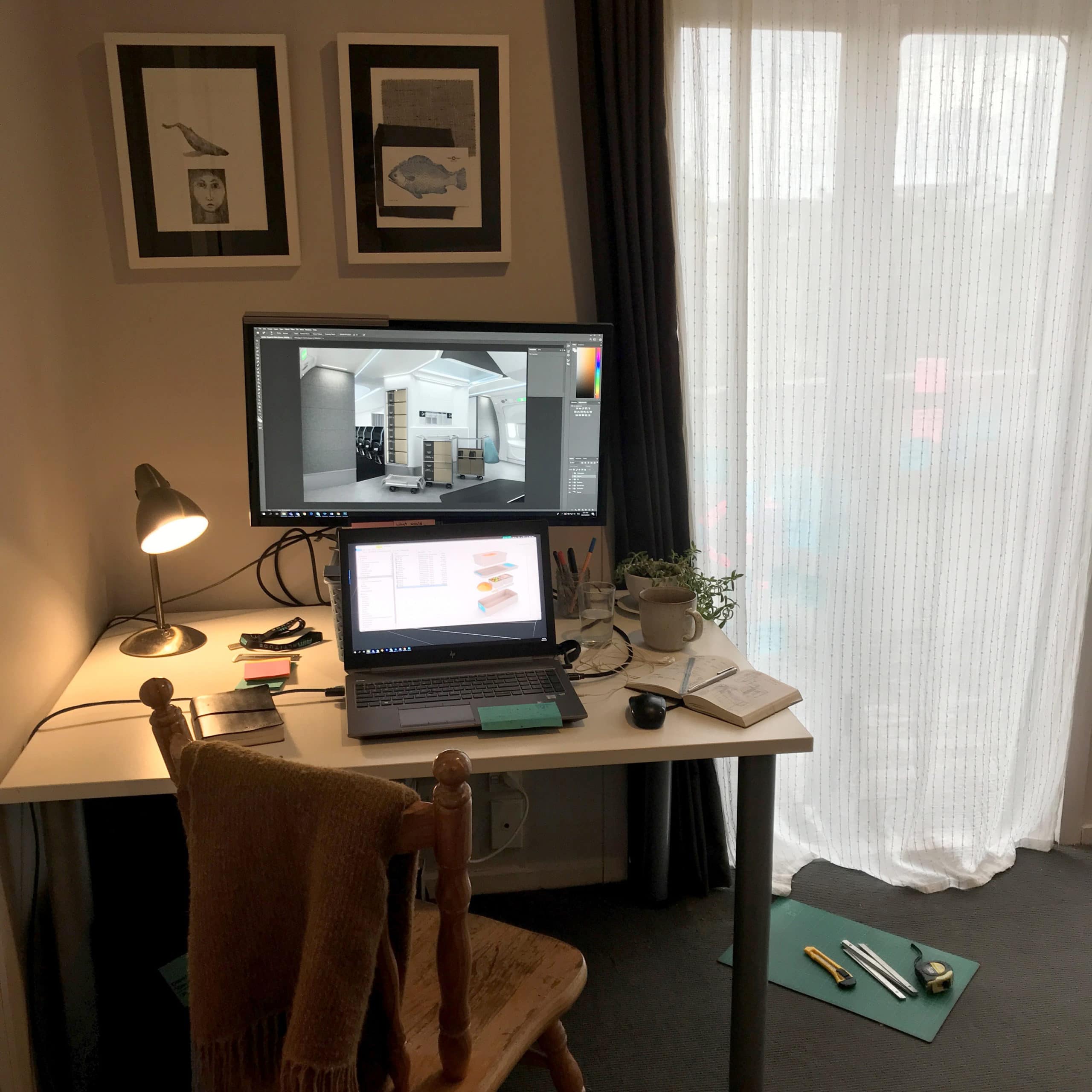
Helena Teichrib, AIM Altitude, writes from her home office in Auckland.

What We’re Made Of is a Q&A series that looks at how companies in the aviation industry are tackling challenges brought on by the COVID-19 pandemic. We’ve had to adapt to changes in where, when and how we work, but we are resilient. If you would like to share your experience, e-mail editor@apex.aero.

—

Helena Teichrib
Senior Industrial Designer, AIM Altitude
Location: Auckland, New Zealand
Day 30 of working from home
Date of writing: April 20, 2020

Where are you writing from?
I am writing this from a desk in my bedroom.

How are you trying to maintain “business as usual” or communicating with your team?
Mostly, we use Microsoft Teams, which has many productivity plug-ins that are especially helpful for this situation. We are used to a lot of remote collaboration with our headquarters in Bournemouth, UK – so this was not all too much of a change for us.

“Being around the engineering team is a core factor when trying to develop or innovate or throw ideas and questions out to all departments; having the freedom to do this is what makes our designs progress.”

What news outlets are you following?
I am following the daily government announcements and a few local news outlets and The Guardian for international news. The APEX Daily Experience newsletter is helpful to stay up to date on aerospace-specific news.

How are you passing time?
I have started many neglected hobbies: sewing, painting and sketching. I eat much better now with more time for cooking and experimenting in the kitchen. Also, my plants look much healthier these days!

Describe where your business was at the end of 2019. What were your goals/projections for 2020?
AIM Altitude was in a good place coming out of 2019. Earlier this year, we were announced as a Crystal Cabin Award finalist in the category of Visionary Concept for our new galley innovation: ARCA. It substantially rethinks meal service, based on trends that we had identified in the industry. The concept better accommodates more personal meal choices in economy, improved waste management with the opportunity for separated recycling and the potential to save weight and space!

Can you share some specific challenges your business has faced as a result of the outbreak? How did you overcome them and how can the industry learn from your experiences?
Being around the engineering team is a core factor when trying to develop or innovate or throw ideas and questions out to all departments; having the freedom to do this is what makes our designs progress. This element of teamwork has been hit hard but with daily video conferences, we have started to claw some of this normality back. I also think this experience will let us refocus on what is really important and may create new thinking streams we had not considered before.

How prepared was your company to instate remote working during the COVID-19 pandemic? Any tips on how to remain productive under these new circumstances?
My office adapted quickly and had some work-from-home trials before the lockdown was enforced. At times like these you have to keep productive; it can actually be useful to do some of those tasks you never had the time for, like a new research project or learning a new piece of software.

What’s one thing you would do to better prepare your business to weather a similar storm in the future?
We were gearing up for one of our most collaborative and impressive AIX shows to date and then “bang,” borders closed everywhere. You cannot really have a Plan B for something like this, so you need to know how to work around the problem to keep it at bay while still moving forward.

How can we, as an industry, work together and rebound from this unprecedented crisis?
New standards will be enforced and companies like ours will be more aware of the public perception of health when traveling. This will then lead to new ideas to streamline and protect passengers: New antibacterial polymers, hand sanitizers built into units, gesture control doors, social distancing and how that will affect seating LOPAs, etc. Sensors and other products that enable touch-free operation will gain a new focus. This could give an onboard “Internet of things” a whole new push.

Where do you see your company or the industry in one year from now?
One year on from this, we will have refocused and started to find our feet again. This exercise will pull us all together and we will come out the other side stronger and more energized. We are excited to help develop interiors that accommodate a new paradigm of flight.

Read more about the coronavirus impact on the air travel industry, including APEX’s position on the matter, and subscribe to the APEX Daily Experience newsletter to stay up to date.

What We’re Made Of: Anthony Harcup, Teague

What We’re Made Of: Anthony Harcup, Teague

Anthony Harcup, Teague
Anthony Harcup, Teague, sporting his flamingo shirt to liven up video conference calls.

What We’re Made Of is a Q&A series that looks at how companies in the aviation industry are tackling challenges brought on by the COVID-19 pandemic. We’ve had to adapt to changes in where, when and how we work, but we are resilient. If you would like to share your experience, e-mail editor@apex.aero.

Anthony Harcup
Senior Director of Airline Experience, Teague
Location: Seattle
Day 15 of working from home
Date of writing: April 6

Are you in lockdown right now?
Yes.

Where are you writing from?
I am writing from the spare room of my house in Mukilteo (just north of Seattle) looking out over the Puget Sound with the Olympic mountain range in the far distance. It’s also right next to the kids’ playroom – so my conference calls are frequently punctuated by surprise visits from my two- and five-year-olds.

What’s your new office attire or go-to comforts at home during this time?
I get a kick from busting out a bad-taste shirt once or twice a week to liven-up the conference calls. Today, the pink-flamingo shirt came out to play. I do miss being around people, and I love seeing the faces of my team and customers on screen – their environments are all so interesting and varied – often sparking conversation.

“It’s hard to see it now, but this crisis is loaded with opportunity to create a better more secure future.”

What news outlets are you following?
BBC News, Seattle Times, the New York Times and Apple News app.

How are you passing time?
Teague is still super busy. I’m up early and working a full day so I am not needy for entertainment over and above the norm. That said – my kids are a whole other story. Without their daycare and various clubs they are a proper handful. To this end, the Disney Channel has provided a well needed dose of child-hypnosis.

Can you share some specific challenges your business has faced as a result of the outbreak? How did you overcome them?
Our project work has continued as planned. I think our most formidable challenges are yet to come. What is for sure is that the industry will be reshaped by the aftermath of this pandemic and it will be important for all of us to play a positive and collaborative role in getting it back on its feet.

Any tips on how to remain productive under these new circumstances?
About a year ago we developed some new software in-house that enabled us to design and collaborate with customers directly in VR. Remarkably, this tool, called “The Garage,” has enabled our customers to explore and sufficiently interrogate interiors.

Anthony Harcup, Teague

How can we, as an industry, work together and rebound from this unprecedented crisis?
We must endeavor to help the airlines regain public confidence in the safety of the passenger journey. They are already working hard to message new approaches to aircraft cleaning and onboard sanitation, which is a step in the right direction, but they could (and must) go further and deeper to combat the collective anxiety created by this pandemic.

Where do you see your company or the industry in six months from now? One year?
Teague has played a key role in helping to reinvent the industry as it has weathered recessions, global crises and pandemics – and we will continue to drive positive change through the current situation. It’s hard to see it now, but this crisis is loaded with opportunity to create a better more secure future.

What’s one thing that will never be the same again for commercial aviation?
Crises of this scale do tend to leave their calling card. If the last 10 years have been about security, the next 10 will be about hygiene. The avoidance of human contact (with anything!) will be paramount throughout the travel experience. Whilst this transformation will no-doubt be enabled by technology and engineering solutions, the role of design will be pivotal in reinstating warmth into automated interactions and creating an emotional connection in environments that enforce physical separation.

Read more about the coronavirus impact on the air travel industry, including APEX’s position on the matter, and subscribe to the APEX Daily Experience newsletter to stay up to date.

APEX in Profile: Nigel Duncan

APEX in Profile: Nigel Duncan

Nigel Duncan
Image: Maxim Sergienko

Nigel Duncan
Chief Executive Officer
STG Aerospace

FAST FACTS
Location: BHD
The future of flight will be: Illuminating
Favorite Airport: SLC
Favorite Aircraft: B787-800 Boeing Sky Interior
Paper or electronic boarding pass? Electronic
Passport stamp you wish you had: Chile
Seatback or PED? Seatback

Nigel has more than 25 years of experience in the aviation industry, including stints at OEMs and entrepreneurial start-ups. He was appointed CEO of STG Aerospace in 2013 after holding several general management and senior sales/marketing positions with leading aerospace companies. Nigel is currently building upon STG’s renowned saf-Tglo® brand with the knowledge and vision of an industry veteran.

What are some of the challenges currently faced by OEMs, and what types of initiatives does STG Aerospace take to accommodate them?

OEMs are looking for reliable, long-term suppliers that they can trust, year in and year out. This year we won our seventh consecutive Boeing Performance Excellence Award. It’s more of a partnership than a supplier relationship. We believe that OEMs struggle with managing the supply base when there isn’t strong communication between them.

What are the challenges on the aftermarket side?

One of the challenges facing the aftermarket is trying to upgrade and maintain aircraft as simply as possible. If clients want to do interior work, they’re looking to do upgrades without having to schedule maintenance events. We try to make it very simple for them by providing upgradability without having to schedule a specific maintenance event. We try to do everything overnight to not take the aircraft out of service.

STG Aerospace offers up to 300 colors via saf-Tglo. What colors have proven to be the most popular?

Historically, airlines have gone with the standard lime-green color with the full luminescent floor-path lighting. But airlines have gotten more interested in their brand, and they’re looking for light colors to be part of the brand, not independent of it. Over the last three to four years we’ve had requests for a larger variety of colors, but there are about ten that are most commonly requested, including oranges, greys and light blues, in addition, of course, to the lime green. Designers sometimes want a blend that matches the carpet or a blend that matches the seating, or sometimes another interior accent of the aircraft.

“There’s a big focus on personal space in the passenger environment – whether in first class, business or economy.”

What interior cabin trends do you find particularly interesting?

I think there are two very interesting trends at the moment. There’s a big focus on personal space in the passenger environment – whether in first class, business or economy €” and also on control of the passenger environment. At the most recent Aircraft Interiors Expo, we introduced the world’s first square-beam reading light. Traditional lights can flow onto the seats on either side of you, but our light is designed to shine precisely on your personal space. If the person next to you is sleeping, the last thing they want is to be woken up by a reading light. We look for incremental benefits that can be brought across the entire cabin. All of these little benefits make a sizeable difference to the cabin ambience and how the passenger feels in the cabin.

What other details make a significant difference?

Lighting affects your visual recognition of things. For example, if you have a high-quality reading light, with what’s called a high color rendering index (CRI), it will create a very nice, clean color that allows you to see your magazine very clearly and easily. Food looks better, too. Everything looks its best under high-quality lighting, so that probably has the most impact.

If the light is the right color and saturation level and if you’re able to change between different colors in a subtle, controlled way, you can make passengers feel more relaxed and even affect how much jet lag they will experience, depending on the length of the flight. There are benefits that can be gained from the correct use and adaption of new LED lights.

Of course, there’s also the benefit of creating an improved retail environment for the airline. Light is key to everything that goes on in the cabin. We are conducting some research in our labs and we’re working quite closely with several universities to see how light can be quantified and to give airlines guidance on how to optimize their environments for retail. You will see some of this research coming out before the end of the year.

“There’s so much more we could do for airlines and passengers with a deeper understanding of lighting.”

What do you imagine aircraft cabins will look like in the next 20 years?

That’s a big question. Definitely less wires and more wireless transmission of data. A better understanding of the use of light, too. There’s so much more we could do for airlines and passengers with a deeper understanding of lighting. I also see there being greater levels of service in regards to service delivery, quality of food, the accommodation of cultural tastes and accessibility to communication in real time. I think our society will be permanently “on” in the aircraft and on the ground €” people will have seamless communication wherever they are. I would say those are the trends over the next 20 years, but they will probably be significantly addressed over the next 10 years.
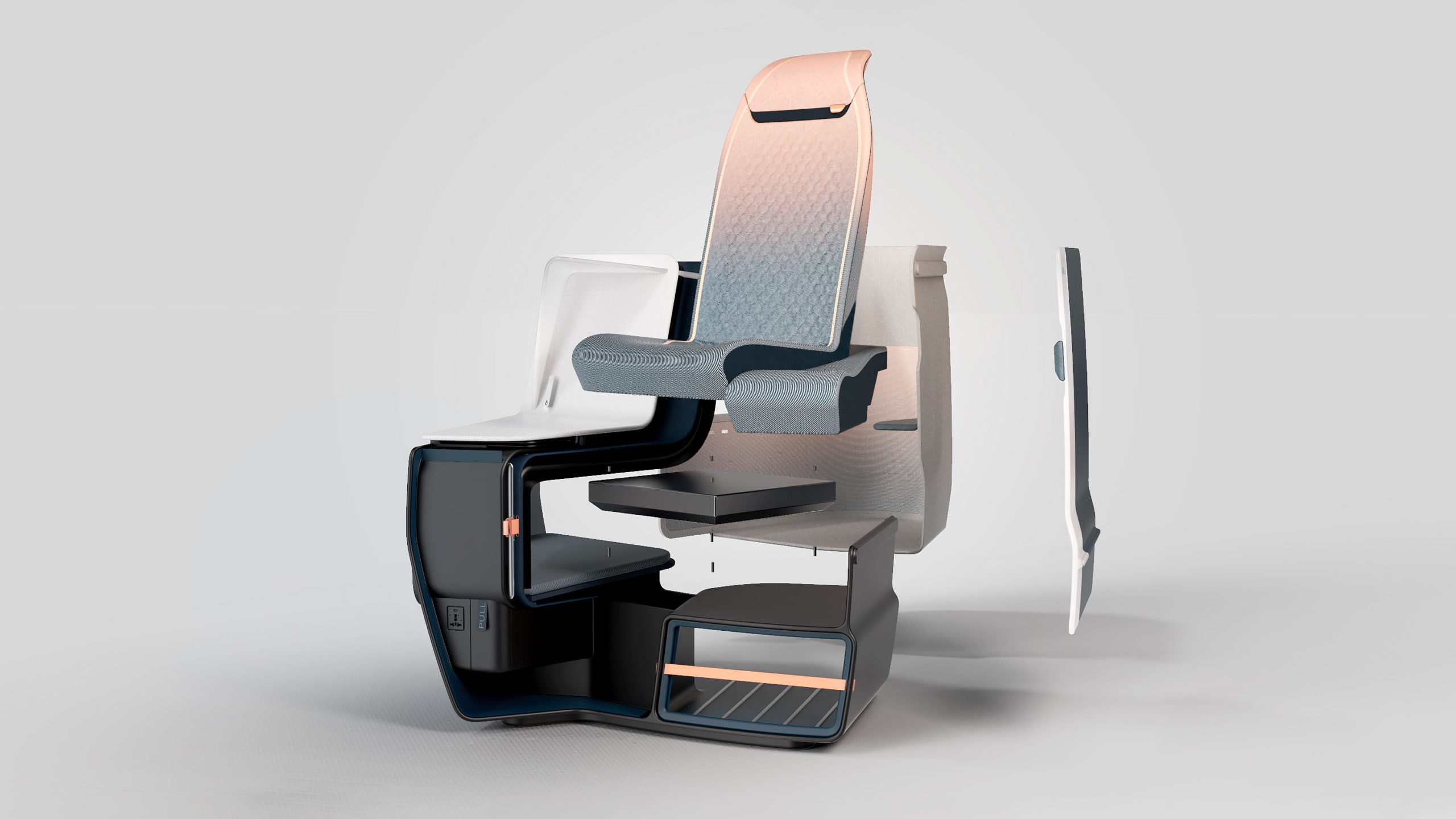

  • Leadership
  • APEX Staff
  • Committees
    • Committees
    • Working Groups
  • Sponsorship & Advertising
  • Partners
  • Pressroom
  • Contact Us

Connect With Us

APEX Logo
  • About
  • Events
  • Awards
  • Industry News
  • Membership

Daily Newsletter

©Airline Passenger Experience Association (APEX) . All rights reserved.
Code of EthicsPrivacy PolicySite Map