
Log in    (Log in help)
APEX
IFSA
FTE
APEX Logo
  • Join
  • About
  • Events
  • Industry News
  • Membership
  • Awards
  • Join
  • About
  • Events
  • Industry News
  • Membership
  • Awards
   Log in

Secondary News Article Categories: Thought Leadership & Brand

Global Recycling Day 2026: The Road is Still Long for Airlines and Caterers

Global Recycling Day 2026: The Road is Still Long for Airlines and Caterers
Photo: Magda Ehlers via Pexels

March 18 marks Global Recycling Day, and IFSA is taking the opportunity to dive into the complex topic of cabin waste. While airlines and suppliers are making incremental improvements to their operations where possible, their hands are often tied by regulatory requirements, which remain local rather than global. This is why industry bodies like IATA and data consultancies like the Aviation Sustainability Forum (ASF) are advocating for clearer international standards.

By extrapolating a snapshot of the live data collected on airlines partaking in the Aviation Sustainability Forum’s Cabin Waste Composition Audit (CWCA), created in collaboration with IATA, ASF believes commercial airlines generated approximately four million tonnes of cabin waste in 2025. For reference, that is the same weight as the Palace of Parliament in Bucharest, Romania, which is widely accepted to be the world’s heaviest building. 

The positive news is that ASF believes around 30 per cent of this waste is recyclable, theoretically reducing overall cabin waste by more than a third. The company splits potential recyclables into the following categories: aluminum, bamboo cutlery, glass, paper and plastic. Last year, ASF believes recyclable plastic accounted for 13 per cent of cabin waste; paper for nine per cent; glass for four per cent; aluminum for 3 per cent; and bamboo cutlery for one per cent. 

ICW Regulations Create Difficulties

However, recycling is only possible as long as the item has not been contaminated by animal byproducts (ABP). For the majority of international flights, anything that has come into contact with ABP is classified as international catering waste (ICW) and must be incinerated or go to landfill. 

ASF CEO Diana Cawley explains that even if a coffee cup is technically recyclable, if it has had milk in it, for example, it must be treated as ICW. Interestingly, though, shelf-stable Ultra High Temperature (UHT) pasteurized milk and dairy creamers are not classified as ABP in the US, and nor are pasteurized processed cheese or individual portions of honey.
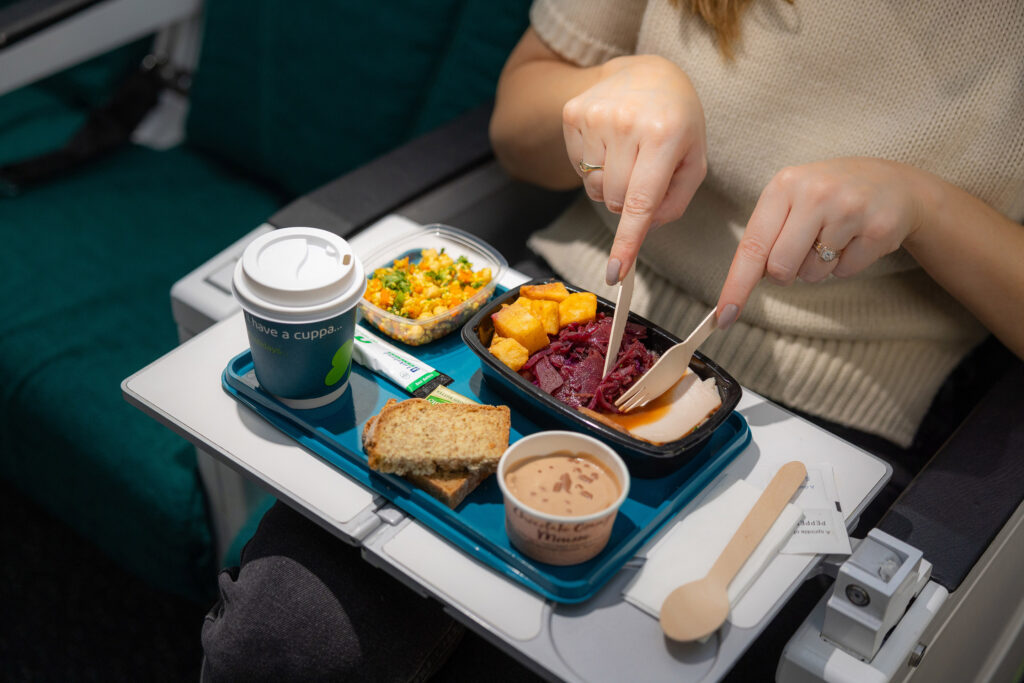
An economy-class meal being served onboard an Aer Lingus flight. Photo: Aer Lingus

This kind of nuance is why education and training account for a very large part of an airline’s chance at success in terms of recycling programs. Both the crew and staff at the airlines’ in-flight catering partners must understand all the different regulations around waste, which continues to vary considerably between regions. 

Therefore, financial and time constraints are a considerable challenge for airlines when it comes to undertaking the necessary steps to put new recycling programs in place, and not just in terms of training all its staff to the level of knowledge required. 

This is something recognized by IATA in the second edition of its “International Catering Waste – A Case for Smarter Regulation” report, released in 2024. It states that “given the complex, time-bound nature of flight operations, segregating cabin wastes and recyclables from domestic and international flights can prove challenging and many airports or their respective animal health inspectors deem all cabin waste to be ICW.” 

Trailblazers Forge a New Path Despite Challenges

In light of this, it seems worth celebrating that these difficulties are not deterring certain parties from trying to equip airlines with the tools necessary to increase their cabin waste recycling.

For example, in September 2024, US Customs and Border Protection (CBP) announced it was working with IATA and the US Department of Agriculture (USDA) Animal and Plant Health Inspection Service (APHIS) to set up local policy and procedures for recycling single-use products arriving in the US on international flights based on the resources available within each airport’s environment.
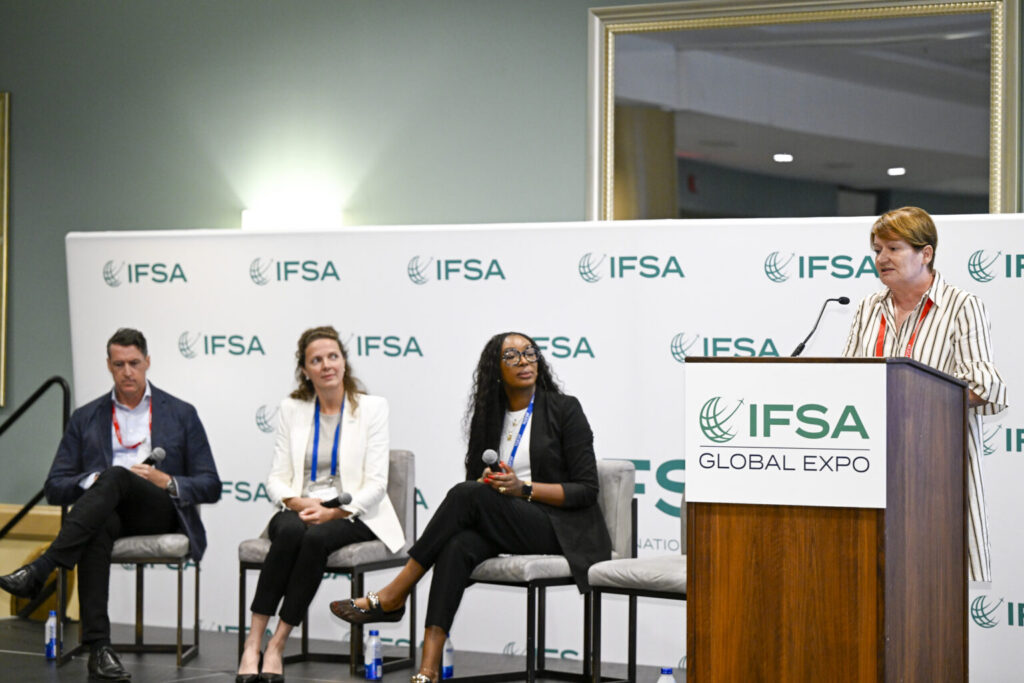
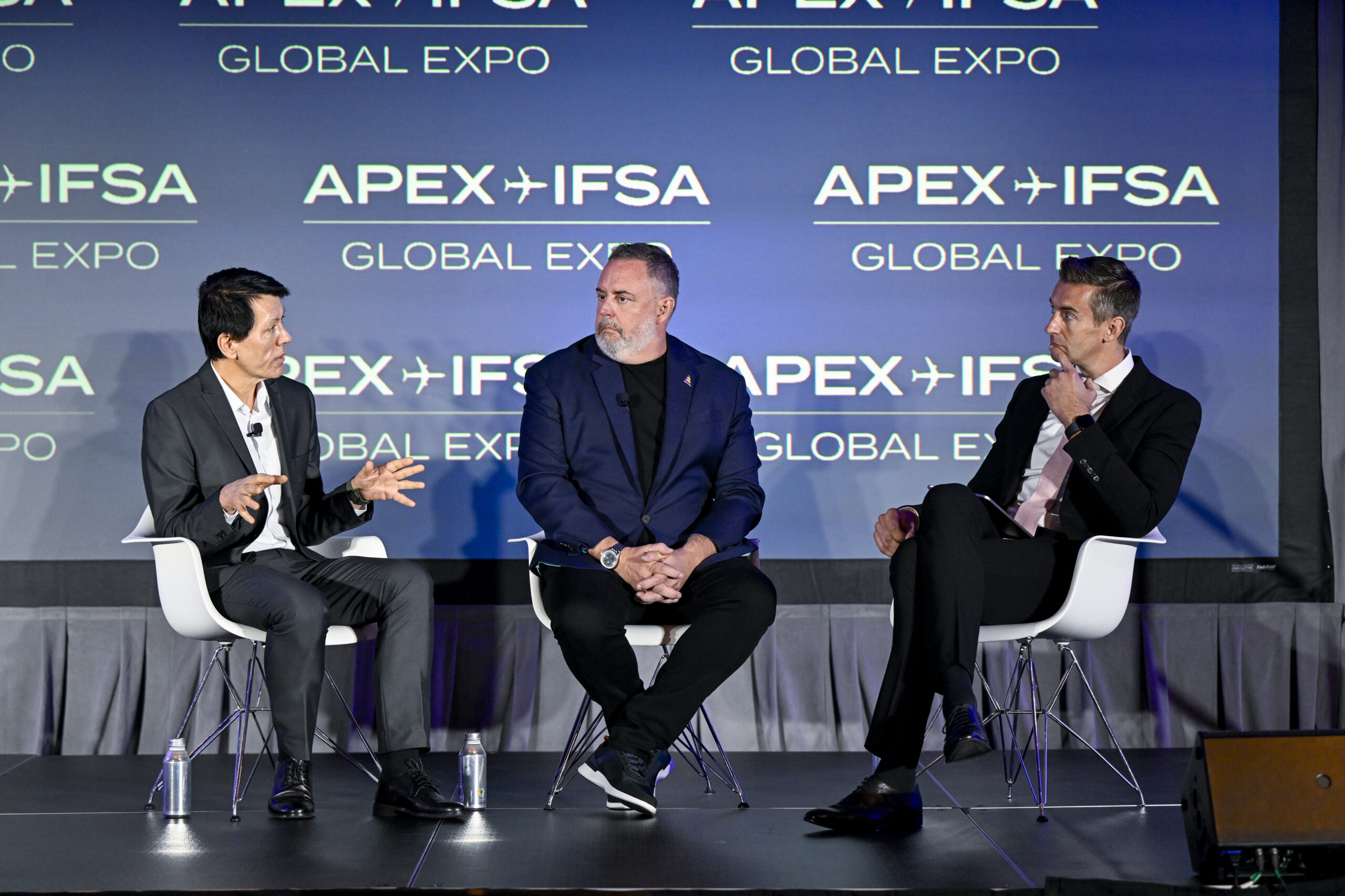
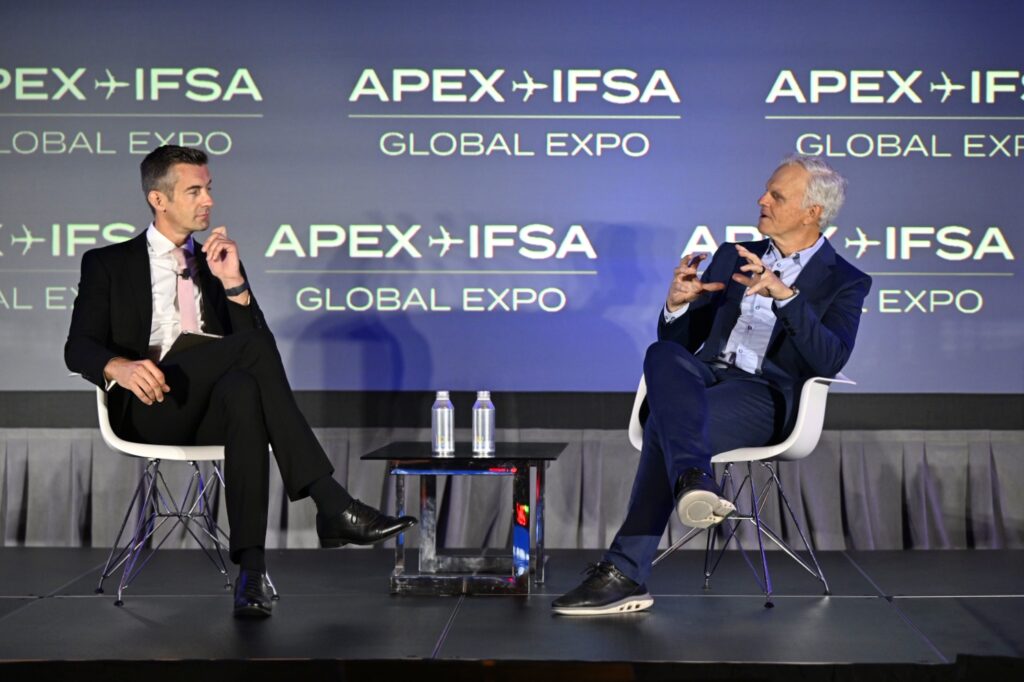
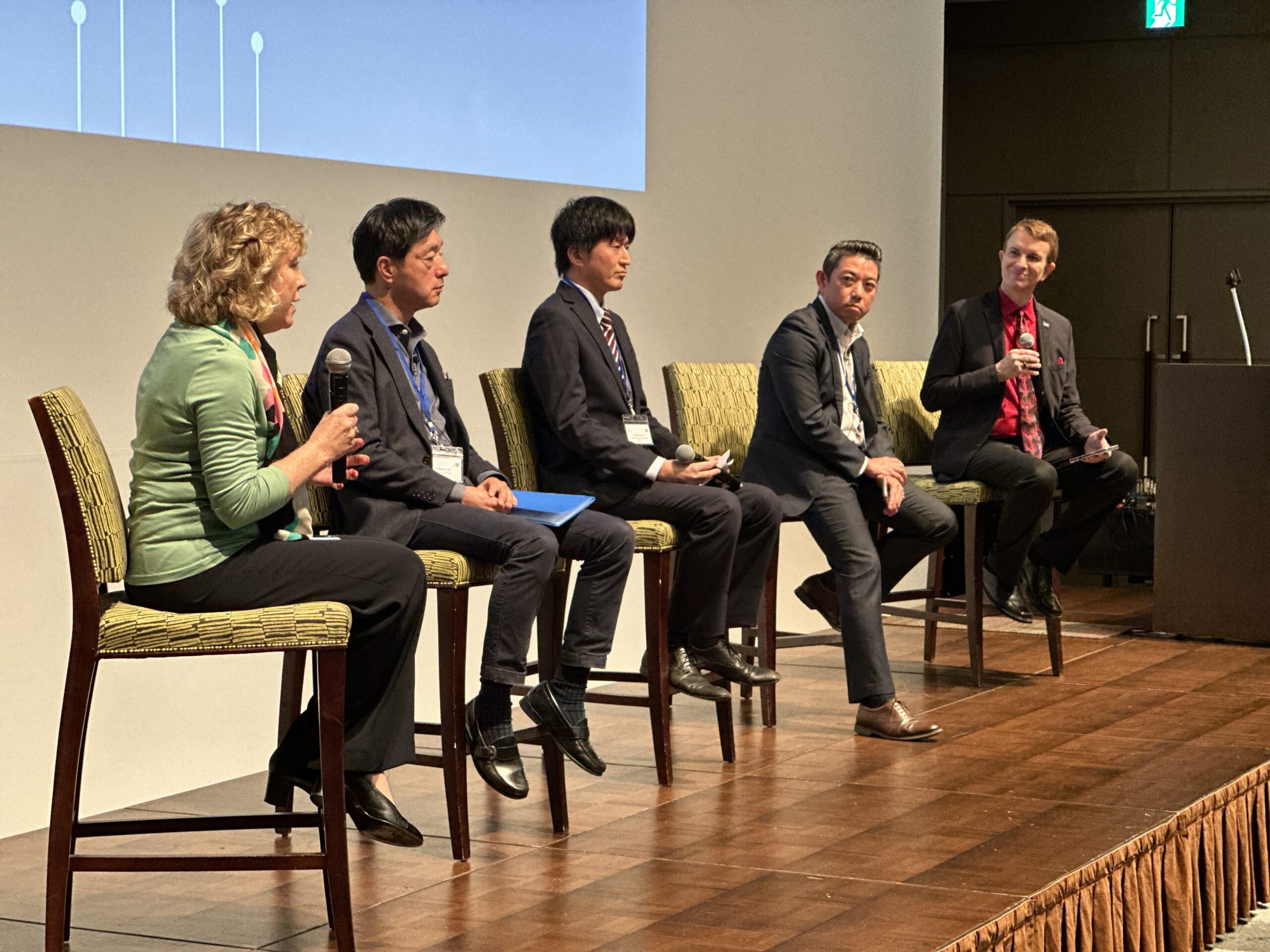
Diana Cawley (pictured far right) presents a panel discussion on the topic of in-flight catering and sustainability at the 2025 IFSA Global EXPO. Photo via Caught in the Moment Photography

The program covers aluminum, paper and plastic. Airlines wanting to partake must work with CBP and APHIS on segregation on board, removal from the aircraft and final disposition, with a critical element involved being to understand the waste composition and quantities coming off the aircraft. 

According to Cawley, there are reliable standard methodologies in place in the system to ensure common practice and identifying the final use for any recycled materials. And despite the effort involved, she confirmed that some airlines have been approved to recycle the aforementioned items at Hartsfield-Jackson Atlanta International Airport, Los Angeles International Airport, Seattle-Tacoma International Airport, John F. Kennedy International Airport and Newark Liberty International Airport. 

The Biggest Obstacle: A Lack of Standardization

The success of existing recycling programs is more visible in places with the same regulations, such as across the US and within the European Union. For example, in November 2024, Alaska Airlines announced a partnership with Ridwell to recycle “Biscoff cookie wrappers, pretzel bags, and other snack packaging that usually end up in landfills,” all of which are exempt from ICW regulations in the US.

Similarly, at the 2025 IFSA Global EXPO, KLM Food and Product Specialist Matrix de Vries noted than when the European Commission clarified the rules for Category 1 waste for inbound flights in 2024, deeming that “any product that has not been in contact with food can actually recycle,” she said it transformed the carrier’s inbound sorting processes in Amsterdam.

Nonetheless, there are still grey areas within the EU when it comes to catering waste regulations. The EU recently announced it will completely ban single-use plastics by 2030, with “the proposed legislation aim[ing] to ensure that all packaging in the EU is recyclable by 2030.” Cawley commented that this is at odds with ICW regulations: “Not all items can be reused or recycled, so what will [airlines] use instead?”
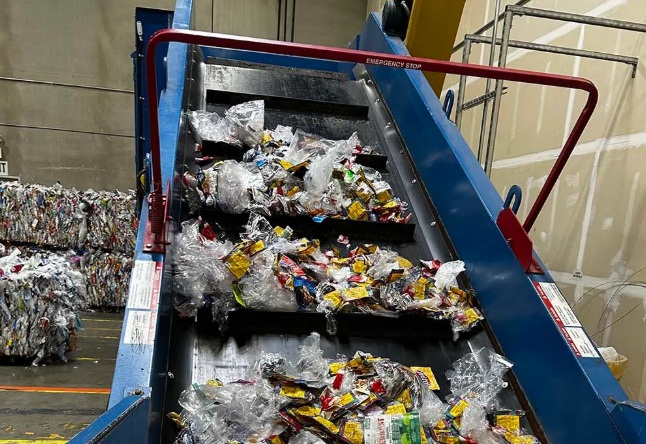
Baling of Alaska Airlines’ snack packaging taking place as part of the recycling process in collaboration with Seattle-based Ridwell Partners. Photo via Alaska Airlines.

In IATA’s report, the association remarked, “Driven by passenger concerns and emerging single use plastic legislation, airlines are replacing in-flight products including cutlery and crockery with reusable or biobased alternatives. However, the environmental benefits of such a transition are significantly reduced if the resulting waste cannot be biotreated through aerobic (composting) or anaerobic digestion.”

Cawley, similarly to IATA, argues that for airlines the most effective way to avoid cabin waste is to implement global standards, but that these must take into account many, many small things involved in the recycling process, starting with the color of the recycling bags, which vary from country to country.

When asked who should be responsible for creating the necessary standards, Cawley replied instantly. “The trade bodies,” she said.

More Airlines Establish a Baseline to Work From

In an industry used to battling against adversity, it seems likely that change will come, but this will certainly require continuing collaboration between industry associations, governments, airlines and caterers. 

The Aviation Sustainability Forum only began trialing its Cabin Waste Composition Audits in November 2023, so the company and its mission are still very young. However, Cawley confirmed it continues to see growing interest from airlines together with their caterers year-on-year. 

“What our benchmark audits offer is trustworthy data, not just an opinion. Our standard methodology makes it far easier to start building meaningful recycling programs,” she stressed. “Making a return on the investment of the audit is achieved very easily.”


Sustainable Packaging: Helping Airlines Generate Loyalty and Revenue

Sustainable Packaging: Helping Airlines Generate Loyalty and Revenue
Pictured: L&L Plaquette’s artisanal butter encased in its award-winning ‘vegetable parchment papillote’ as served onboard Lufthansa. Photo via L&L Plaquette

New research from WTCE suggests that airlines who visibly embody sustainability in the cabin, particularly in terms of items used as part of their in-flight service offering, stand to gain more in revenue than those who disregard sustainability. Lufthansa provides an excellent case study.

A recent study commissioned by the World Travel Catering & Onboard Services Expo (WTCE) suggested that “airlines have a commercial opportunity to link sustainability with loyalty through tangible, transparent actions.”

“Passengers want to buy something that feels good ethically, and not just emotionally.”
– Kai Kosicki, WTCE

In the report, titled ‘A Greener Passenger Experience, A Smarter Airline Strategy’ written by Aviation Sustainability Forum (ASF) Co-Founder Matt Crane, he specifically highlights that “42 per cent of travelers say they are likely to make purchasing decisions onboard based on sustainability, whether that means choosing an eco-friendly meal, a recycled-material amenity product or plastic-free packaging.”

WTCE Retail Technology Ambassador Kai Kosicki added, “From a retail perspective, sustainability has become a product feature. Passengers want to buy something that feels good ethically, and not just emotionally.”
At the same time, Reliable Market Insights is claiming that sustainability is one of the main drivers of growth in the airline food packaging market as a result of both consumer demand and regulatory support for more eco-friendly materials onboard. The company predicts that revenue associated with the airline food packaging market will see a compound annual growth rate of 6.8 per cent between 2026 and 2033, reaching a market size of approximately US$5 billion by 2030.

Increasing passenger satisfaction at the same time as improving profits seems like a no-brainer for airlines, but Crane believes this can only be achieved if airlines are making sustainability wins “visible,” and that not many airlines are currently succeeding in doing so. In this article, IFSA explores how Lufthansa is using sustainable packaging to create a positive, premium eco-conscious passenger experience for its customers.

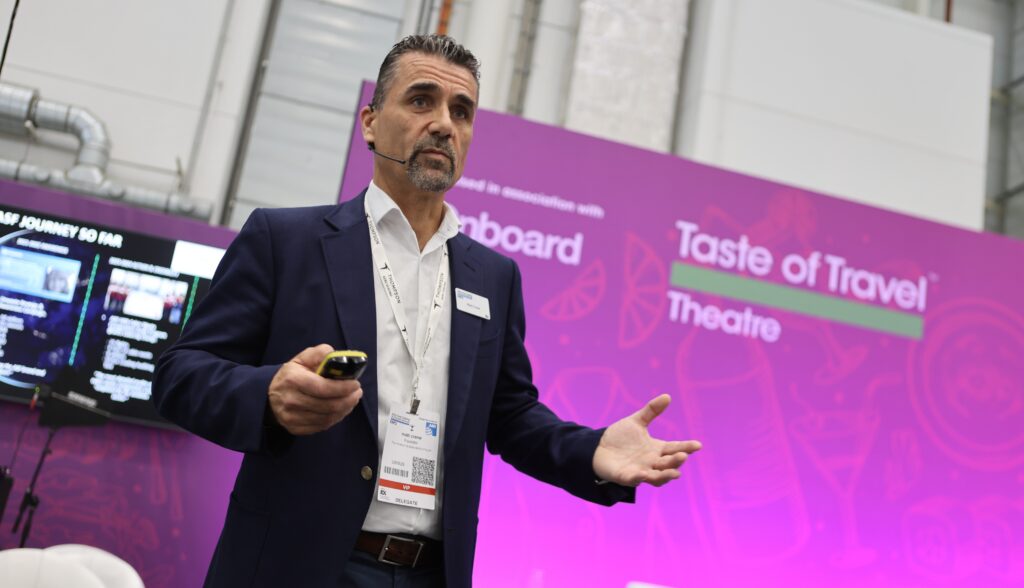
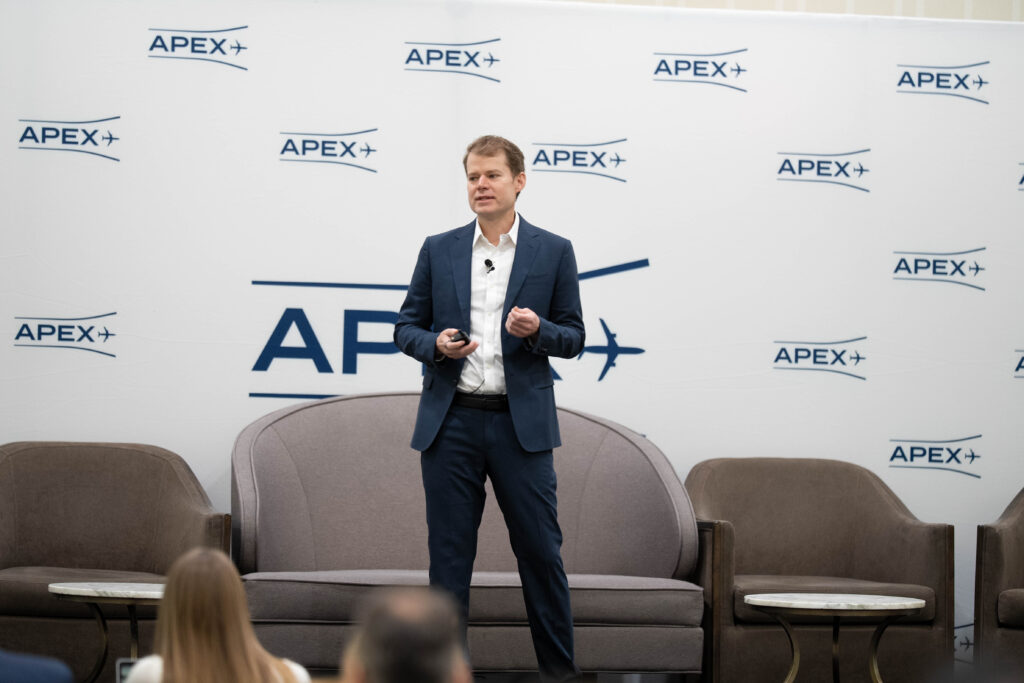
Pictured: Aviation Sustainability Forum Co-Founder Matt Crane, who wrote the WTCE report on “A Greener Passenger Experience” onstage at a WTCE event. Photo via WTCE.

Lufthansa’s Business-Class Butter: A Case Study

As part of their meal service, Lufthansa’s worldwide business-class passengers are treated to a slow-churned, artisanal butter portion hand-wrapped in 100 per cent plant-based, compostable paper.

The product, created by Belgian artisan L&L Plaquette and dubbed the ‘vegetable parchment papillote,’ recently won “Best Innovation Dairy Product” at Gulfood 2026, the world’s biggest annual food and beverage sourcing and innovation show in Dubai. 

“Airlines are no longer just buying an ingredient; they are investing in their brand’s integrity,”
– Lionel Plaquette, L&L Plaquette

It disrupts the single-portion butter cup, which the company believes has remained an industrial afterthought, packaged in single-use plastic and aluminum for over 40 years. Available in 10 gram, 15 gram and 20 gram portions and a range of flavors including Pure Sweet Butter, Sea Salt Butter and Fleur de Sel de Gruissan, alongside bolder versions incorporating truffle, garlic and seaweed, it can be customized with bespoke branding.

L&L Plaquette owner and sixth-generation Master Butter Maker Lionel Plaquette explained the papillote is made from 40gsm greaseproof paper that consists of 100 per cent virgin wood pulp, with zero aluminum or plastic coatings. 

Pictured: L&L Plaquette’s ‘vegetable parchment papillote’ recently took home the Gulfood 2026 Award for Best Dairy product. Image via L&L Plaquette

He claimed it was selected by Lufthansa for its uncompromising environmental credentials, the most critical of which being that it is PFAS-free. “We do not use any perfluorinated chemical treatments,”  stated Plaquette. “Our paper achieves its high fat resistance through intensive mechanical refining of pure cellulose fibers combined with a natural starch surface application. This creates a high-density sheet that blocks oil penetration naturally.”
“Airlines are no longer just buying an ingredient; they are investing in their brand’s integrity,” he continued. “While artisanal packaging carries a slight premium, the ROI is found in the ‘Gift Effect.’ By replacing a plastic tub with a hand-wrapped ‘Papillote,’ we transform a commodity into a premium guest amenity. Data from our partners shows that passengers are extremely sensitive to this ‘first touch’ of the meal. The feedback is unanimous: the ‘unwrapping ritual’ creates an emotional connection to the food, suggesting care and craftsmanship, values that industrial plastic can never communicate.”

“While artisanal packaging carries a slight premium, the ROI is found in the ‘Gift Effect.’
– Lionel Plaquette, L&L Plaquette

Beyond sustainability, L&L Plaquette offers a powerful corporate social responsibility narrative, as every portion is hand-wrapped in Belgium in partnership with sheltered workshops, known as Entreprises de Travail Adapté (ETA). The company argues that this model adds depth to airlines’ Environmental, Social, and Governance (ESG) reporting.

While the product is not available for purchase, so its value cannot be easily quantified, it is clear that by visibly championing sustainability, Lufthansa is choosing to invest in its premium image in the hope of building loyalty to the brand.  

Sustainable Packaging is Not Just for Premium Passengers

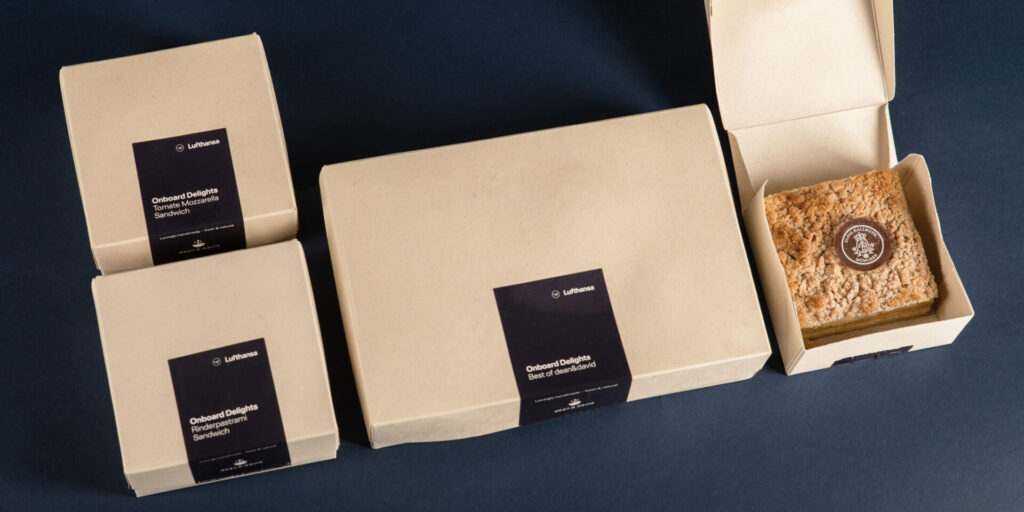
Pictured: The German Design Award-winning Paperwise packaging used for food served as part of Lufthansa’s Onboard Delights service. Photo via Paperwise

Lufthansa has been somewhat of a leader in the sustainable packaging space for some time. In 2021, it won the German Design Award in the “Excellent Communications Design” category for the packaging of its Lufthansa Onboard Delights & SWISS Saveurs F&B retail service on short- and medium-haul flights. The packaging in question is made by Paperwise, a CO2-neutral paper and board made from agricultural waste. 

DeSter, which helped to get the products onboard, explained, “The unmarked packaging can be used by both airlines for their partners’ respective food concepts as only labels and banderoles are used for product communication. The nature of the packaging and its minimalist design help to avoid waste.” 

Furthermore, Lufthansa’s Onboard Delights menu currently includes tea and coffee from German coffee brand Dallmayr, which is served in “a sustainable, reusable cup made of recyclable plastic that replaces the previous disposable cup and its plastic lid.” The carrier publicly said it was aiming to eliminate single-use plastics and aluminum from its Onboard Delights offering by the end of 2025.

More Sustainable Packaging Innovations to Come

As the connection between sustainable airline packaging and passengers’ perceptions of an airline brand become more undeniable, it is clear that, as Matt Crane says in his WTCE report, a sustainable approach to in-flight services will become a key differentiator for carriers trying to win business, rather than a “nice-to-have.” 

IWD 2026: The Women Helping to Elevate the In-Flight Services Industry

IWD 2026: The Women Helping to Elevate the In-Flight Services Industry
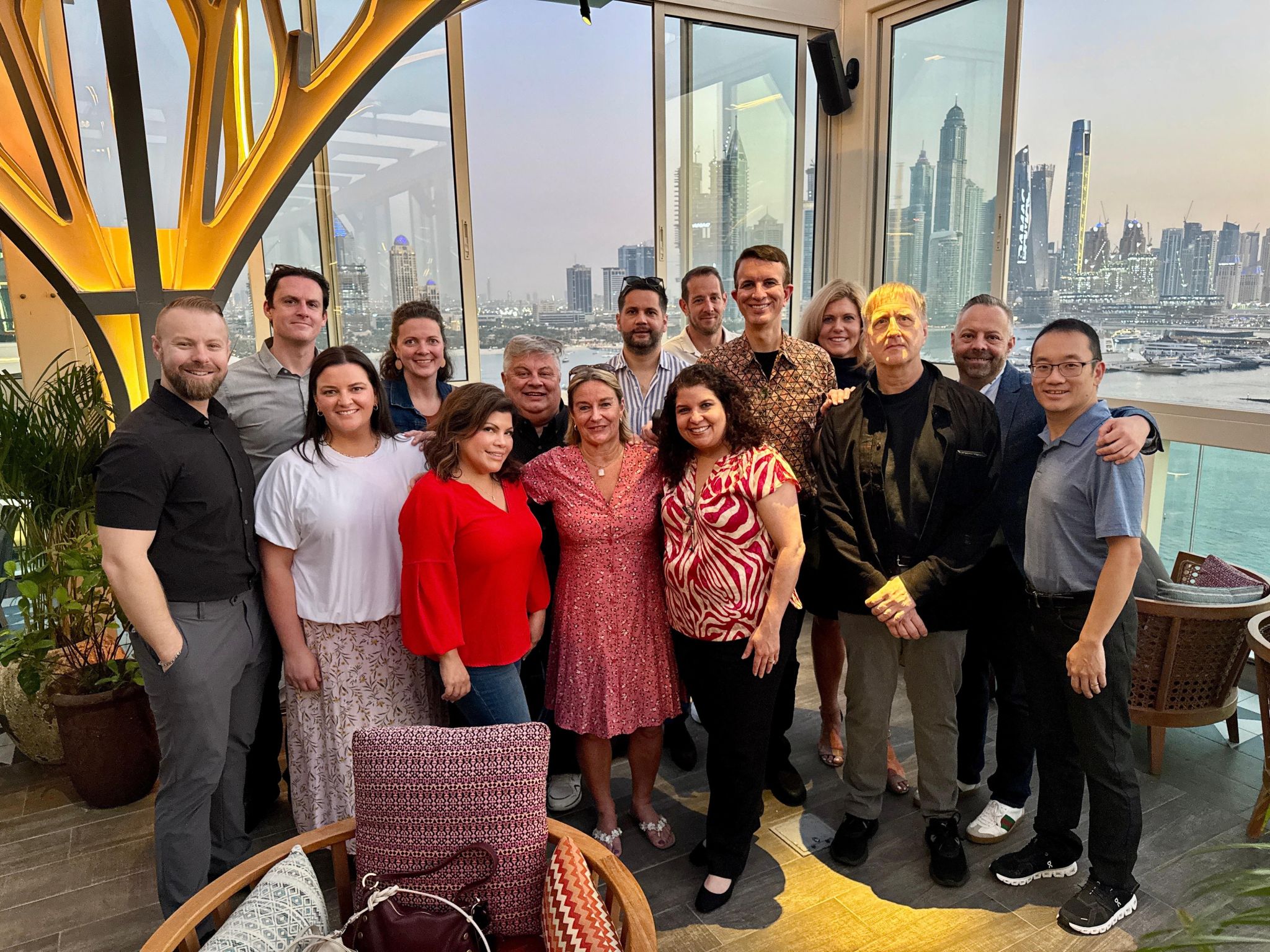
The 2026 IFSA Board of Directors during their most recent strategic meeting in Dubai.

To celebrate International Women’s Day (IWD) 2026, IFSA Insights Editor Stephanie Taylor spoke to three members of the IFSA Board of Directors about their proudest moments, favorite part of working within the in-flight services industry and their advice for young people wanting to enter the sector. United Airlines Global Director Food Safety & Regulatory Compliance, Catering & Lounges Vanessa Lindstrom; ITW Envopak Business Development Director, Airlines Nicky Slater; and Adulce Group Founder and Owner Dulce Martin share their stories. 

People are the Industry’s Greatest Asset

United Airlines Global Director Food Safety & Regulatory Compliance, Catering & Lounges Vanessa Lindstrom

For both Martin and Slater, it is who they work alongside that is their favorite part of the industry. Slater explained, “The best part for me is the global network of connections. In 20+ years of working with airlines, my job has taken me to over 20 countries and allowed me to interact with others from diverse backgrounds. These are people I would never have had the chance to engage with otherwise, and they have become real friends.” Martin added, “We have an incredible global network of fantastic individuals.”

The collaborations between these friends and colleagues are what keeps the industry going from strength to strength. For example, for Lindstrom there is one particular female colleague who stands out. “Michielle Sego Johnson, United Airlines VP Inflight Services and Catering Operations, is an authentic and inspirational leader. 

“Three years ago, our team was added to her scope of work,” Lindstrom elaborated. “From the beginning, Michielle was engaged with the food safety program, seeking to learn everything about food safety. She has been instrumental with helping me build the food safety brand at United. Her support and recognition of our work has helped increase investment for the program and grow food safety culture. Michielle always advocates for us and together we keep food safety in sync with our #1 of our four core values: Safety.”

Being Part of Something Bigger is a Source of Pride

On what stands out as a career highlight, Martin looks back to COVID-19. “In terms of volunteering for IFSA, the association plays a vital role advocating for the needs of airlines, especially during challenging times,” she said. “Pivoting during the pandemic and being active in encouraging bipartisan lawmakers to support airline carriers is one for the books!”

“During the past nine years I’ve been at United, I’ve seen first-hand all the opportunities you have to advance your career”
– Vanessa Lindstrom, United

Likewise, it is propelling the in-flight services industry forward that Lindstrom focuses on when asked about achievements she is most proud of. “In 2020, I began co-chairing the IFSA Global Affairs and Education Committee (GAEC) and was the board liaison. I advocated for the World Food Safety Guidelines to align the requirements for airline catering with best practices of the food industry.

“Specifically, in 2022 we helped update and launch guidelines to align with an ISO-based Global Food Safety Initiative (GFSI) food safety scheme, FSSC 22000, which is internationally recognized as best in class. This has built the framework for IFSA GAEC to work directly with the ISO committee toward the creation of an ISO Technical Standard in the future.” 

IWD is Recognized by Airlines and Suppliers

ITW Envopak Business Development Director, Airlines Nicky Slater

Both Lindstrom and Slater are proud to work for companies that understand the importance of International Women’s Day, something in line with this year’s theme, “Give to Gain,” which acknowledges that “contributing to women’s advancement helps create a more supportive and interconnected world.”

“Working for a global organisation like ITW Inc, with 40,000+ employees worldwide, each business supports IWN in their own way,” confirmed Slater. “ITW also supports a global employee-led business resource group (BRG) supporting the advancement of women. These are run on a country-by-country basis by like-minded volunteers within the organization.” 

Similarly, Lindstrom said United’s IWD campaign, which is carried out on a corporate level, recognizes and celebrates women in key non-traditional female roles. It is led by ulMPACT, the carrier’s employee-led BRG, which also marks Women’s History Month during March each year. 

In-Flight Services Offers Great Career Prospects

Lindstrom and Slater both recognize that aviation, and in-flight services in particular, offers new entrants a world of possibilities. “Having had a 40-year career in three different countries (India, Australia and the US) in quality assurance and food safety roles in the pharmaceutical and food & beverage industry, I never thought of a career in the aviation industry,” said Lindstrom. “During the past nine years I’ve been at United, I’ve seen first-hand all the opportunities you have to advance your career and move into different areas of the business based on your skills, interests and desired impact.”

“The best part for me is the global network of connections [with] people I would never have had the chance to engage with otherwise.“
– Nicky Slater, ITW Envopak

Slater agreed. “If you want a fun-loving industry with plenty of room for growth and the opportunity to see the world, then go for it! It’s a great industry to work in if you are prepared to roll your sleeves up and get stuck in.”

IFSA’s Commitment to Championing Women’s Voices

Adulce Group Founder and Owner Dulce Martin

According to the newly released 2025 MSCI report “Women on Boards and Beyond,” globally women held “28.3 per cent of board seats at large- and mid-cap companies” last year, with “48.7 per cent of companies having reached at least 30 per cent female representation as of October 2025.” 

IFSA is proud to have 40 per cent female representation on its Board of Directors.  Of the 15-strong board, six are currently female. In addition to Lindstrom, Martin and Slater, the IFSA Board of Directors also includes KLM Royal Dutch Airlines Food & Product Specialist Matrix de Vries; gategroup Global VP Business Development Diana Czapalay; and LSG Group CCO for The Americas Tone Cresswell. 

APEX TECH 2026: Full STREAM Ahead for APEX’s Content Licensing Initiatives

APEX TECH 2026: Full STREAM Ahead for APEX’s Content Licensing Initiatives
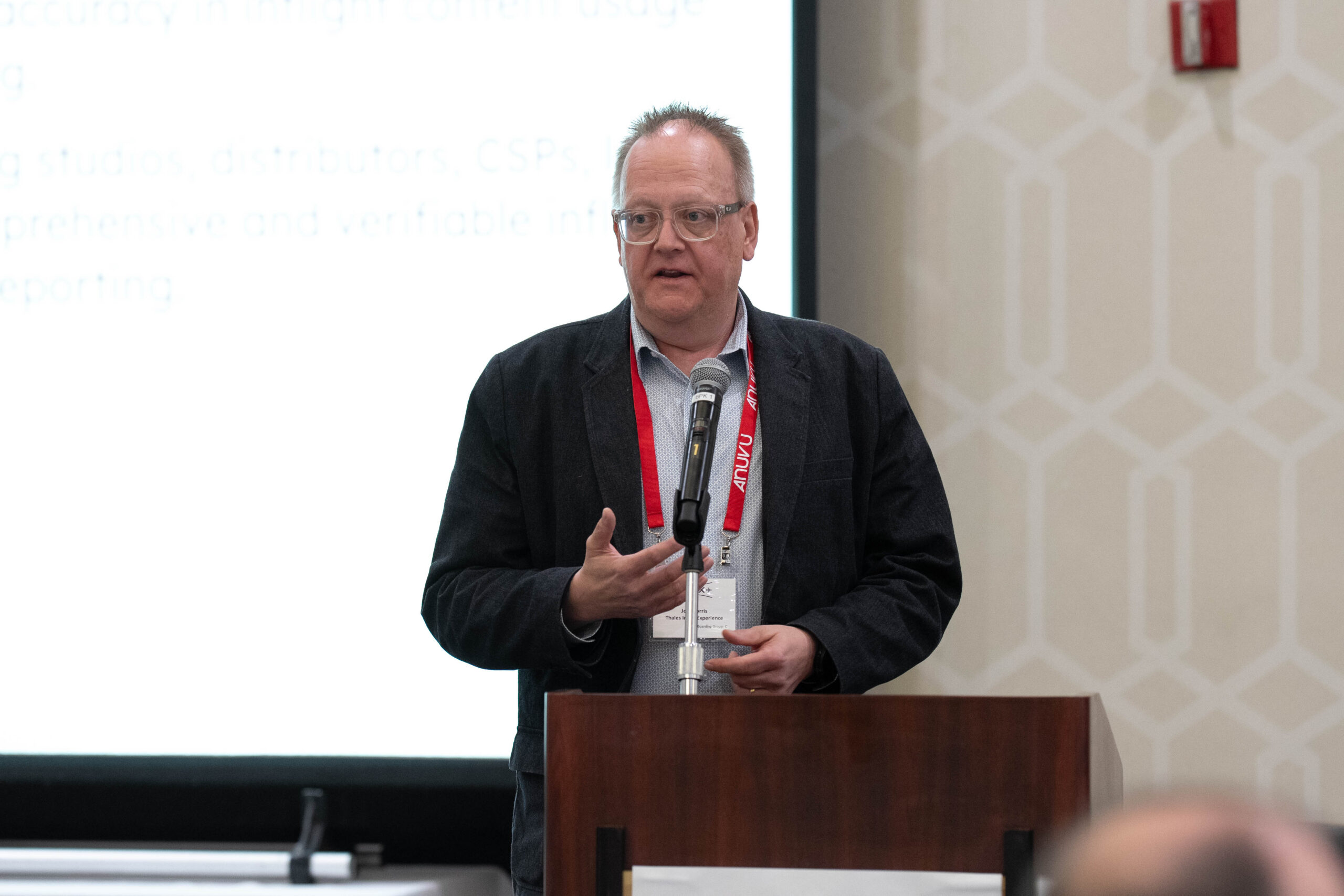
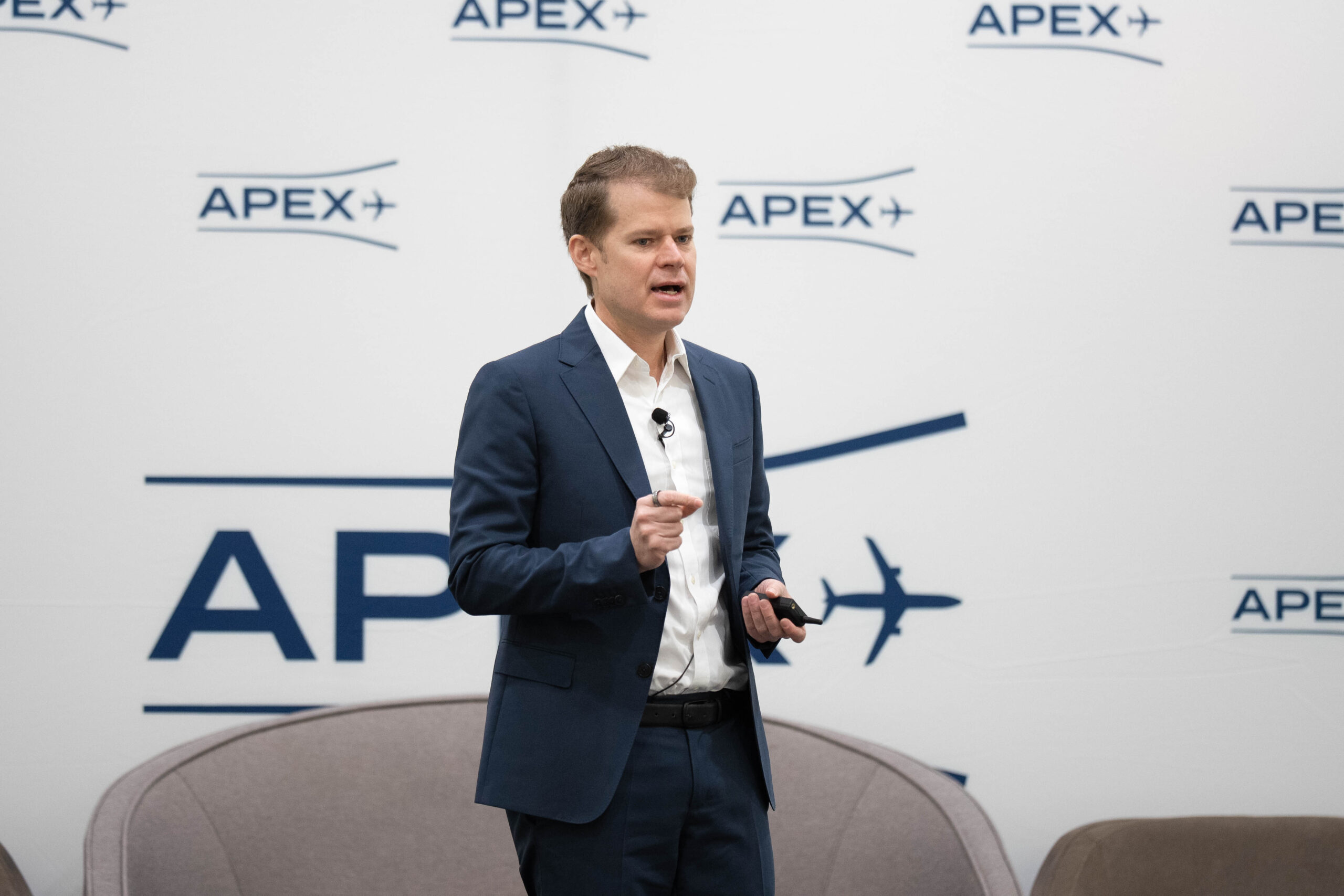
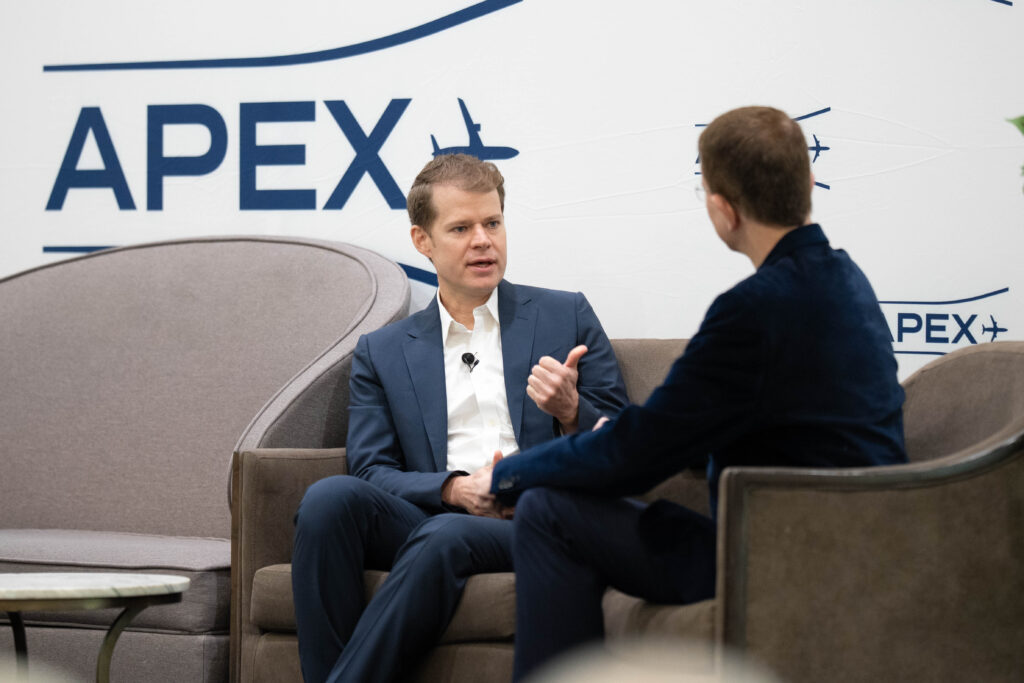
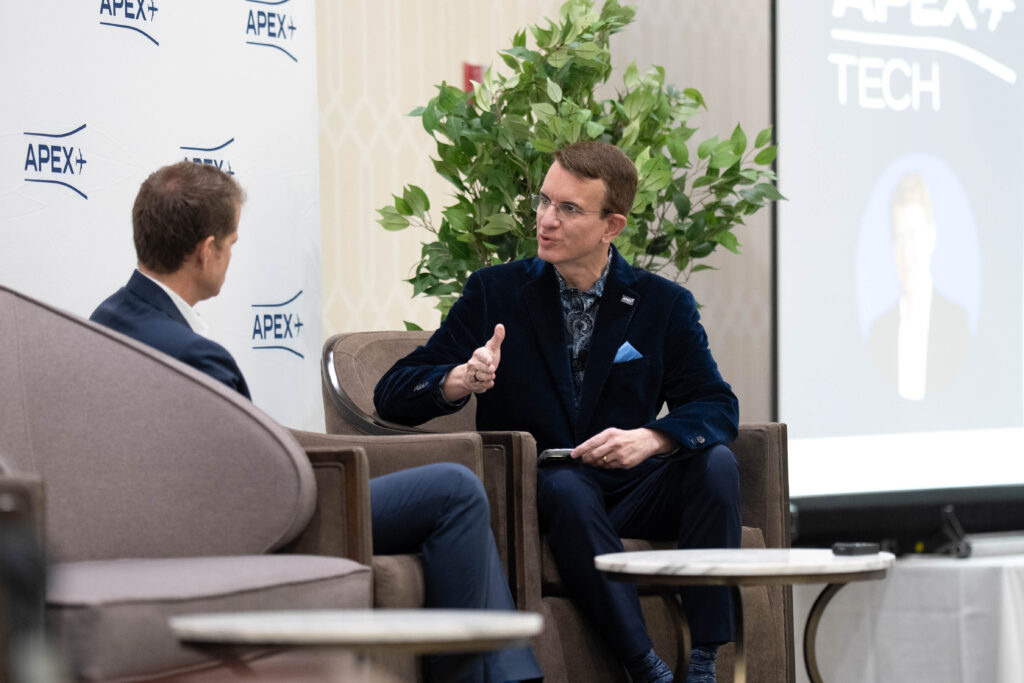
Pictured: Thales InFlyt Experience Director of Marketing Operations and Director of APEX FlightTrack and APEX STREAM Jon Norris. Photo: Stewart Media Digital

During APEX TECH 2026, Thales InFlyt Experience Director of Marketing Operations Jon Norris donned his APEX hat as Director of APEX FlightTrack and APEX STREAM to provide an update on both new initiatives. 

“APEX FlightTrack delivers the first complete, tail number-specific, globally auditable reporting structure for licensed inflight content usage, enabling accurate 2025 retro billing and verifiable reporting for 2026 onwards,” Norris explained to delegates. 

“The initial feedback from the working groups has been positive and we’re now starting to build out the plan and schedule for both projects accordingly.”

“APEX FlightTrack complements APEX STREAM by giving studios accuracy and confidence in inflight content reporting. APEX can cross-reference actual aircraft operations with hardware capabilities and IFE content license requirements,” he continued. “This enables studios to retroactively validate 2025 usage, bill correctly within Q1/2026, and then begin a standardized, transparent, and fully auditable reporting cycle for 2026 onwards on a quarterly basis.”

APEX STREAM was first announced at the 2025 APEX IFSA Global EXPO in Long Beach during a panel session on the complexity of content rights in regards to streaming using in-flight connectivity. An abbreviation for Standardized Technical Rights Enforcement for Airline Media, APEX STREAM is a framework designed to gather perspectives from airlines, studios, content service providers (CSPs), and connectivity companies with a view to clarifying the licensing landscape and reducing uncertainty around in-flight streaming.

“During January, we held our initial working group meetings with Studios and Independent Distributors, CSPs and Labs, and IFE Systems companies supporting APEX FlightTrack and APEX STREAM. The initial feedback from the working groups has been positive and we’re now starting to build out the plan and schedule for both projects accordingly,” said Norris. 

“APEX can cross-reference actual aircraft operations with hardware capabilities and IFE content license requirements.”

The first APEX FlightTrack reports are due to be created in February/March using the full global tail number and hardware database from CAPA, as well as the full historical flight movement database from OAG. 

To generate the reports, APEX will cross-reference which aircraft flew (aircraft variant, tail number, total seats); on what route (flight number, origination and destination airports); when flight took place (departure date/time and arrival date/time); and which hardware each aircraft used (IFE manufacturer/model, IFC provider/service, and wIFE manufacturer/model).

The plan is that within each report, studios and independent distributors will receive a complete list of flights needing to be billed that separates onboard server-based content delivery and over the air delivery. They will also contain runtime threshold results, hardware capability verification and device and system mismatch flags.

“APEX FlightTrack complements APEX STREAM by giving studios accuracy and confidence in inflight content reporting.”

During initial meetings, working group members were asked for their runtime and/or licensing thresholds, rule sets, and reporting format requirements. Until the first report is published, Norris is keen to discuss reporting requirements with additional companies in the aim of building in the specific information studios need to determine whether they have been paid the appropriate rate by their airline customers. 

Norris urged any interested parties to schedule a call with him to discuss the initiatives in more detail. 

Moving forward, there will be an APEX STREAM Studios and Independent Distributors working group meeting at APEX Content Market in Dubai on February 10 from 03:00 PM to 04:00 PM.

To read out more about the keynote addresses and panel discussions at APEX TECH 2026, click here. 

APEX TECH 2026: Air India Embraces Customer-First Transformation Using Inflight Experience

APEX TECH 2026: Air India Embraces Customer-First Transformation Using Inflight Experience
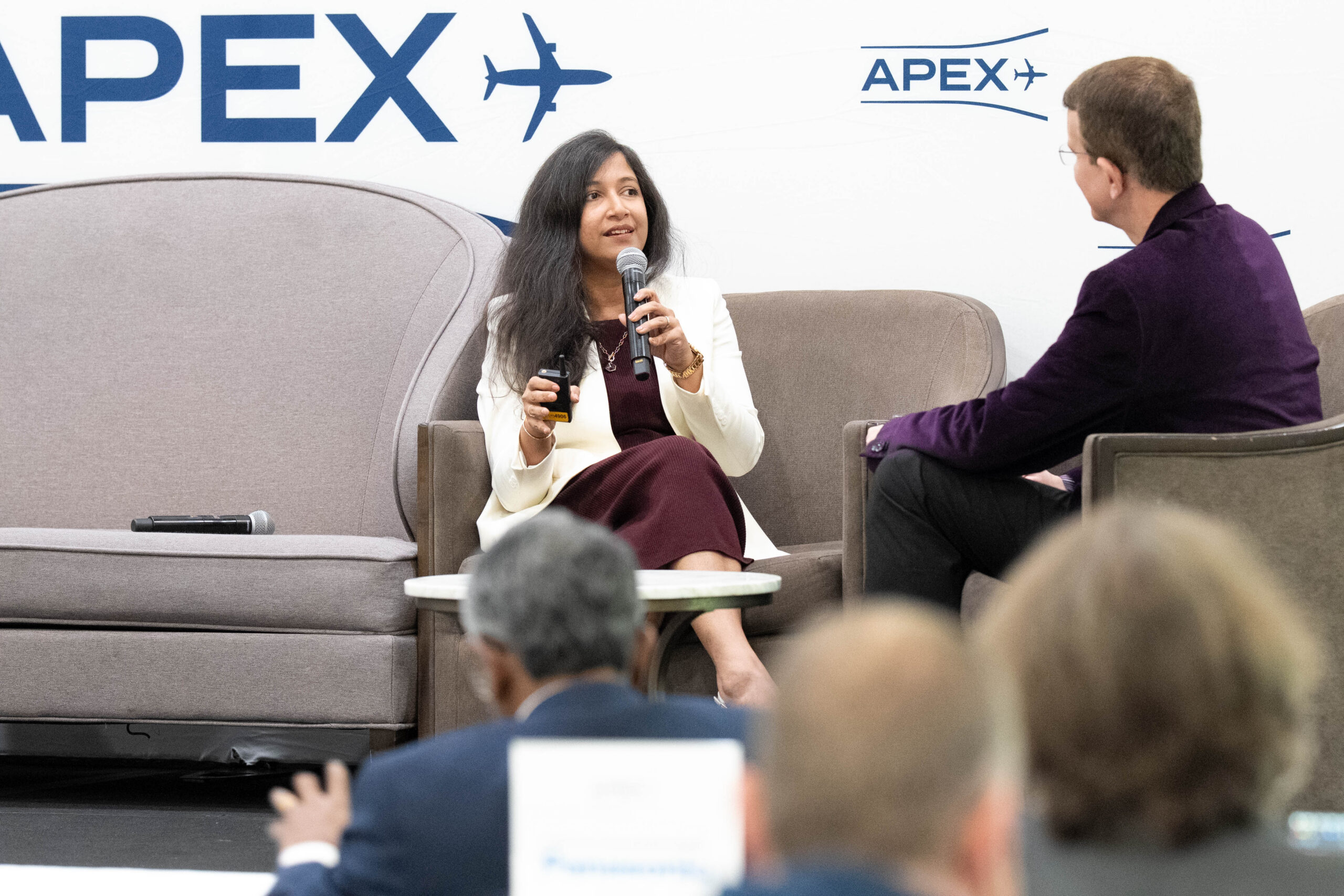
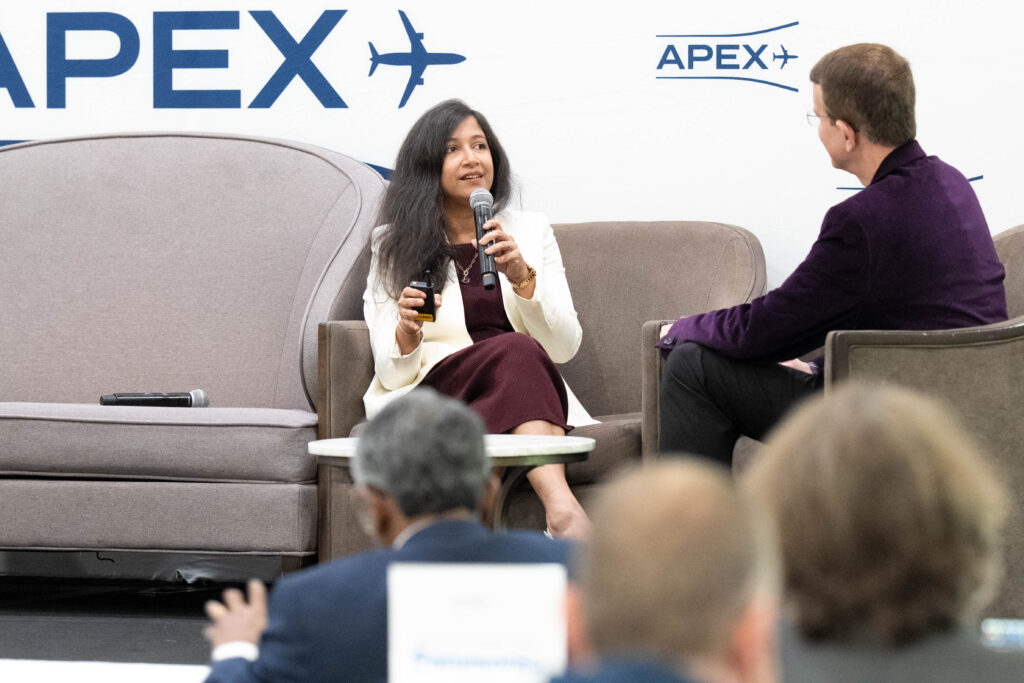
Air India Vice President CX Strategy and Intelligence Anjali Birla with APEX CEO Dr. Joe Leader during their keynote session at APEX TECH 2026. Photo: Stewart Media Digital

As APEX TECH 2026 came to a close, Air India Vice President CX Strategy and Intelligence Anjali Birla delivered the final keynote, sharing how the airline is using customer insight, technology, and inflight experience to guide one of the most ambitious transformations in global aviation. Speaking with APEX CEO Dr. Joe Leader, Birla outlined how Air India is rebuilding its brand, operations, and onboard experience around a clear customer-first philosophy.

A Transformation Decades in the Making

Birla began by outlining the scale of change that has taken place since Air India returned to Tata Group ownership in 2022. Founded nearly a century ago, Air India was nationalized in 1953 before re-entering private ownership with significant operational and brand challenges.

“The Economist called this ambitious journey that we’re on the Everest of corporate turnarounds.”

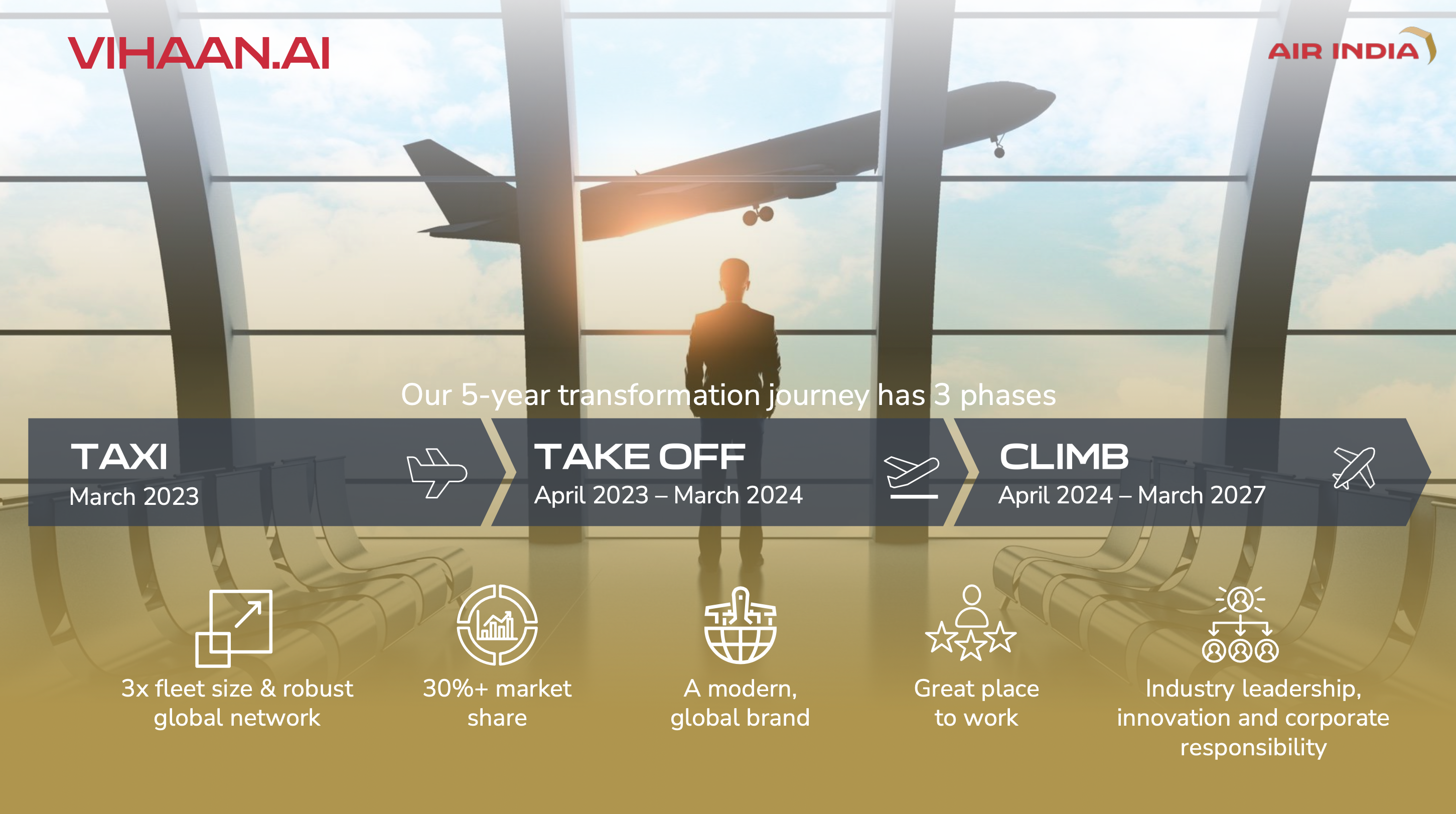
To address them, Air India leadership created a five-year roadmap known as VIHAAN.AI. “Vihaan in Sanskrit means the dawn of a new era,” she explained, noting that the program aimed to redefine Air India’s identity while modernizing nearly every aspect of the airline. “The Economist called this ambitious journey that we’re on the Everest of corporate turnarounds.”

Image via Air India

The transformation has included one of the largest single aircraft orders in aviation history, fleet refurbishments, a complete digital overhaul, and the launch of a new brand identity. Birla also highlighted the creation of South Asia’s largest aviation training academy, capable of training up to 2,000 people daily, alongside the merger of four airlines into two distinct brands. “All of this in a span of about two and a half years,” she said.

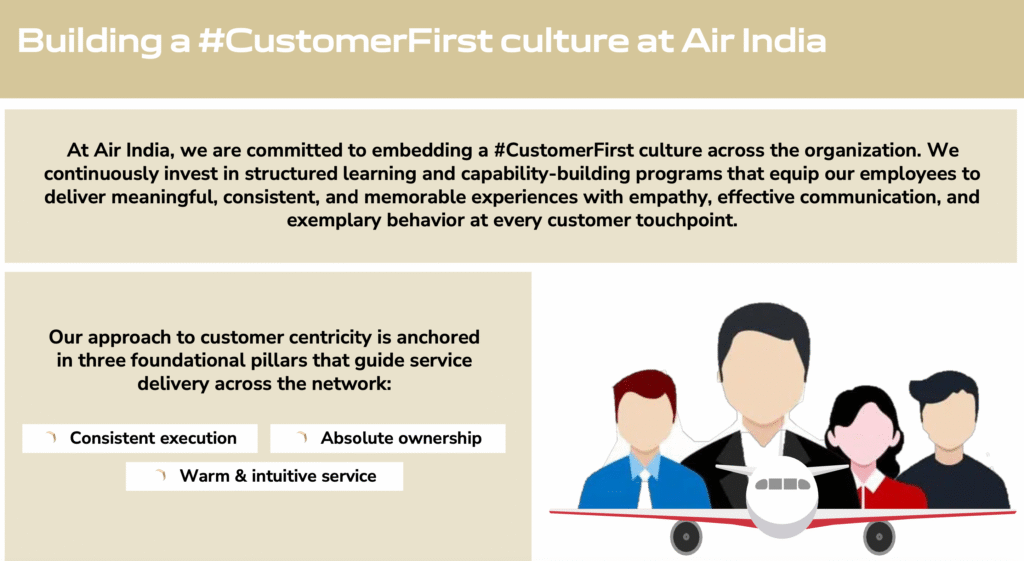
Air India’s culture shift has been equally important. After decades under government ownership, Birla explained that it now places strong emphasis on what a “customer-first mindset” built around consistent execution, ownership, and intuitive service.

Prioritizing Inflight Experience Through Customer Insight

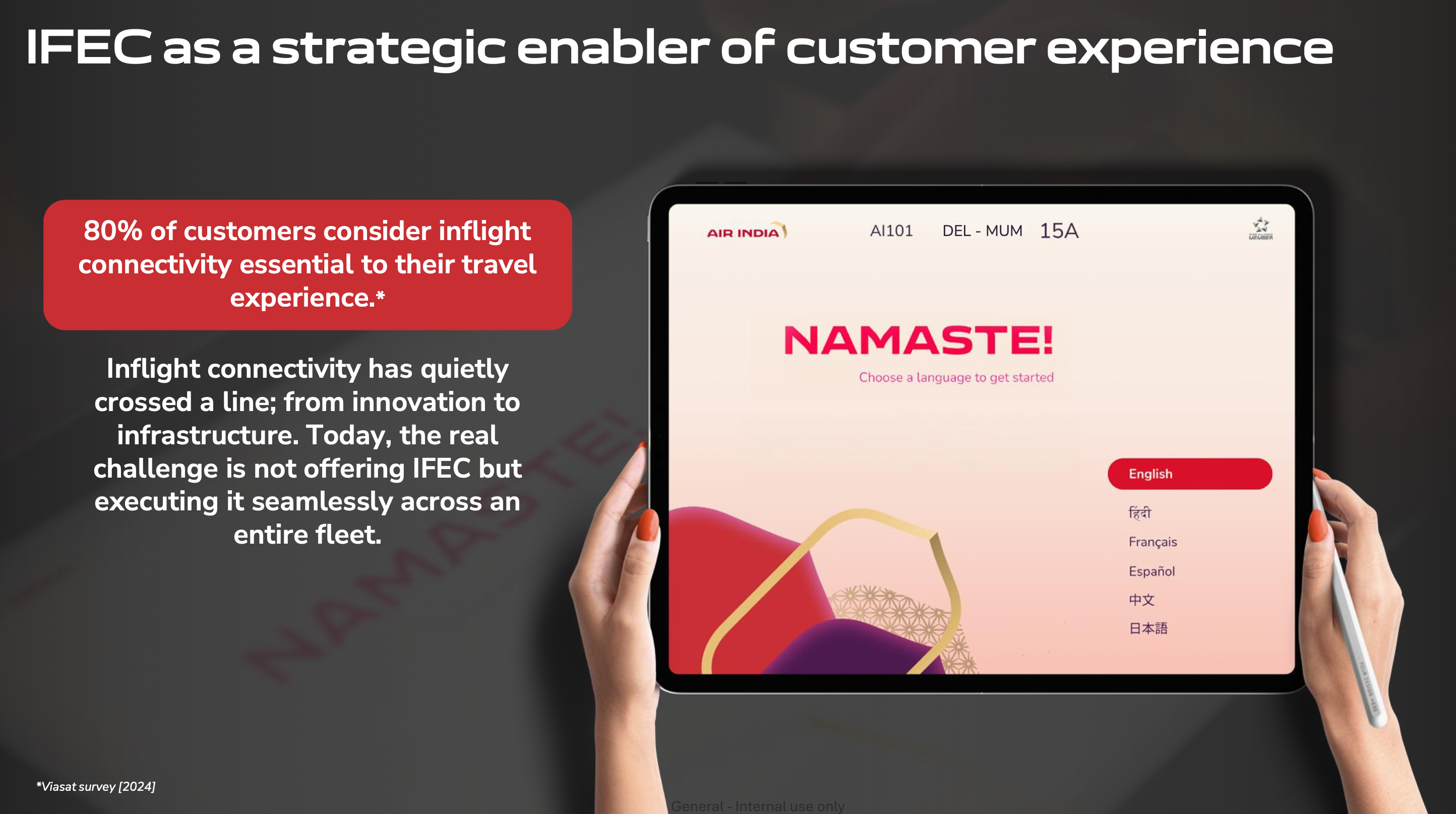
When asked how in-flight entertainment and connectivity (IFEC) factored into Air India’s broader transformation, Birla made clear that decisions were rooted in direct customer feedback rather than internal assumptions. “We didn’t want to do it based on what consultants were telling us or based on what we thought needs to be done, but on what the customer really wanted.”

Air India engaged nearly 10,000 customers globally to identify priorities, and IFEC ranked among the top ten focus areas. “So right from day zero, we were clear that in-flight entertainment and connectivity is going to be a big driver of customer affinity, customer loyalty,” Birla said. This emphasis made inflight experience one of the earliest visible signs of transformation for passengers and reinforced confidence that change was underway.

“From day zero, we were clear that in-flight entertainment and connectivity is going to be a big driver of customer affinity, customer loyalty.”

The airline faced the added complexity of integrating multiple fleets and systems following mergers. Birla described how delivering a consistent experience required simplifying what customers saw, even when backend systems differed. “The first thing that we did was create a uniform UI (user interface),” she explained. “Whatever may be happening at the back end, the customer shouldn’t be seeing that.”

To address hardware differences, the airline introduced streaming solutions on aircraft without seatback screens while retrofit programs progressed. Birla described this approach as part of transparent communication with customers.

“We know it’s taking time for us to build the experience that you’re looking for,” she said. “But in the interim, we have a bring-your-own-device (BYOD) streaming solution available that allows you to stream more than 2,000 hours of content.”

Balancing Global Appeal with Cultural Identity

Air India’s content strategy reflects its ambition to serve a global audience while simultaneously celebrating its Indian heritage. Birla explained that programming decisions are continuously shaped by passenger feedback and evolving viewing trends. “We very rigorously track feedback,” she said. “We track qualitative inputs that they provide to us after every flight.”

The airline offers a mix of Bollywood, Hollywood, regional cinema, and international programming. Birla pointed to Korean dramas as an example of emerging content trends that resonate with passengers. Children’s programming has also expanded to include both video and audio options based on parental feedback. “While we need our kids to be engaged, we don’t want them watching a screen all the time,” she said.

Image via Air India

This approach supports Air India’s broader brand vision as “a world class airline with a deeply rooted Indian heritage and culture.”

Crew feedback also plays an important role in shaping the onboard experience. Birla emphasized that frontline employees offer valuable insights into passenger behavior and service gaps. “They’re in constant touch with passengers,” she said.

Data, Feedback, and Continuous Improvement

Birla highlighted the growing role of data in shaping Air India’s inflight strategies. The airline initially focused on reliability and usage trends before expanding into qualitative analysis through surveys, social media, and direct feedback.

“We started with understanding how much time passengers are spending on titles,” she explained, noting that email engagement and social media responses also provide useful signals.

Looking ahead, Air India plans to move toward greater personalization. “Right now, it’s more of a uniform experience,” Birla said. “But we’re on the journey to personalize journeys a lot more.”

Image via Air India

Operational reliability remains central to the airline’s progress. Domestic on-time performance has improved significantly, reaching above 80 per cent, while international operations continue to advance toward target benchmarks. “It’s just when, not if,” Birla said, expressing confidence in the carrier’s ongoing improvements.

Crew enablement has been another focus area. Birla described the shift from manual reporting to fully digital systems as a significant operational improvement.

“We completely changed this to fully digital,” she said, noting that new tools allow crews to manage interactions more efficiently and respond to service challenges with greater sensitivity. Training programs have supported this transition, with over 50,000 employees completing development initiatives designed to align with Air India’s evolving service culture.

“We’re on the journey to personalize journeys a lot more.”

A Customer-Centred Roadmap for the Future

Birla closed the discussion by emphasizing that successful transformation depends on understanding customer needs, securing internal alignment, and maintaining disciplined execution.

“It’s really basic,” she said. “It’s understanding very deeply what your customer is looking for. It’s building buy-in internally. It’s very rigorous in execution and governance.”

She also highlighted the importance of designing the full inflight environment, not just screen content. From refreshments to cultural elements, every detail contributes to the overall passenger experience. “It’s not just what you’re watching on the screen,” Birla said. “It’s the whole environment around.” 

By continuing to listen closely to feedback and adapting along the way, Air India aims to build long-term trust and demonstrate that its transformation is not a one-time shift, but an ongoing commitment to delivering a more reliable, connected, and customer centered travel experience.

Read about the other airline keynote sessions at APEX TECH 2026 from Aeroméxico, Delta and United. For coverage of the panel sessions and workshops, click here.

APEX TECH 2026: Warner Bros. Discovery on the Future of Non-Theatrical Content

APEX TECH 2026: Warner Bros. Discovery on the Future of Non-Theatrical Content
Warner Bros. Discovery SVP Content Sales, IFE & Syndication Esdra Lamy with APEX CEO Dr. Joe Leader during their keynote session at APEX TECH 2026. All Photos: Stewart Media Digital

During the second day of APEX TECH, Warner Bros. Discovery SVP Content Sales, IFE & Syndication Esdra Lamy joined APEX CEO Dr. Joe Leader for a keynote conversation that reframed what airlines should prioritize as the streaming landscape continues to evolve. Lamy emphasized that in-flight entertainment (IFE) still delivers something increasingly rare on the ground: a premium, curated environment designed for immersion, discovery, and intentional brand presentation, supported by reliable delivery and stronger insight into what passengers actually watch.

“The world is changing basically daily,” Lamy said, describing an industry where distribution routes no longer follow a predictable pipeline. Studios are navigating mergers, streaming expansion, and new forms of content creation, while airlines face a growing opportunity to differentiate through thoughtful curation instead of simply replicating at home viewing.

“When the traditional path no longer exists, studios have to look at the world differently.”

“I think it’s opened up the landscape,” he continued. “Studios have to look at their world slightly differently.”

A Media Landscape That Keeps Rewriting the Rules

Lamy opened the session by placing airline content strategy within the broader transformation reshaping the global media industry. Creation, attention, and distribution have expanded outward while traditional studio structures continue to consolidate and reorganize. What once flowed through a predictable Hollywood pipeline now competes with other creators, platforms, and entirely new categories of content.

“Once upon a time, everything funneled through the Hollywood pipeline,” Lamy said. Today, “anyone with a phone can become a content creator and generate a mass audience.” As a result, “there’s so much to compete for people’s attention,” particularly on the ground where screens and platforms constantly divide focus.

He argued that this fragmentation makes the inflight environment more valuable, not less. “That’s what makes the inflight experience unique and special,” Lamy said, calling it “the only remaining true captive audience.”

At the same time, the studio ecosystem itself continues to shift. Mergers, acquisitions, and vertical integration have redefined how companies approach licensing and distribution. “The business has shrunk and at the same time it has grown,” Lamy explained. “What does that do with licensing? When the traditional path no longer exists, studios have to look at the world differently.”

Looking Beyond Replicating At Home Viewing

When Dr. Leader asked what airlines often misunderstand about streaming onboard, Lamy addressed the assumption that inflight should simply mirror at home consumption. While passengers increasingly expect connectivity and streaming access, he cautioned against copying the ground experience too closely.

“Trying to duplicate exactly how people consume content on the ground would be cheating the customer experience,” Lamy said.

Instead, he described inflight as a distinct emotional and behavioral environment where curation matters. “Part of the experience is the ability to discover,” Lamy said, pointing to the value of having programmers assemble selections that help passengers encounter something unexpected.

He also highlighted how mood and context shift at altitude. “When you get on the plane, you’re already anxious to begin with,” Lamy said. “Traveling can be anxious for just about all of us.” In that setting, content choices often reflect emotional needs. “Am I looking for comfort? Am I looking to be excited and to be scared?” he asked. It is not only about access, but about creating an experience that aligns with how passengers feel while traveling.

Airlines Can Do What Platforms Often Cannot

Lamy then pointed to a distinct advantage airlines hold over individual streaming platforms. Because airlines license content across studios and rights holders, they can curate collections in ways single platforms often cannot, especially when franchises and talent libraries span multiple distributors.

“Airlines are probably the only place that is in the best position to be able to honor that talent and actually put up all that work in one place,” Lamy said. “That is unique.”

“You are truly the one place that can help set the unique tone for the passenger.”

This capability allows airlines to celebrate storytelling across studios, offering passengers a broader and more immersive experience. As content continues to fragment across platforms, that role becomes even more important. By bringing titles together in one place, they create a smoother and more accessible discovery process.

Lamy also emphasized the role airlines play in shaping how stories are presented. “You are truly the one place that can help set the unique tone for the passenger,” he said, adding that a thoughtful approach turns IFE into more than background viewing and makes it a meaningful part of the journey.

What is Coming Next? More Flexibility

As the discussion shifted toward windowing, rights, and non-theatrical distribution, Lamy explained that flexibility has become increasingly important. “Windowing today is subjective,” he said. “It can vary by studio and even by individual titles.”

He noted that Warner Bros. Discovery has occasionally allowed partners to move between windows for special initiatives. “We are one of the few studios that have allowed partners to jump windows for special events,” Lamy said. “As long as it makes sense internally and supports the brand, we are open to those conversations.”

This openness reflects a broader recognition of airlines as strategic partners rather than secondary distribution channels. Inflight exposure can drive awareness, spark interest in franchises, and create meaningful global touchpoints.

Operational reliability also remains essential to IFE’s future success, explaining that buffering or delays can shape how audiences perceive content. He claimed studios evaluating inflight partnerships increasingly consider how delivery affects brand integrity.

As streaming models evolve, Lamy added that studios continue to look at how onboard access fits within broader licensing frameworks. While new approaches may emerge, he believes caution remains necessary. “We are all in the business of meeting customers where they are,” Lamy said. “But we must also ensure that business models make sense.”

Security, rights management, and brand protection remain critical considerations as technology advances. “As technology evolves and becomes more secure, conversations will continue to progress,” Lamy noted.

Smarter Measurement Intent and the Passenger Focus

From Lamy’s perspective, the future of IFE depends on reliability, insight, and intent. He acknowledged that airlines already analyze what passengers actually watch, and that those insights help guide programming decisions.

At the same time, he stressed the importance of thoughtful brand alignment. “There’s got to be real intent behind what we’re doing around brand appearance.”

“We are all in the business of meeting customers where they are, but we must also ensure that business models make sense.”

Technology now plays a central role in shaping these decisions. “Technology sort of wrapped itself around the content,” Lamy said, describing a shift where success is defined not only by what is licensed but also by “how you deliver content, how you measure content, and the continuous evolution of that content ecosystem through technology.”

Lamy closed by encouraging the industry to keep the conversation going, continue asking questions, and stay focused on the passenger. “Ultimately, it’s about the consumer,” he said, and ensuring people have “the opportunity to experience the content the right way, wherever they want to.”

APEX TECH 2026: Edge Caching and Streaming Reshape the Future of Inflight Content

APEX TECH 2026: Edge Caching and Streaming Reshape the Future of Inflight Content
Pictured (left to right): Siden Head of Business Development and Partnerships Glenn Gonzales; Spafax VP Global Business Development & Growth Dimitrios Tsirangelos; Safran Senior Director of Passenger Services Clare Josey; Quvia Aviation Product Manager Isaac Stasevich; Axinom CEO Ralph Wagner; and APEX CEO Dr. Joe Leader. All photos: Stewart Media Digital

At APEX TECH 2026, the software layer behind in-flight entertainment (IFE) took center stage during a panel moderated by APEX CEO Dr. Joe Leader. The session brought together five industry leaders with different perspectives: Siden Head of Business Development and Partnerships Glenn Gonzales, Safran Senior Director of Passenger Services Clare Josey, Quvia Aviation Product Manager Isaac Stasevich, Spafax VP Global Business Development & Growth Dimitrios Tsirangelos, and Axinom CEO Ralph Wagner.

Together, they explored how edge caching, streaming, and data orchestration are shifting from behind-the-scenes technology into core building blocks of the inflight experience. The discussion focused on how rising expectations for nonstop streaming and faster content updates are pushing airlines to balance big ideas with licensing limits, complex supply chains, and systems that actually work inflight.

“The bottom line is [airlines] want passengers to experience what they experience at home.”
– Dimitrios Tsirangelos, Spafax

Airline Ambition Meets Technical Reality

Dr. Leader opened the session by framing the discussion about the shift away from hardware and into software, content, and data intelligence. That shift, he argued, will determine whether inflight experiences scale successfully.

“We’re seeing how shifting from platforms and hardware into software, content, and data edge intelligence determines whether the inflight experience will actually work at this new scale,” Dr. Leader said.

Tsirangelos described how airline expectations are changing, but not always clearly defined. “We’re seeing a shift in the mindset of the airlines,” he said. “Some of them, they don’t know what they want. The bottom line is they want passengers to experience what they experience at home.”

That gap exposes the tension between ambition and operational reality. Airlines want streaming, dynamic libraries, and faster refresh cycles, but they are still operating within legacy systems and strict rights frameworks.

“They are asking all of us questions like, what is possible, what can we do, and how can we securely get content to our passengers without infringing any rights,” Tsirangelos said. “That’s why we’re here, to orchestrate all this.”

Gonzales added that those expectations often underestimate the complexity behind streaming at scale. “We hear things like, I just want to enable this Netflix app and have it launch next week,” he said. “The complexity around that is very difficult.”

“You can put content onboard early, but the license defines when you can start streaming it and when you stop.”
– Ralph Wagner, Axinom

He explained that streaming performance depends on more than bandwidth. “You’re never going to cache the entire catalog of a streamer,” Gonzales said. “It’s really about network awareness and content awareness.”

Josey added that the challenge goes far beyond connectivity. “We can get content to the aircraft in real time. We can get it immediately before departure. We can even get it while it’s flying,” she said. “The biggest challenge is the workflow and the supply chain.”

Studios, distributors, and airlines operate on different timelines, and aligning those processes remains one of the biggest barriers to scaling streaming onboard. “Airlines underestimate what’s involved in that entire ecosystem,” Josey said.

Rethinking the Content Supply Chain and Licensing Models

“Every studio is going to be different. Some will allow more flexibility. Some will not.”
– Clare Josey, Safran

As airlines continue to move toward more dynamic libraries and frequent refresh cycles, the traditional content supply chain is under immense strain. Tsirangelos said the industry needs to rethink how content is licensed, bundled, and distributed.

“This is completely new,” Tsirangelos said. “We need to rethink the licensing models with the studios.”

He explained that new delivery models change everything from bundling to distribution. “There are so many different ways of delivering content now, whether video on demand, FAST channels, or other formats,” he said. “When we talk about infinite libraries, new models need to be agreed between content providers, platforms, and studios.”

Dr. Leader followed up by asking whether app-based streaming models pose an existential threat to traditional content service providers. Tsirangelos argued the opposite. “The future role of the CSP is orchestration,” he said. “Orchestrating rights, recommendations, and how content is delivered using data.”

Josey noted that dynamic swap-in and swap-out models introduce new complexities around auditability. “You need really solid audit trails,” she said. “Upstream distributors and rights holders have to be paid based on usage. That reporting becomes critical.”

Wagner added that Digital Rights Management (DRM) will remain non-negotiable, regardless of how flexible systems become. “You never unlock DRM,” he said. “The DRM license defines when content is consumable.”

He explained that pre-positioning content does not mean violating rights. “You can put content onboard early, but the license defines when you can start streaming it and when you stop,” Wagner said. “That gives airlines flexibility without breaking compliance.”

Josey added that studios will never approach this in unison. “Every studio is going to be different,” she said. “Some will allow more flexibility. Some will not.”

“Five or six megabits per second times 200 or 300 passengers adds up fast. You have to optimize around network awareness.”
– Glenn Gonzales, Siden

Edge Caching Intelligence Over Bandwidth

As connectivity improves, Dr. Leader posed an important question. Does higher bandwidth reduce the need for edge caching, or make it more important? All the panelists agreed that edge intelligence becomes more critical, not less.

“For me, it becomes more important,” Gonzales said. “As new content types emerge, gaming, high-definition video, interactive services, you cannot just stream everything.”

He pointed out that even modest increases in stream quality quickly multiply at scale. “Five or six megabits per second times 200 or 300 passengers adds up fast,” he said. “You have to optimize around network awareness.”

Josey framed edge caching as a tool for curation just as much as performance. “Just because you can stream everything does not mean you should,” she said. “Airlines still want to curate the experience.”

“It’s induced demand. The more bandwidth you give, the more people are going to ask to use it.”
– Isaac Stasevich, Quvia

She introduced a future where micro-assets, highly personalized content, may only appeal to a handful of passengers on a given flight. “That is where edge intelligence shines,” Josey said. “You bring in what you need, keep it as long as it performs, and then remove it.”

Wagner drew parallels to the broader internet. “Netflix is not streaming from headquarters,” he said. “They put content as close as possible to the consumer. On an aircraft, the closest place is onboard.”

Stasevich added that higher bandwidth actually increases demand. “It’s induced demand,” he said. “The more bandwidth you give, the more people are going to ask to use it.” That includes analytics, operational systems, and third-party services, not just entertainment. “Everyone wants to move more data on and off the aircraft,” he said.

Data Products and the Hybrid Edge Model

The discussion then turned to data. Stasevich said airlines are clear about what they want to do with data, but less clear about how to move it without hurting the passenger experience. “The goal is clear,” he said. “Bring the data into AI models, personalize experiences, and do that without impacting passengers.”

The challenge lies in deciding what processing happens onboard versus in the cloud. “There will always be a balance,” Stasevich said. “There has to be ways to process the data on the plane, cache it and get ready to offload it, and, like I said earlier, offloaded when you’re not going to affect the passengers.”

Wagner described the future as inherently hybrid. “Some processing will be done on the ground because it is more efficient,” he said. “Some will be done onboard because it has to be.”

“If something goes viral, that is when you want to push it to other edge caches.”
– Glenn Gonzales, Siden

That hybrid approach extends beyond entertainment. Wagner cited crew applications, operational data, onboard shopping, and even real-time support as use cases that benefit from edge-cloud collaboration.

“What matters is whether the onboard architecture is open,” he said. “Can you add another server? Can you run software onboard that was written for the cloud?”

Josey added that standards and IP-based architectures will be critical to future-proofing fleets. “Airlines need to be able to deploy applications quickly,” she said.

Future-Ready Decisions and the Role of Intelligence

In the final round of questioning, the panel looked ahead to future trade-offs. As content formats shift toward shorter, more snackable experiences, assumptions around reuse and caching change.

Tsirangelos said short-form content already performs well in ground environments like lounges. “Nobody sits in a lounge to watch a two-hour movie,” he said. “Shorter content is becoming more interesting.”

Gonzales noted that short-form content often requires less data, but still benefits from intelligence. “If something goes viral, that is when you want to push it to other edge caches,” he said.

Josey differentiated between lean-back and lean-forward experiences. “Seatback is still a lean-back experience,” she said. “But personal devices allow for different content types. The system needs the intelligence to decide where each asset belongs.”

As the session closed, the message was consistent across the panel. Edge caching and streaming are no longer niche technical topics. They sit at the center of how airlines scale content, manage cost, and protect the passenger experience.

APEX TECH 2026: Inside United’s Approach to In-Flight Engagement with Kinective Media

APEX TECH 2026: Inside United’s Approach to In-Flight Engagement with Kinective Media
United Airlines Managing Director of Strategic Partnerships Mike Petrella with APEX CEO Dr. Joe Leader during their keynote session at APEX TECH 2026. All photos: Stewart Media Digital

United Airlines opened the second day of APEX TECH at Los Angeles International Airport with a keynote that reframed how in-flight entertainment and connectivity (IFEC) contribute to airline performance. Titled “United’s Kinective Media: Turning Passenger Satisfaction into Major Airline NPS and RASM Increases,“ the session featured APEX CEO Dr. Joe Leader in conversation with United Airlines Managing Director of Strategic Partnerships Mike Petrella. Petrella outlined how the airline is using connected media, first-party data, and next-generation connectivity to turn the seatback screen into a scalable engagement and revenue platform.

Screens as a Digital Gateway to Passenger Satisfaction

Petrella opened by framing United’s massive seatback IFE rollout as a strategic decision rooted in continuity. Passengers now live in a digital environment shaped by streaming, personalization, and intuitive interfaces, and United wants the in-flight experience to feel like a natural extension of that world.

“Connected media allows us to interact on a personalized basis. Not just brand awareness, but full-funnel engagement.”

“Our screens represent one of the most immersive opportunities we have to engage travelers,” he said. “It is a one-to-one interaction, not a broadcast.”

Rather than overwhelming passengers with content or commerce, United designs the experience to meet travelers where they are. The goal is for passengers to have familiarity and control. When a passenger turns on a screen, they can choose to relax, watch content, explore the map, or simply turn the screen off.

“We want surprise and delight, not shock and awe,” Petrella said. “People are in this vessel for three and a half hours. It should be the best possible experience.”

That philosophy shapes how United approaches personalization. The experience adapts to individual travelers without crossing the line into discomfort. “There is a fine line between personalization and being spooky,” Petrella said. “We are very conscious of that.”

Privacy and trust are at the center of every decision. Petrella emphasized that customer data protection is foundational, especially as United builds a connected media platform. “Privacy will never, ever be an afterthought,” he said.

“We want surprise and delight, not shock and awe.”

Data Shows the Moving Map is Still Very Relevant

United’s connected media strategy relies on signals generated through real passenger behavior, not assumptions. The airline already knows who is onboard through the manifest, but the value comes from understanding how travelers interact with the experience.

“What are people actually doing on the screen?” Petrella explained. “Are they watching a video all the way through? Are they interacting with the map? Are they scanning a QR code?”

The interactive map has emerged as one of United’s most heavily used features. Petrella described how it has evolved from a simple navigation tool into a discovery platform. Travelers can explore destinations, learn about locations they are flying over, and engage with contextual content tied to their journey. “It is not just ‘here is the state you are flying over,’” he said. “It is about inspiration.”

“It is not good for the advertiser or the traveler to show something irrelevant.”

United made headlines regarding its moving map last year when it integrated a ‘Control Tower’ mode. It has also integrated its former inflight magazine Hemisphere into the digital map experience, creating opportunities to highlight destinations, events, and experiences in a way that feels relevant. Passengers can see events linked to where they are flying over or heading to, or simply enjoy spotting a familiar hometown on the screen.

“These are the moments that make people smile,” Petrella said. “That is what creates resonance.”

United continuously measures engagement across content, advertising, and features. Performance is evaluated using real usage, completion rates, and downstream behavior. If something does not resonate with passengers, it is adjusted or removed. “It is a constant cycle of testing and learning,” Petrella said.

Connected Media Enables a New Commercial Model

Petrella drew on his background in digital advertising to explain why connected media represents a fundamental shift from traditional in-flight advertising. Legacy airline advertising relied on broad placement and limited targeting. On the other hand, connected media enables relevance. “Connected media allows us to interact on a personalized basis,” he said. “Not just brand awareness, but full-funnel engagement.”

Rather than showing the same message to every passenger, United can tailor content and offers based on travel context, behavior, and loyalty signals. A frequent business traveler might see different recommendations than a family on vacation, while a weekly flyer may not need to see a credit card offer they already hold.

“It is not good for the advertiser or the traveler to show something irrelevant,” Petrella said.

The airline supports multiple commercial models depending on partner goals. Some campaigns focus on broad brand presence, while others emphasize transactions, subscriptions, or bookings. What matters is alignment between intent, audience, and experience.

Petrella explained that advertising must feel additive, not disruptive, comparing the approach to a curated menu instead of overwhelming choices. “It should feel integrated into the journey,” he said. “You should not feel like you are being advertised to.”

United also tracks performance beyond the aircraft. Engagement onboard connects to behavior in lounges, apps, email responses, and post-flight actions. This closed-loop measurement helps the airline refine what works and eliminate what does not.

Building the Ecosystem Beyond the Aircraft

“Data is the horizontal layer that supports everything. Our card program, media business, partnerships, content, and loyalty all connect through it.”

Looking ahead, Petrella positioned connected media as part of a broader ecosystem that spans the entire traveler journey. He described eight key moments, from inspiration and planning to the onboard experience, destination, return home, and day-to-day loyalty engagement. “This is not just about flying from point A to point B,” he said. “It is about everything around it.”

United’s relaunch of its MileagePlus X app reflects that thinking. The platform connects commerce, loyalty, and media beyond the aircraft, allowing travelers to earn and use miles in daily life. While the app is still in beta testing, it signals how United plans to integrate data across channels.

“Data is the horizontal layer that supports everything,” Petrella said. “Our card program, media business, partnerships, content, and loyalty all connect through it.”

Petrella argued that building this capability internally with Kinective Media, rather than relying entirely on third parties, gives United control over experience quality and strategic direction. It also allows the airline to move faster as connectivity improves and new capabilities emerge.

Next-generation connectivity, including higher bandwidth systems, will amplify what United has already built. “Connectivity empowers what we are doing,” he said. “It creates more opportunities for personalization.”

Petrella closed by hinting that United’s connected media strategy is still in its early stages, with major updates coming later this year. While he stopped short of sharing details, he made clear that new capabilities are on the way as connectivity and personalization deepen across the fleet.

“There’s a couple of things coming out that I can’t share yet,” Petrella said. “But later this year, the next time you’re on a flight, you’re going to be incredibly excited about what you see.” Dr. Joe Leader built on that momentum, inviting Petrella to share those updates at FTE Global in September.

Read about the keynote addresses from Aeroméxico and Delta Air Lines at APEX TECH 2026. For further event coverage, including round-ups of the panel sessions, click here.

APEX TECH 2026: Inside Aeroméxico’s Data-Driven Strategy for IFE, Connectivity, and Personalization

APEX TECH 2026: Inside Aeroméxico’s Data-Driven Strategy for IFE, Connectivity, and Personalization
Aeroméxico Chief Digital and Customer Experience Officer Andrés Castañeda Ochoa during the opening keynote at APEX TECH 2026. All photos: Stewart Media Digital

Aeroméxico Chief Digital and Customer Experience Officer Andrés Castañeda Ochoa opened APEX TECH 2026 by challenging the industry to rethink how it defines progress in in-flight entertainment and connectivity (IFEC). Speaking to an audience of technology and passenger experience leaders at LAX, Castañeda argued that the next phase of in-flight experience depends on a disciplined focus on customer needs.

In his keynote, Castañeda outlined how artificial intelligence (AI) and enterprise data strategies are reshaping the connected cabin. His message focused on moving beyond basic connectivity toward integrated intelligence across operations, customer touchpoints, and onboard systems. The goal, he said, is simple but ambitious: turn data into real-time value for passengers and airlines alike.

“Today, about 80 per cent of our 400 applications are already in the cloud.”

Gaining a Unique Perspective

Castañeda opened his keynote by explaining why his role at Aeroméxico gives him a unique perspective on the industry. As both Chief Digital Officer and Chief Customer Experience Officer, he oversees everything from marketing and product to IT, data, and digital platforms. “It’s a big title,” he said, “but mainly it’s two areas. Everything around the customer, and everything around IT and digital.”

That structure enables Aeroméxico to align technology decisions directly with customer insight. Instead of building systems in isolation, the airline uses feedback from Net Promoter Score (NPS), marketing data, and onboard behavior to shape how technology supports the passenger journey.

He explained that the airline has emerged from its pandemic restructuring stronger than ever. “Since we exited restructuring in 2023, we have had the best years in our history,” he said. “You never pass a crisis to take a big opportunity, but this one forced us to reset and invest.”

Those investments are paying off. Aeroméxico surpassed 50 points in global NPS in 2025, has earned APEX Five Star status for six consecutive years, and has ranked as the world’s top on-time performing airline for two years in a row.

“Our customers are not comparing us to other airlines anymore. They are comparing us to Apple, Amazon, and Netflix.”

The Limits of Connectivity Alone

While Aeroméxico has seen strong results following its recent investments, Castañeda was candid about the structural challenges holding the industry back. Chief among them is hardware complexity and long-term contracts that limit flexibility.

“In our fleet of around 170 aircraft, we have four Wi-Fi connectivity providers and five or six different hardware configurations,” he said. “And when you sign ten-year contracts, if you want to innovate, you are kind of stuck.”

Those limitations are increasingly visible to passengers, whose expectations are shaped by digital platforms outside aviation. “Our customers are not comparing us to other airlines anymore,” Castañeda said. “They are comparing us to Apple, Amazon, and Netflix.”

Content fragmentation only adds to the challenge. Live sports, premium content, and exclusive programming are spread across multiple platforms, each with its own licensing rules. “If you want Formula One, it’s Apple TV. Tennis is ESPN. NFL is somewhere else,” he said. “That makes it harder for us to deliver what customers want, when they want it.”

Even with improving connectivity, many aircraft still rely on slow content update cycles. “Most of our aircraft require a two-month programming cycle,” Castañeda said. “That makes it very hard to have the most relevant content onboard.”

The takeaway was clear. Connectivity matters, but what really changes the experience is what airlines build on top of it. With the right architecture and intelligent systems, faster internet becomes a tool for better, more personalized journeys.

“When you have 15 or 20 million customers, you need intelligence at scale. It’s not one by one.”

Turning Data into Intelligence at Scale

To address these challenges, Aeroméxico has focused on building a unified enterprise data foundation designed to support intelligence across the company. Over the past five years, the airline has partnered with AWS to migrate and modernize its systems.

“We decided not only to migrate our applications, but to modernize them,” Castañeda said. “Today, about 80 per cent of our 400 applications are already in the cloud.”

That foundation allows Aeroméxico to connect data across the full journey, from ticket purchase and check-in to IFEC. Rather than treating each touchpoint separately, the airline consolidates all data into a centralized data marketplace.

“We now have up to 90 different variables per customer,” he said. “It’s not about personal identity. It’s about personas and behaviors […] When you have 15 or 20 million customers, you need intelligence at scale. It’s not one by one.”

Castañeda explained that Aeroméxico separates data producers from data consumers. Every interaction generates data, and teams across the airline access it through APIs to design personalized products and services.

This approach enables real-time decision-making in the connected cabin. Content recommendations, connectivity offers, retail opportunities, and service interactions can all be shaped by context and intent.

“Hyper-personalization is no longer just a technology. It’s the new standard in hospitality.”

Personalization, People, and the Road to 2030

During a fireside chat with APEX CEO Dr. Joe Leader, Castañeda addressed how difficult true personalization can be, as passengers do not fit neatly into fixed categories. “The same person can be a business traveler one day and a family traveler the next,” he said. “So how do you predict that?”

This is why Aeroméxico approaches personalization through context rather than labels. On-time performance may matter more on a business trip, while entertainment, flexibility, or service touchpoints may matter more on leisure journeys. Understanding those shifts requires scale, data, and constant learning. 

“You need a big platform to understand that,” Castañeda said. “And then you need to train your frontline teams to deliver on it.”

Castañeda closed by sharing Aeroméxico’s vision for 2030, where integrated intelligence supports every stage of the journey. AI-driven systems provide a real-time view of the customer, while technology stays in the background, enabling human service rather than replacing it. “Hyper-personalization is no longer just a technology,” he said. “It’s the new standard in hospitality.”

Dr. Leader echoed that sentiment at the end of the conversation. “You are investing in your product, your people, and your digital foundation,” he said. “That is how airlines win the next decade.”

For Aeroméxico, integrating intelligence across IFE and connectivity is ultimately about using data in the service of people. “We don’t just fly with wings,” Castañeda said. “We fly with the heart of those who make Aeroméxico possible.” 

Beyond the Box: How West Entertainment is Re-Engineering the IFEC Ecosystem

Beyond the Box: How West Entertainment is Re-Engineering the IFEC Ecosystem
Image via West Entertainment

In-flight entertainment is shedding its skin. Once defined by static catalogues refreshed on a 60-day cycle, the industry is pivoting toward a dynamic, data-driven, and rights-aware content ecosystem. As airlines face the complexity of this new landscape, West Entertainment is positioning itself not just as a content provider, but as a technical bridge between airlines and the latest passenger experience-enhancing technology.

West Entertainment continues to innovate in order to meet the opportunities and challenges that this shift in the in-flight entertainment and connectivity (IFEC) market provides. The company is currently focused on three key pillars: cloud-based and edge-cached architectures; managing rights complexity; and increasing personalization. 

“We understand the balance between automation and editorial control. WestIQ is not about replacing human curation. Instead, it’s about augmenting decisions.”
– Kate Groth, West Entertainment

Positioning Content Closer to ‘The Edge’

The Lab at West it is redefining how media is prepared, secured, and delivered for virtualized IFE environments. West Entertainment VP Operations and Technology Solutions Eric Silverstein explained, “As IFE platforms move from aircraft-bound servers and physical media loads to cloud-based and edge-cached architectures, the content supply chain built around hard drives, manual loading, and monolithic updates no longer holds. At West, we see this change as an operational opportunity as much as a technical one.”

West is working hand-in-hand with leading OEM platforms and strategic tech partners to leverage dynamic updates and uploads. “With adaptive encoding and packaging, metadata normalization, content modularity, and DRM and security alignment, West is meeting evolving passenger expectations,” stated Silverstein.

The Future is Rights-Aware Workflows, Not Manual Compliance

One of the biggest hurdles for airlines, ISPs and content providers is managing evolving rights complexities across aircraft types, regions, and connectivity models. To tackle this issue head-on, West Entertainment’s WebyWest workflow engine provides a “rights-aware” system that understands the geographic and technical limitations of a content license. “This automation allows airlines to manage global fleets without the risk of rights infringement or the overhead of manual tracking,” said West Entertainment President Kate Groth.

As a direct result of the shifting landscape regarding content rights, West has also launched WeFly, a studio-approved OTT platform. The solution is engineered to deliver a superior content experience, leveraging a cloud-native, over-the-top architecture to eliminate the traditional constraints of legacy IFE systems. 

Personalization, Without the Hefty Price Tag

West Entertainment’s proprietary AI model, WestIQ, is designed to take limitless data sources and translate them into specific business objectives by enabling real-time trend analysis, predictive analytics, intelligent content curation, budget optimization, and the creation of a personalized passenger experience. It does so across multiple platforms, including seatback IFE, wireless IFE and LEO-connected streaming without fragmentation. 

For example, WestIQ can analyze unique airline data to curate content that resonates with specific routes, such as business-heavy long-haul flights or leisure-focused domestic services. It can also turn data into revenue by presenting targeted offers, be it advertising, Duty-Free, buy-on-board food and beverage, or destination-based activities, at the moment of highest engagement.

“With adaptive encoding and packaging, metadata normalization, content modularity, and DRM and security alignment, West is meeting evolving passenger expectations.”
– Eric Silverstein, West Entertainment

Perhaps most excitingly, WestIQ can reorganize the graphical user interface of an IFE system in real-time based on passenger interactions. 

Groth commented, “We understand the balance between automation and editorial control. WestIQ is not about replacing human curation. Instead, it’s about augmenting decisions around programming with insights on performance and localization. This translates to smarter recommendations and a better understanding of passenger behaviour that turns data into actionable insights for airlines.”

West Entertainment is looking to define the new standard for IFEC. By prioritizing “rights-aware” automation, edge-based content delivery solutions and data-driven insights through WestIQ, it is enabling carriers to transform from traditional content distributors into sophisticated digital experience partners.

West Entertainment President Kate Groth is taking part in a panel discussion titled “From Studio to Screen: Managing Rights within the Future Content Mix” at APEX TECH in LA on January 28 between 09:55 AM to 10:40 AM. 

APEX TECH 2026: Meet APEX Director Dimitrios Tsirangelos, Who Believes IFEC is on the Cusp of True Personalization

APEX TECH 2026: Meet APEX Director Dimitrios Tsirangelos, Who Believes IFEC is on the Cusp of True Personalization
Spafax SVP Global Business Development and Growth Dimitrios Tsirangelos. Photo via Spafax

Spafax SVP Global Business Development and Growth Dimitrios Tsirangelos has been involved in the passenger experience industry for over three decades, and remembers attending one of the first World Airline Entertainment Association (WAEA) events. In December 2025, he became a newly appointed member of the APEX Board of Directors. APEX Insights spoke with him to find out his ambitions during his tenure.

Throughout his career, Tsirangelos has worked across the whole in-flight entertainment and connectivity (IFEC) value chain, helping airlines and their partners to translate shifting passenger expectations into scalable solutions spanning content, operations, monetization and data-driven engagement. He explained, “Over time, my focus has increasingly moved towards integrated IFEC ecosystems, and how content, connectivity, user experience and data analytics come together to drive both satisfaction and sustainable revenue.”

“The skills I lean on most are ecosystem building and facilitation.”

He initially joined Spafax in October 2023 as VP Business Development, IFE Technology & Innovation before transitioning to his new role in January. “I sit at the crossroads between airline strategy, product and service design and the execution of specific programs or projects,” he said.

Tsirangelos believes it is this experience that will be useful to APEX as an association. “The skills I lean on most are ecosystem building and facilitation, bringing the diverse stakeholders to the table and translating between the airline priorities and the supplier reality for content service providers or experience service providers,” he continued.

During his time on the APEX Board of Directors, he hopes to “turn good intentions into complete initiatives.” He added, “One of my objectives is to contribute to standards, collaboration and industry progress. I would also like to focus on discussions around what creates measurable value not only for the airlines, but also for APEX’s supplier members, so that everyone sees APEX as an important place to be.”

“We are working on products and services that help airlines move away from static programming to dynamic and data-informed curation.”

Personalization is what most excites him about the current IFEC landscape, “but more than just the recommended titles we’ve had for years now.” Instead, Tsirangelos clarifies what he means by personalization is “an experience grounded in better metadata, context, signals and continuous measurement.” He added, “We are working on products and services that help airlines move away from static programming to dynamic and data-informed curation, which then provides clearer outcomes, better engagement, NPS improvements and higher ancillary revenue.

“We are interested in the intersection between cloud-based content streaming through the different LEO, GEO and mixed orbit systems; smarter edge architectures; improved content workflows that we are already utilizing today; and also privacy-respecting identity layers that enable consistent experiences across seatback, mobile and the whole connected journey. When all these pieces come together, finally personalization can scale across all business models. This is what excites me now and for the future.”

Dimitrios Tsirangelos is taking part in a panel discussion at this week’s APEX TECH event in Los Angeles. His session on “Edge Caching and Streaming” is scheduled for 04:30 PM to 05:15 PM on January 27.

Edelweiss Selects Thompson VantageXL+ for A350 Business Class

Edelweiss Selects Thompson VantageXL+ for A350 Business Class
Image via Thompson Aero Seating

Thompson Aero Seating (TAS) has announced it will provide business-class seats for Edelweiss’ Airbus A350 fleet. Edelweiss has become the first European airline to select the new VantageXL+ for its A350 business-class cabins. The program highlights the airline’s focus on improving long-haul comfort while showcasing the latest evolution of TAS’ Vantage seating platform.

VantageXL+ Debuts on Edelweiss A350s

This week, SWISS leisure subsidiary Edelweiss announced that it has selected the new VantageXL+ from Thompson Aero Seating for its Airbus A350 fleet, becoming the first airline in Europe to offer the A350-specific version of the seat. The airline plans to begin taking delivery of the product later this year, with the product being retrofitted across its six Airbus A350s. 

“Every VantageXL suite delivers an outstanding passenger experience through a wide range of amenities, stowages, and the ability to integrate the latest in IFE equipment, all carefully designed to provide incredible levels of comfort.”
– Andy Morris, Edelweiss Air

The announcement comes as Edelweiss continues to overhaul its long-haul operations. The airline is replacing its Airbus A340-300 fleet with Airbus A350-900 aircraft acquired from LATAM. While the aircraft currently retain their existing interiors, Edelweiss plans to update the cabins as part of its broader premium refresh.

Each ship set of the VantageXL+ will accommodate 32 passengers in a 1-2-1 layout, providing every traveler with direct aisle access. The VantageXL+ builds on Thompson’s popular VantageXL platform, with refinements designed specifically for the Airbus A350 fuselage. Rather than introducing a completely new seat architecture, Thompson focused on improving an established design.

Key updates include expanded footwells and reshaped internal walls, which provide more legroom and improved comfort in bed mode. Thompson has also refined the suite top rails to make the space feel more open and adjusted in-flight entertainment (IFE) screen placement to improve viewing distance and immersion. Together, the changes reflect a broader industry trend toward incremental but meaningful improvements in long-haul cabin comfort.

Photo via Edelweiss Air

The platform also allows Edelweiss to express its brand through customized materials, colors, and finishes. While the seat structure remains consistent, these details help the cabin feel distinctly aligned with Edelweiss’ leisure-focused identity.

Business Suites Anchor Edelweiss’ VantageXL+ Cabin

A defining element of Edelweiss’ VantageXL+ installation is the enhanced front row, branded as the Edelweiss Business Suite. The cabin includes four of these suites, which the airline markets as delivering a first-class-style experience within an all business-class layout.

Each Business Suite features a closing door for added privacy and a large 32-inch display designed to support a more immersive IFE experience. In the center suites, a movable divider allows passengers traveling together to share the space or separate it when flying solo, without changing overall cabin density.

As with all seats in the Vantage family, each Business Suite converts into a fully-flat bed, ensuring consistency in sleep comfort throughout the cabin. The front row configuration allows Edelweiss to introduce a differentiated premium offering without adding the cost and complexity of a separate first-class cabin, an approach that continues to gain traction among leisure-focused long-haul operators.

Image via Thompson Aero Seating

Behind the front row, Edelweiss has branded the remaining 28 seats as Edelweiss Business. These seats use the same VantageXL+ base but swap the door for an aisle-side privacy shield. The configuration allows Edelweiss to offer varying levels of privacy within a single cabin.

Each Edelweiss Business seat also converts into a fully-flat bed and provides direct aisle access. With ample space for work and relaxation, multiple personal storage areas, and a 17.3-inch IFE screen, the cabin is designed to meet the expectations of long-haul leisure travelers.

“Every VantageXL suite delivers an outstanding passenger experience through a wide range of amenities, stowages, and the ability to integrate the latest in IFE equipment, all carefully designed to provide incredible levels of comfort,” said Thompson Aero Seating CCO Andy Morris. “The VantageXL+ represents another step forward in TAS’s commitment to refine and enhance a living product to meet evolving customer requirements. We have been pleased to partner once again with the Edelweiss team on this notable customization of our seats.”

As the first European carrier to bring VantageXL+ into service, Edelweiss provides Thompson with a high-profile regional launch customer. With deliveries planned for 2026, the program sets the stage for wider adoption of the A350-optimized seat and underscores how interactive cabin innovation continues to shape premium long-haul travel.

APEX EXPO 2025: Lounges Emerge as Strategic Battleground for Airline Brands

APEX EXPO 2025: Lounges Emerge as Strategic Battleground for Airline Brands
Pictured (left to right): KLM Future Customer Journey Manager Jordie Knoppers; Saudia Chief Customer Experience Officer Rossen Dimitrov; LOUNGE by YATES+ CEO Janis Tse; and ANA VP Product and Services Toshiya Shimada. All photos: Caught in the Moment Photography

At the 2025 APEX Global EXPO, the evolution of airport lounges took center stage during a panel moderated by LOUNGE by YATES+ CEO Janis Tse. The session brought together three airline leaders with distinct perspectives: All Nippon Airways (ANA) VP Product and Services Toshiya Shimada, KLM Future Customer Journey Manager Jordie Knoppers, and Saudia Chief Customer Experience Officer Rossen Dimitrov.

Together, they examined how airlines are transforming lounges from simple waiting areas into essential extensions of their brand while balancing customer expectations and operational costs. The discussion underscored both the opportunities and challenges facing airlines as they redefine the pre-flight experience in an era of rising demand, limited airport space, and growing pressure for sustainability.

Lounges: the Start of the Travel Journey

Tse opened the panel by noting that lounges have evolved into the true beginning of the passenger journey. “The journey should start from the ground,” she said. “In the past five to eight years, airlines have taken a step back and realized it begins before departure.” Dimitrov agreed, adding that Saudia now extends the premium experience all the way to check-in. “We have an enhanced check-in area with a dedicated lounge, and the experience starts there.”

For ANA, this concept has long been central to its philosophy. Shimada explained how lounges transitioned from functional spaces into brand showcases. “In the 1980s and 1990s, lounges only had coffee, water, cookies, and maybe pretzels,” he said. “Now, airlines must deliver restaurant-level service. The lounge is not just a waiting space, it’s part of the overall journey.”

Dimitrov added that design and culture are key to creating the right atmosphere. “You need to know your customer and what their expectations of service are,” he said. “Design becomes critical, how you represent your brand, train your people, and perform within the constraints of the space you’re given.”

On that note, Knoppers emphasized that lounges must deliver on the brand promise. “We make a lot of commercial advertising,” he said. “But if you fail to deliver the promise, you can lose business. Our lounges must show what the brand stands for.” He used KLM’s renovated Crown Lounge in Amsterdam as an example of how thoughtful design can represent the brand and meet passenger needs.

“We have an enhanced check-in area with a dedicated lounge, and the experience starts there.”
– Rossen Dimitrov, Saudia

Elevating Service and Culinary Experience

Over the past few decades, food and beverage programs have become the centerpiece of modern lounge design. “Ninety-nine per cent of guests come expecting to eat and drink,” Tse said. Shimada explained ANA’s shift from self-service buffets to restaurant-quality dining. “Some airlines now target Michelin-level restaurant service,” he said. “We must partner with catering professionals, because airlines don’t have restaurant expertise. And with global passengers, we must offer Japanese, continental, and vegetarian options, and it’s very challenging.”

Dimitrov praised ANA’s hospitality, explaining that during a recent visit,  “I was really impressed by how your staff handled a rowdy group professionally and calmly,” he said. “It showed how well-trained and accommodating they were.”

Tse shifted the conversation toward premium segmentation, asking how first- and business-class lounges differ. Dimitrov explained that consistency across the journey is vital. “First-class expectations extend from the lounge to the cabin,” he said. “You must coordinate service so it feels seamless. Many first-class passengers dine in the lounge and then rest onboard, so we pass that information to the crew; it’s one continuous service.”

Shimada explained, “First class requires a more personalized and luxurious approach. We have to design every step, from reservation to check-in to boarding, as one flow.”

“We introduced a light fare for business class that excludes lounge access to manage crowding.”
– Jordie Knoppers, KLM

Managing Space, Partnerships, and Profitability

Space limitations remain one of the most significant challenges. “Space is costly, so we have to think creatively,” Knoppers said. “We introduced a light fare for business class that excludes lounge access to manage crowding. We also use self-assist kiosks and location-based services for smoother flow.”

Shimada added that even within smaller lounge footprints, airlines can create privacy through thoughtful design. “Even in small lounges, positioning chairs and partitions carefully can create private zones,” he said.

Dimitrov agreed that design is critical. “I’ve seen large lounges that feel like cafeterias,” he said. “It’s not about size, it’s about the experience you create within it.” He noted the importance of collaboration with airports. “Airports look at their bottom line,” he said. “Sometimes lounges are before security, and passengers don’t use them because of the time needed to reach the gate. We have to educate airport authorities and take them on the journey with us.”

Tse replied by pointing to growing partnerships between airlines and airports, particularly at secondary hubs. “Shared spaces and joint investments balance customer needs and commercial realities,” she said. But Shimada warned that partnerships can weaken brand identity. “If you share with other airlines, you lose some control over your brand,” he said. “It’s a balance between cost savings and maintaining your own identity.” Dimitrov agreed, noting that partner inconsistency can harm perception. “Your customer doesn’t care if it’s your partner’s lounge; they think it’s yours,” he said.

Profitability has also become central to lounge strategy. Knoppers said, “It’s always a balancing act-meeting customer needs while keeping lounges profitable. Transparency and managing expectations are key.” He added that KLM now offers premium upgrades like spa treatments and curated menus. Dimitrov explained Saudia’s model: “Lounges can’t be cost centers anymore. We collaborate with banks, loyalty programs, and hospitality companies. But managing multiple lounges, domestic and international, is expensive, so we tailor services to each market.”

“If you share with other airlines, you lose some control over your brand. It’s a balance between cost savings and maintaining your own identity.”
– Toshiya Shimada, ANA

Designing for the Future

The panel concluded on the topic of growth and sustainability. “When you build a lounge, you plan for the next five years,” Dimitrov said. “Then the network grows faster than expected, and suddenly it’s overcrowded.” Knoppers added that maintaining brand consistency across global lounges can be even more complex than managing one flagship. “You need a consistent brand experience worldwide,” he said.

Regarding the topic of sustainability in lounges, everyone agreed it is now a core design principle. “Sustainability is part of our life now,” Dimitrov said. “We need to educate customers too, because we still see unnecessary waste,” added Shimada. “We must move toward lighter materials and less plastic,” he said. Knoppers added that KLM incorporates sustainability at every level: “It’s built into our design principles, from furniture to ventilation systems. If you scale it correctly, sustainability makes sense and creates efficiency.”

As Tse concluded the panel, each speaker agreed lounges have become much more than a pre-flight waiting area. “They represent the brand, connect with customer well-being, and must deliver profitability,” she said. The discussion made clear that the lounge of the future is about strategy, not just space or service. From premium dining and digital access to shared partnerships and sustainable design, airlines are redefining the experience on the ground as the first chapter of the passenger experience.

APEX EXPO 2025: Ten Airlines Celebrate Winning Prestigious APEX World Class™ Awards

APEX EXPO 2025: Ten Airlines Celebrate Winning Prestigious APEX World Class™ Awards
Xiamen Air accepts a 2026 APEX World Class™ award at this year’s APEX EXPO in Long Beach, California. All photos: Caught in the Moment Photography

During an awards ceremony at the Long Beach Convention Center on the final night of the 2025 APEX EXPO, airlines, suppliers and media gathered together to celebrate the reveal of the ten 2026 APEX World Class™ airlines.   

Launched in 2021 in collaboration between APEX and YATES+, APEX World Class™ is a rigorous airline recognition program based on an audit by industry professionals across twenty dimensions within four key constructs: Safety & Well-being, Sustainability, Service–Guest Experience, and F&B Execution. The audits are validated by academic experts, and benchmarked against one year of guest ratings and NPS analysis.

Saudia accepts a 2026 APEX World Class™ award

The 2026 APEX World Class Airlines are: ANA, Emirates, Fiji Airways, Japan Airlines, Oman Air, Qatar Airways, Saudia, Singapore Airlines, Turkish Airlines and Xiamen Airlines. 

The ceremony also recognized each airline that had been “best in class” across the audit’s aforementioned four key constructs. Japan Airlines received best in class for Safety & Well-being; Saudia received best in class for Service–Guest Experience; and Turkish Airlines received best in class for both Sustainability and F&B Execution. 

Japan Airlines accepts a 2026 APEX World Class™ award

Each attending airline was invited to the stage to be congratulated by both APEX Group CEO Dr. Joe Leader and BBC News Anchor Ben Thompson, who asked questions about how it felt to win the award and what it meant. 

It was an especially proud moment for Fiji Airways CEO André Viljoen, who earlier in the week during his CEO keynote had revealed that the carrier had been working towards APEX World Class™ recognition solidly for the past 18 months. It is the smallest airline by fleet size to have gained the award. 

Fiji Airways accepts a 2026 APEX World Class™ award

“It’s a very emotional moment for all the staff at Fiji Airways and the country, to put ourselves on the world stage against the giants is an enormous achievement, and we’re very proud and also very humbled,” Viljoen commented. “So how did we do it? […] We have game-changing strategies that we drive, and one of them was to become World Class. And we’re here!”

At the other end of the scale, Thompson asked Turkish Airlines SVP Marketing Omer Faruk Sonmez how the carrier is aiming to maintain such a high level of service once it becomes the largest in the world in terms of fleet size (it is targeting 800 aircraft by 2033, when it will celebrate its 100th anniversary. Sonmez responded, “It is constant training and keeping your staff members motivated to be able to deliver the best possible service levels.

Turkish Airlines accepts a 2026 APEX World Class™ award

“Our commitment remains clear: delivering your world class service on every single flight that we operate […] That is not going to change,” he continued. “Across more than 100 touch points, we listen to our travelers, […] we learn from them. We keep improving, we keep investing. And that’s how you keep continuing to win awards like this.” 

Emirates SVP IFE & Connectivity Patrick Brannelly said he is delighted to see the whole industry raising its game. He explained, “The biggest competition in the airline industry, I always say, is people not flying. And the more that we as an industry make flying better, the more people will want to fly. And it’s a tremendous privilege to be able to fly around the world and be treated with brilliant service by brilliant people, and long may it last and get better and better and better.” Emirates also received the 2026 APEX Best™ Global Entertainment Award for its ice in-flight entertainment solution. 

Emirates accepts a 2026 APEX World Class™ award

All Nippon Airways EVP Customer Experience Keiji Omae used the spotlight to highlight upcoming changes to the carrier’s passenger experience with the launch of its new business-class seating product, THE Room FX, which also won the 2026 APEX/IFSA Innovation Award for Best Cabin. “This cabin product innovation, integrated with renowned Japanese service quality, will redefine the flying experience for even more passengers,” he stated.

Saudia Chief Guest Experience Officer Rossen Dimitrov was delighted to receive the award, which he believes will further the carrier’s mission to bring the world to Saudia Arabia, and bring Saudi Arabia to the world, something he discussed earlier on in the week during a keynote speech shared with flyadeal CEO Stephen Greenway.

All Nippon Airways accepts a 2026 APEX World Class™ award

“What sets the APEX/IFSA Awards apart comes from how our awards program moves beyond recognition; it actively drives excellence across our entire industry,” APEX/IFSA Group CEO Dr. Joe Leader stated.

“Unlike other award platforms, these honors reflect both the voices of millions of global passengers and the rigorous assessments of independent experts. This powerful combination establishes the APEX/IFSA Awards as the most trusted and impactful distinction in aviation today, one that champions innovation, elevates service, and accelerates the pursuit of a world-class passenger experience.” 

Oman Air accepts a 2026 APEX World Class™ award

See more photos from the awards ceremony at the 2025 APEX/IFSA Global EXPO in Long Beach, California. To find out more about all the awards presenting during the ceremony, read the official press release.

APEX EXPO 2025: Scott Kirby’s Fireside Finale Maps United’s Strategy for Brand Loyalty, Global Growth, and Defeating AA in Chicago

APEX EXPO 2025: Scott Kirby’s Fireside Finale Maps United’s Strategy for Brand Loyalty, Global Growth, and Defeating AA in Chicago
All photos via Caught in the Moment Photography

As APEX Global Expo 2025 came to a close, United Airlines CEO Scott Kirby took the stage for the Fireside Finale with The Airline Observer Editor Brian Sumers. He outlined United’s long-term strategy focused on customer investment, disciplined growth, and global competitiveness, offering a vision of an airline built to lead on the world stage. United is executing a long game that moves beyond domestic rivalry and toward global ambition.

Hub Discipline as Strategy

Kirby pointed to Chicago as his prime example, showing how United’s refusal to react to American’s expansion strengthened their brand-loyal strategy. After American added 100 flights a day, he said United did “absolutely nothing.” Kirby noted that Chicago has been United’s second-best performing domestic hub during the second and third quarters and the number one international hub. “When you are the brand-loyal airline, you can ignore what everyone else is doing and keep executing your plan,” he said. 

Kirby also asserted that American’s losses in Chicago are not sustainable. “American Airlines is now losing around $800 million a year in Chicago,” he said. “That is not sustainable.”

He applied the same logic to Delta’s new long-haul announcements from Los Angeles, where they will launch a daily service between Los Angeles and Hong Kong and Los Angeles and Chicago, both beginning next summer. “This goes back to two routes out of 6,000 flights a day,” he said. “Because we have brand-loyal customers, we just execute our plan.” 

Kirby explained that when a new airline enters a hub market, “United will lose a fair share of the price-sensitive customers, but will retain the brand-loyal customers […] This goes back to two routes out of 6,000 flights a day,” he said. “Because we have brand-loyal customers, we don’t change anything.” 

Competition and Collapse

That same logic framed his view of Spirit Airlines, which filed for Chapter 11 bankruptcy protection earlier in the week.Kirby responded bluntly. “They have a business model that customers hate and one that is predicated on screwing the customer,” he said. “On the cost side, it was a Ponzi scheme. On the business side, it was a bait and switch.” 

“That is a fundamentally broken business model, and the consumer has voted. They are going out of business because customers do not like their product.” When asked why he was so sure Spirit would not reemerge from bankruptcy, Kirby responded, “Because I am good at math.”

He then predicted “a bit of a bloodbath” in Florida but said United would not jump into every fight with competitors. “We only fight battles from the high ground,” he said. “We do not engage in battles where we have a losing hand. I do not believe in strategic flying. The graveyard of airlines is littered with headstones that say strategic flying.”

“The graveyard of airlines is littered with headstones that say strategic flying.”

United’s Fleet and Long-Haul Strategy

Kirby said United’s next frontier is the global stage, where he believes US airlines trail government-supported competitors. “Two-thirds of long-haul seats to and from the United States are on foreign carriers, even though 60 percent of the passengers are US citizens,” he stated. He argued the main reason for this is that many international airlines are backed or subsidized by their governments, so they can add capacity without worrying about profitability.

Now that United has built a strong customer base at home, the challenge is figuring out how to compete globally with products travelers prefer, even against Middle Eastern carriers. As such, United’s goal is to build a product that customers choose over foreign rivals. “We have an imperative to compete profitably,” he said. “We want to create an airline that all Americans can be proud of.”

That ambition is directly linked to fleet renewal. Asked whether the long-deferred Airbus A350 order could reemerge, Kirby said timing and economics are shifting as the airline retires its fleet of Boeing 767s.

“By the end of the decade, we will be well into retiring the 767,” he said. “It is a natural time to at least think about whether to make the Airbus A350 order firm in the 2030 timeframe.” He added that their “bad” 2017 Rolls-Royce engine deal now looks less unreasonable because engine prices have gone up so much.

“I want us to eliminate the trade deficit that the United States has in global long-haul service.”

Investing in the Passenger Experience

Turning to passenger experience, Sumers questioned Kirby on investments in catering, particularly United’s recent upgrades. “You can’t prove that $50 million drives a dollar more of revenue or drives someone to choose United, ” Kirby responded. “But when you add it to everything else, the whole is greater than the sum of the parts. At most airlines, when you are trying to cut expenses, the things you can change are to do with he customer. We now do the opposite.”

Kirby acknowledged his past role in cost-cutting decisions but said the philosophy has changed. “I have done those things in the past, but the realization is we now add incremental customer investment no matter what,” he said.

This commitment extends to premium cabins. Kirby confirmed that United’s new Polaris Studio concept is a first step toward reclaiming ground lost when US airlines exited international first class. “I want us to eliminate the trade deficit that the United States has in global long-haul service,” he said. “This is a baby step into maybe what that looks like. But we can’t do it while losing money.” 

Technology was also highlighted as a differentiator for customer experience, particularly United’s in-seat screens and adoption of Starlink Wi-Fi. He described a new moving map that shows aircraft positions during long taxi times that was brought to fruition within six weeks. “It’s a small thing, but it’s cool,” he said. “When you land, you can see where you are in the taxi line. That’s the kind of innovation that makes customers think, ‘this is an airline I want to fly.’”

When asked about disclosing financial results from United’s connected media initiatives, Kirby was tight-lipped, but confirmed that targeted advertising is already delivering value. “It is incredibly successful with the brands that have used it, because we know a lot about the customers and what they are interested in,” he said. “It is a little creepy, but it works.”

APEX EXPO 2025: How Saudia & flyadeal’s Differing Strategies Advance Saudia Group’s Goals for Vision 2030

APEX EXPO 2025: How Saudia & flyadeal’s Differing Strategies Advance Saudia Group’s Goals for Vision 2030
Pictured (left to right): Saudia Chief Guest Experience Officer Rossen Dimitrov; flyadeal CEO Steven Greenway; and BBC News Anchor Ben Thompson. Image via Caught in the Moment Photography

Both Saudia and flyadeal share the same mission: To bring the world to Saudi Arabia, and to bring Saudi Arabia to the world. The way they do so, however, is completely different. This was something the pair explored together on stage in discussion with BBC News Anchor Ben Thompson at the 2025 APEX Global EXPO.

flyadeal CEO Steven Greenway said, “We’re the bus, they’re the luxury, and the more definition between those two, the better.” He explained this difference manifests itself in many ways, but used loyalty as an example: “We’ve just gone live with the Al Fursan Saudia loyalty program. You can earn and burn with Al Fursan on flyadeal, but we don’t recognize status. If [passengers] want lounge access they have to fly with Saudia.”

Furthermore, Greenway argued that as a low-cost carrier, flyadeal doesn’t use Net Promoter Scores to measure its success. “We’re never going to get 50, 60 or 70. That’s for full-service carriers. Our biggest driving factor is on-time performance.” Impressively, it was recognized by Cirium as the world’s most punctual airline in June 2025, with a 91.77% on-time arrival rate. 

“You can earn and burn with Al Fursan on flyadeal, but we don’t recognize status.”
– Stephen Greenway, flyadeal

Meanwhile, Saudia Chief Guest Experience Officer Rossen Dimitrov told delegates that his airline’s job is to show the world what Saudi hospitality is all about. It is doing so by investing in all customer touchpoints from “cabin interiors to hard and soft product, lounges, the check-in experience; and what we do onboard in terms of service, like our catering and crew.” 

Dmitrov said that although the carrier is undergoing a period of huge change, the passenger experience across Saudia should be aligned on the hard product by the end of 2026, with its current fleet undergoing retrofits and its new cabins being delivered on its Airbus A321XLRs and Boeing 787s. 

He noted that the Kingdom’s Vision 2030 initiative, which hopes to bring 100 million tourists to Saudi Arabia each year, has been helpful, as it required a very clear strategy. “Some of the items we have identified in our strategy that were due to be delivered in 2028-2029 we’re already delivering today, both in terms of digital transformation and the technology that we’re bringing on board.”

“Some items […] due to be delivered in 2028-2029 we’re already delivering today.”
– Rossen Dmitrov, Saudia

This sustained effort is generating tangible results. Saudia is currently one of ten APEX World Class airlines across the globe, and ranked number 17 globally by SkyTrax.

Both Dmitrov and Greenway attribute the success of their respective carriers to Saudia Group’s Director General. Dmitrov shared, “When I say to him, ‘I have an idea, why don’t we do A, B, C,’ he says, ‘Why aren’t we doing it already? Have I stopped you?”

“[People] can criticize 2030 and say, ‘Oh, it’s just too ambitious.’ I always say, even if we achieve half of it, it’s phenomenal,” Greenway added. “To have someone in our industry support you however you want, you don’t find that in any other part of the world.”

Greenway discussed flyadeal’s strategy in further detail during a presentation on its journey “From Startup to Standout.”

APEX EXPO 2025: flyadeal CEO Steven Greenway on Building a New Future in Saudi Arabia

APEX EXPO 2025: flyadeal CEO Steven Greenway on Building a New Future in Saudi Arabia
Pictured (left to right): Flyadeal CEO Stephen Greenway; and BBC Anchor Ben Thompson. All photos via Caught in the Moment Photography

At the 2025 APEX Global Expo, BBC anchor Ben Thompson sat down with Steven Greenway, CEO at Saudi Arabia’s low-cost carrier flyadeal, to discuss the airline’s growth story and its role in Vision 2030. Greenway’s perspective on balancing operational reliability, dual-brand strategy, and social transformation highlights how flyadeal is positioning itself as a central player in the dynamic Saudi aviation market.

Defining flyadeal’s Role within the SAUDIA Group

Flyadeal was created in 2016 as a complement to SAUDIA, the Kingdom’s full-service flag carrier. SAUDIA has increasingly moved upmarket since then, leaving space for a budget-focused airline to capture the mass market. Greenway explained that the group’s strategy in this regard mirrors Qantas and Jetstar’s dual-brand model, targeting different passenger demographics with each offering. 

By maintaining this balance, flyadeal helps Saudi Arabia offer a spectrum of services while defending market share against outside competitors.

Greenway’s career has included leadership roles at Peach in Japan and Scoot in Singapore. He emphasized that running an LCC within a larger airline group requires clear separation and discipline. Greenway explained, “If you don’t set things up properly, it becomes almost like a sibling rivalry.”

Too often, low-cost subsidiaries fail because they become polluted by the DNA of the full-service carrier, he explained. Quick turns, high utilization, and a no-frills model require a completely different mindset. Flyadeal has worked to preserve that independence. It has its own board, audit committee, and systems, ensuring that the airline is not constrained by SAUDIA’s processes.

Turning Around Reliability

When Greenway took over, flyadeal’s most pressing challenge was operational performance. The airline faced significant challenges with aircraft availability and engine reliability. Limited spare parts hurt on-time performance. “The fire I ran toward was reliability,” Greenway recalled.  Within six months, the airline reversed the trend and became one of the most reliable carriers in the Middle East. 

Reliability goes hand in hand with customer experience. Greenway noted that passengers choosing a low-cost carrier typically look for three things: punctuality and schedule integrity, affordable fares, and a little bit of comfort on board. “If you deliver those three, your Net Promoter Score (NPS) goes through the roof, and your market share grows automatically,” he said.

Flyadeal already had modern aircraft, competitive fares, and solid onboard service. What it lacked was consistent reliability. Addressing that gap completed the foundation of the business model. Greenway explained that fixing reliability was not just an operational milestone, but the third and final pillar needed to sustain growth.

Expanding Markets and Opportunities

Flyadeal operates primarily in the domestic market, one of the largest in the Middle East region, with 35 million Saudis living in the Kingdom. “Before, flyadeal Jeddah to Riyadh was not even in the top ten in terms of the highest capacity routes in the world; it is now number three, and will probably be number one in the next one to two years.” The domestic market is a large focus for the airline and is growing 15 percent year-on-year.  

Greenway described connecting Saudi cities to destinations across the Middle East as the “backyard strategy.” Recent geopolitical shifts have enabled flights to Iraq, Syria, and potentially Libya. “Two million Syrians live in the Kingdom,” Greenway explained. “For 15 years, they could not return home. Now we are launching Damascus on October 1, and demand is strong.”

“For 15 years, [Syrians] could not return home. Now we are launching Damascus on October 1, and demand is strong.”

These routes carry risk, as political instability can close them quickly; nevertheless, the upside is significant. Flyadeal is also preparing to support inbound tourism, religious travel, and labor migration, all of which are expanding markets aligned with Vision 2030.

Religious traffic remains one of Saudi Arabia’s defining aviation markets. Millions of Muslims travel annually for Hajj and Umrah, with new visa reforms allowing greater flexibility. “In the past, if you wanted to come to do Hajj and Umrah, you came on a restricted visa. You would have to go to Jeddah, spend three days on the ground, commute to Mecca, come back, and then leave, and it had to be through a tour operator.”

“Now it is just like a holiday visa where you can do what you want,” he explained. The new visa system allows them to travel more freely and experience more of Saudi Arabia. Pilgrims can now spend more time exploring the Kingdom, extending trips beyond Mecca to cultural destinations such as AlUla, and this creates huge demand for flyadeal. 

That said, Saudi Arabia’s aviation ambitions depend heavily on infrastructure. Riyadh’s airport is undergoing redevelopment, while the massive King Salman terminal project remains years away. Until then, airlines face slot constraints and must maximize capacity through fleet choices. Flyadeal is adding Airbus A320neos with higher-density seating to meet demand without relying solely on new slots.

Beyond Aviation: Nation Building

For Greenway, leading flyadeal is more than running an airline. He described it as part of a larger social transformation. “When I say to people joining us that they are nation builders, I mean it,” he said. “We are reconstructing the social fabric, providing opportunities, and supporting economic growth.”

Leading flyadeal, Greenway noted, carries responsibilities that reach far beyond aviation. The role comes with weight, from creating opportunities for citizens to help reshape the social fabric, responsibilities that are made clear by the government and must be embraced as part of the job. “I thought I was just running an airline,” he said. “Running an airline is hard enough, but I’m very happy this is the reality, and you can see the enthusiasm it brings.”

“We are reconstructing the social fabric, providing opportunities, and supporting economic growth.”

Greenway admitted that before arriving, he shared many misconceptions about Saudi Arabia. After living and working in 14 countries, he was surprised by the warmth, energy, and ambition he found. “This is the most dynamic environment I have ever worked in,” he said. “The plan is real, the progress is tangible, and people are fully committed.”

Before accepting the job, he made two trips to Saudi Arabia, and what he witnessed convinced him to be part of the change. For Greenway, leading flyadeal carries greater weight than any other airline role he has held, because it also means engaging with broader social and national goals.

APEX EXPO 2025: West Entertainment, ANA Formalize Multi-Year Partnership Promising Enhanced In-Flight Experiences

APEX EXPO 2025: West Entertainment, ANA Formalize Multi-Year Partnership Promising Enhanced In-Flight Experiences
All images via West Entertainment

West Entertainment and All Nippon Airways (ANA) have officially renewed their partnership in a multi-year agreement that promises to elevate in-flight entertainment for millions of passengers. The announcement took place during a ceremonial signing at APEX Global EXPO 2025 in Long Beach, California, marking a new phase in the collaboration between the global in-flight content provider and Japan’s largest airline.

A Renewed Commitment, Strategic Alignment

A formal ceremony was held at West Entertainment’s booth, showing the strong bond between the companies, which has become a model for airline-supplier cooperation. ANA was represented by Vice President of Product and Services Planning Toshiya Shimada; while Managing Partner and CEO Rick Warren, represented West Entertainment.

The expanded partnership will see West Entertainment work closely with ANA to deliver a curated and diverse in-flight entertainment portfolio. By applying advanced digital workflows and creative solutions, the collaboration is working to unlock new opportunities for passenger engagement. This highly tailored approach ensures content that reflects the varied interests of ANA’s global travelers and continues to enhance the airline’s award-winning onboard experience.

Personalization as the Core of the Passenger Journey

A defining theme of the partnership is personalization. Shimada emphasized that ANA is moving beyond the traditional model of simply offering a wide variety of content. Instead, the airline wants to use personalization to deliver a tailored experience that speaks to its unique passenger demographics.

“Entertainment plays a very important role in terms of the customer experience,” Shimada said. “We would like to personalize all the content to meet the individual needs of each passenger. That is what we are focusing on, and West Entertainment is the vendor that can meet our requirements.”

This approach goes hand in hand with ANA’s ambition to differentiate itself from other Skytrax Five Star airlines. While its peers may also offer extensive catalogs of films and TV series, ANA intends to apply tools such as West IQ to analyze passenger viewing behavior and anticipate preferences. “In the near future, we are looking for the latest innovations that fit evolving customer needs,” Shimada explained.

For West, working with ANA represents an opportunity to refine its personalization tools with a partner known for exacting standards. “From our point of view, ANA is the gold standard,” Warren explained. “Everything about the airline, from the food to the service to the IFE, reflects meticulous care. That level of detail inspires us to deliver at the same standard.”

Yet technology is only part of the equation. ANA also emphasizes the cultural values that define its service.

Omotenashi and the Human Side of Innovation

Beyond technology, both companies emphasized that the partnership is rooted in shared values. For ANA, the concept of omotenashi is central. The Japanese principle of thoughtful hospitality goes beyond service transactions to encompass a spirit of genuine care.

“Omotenashi means that if one person makes a request, the other side responds with flexibility,” Shimada explained. This human-centered philosophy guides ANA’s in-flight service across the board, from cabin crew interactions to meal design. Applying it to IFE means ensuring that digital entertainment feels like a seamless extension of ANA’s brand of hospitality.

West Entertainment acknowledged the responsibility of aligning with such a philosophy. “The tools we are developing with ANA are designed to elevate the passenger experience on multiple levels,” Warren said. “It is not only about passenger-facing content, but also about making ANA’s IFE team more efficient. By automating manual tasks, we can free up resources to focus on strategy and the future.”

By linking efficiency with hospitality, the partnership embodies a model of innovation that feels practical as well as personal. It ensures that technological upgrades do not compromise the airline’s distinctive service culture but instead enhance it.

Looking Ahead: Setting New Standards for IFE

“The reason why we selected West is not only the company, but the people,” Shimada said. “They have done tremendous work, such as developing microsites and responding to our requirements with dedication and creativity. It is the people that make this partnership valuable.”

That emphasis on people mirrors ANA’s service philosophy and sets the tone for the future of the collaboration. Together, ANA and West are exploring next-generation initiatives such as integration with global streaming platforms, more advanced analytics for predictive personalization, and continued investment in seamless digital workflows.

By renewing with West, ANA is signaling its intent not just to keep pace but to lead. “Working with ANA elevates our own standards,” Warren said. “Their attention to detail and commitment to hospitality challenge us to innovate continuously. Together, we are shaping what the next era of in-flight entertainment looks like.”

For passengers, the outcome will be more engaging, personalized, and seamless entertainment experiences that complement ANA’s reputation for Five-Star service.


APEX EXPO 2025: André Viljoen Reveals Game-Changing Strategies Allowing Fiji Airways to Successfully Compete with Giants

APEX EXPO 2025: André Viljoen Reveals Game-Changing Strategies Allowing Fiji Airways to Successfully Compete with Giants
Photo credit: Caught in the Moment Photography

During his keynote speech at APEX Global EXPO, Fiji Airways CEO André Viljoen shared ten game-changing strategies implemented since the beginning of his tenure, which he believes are the reason it is the highest APEX-‎rated international airline of its size in the world.

The first was harnessing the strength of its people. He explained, “What we did is we brought in a lot of cognitive psychology programs. These programs include frameworks like NLP, Enneagram, Neuro-Semantics, The Four Quadrants,” and more. 

They were first deployed across senior leadership teams, and then rolled out to every employee across the company. “What it’s done is changed the mindset, which is now highly focused on being the best in the world and particularly on punching above our weight,” Viljoen continued.

Fiji Airways’ second game-changing strategy was to clearly define its purpose. “Our purpose is that we fly for Fiji,” said Viljoen. “50 percent of our economy is tourist-based, and we bring in 70 percent of all arrivals to the country […] essentially, we are custodians of the strategy of the country, which is tourism.”

Ensuring Service Excellence Wins Customers

Photo credit: Fiji Airways

Next, the carrier focused on service quality. “We brought in Ron Kauffman and his Uplifting Service program, which we’ve lived from 2017 to today,” stated Viljoen. “Every quarter we take every service employee through a service training program. It’s not about service procedures, it’s about education –⁠ we educate service and we train process.”

“Essentially, we are custodians of the strategy of the country, which is tourism.”

Skytrax has named Fiji Airways both ‘Best Airline in ‎Australia & Pacific’ and ‘Best Airline Staff Service in 2023 and 2024,’ surpassing far larger rivals, and Viljoen believes its small size enables it to offer a personalized service hard for Air New Zealand and Qantas to match. He noted, “Every market we serve, we’re second to a main carrier. We’re not a price leader, but a service leader. Our flights leave every night from Nadi to LAX with 50 percent connecting traffic. These are Kiwis and Aussies using our flights.” 

A recent addition to Fiji Airways’ service offering is ‘Dine on Demand.’ The airline is the smallest in the world to have adopted the concept with help from Yates & Company, and it involved an entire reorganization of its catering infrastructure. It has also done away with amenity kits, instead encouraging passengers to pick and choose only what they need from a range of high-quality products.  

Looking Ahead: US Growth and Digital Innovation

Fiji Airways has been recognized as a Five Star Major Airline for three consecutive years. Image via Fiji Airways

Internally, Viljoen is conscious that Fiji Airways needs to improve its digital offering “in all areas of the company” so it can “reap the benefits of that,” but admitted that financing an overhaul in this regard will be costly. 

While he confirmed that significant investment in its website has led to 40 percent of bookings now being carried out online, Viljoen believes the number could be higher. “Our mobile app isn’t working as well as it should, so we’ve got a lot of investment we have to do there.”

“Every quarter we take every service employee through a service training program.”

The airline is also focused on growing its market share in the US, as US flights currently account for 20 percent of its business. Viljoen highlighted that becoming a full member of oneworld earlier this year, and adopting American Airlines’ loyalty program will further this goal. “97 percent of our business is in-bound leisure coming on their one-off holidays, but now we have access to American’s 100M+ database and dynamic pricing for redemptions. It’s a great step forward for us.”

Finally, Viljoen said Fiji Airways is set on being the first airline of its size to achieve the APEX World Class award, something it has actively been working towards for the last 18 months. “The first time we collected an APEX Five Star Award, sitting at a round table with airlines that have 300 aircraft and 70,000 staff, while we have 20 aircraft and 2,000 staff […] was breathtaking. There’s no question the inspiration our staff get from receiving these awards.”

The APEX World Class airlines will be announced at the APEX Global EXPO awards ceremony on Thursday, September 11.

APEX EXPO 2025: Breeze CEO David Neeleman Speaks about Growth, Tech, and New Markets

APEX EXPO 2025: Breeze CEO David Neeleman Speaks about Growth, Tech, and New Markets
All photos via Caught in the Moment Photography

In a wide-ranging interview with BBC anchor Ben Thompson at the 2025 APEX Global Expo, Breeze Airways Founder and CEO David Neeleman highlighted the airline’s rapid growth, its distinctive business model, and the technology-driven strategies that sets it apart from both legacy carriers and low-cost competitors. 

Breeze Airways was founded on the principle of connecting mid-sized American cities that had lost air service over the past decade, a decision based on Neeleman’s experience at Azul in Brazil, where new routes spurred market growth. “When we launched in Brazil, there were only about 47 million domestic passengers. We took that number to over 100 million,” he said. “We added service to more than 100 cities that had no airline presence. Competition was low, and those markets thrived.”

“For the first six months, it is really hard to make money as the costs are highest at the start, and revenues are lowest because nobody knows you.”

Neeleman saw a trend in the US: As planes grew larger, the gap between regional jets and mainline jets was capped at 74 seats. Rather than offering point-to-point flights, airlines pushed passengers through hubs. As a result, nearly 125 US cities lost at least a quarter of their air service over the past decade.

“The coolest thing about this middle spot is that if we can find a market that has only 10 PPPD (per passenger per day) each way, we can make it work,” he explained. “There are about 3,500 of those markets, and today we’re only in about 280, so there is tremendous growth in that area.”

Creating New Demand Rather Than Stealing Shares

Instead of competing head-to-head with larger carriers, Breeze focuses on creating new demand. Neeleman compared it to Ryanair’s secondary airport strategy in Europe, where flights to lesser-known cities eventually led to real estate purchases, increased tourism, and repeat travel.

For Breeze, this translates to serving airports such as Vero Beach, Florida, or Provo, Utah, that offer passengers a direct alternative to long drives from major hubs. “If you live on Long Island and can now buy a place in Vero Beach and fly there nonstop, instead of driving two hours from Orlando or West Palm Beach, you’ll make the trip more often,” he said. 

“We have 12 Ascent seats today, and the math works out because they earn a premium well beyond the space they occupy.”

Breeze’s network stability has been remarkable. The airline has exited fewer than five cities out of the 78 it has launched. Neeleman credits this to careful market selection and patience. Airline maturity curves are critical for Breeze. “For the first six months, it is really hard to make money as the costs are highest at the start, and revenues are lowest because nobody knows you. But then, as more people know you and you get repeat business, that is when you get profitability.” Today, 80 percent of Breeze’s markets are more than a year old, and all of them are delivering double-digit margins.

A Premium Experience, But at the Right Price

One of Breeze’s differentiators is offering first-class seating, branded “Ascent,” on its Airbus A220 fleet. The A220 is conducive for first-class seats, as it allows the airline to lose just one seat per first-class row, compared to two on a Boeing 737, A320, or A321.

“We have 12 Ascent seats today, and the math works out because they earn a premium well beyond the space they occupy,” Neeleman said. He announced that Breeze will be adding another row of Ascent seats. “We intend to begin to add these additional seats in the next six to eight months.” 

Alongside first class, Breeze has built a fare structure called “Nice, Nicer, Nicest,” which bundles perks such as checked bags, carry-ons, extra legroom, and Wi-Fi. Unlike the ultra-low-cost model, which charges separately for each item, Breeze’s bundles encourage passengers to trade up.

“What’s fascinating is that the more people fly us, the more they spend,” Neeleman explained. “First-time flyers often choose the cheapest option, but by the third trip, many are moving up to Nicest or even Ascent.” The bundling model has led to an extraordinarily high Net Promoter Score (NPS) score. “Last week we had an 85 percent on-time rate, and our NPS score was 75.”

Technology, Reliability Form Breeze’s Core Identity

Neeleman describes Breeze as “a technology company that happens to fly airplanes.” From AI-assisted programming to predictive maintenance, technology plays a central role.

Artificial intelligence (AI) will soon be applied to ground operations as well. Neeleman shared his vision to install AI cameras at every aircraft turn to analyze safety, efficiency, and performance. “I want every movement inside and outside the jetway logged. That’s how we’ll improve reliability,” he said. 

Technology also underpins Breeze’s customer experience. The airline is developing a super app to integrate flights, hotels, and events, alongside a new loyalty program. “Passengers don’t want to wait in line for a boarding pass with a smile. They want everything seamless and digital,” Neeleman explained. “Personalizing that experience and making passengers feel that every time they fly Breeze, they know me. They feel recognized and valued.”

Breeze has built its reputation on reliability, even if flights are occasionally delayed. Neeleman revealed that since March 30, the airline has canceled just one flight out of nearly 40,000. “We may get you there late, but we will get you there,” he said.

“Passengers don’t want to wait in line for a boarding pass with a smile. They want everything seamless and digital.”

To reinforce this, Breeze is launching two “rescue planes” based in Charleston and other key locations. These aircraft will be dispatched with technicians and parts to fix grounded planes quickly. “Imagine being in Portland, Maine, with a no-go item. Instead of canceling, we tell passengers a plane with parts is on the way. Have lunch, and we’ll see you soon. That kind of service builds loyalty.”

Adding to this momentum, Breeze Airways was rated a 2026 APEX Five Star Major Airline and honored with the 2026 APEX Best Major Airline in North America Award.

Air France Unveils Next-Generation La Première First Class in Paris

Air France Unveils Next-Generation La Première First Class in Paris

APEX Joins Exclusive Reveal of Air France’s Ultra-Luxury Cabin

Air France officially revealed its highly anticipated next-generation La Première first-class suite today in Paris, marking the airline’s most significant update to its luxury long-haul experience since 2014. The unveiling showcased an evolution of the airline’s commitment to refinement, exclusivity, and technological advancement.

This new La Première suite reaffirms Air France’s position in the ultra-premium travel market, where privacy, comfort, and bespoke service remain essential. The airline has dedicated billions of euros to fleet renewal, onboard enhancements, and customer experience improvements as part of its broader transformation strategy.

Air France-KLM Group CEO Ben Smith and Air France CEO Anne Rigail stand together in Paris moments before unveiling the next-generation La Première suite. The reveal marks the airline’s most significant investment in ultra-premium travel since 2014.

A Suite Redefining Luxury

Designed for the most discerning travelers, the La Première suite introduces a fully enclosed private space with a 2-meter-long bed, an adjustable chaise lounge, and five windows per suite, an Air France exclusive. The four-suite cabin aboard the Boeing 777-300ER ensures an intimate and highly personalized journey.

Passengers can control their environment through a wireless touchscreen tablet, allowing them to adjust lighting, window shades, seating positions, and in-flight entertainment (IFE) with ease. The suite features two 32-inch 4K screens, enabling passengers to switch content between displays for an uninterrupted experience while dining or reclining.

Fabien Pelous, Air France senior vice president of customer experience, emphasized the versatility of the suite’s layout. “We wanted passengers to feel at home in the air, with a space that adapts to their every need—walking space, relaxation space, dining space—all within one seamless experience,” Pelous said.

The suite also integrates ultra-high-speed Wi-Fi, ensuring passengers remain connected at all times. The IFE system allows movies to transfer between screens, letting travelers seamlessly transition from dining to relaxing without interruption. “You can start your movie while you are dining,” Pelous said. “Then, if you want to recline, you just reverse it and send the movie to the other screen in an interactive way.”

Air France Senior Vice President of Customer Experience Fabien Pelous, APEX Group CEO Dr. Joe Leader, Air France-KLM Group CEO Ben Smith, and Air France CEO Anne Rigail pose together immediately after the reveal of the new La Première suite.

French Craftsmanship at the Core

The new La Première suite embodies French luxury and craftsmanship, a central pillar of Air France’s identity for over 90 years. The airline emphasized its commitment to locally sourced design and manufacturing, with the suites produced in Rochefort, France.

Air France has partnered with some of France’s most prestigious brands to deliver an unmatched onboard experience. Passengers will receive Jacquemus-designed loungewear, Dumas Paris bedding, and a Sisley amenity kit, ensuring that every detail aligns with the airline’s ultra-premium vision.

Anne Rigail, Air France CEO, highlighted the significance of this approach. “We wanted to develop a cabin that provides both innovation and a feeling of familiarity,” Rigail said. “Privacy, personalization, and effortless luxury remain at the heart of the La Première experience.”

Industry Expert Weighs In

Sam Chui, one of the world’s most influential aviation content creators and airline reviewers, experienced the suite firsthand and praised the innovation behind its design. “First Class design is no longer just 1-2-1 with a shell, there are so much differentiation in the next gen First Class design,” Chui said. “The new La Première surprised me with the extra long and wide bed that changed the whole game.”

Legendary aviation reviewer Sam Chui receives a personal tour of the La Première suite from Air France-KLM Group CEO Ben Smith, exploring the innovative seating and entertainment system.

A Luxury Experience Beyond the Aircraft

The La Première experience begins long before takeoff, with an enhanced airport journey at Paris-Charles de Gaulle. The newly redesigned La Première lounge features private suites, gourmet dining, and concierge services tailored to every traveler’s needs. Air France has expanded its premium lounge offerings in key global markets, including New York, Los Angeles, and Washington, D.C.

Ben Smith, Air France-KLM Group CEO, detailed the airline’s strategic investment in its luxury offering. “Paris is a unique hub for premium travel,” Smith said. “Our customers expect the very best in refinement, privacy, and service, and La Première delivers exactly that.”

Air France CEO Anne Rigail personally introduces APEX Group CEO Dr. Joe Leader to the new La Première suite, demonstrating its flexibility and premium design.

A Billion-Euro Investment in Excellence

Air France’s broader transformation strategy includes a €1 billion annual investment in fleet renewal and customer experience enhancements. The airline has already introduced new Airbus A350s, with more deliveries scheduled, while modernizing its short- and medium-haul fleet with the Airbus A220.

The current La Première cabin, introduced in 2014, has already received international acclaim, featuring just four suites per aircraft on select Boeing 777-300ERs flying across five continents. The new suite will begin rolling out in 2027, with additional routes in North America and Asia set to receive the upgraded cabin.

Smith reinforced Air France’s long-term vision for ultra-premium travel. “We didn’t just want to build a better first-class suite—we wanted to create something that defines the future of ultra-premium travel,” Smith said. “This is the highest expression of Air France.”

Delta Expands Delta Sync with YouTube and AI-Powered Personalization

Delta Expands Delta Sync with YouTube and AI-Powered Personalization
Delta Air Lines Managing Director of IFEC Engagement & Optimization Sarah Downs onstage at the 2025 APEX Content Market in Dubai

At APEX Content Market in Dubai, Delta Air Lines showcased its latest advancements in in-flight entertainment, emphasizing how the next generation of Delta Sync transforms the passenger experience through expanded streaming partnerships, AI-driven personalization, and seamless digital engagement.

Last month at CES 2025, Delta Air Lines CEO Ed Bastian announced a partnership with YouTube, allowing passengers to enjoy ad-free video and music streaming for free. Yesterday, at the 2025 APEX Content Market, Delta provided further details on how the airline’s digital strategy is evolving to bridge the gap between home and in-flight experiences.

“The next wave of personalization is about safe, clean data-sharing to enhance content relevance onboard.”
– Sarah Downs, Delta Air Lines

A Seamless Digital Experience at 35,000 Feet

Delta Air Lines Managing Director of IFEC Engagement & Optimization Sarah Downs highlighted how Delta Sync powerfully redefines passenger engagement by mirroring the seamless digital experience customers expect on the ground. The airline’s YouTube partnership will provide SkyMiles Members with content and entertainment that can be enjoyed on and off the plane, with more details to come as Delta prepares to bring YouTube onboard later this year.

“For those who are already into YouTube, this really just elevates their experience on Delta aircraft,” Downs explained. “It’s about creating a deeper connection with our customers beyond just what’s in our control on board.”

Passengers who log into Delta Sync during their flight maintain free access to YouTube for 24 hours post-flight, similar to the airline’s existing partnership with Paramount+. This extension allows travelers to continue enjoying content seamlessly as they transition from the air to their destination.

In its newest iteration, Delta Sync enables passengers to plan their trips before landing, including making real-time restaurant reservations directly from the in-flight entertainment system using 3D Flight Maps. In this example, a traveler confirms a booking at Kyushu Jangara Ramen, seamlessly integrating their itinerary with Delta’s connected platform. This feature enhances the travel experience by reducing post-flight planning stress and ensuring a smoother arrival (Photo Credit: Delta Air Lines).

Delta Sync Drives Engagement and Loyalty

The impact of Delta Sync extends beyond just entertainment. By integrating Wi-Fi access, streaming partnerships and AI-driven personalization, the platform has significantly boosted customer engagement and satisfaction. Downs revealed that since launching Delta Sync, Delta has enrolled over three million new members in its SkyMiles program—passengers who had booked flights but hadn’t yet joined the airline’s loyalty program.

“We’re capturing a whole new pool of people onboard our flights,” Downs said. “This gives us the ability to learn about customers in a way we couldn’t before and tailor experiences more meaningfully.”

APEX Group CEO Dr. Joe Leader challenged Delta’s results in comparison to broader industry trends: “One of the things we heard from United Airlines yesterday was that they saw an 18% improvement when they rolled out their new interface. Has Delta Sync had a similar impact on engagement and passenger feedback scores?”

“Absolutely,” Downs responded. “We see increases in customer satisfaction when engaging with our Delta Sync products, both in the feedback experience and our Wi-Fi platform.”

“It’s about creating a deeper connection with our customers beyond just what’s in our control on board.”
– Sarah Downs, Delta Air Lines

Elevating the Living Room Experience in the Sky

As passengers grow accustomed to multi-screen experiences at home, Delta aims to replicate that dynamic in the cabin. The airline is leveraging connectivity, content partnerships and data-sharing to create a more intuitive and engaging entertainment environment.

“Aircraft and airlines are trying to bring that living room experience to the sky, and we’re doing the same,” Downs stated. “The key is the interplay between Wi-Fi connectivity and seatback entertainment, moving beyond traditional content delivery methods.”

Leader pressed further on how Delta Sync is evolving to match passengers’ at-home digital habits. “Customers today use multiple screens simultaneously. How is the next generation of Delta Sync working to replicate that kind of interactivity in-flight?”

“For us, it’s about creating a connected experience across our platform,” Downs explained. “Not just thinking about how we bring content to the seatback screen in the traditional way, but how we can drive more engagement through an interplay of different digital touchpoints.”

Delta Sync’s arrival interface provides passengers with real-time arrival details, baggage claim information, ground transportation updates, and weather forecasts. The system offers a personalized welcome message and enables passengers to coordinate their arrival plans directly from their seatback screen. By integrating essential travel details into a single display, Delta aims to create a more seamless transition from air to ground (Photo Credit: Delta Air Lines).

Expanding Content Partnerships for a Tailored Experience

Delta’s strategy includes broadening its streaming partnerships to offer a wider array of content. Alongside Paramount+ and YouTube, the airline is in discussions with additional platforms to further diversify its entertainment options. However, the next frontier isn’t just about adding content—it’s about how Delta collaborates with partners to refine personalization.

“We clearly have a wealth of first-party data, and our partners do as well,” Downs explained. “The next wave of personalization is about safe, clean data-sharing to enhance content relevance onboard.”

Leader questioned whether this approach could lead to a scenario where passengers can resume watching content in-flight from where they left off at home.

“That is our vision,” Downs confirmed. “It’s a long-term approach, but we’re already in conversations with our partners about how we can make that a reality.”

“We see in our customer feedback that while passengers want us to use their data to enhance their experience, they also want control over how it’s used.”
– Sarah Downs, Delta Air Lines

Balancing Streaming Costs with Edge Caching

As Delta enhances its content delivery model, it must also balance the costs associated with real-time streaming. Downs addressed a growing industry conversation around edge caching, which allows airlines to store streamed content temporarily, reducing redundant data transfers.

“We’re excited about next-gen capabilities,” Downs said. “Expanding bandwidth is crucial, but we also need to strike a balance between real-time streaming and preloading content to optimize costs while maintaining a high-quality experience.”

Leader pointed out that some content providers worry that streaming partnerships could reduce traditional content licensing revenue. “What would you say to alleviate those concerns, and what is Delta’s long-term vision for content acquisition?”

“I think this is actually a really exciting new frontier,” Downs replied. “Instead of relying solely on aggregate viewership data, we’re shifting towards more targeted content delivery based on audience preferences. That means curating content for specific passenger segments rather than a one-size-fits-all approach.”

Delta appears to be one of the first airlines to display lavatory availability, shown here on the far-right edge of the in-flight entertainment system, offering passengers real-time restroom status. Additionally, the system introduces a traveler mode indicator, with this example showing “vacation mode” — suggesting a more tailored experience based on passenger preferences. At the bottom right, the aircraft cabin temperature is displayed, providing passengers with greater environmental awareness. These enhancements reflect Delta’s continued investment in a more personalized, passenger-centric in-flight experience (Photo Credit: Delta Air Lines).

AI and Machine Learning Powering Next-Gen Delta Sync

Artificial intelligence is playing a crucial role in shaping Delta’s in-flight entertainment strategy. The airline has already deployed AI-driven recommendation engines in Delta Sync to learn from passengers’ viewing habits and refine content suggestions.

“We’re pulling in AI and machine learning to deliver offer recommendations,” Downs noted. “For example, if you enjoy playing New York Times games in-flight, we might suggest another interactive game available on Delta Sync.”

Leader brought up the broader implications of AI in content delivery. “AI is transforming every industry. How is Delta leveraging machine learning to enhance the passenger experience beyond just content recommendations?”

“In our Wi-Fi world, AI is also helping us refine retail and service offerings,” Downs responded. “It’s about making every interaction onboard feel more personalized and intelligent.”

“Are we measuring success by total viewership, or are we focused on delivering the right content to the right passenger at the right time?”
– Sarah Downs, Delta Air Lines

Privacy and Personalization: Finding the Right Balance

While Delta remains committed to personalizing passenger experiences, it remains mindful of privacy concerns. Unlike some competitors, which auto-login passengers based on the flight manifest, Delta requires passengers to take an action—such as scanning a QR code—to access Delta Sync.

“Privacy is king here,” Downs emphasized. “We see in our customer feedback that while passengers want us to use their data to enhance their experience, they also want control over how it’s used.”

Leader asked whether Delta might evolve toward a more automated login process in the future.

“We started with a manual login to understand adoption,” Downs explained. “But as we move forward, we’re exploring ways to make it even more seamless—while ensuring it remains a choice, not a requirement.”

Delta’s Advice for the Future of IFEC

Leader closed by asking what advice Delta would offer to other airlines and content providers looking to advance in-flight entertainment.

“We all have to listen,” Downs said. “Not just to each other, but to our customers. Are we measuring success by total viewership, or are we focused on delivering the right content to the right passenger at the right time?”

United’s IFE Updates See Customer Satisfaction Rise by 18%

United’s IFE Updates See Customer Satisfaction Rise by 18%
Nisha Thakkar, Senior Manager Inflight Entertainment, United Airlines speaks onstage at the 2025 APEX Content Market in Dubai
United Airlines Senior Manager Inflight Entertainment Nisha Thakkar speaks onstage at the 2025 APEX Content Market in Dubai. Photo credit: Angie Jaramillo (All IFE screen images courtesy of United Airlines)

During the 2025 APEX Content Market in Dubai, United Airlines Senior Manager Inflight Entertainment Nisha Thakkar joined APEX CEO Dr. Joe Leader on-stage to share exclusive insights into the carrier’s holistic approach to IFE.

United’s IFE experience is underpinned by its commitment to installing in-flight entertainment screens across its entire mainline fleet, announced back in 2021. At APEX Content Market, Thakkar confirmed that the airline has already rolled out seatback screens across 600 aircraft and is expecting that number to increase to 1,000 by 2028.

Passengers are welcomed onboard with information about their flight, including the weather at their destination.

Thakkar noted that together with the introduction of these new screens, the rollout of a new user experience (UX) on its IFE platform in November 2023 has resulted in customer satisfaction with United’s IFE experience jumping by an impressive 18 percent. She believes this is the result of the carrier creating a holistic offering that’s “larger than just entertainment.”

United’s IFE strategy is based on three key pillars: Engage, Serve and Promote. 

Content Curation is Front and Center

When it comes to content, Thakkar explained the airline has focused heavily on content curation to “make it easier for customers to find what they’re looking for.” To this end, United offers customized content selections depending on whether passengers want to be entertained, to sleep or to work. There’s also a “Kid’s Zone.” 

Passengers can choose four different “modes” when they travel, which will change the type of content they’re recommended.

It has also stopped showcasing content in alphabetical order, instead pushing the newest and/or buzziest titles to the top of the list, and offers destination-based content recommendations too. Thakkar uses the example of “Three Perfect Days,” a feature within United’s in-flight magazine that provides itineraries for different destinations. “If you’re traveling to one of those we’ve featured, you’ll see recommendations for what to do there,” she stated.   

Furthermore, Starlink’s high-speed in-flight Wi-Fi is set to take flight on United’s mainline fleet before the end of the year. Thakkar said this will mean the airline will be even better equipped to update its aircraft with new content quickly. Rather than taking away from the IFE experience, she believes in-flight connectivity will remain a “complementary, second-screen activity.”

“We don’t want it to feel too commercialized. We want it to feel relevant.”

– Nisha Thakkar, United Airlines

Keeping Passengers in the Loop

In terms of serving passengers, Thakkar said the goal was to provide them with a “bigger picture.” Just last month, it added a new feature to its moving map called “Control Tower,” which shows passengers information about their aircraft while on the ground, including how many planes are ahead of them on the runway and where they’re taxiing to a gate. This is in addition to United providing information about passengers’ upcoming flight connections and the weather at their destination.

“Control Tower” mode, a feature unique to United Airlines, in action.

Making Advertising Feel Smart and Fresh

When it comes to promotion, United is using data and technology to provide meaningful ad campaigns to its travelers. “We can see everything from what cabin you’re sitting in to if you have a MileagePlus account with us or if you have a credit card. if you have those things, we’re not going to send you those messages,” Thakkar said. 

Furthermore, the airline is also making use of frequency capping and asset rotation so that passengers don’t see the same ads throughout their entire journey. 

An example of a branded partnership with A24 in the form of a curated selection of A24’s content.

Interestingly, Thakkar revealed that United’s new user interface supports display tile ads, which are seeing “more engagement via IFE than on any other channel right now.” She continued, “If I click on that ad it will take me to a full-page ad or a video. People are hungry for information that is relevant to them and they don’t necessarily feel like it’s advertising in that space, maybe more like we’re communicating different messaging to them. That’s how we’re approaching this, we don’t want it to feel too commercialized. We want it to feel relevant.”

Thakkar’s overarching message is that United is “being very thoughtful in [it’s] approach.” It’s clearly working. 

Shaping the Future of IFEC with Next-Gen Satellites

Shaping the Future of IFEC with Next-Gen Satellites

The European Union-backed SpaceRISE- a consortium including Hispasat, SES, and Eutelsat, ‎among other partners- is setting a new standard for in-flight entertainment and connectivity ‎‎(IFEC). By merging the Medium Earth Orbit (MEO) and Low Earth Orbit (LEO) satellite ‎technologies, the SpaceRISE program will offer more powerful connectivity options. As airlines ‎continue to look to provide better connectivity options to passengers, this program will aim to ‎offer reduced latency, faster speeds, and global coverage to meet the demand for dependable ‎connectivity in the sky. This is a technological achievement and a stepping stone towards a more ‎connected aviation landscape.‎

Next-Gen Satellites
Over the years, IFEC has evolved from a luxury to an expectation. In 2004, Lufthansa Airlines ‎became the first airline to offer in-flight connectivity to its passengers on a flight between Munich ‎International Airport (MUC) and Los Angeles International Airport (LAX). On this groundbreaking ‎flight, passengers could access the internet for $30 for the whole flight or pay $10 for 30 minutes ‎and 25 cents for every minute after. Throughout the past two decades, IFEC has dramatically ‎evolved with Wi-Fi becoming a standard feature and an essential part of the passenger ‎experience. In fact, many major airlines now offer free Wi-Fi across their entire route network. ‎

In recent years, as the demand for connectivity has skyrocketed–especially on long-haul flights ‎that traverse oceans–as such IFEC providers began to look into new technologies that will allow ‎airlines to offer seamless high-speed connectivity across their fleets. Furthermore, this ‎connectivity must allow passengers to not only communicate over messages but also use data-‎heavy applications such as streaming and gaming. ‎

Throughout the past two decades, airlines have used mechanically steered antennas; however, ‎these have begun to show their limits. Mechanical antennas have slower satellite tracking and ‎handover speeds, and mechanical antennas cannot keep up, leading to service ‎interruptions. On many long-haul flights that transverse the Atlantic or Pacific Oceans, planes fly ‎over ‘dead zones,’ hindering the passenger experience where there is no connectivity due to the ‎remote location. But that will all change. ‎

Today, the way a plane connects to the different satellites often causes interruptions throughout ‎the flight. Planes connect to LEO and MEO satellites depending on their route and location. LEO ‎satellites orbit at a lower altitude, 1,200 miles (2,000 km) or less, and this lower altitude enables ‎them to provide high-speed connectivity and low latency. Despite these satellites’ global ‎coverage, they consistently struggle to work in areas with substantial demand. Furthermore, ‎these satellites continuously orbit around the Earth’s surface, and as such, antennas will ‎frequently have to change the LEO satellite they are utilizing because it is out of coverage. ‎Alternatively, MEO satellites orbit a much higher altitude, which varies between 1,243 and ‎‎22,300 miles (2,000 to 36,000 km) above the Earth. The high altitude enables it to have a wide ‎coverage and robust performance. What’s more, MEO satellites provide exceptional coverage ‎over a specific dense area. However, they do not cover the high latitudes where long-haul flights ‎fly. ‎

By combining LEO and MEO satellite technologies, SpaceRISE can offer uninterrupted ‎connectivity to travelers even when flying in remote or high-traffic areas. According to Chief ‎Executive Officer of Eutelsat, Eva Berneke, the program will offer “multi-layer, low-latency ‎networks.” Only through the use of both LEO and MEO satellites can airlines provide the in-flight ‎connectivity experience that passengers have grown accustomed to in a seamless and ‎uninterrupted manner. According to SpaceRISE, this integration between the satellite ‎technologies will be powered by an intelligent network management system, permitting them to ‎provide connectivity regardless of demand and location.

Airline Connectivity ‎
For the airline industry, SpaceRISE’s developments are immense. On the operational side, the ‎enhanced connectivity will lead to better operational efficiency as real-time data sharing between ‎the aircraft and the ground time will be more reliable. What’s more, it will allow airlines to ‎increase safety and lower fuel costs thanks to optimizing flight paths and predictive ‎maintenance. By adopting this technology, airlines can stay ahead in the competitive market ‎landscape. ‎

On the passenger experience side, SpaceRISE will support the growing trend toward complete ‎digitization throughout the industry. Airlines want to give passengers an identical internet ‎experience to their homes even though they are flying at 30,000 feet. With the continued ‎advancements in technology, travelers have grown accustomed to always-on, high-speed in-‎flight connectivity. Due to the combination of satellite technology, airlines will now be able offer ‎this to travelers, providing a wide array of connectivity services ranging from streaming live ‎television broadcasts to high-definition streaming. Passengers will have a more enjoyable travel ‎experience and, regardless of their flight duration or route, will be able to stay connected. For ‎business travelers especially, this will ensure real-time communication and allow passengers to ‎participate in video calls, stay in touch with people on the ground, and collaborate with others on ‎projects. ‎

The SpaceRISE program showcases Europe’s commitment to facilitating global connectivity ‎through significant investment in these satellite technologies. This initiative will catalyze broader ‎advances in satellite communications and set a new baseline for in-flight connectivity. It is set to ‎revolutionize the passenger experience, ensuring that low-latency, high-speed connectivity will ‎become an intricate part of modern airline travel. With airlines set to utilize evolutionary ‎technologies, passengers can anticipate a future where staying connected in the sky is just as ‎seamless as on the ground. ‎

Delta Air Lines Reveals Its Next-Generation Airbus A350 Cabin Redesign: A Step Into the Future of Premium Travel

Delta Air Lines Reveals Its Next-Generation Airbus A350 Cabin Redesign: A Step Into the Future of Premium Travel

Delta Air Lines today unveiled in advance of passenger service a groundbreaking new cabin design for the Airbus A350-900 High-J configuration, marking the airline’s first major end-to-end aircraft interior color and materials overhaul in over 20 years. Showcased at Delta’s Atlanta headquarters, the redesign demonstrates the airline’s commitment to elevating passenger comfort, creating more personalized premium experiences, and incorporating thoughtful design enhancements for its flight attendants.

© 2025 Delta Air Lines, Inc.

“This aircraft interior represents a significant evolution for Delta,” Delta Air Lines Managing Director Onboard Strategy & Experience Ekrem Dimbiloglu said during the event earlier today. “As we approach our centennial on March 22, it’s fitting that we unveil a cabin that reflects our next 100 years, blending modern elegance with practical innovations designed for our customers and crew.”

A Cabin Redesign Four Years in the Making

The unveiling introduced journalists to Delta’s first redesigned Airbus A350, a project four years in development. Over 30 suppliers contributed to this effort, which incorporated customer feedback, rigorous testing, and employee input through Delta’s Employee Involvement Group (EIG).

The overhaul departs from Delta’s iconic blue-heavy interiors, transitioning to a more premium and elegant color palette. “We wanted to move beyond the enchanted blue and gray interiors that have been our standard for decades,” Dimbiloglu explained. “This redesign incorporates richer charcoals, darker blues, and intentional uses of Delta’s signature red to bring elegance and warmth to the cabin.”

Among the many changes, the cabin now features Delta Premium Select (DPS) with darker fabrics and memory foam cushions throughout every seat on the aircraft. “We want every passenger, from Delta One to Main Cabin, to feel at home the moment they step onboard,” Dimbiloglu stated.

“We believe the small details make a great experience. From colors to textures, we’ve put thought into every inch of this plane.”
— Delta Air Lines Managing Director Onboard Strategy & Experience Ekrem Dimbiloglu

Delta Air Lines Managing Director Onboard Strategy & Experience Ekrem Dimbiloglu highlights the redesigned galley of the Airbus A350, crafted with significant input from flight attendants to streamline onboard service. The enhanced galley layout optimizes workflow efficiency, provides improved storage solutions, and offers more intuitive access to catering supplies, ensuring smoother operations and better service delivery. This innovation reflects Delta’s commitment to creating a seamless experience for both crew members and passengers, aligned with the best practices of IFSA (International Flight Services Association); (APEX Staff photo). 

Enhanced Comfort Across All Cabins

Delta’s new Airbus A350 features a cabin segmentation that caters to growing demand for premium seating. The High-J configuration adds an extra Delta One section, with 32 Delta Premium Select seats, Comfort Plus seating, and a smaller Main Cabin configuration.

© 2025 Delta Air Lines, Inc.

“In recent years, we’ve seen a strong shift toward premium products,” Dimbiloglu explained. “Delta One and Delta Premium Select are especially popular among customers seeking more space and comfort for long-haul flights.”

Delta Premium Select stands out with new features, including dual pockets for personal devices, ensuring convenience and accessibility during flights. Adjustable headrests and deep reclining seats provide enhanced comfort for journeys up to 14 hours. “Customer feedback has been integral to every decision,” Delta Air Lines Manager Onboard Brand Experience Customer Experience Design Michael Steinfeld said.

Delta Air Lines Manager Onboard Brand Experience Customer Experience Design Michael Steinfeld discusses the enhanced features of the airline’s Premium Select cabin during an exclusive press tour of Delta’s newest Airbus A350. The Premium Select cabin boasts wider seats with deeper recline, adjustable leg and footrests, memory-foam cushions, and updated upholstery featuring sustainable materials. Passengers also enjoy upgraded amenity kits, noise-canceling headsets, and larger in-flight entertainment screens for a more luxurious travel experience (APEX Staff photo). 

Steinfeld also emphasized the memory foam cushions present in every seat on the aircraft. “Our team tested these seats for hours at a time, mirroring long-haul flights to ensure maximum comfort.”

Innovations in Technology

Another highlight of the redesign includes significant upgrades in passenger technology. USB-C ports capable of 60-watt power delivery, 110-volt outlets, and wireless charging stations are now standard across all cabins. Delta’s attention to accessibility has also been enhanced with an industry-first grayscale accessible flight map for low-vision customers.

“We’re leading the industry with innovations like the accessible map,” Steinfeld noted. “It’s not only beneficial for individuals with low vision but also resonates with customers who prefer less screen brightness during night flights.”

Dimbiloglu highlighted the incorporation of Bluetooth-enabled inflight entertainment on future Delta Sync systems. While the current A350 design does not yet include these features, they represent Delta’s commitment to ongoing technological advancement.

“Lighting, technology, and cabin design all work together to deliver a cohesive experience, ensuring passengers can relax and enjoy their journey.”
— Delta Air Lines Manager Onboard Brand Experience Customer Experience Design Michael Steinfeld

Thoughtful Enhancements for Crew Members

Delta’s redesign also prioritizes its employees, especially flight attendants, whose roles are essential to delivering exceptional service. Updates include memory foam mattresses in crew rest areas, additional jump seats for convenience during turbulence, and new cross-aisle configurations to improve crew mobility.

“Delta’s flight attendants are the heart of our onboard experience,” Dimbiloglu emphasized. “This redesign ensures they have the tools and comfort they need to excel.”

A unique detail includes small tags featuring Delta’s iconic wings on the flight attendants’ jump seats, symbolizing their importance to the airline. “These thoughtful touches reflect our pride in our people and the vital role they play in Delta’s success,” Dimbiloglu said.

Lighting: More Than Just Atmosphere

The redesigned lighting system emerged as one of the most discussed features of the unveiling. With full-spectrum mood lighting, Delta’s design team aimed to create an environment that transitions seamlessly through the phases of flight.

© 2025 Delta Air Lines, Inc.

“We’ve introduced warm ambers for meal service, calming blues for cruising, and soft peach hues for nighttime rest,” Steinfeld explained. “These choices are deliberate, setting the tone for relaxation and helping customers adjust to jet lag on long-haul flights.”

Delta also partnered with Spotify to curate monthly boarding music playlists, adding another layer to the airline’s focus on creating a relaxing and welcoming environment.

A Vision for Delta’s Next 100 Years

As Delta approaches its 100th anniversary, the A350 cabin redesign symbolizes the airline’s forward-thinking ethos. The High-J Airbus A350 will primarily serve routes to Asia and South Africa, where demand for premium cabins remains strong.

“This is more than just an updated interior,” Dimbiloglu concluded. “It’s a statement of where Delta is heading for the next century. Whether you’re flying in Delta One or Main Cabin, we want every customer to feel at home, and this design sets the standard.”

The first High-J A350 with the new cabin design will enter service on February 1, 2025, beginning its journey toward redefining long-haul travel.

Industry Leaders Prioritize Accessibility in Airline Design at RedCabin Event in Tokyo

Industry Leaders Prioritize Accessibility in Airline Design at RedCabin Event in Tokyo

Accessibility Innovators from airlines, suppliers, and government research institutions convened at the RedCabin Accessibility Panel in Tokyo to tackle one of aviation’s most pressing issues: expanding accessibility access in airline passenger experience.

APEX members and industry leaders discuss the future of aviation accessibility before a full house at the RedCabin Accessibility Panel held at the Tokyo Conference Center, addressing challenges and regulatory shifts in inclusive cabin design.

Participants included a variety of APEX members including Airchair Business Development Director Sarah McOnie, JAMCO Corporation Technology and Innovation Center Robert Nakamoto, Japan Aerospace Exploration Agency (JAXA) Associate Senior Researcher Yasuoka Tetsuo, and All Nippon Airways (ANA) Manager Accessibility Hygiene and ESG Service Planning for Customer Experience Strategy Fuyuhiko Ota, the panel represented diverse perspectives committed to driving accessibility advancements.  Moderated by APEX Group CEO Dr. Joe Leader, the session explored barriers faced by passengers with reduced mobility, the impact of regulatory mandates, and innovative solutions shaping the future of inclusive air travel.

“Accessibility in aviation is no longer an option; it is a necessity,” stated Dr. Leader in his opening remarks. “This discussion is an opportunity to share innovations and strategies that will improve the passenger experience for millions of travelers worldwide.”

Innovation Through Collaboration

The session began with a presentation by JAXA Associate Senior Researcher Yasuoka Tetsuo, who introduced the metamorphic lavatory, a groundbreaking design developed in collaboration with JAMCO Corporation. “Accessibility must meet the needs of all individuals, incorporating inclusive designs that benefit everyone,” Yasuoka emphasized. “Our work reflects the responsibility of the aviation industry to prioritize universal access and improve the passenger experience for all.”

JAMCO Corporation Technology and Innovation Center Robert Nakamoto highlighted how collaboration with JAXA and wheelchair advocacy groups brought invaluable insights. “Listening to wheelchair users and advocacy organizations allowed us to understand real-world challenges better,” Nakamoto noted. “This feedback directly influenced the design of our accessible lavatories, ensuring they address the most critical needs of passengers with reduced mobility.”

Breaking Down Barriers for Passengers with Reduced Mobility

Airchair Business Development Director Sarah McOnie addressed the anxiety many passengers with reduced mobility experience during their journeys. “Fear and discomfort are significant barriers,” McOnie explained. “Our goal is to provide safe, comfortable solutions that instill confidence in passengers and make the transfer process smoother.”

Sarah McOnie of Airchair responds to a question from APEX Group CEO Dr. Joe Leader, sharing insights on reducing barriers and enhancing accessibility for passengers with reduced mobility during the RedCabin Accessibility Panel in Tokyo.

JAMCO’s Nakamoto pointed out that accessibility in single-aisle aircraft presents unique challenges, especially when balancing compliance with operational efficiency. “Limited cabin space requires thoughtful, innovative solutions,” he explained. “The new regulatory requirements present both challenges and opportunities to improve passenger experiences in meaningful ways.”

ANA’s Commitment to Accessibility Excellence

All Nippon Airways (ANA), recognized as an APEX World Class airline, has taken a proactive approach to accessibility. Manager Accessibility Hygiene and ESG Service Planning for Customer Experience Strategy Fuyuhiko Ota explained the airline’s philosophy. “At ANA, accessibility is not just about meeting regulations but about ensuring that all passengers, regardless of ability, can travel with ease and dignity,” Ota stated.

Ota highlighted ANA’s efforts to integrate accessible features across its fleet, including enhanced training for cabin crew and the installation of accessible lavatories even on smaller aircraft. “It is essential to combine tangible features, such as onboard equipment, with intangible elements, like service excellence, to create a seamless experience for all passengers,” Ota emphasized.

The October 2026 Mandate and Industry Concerns

A critical part of the discussion revolved around the upcoming U.S. Department of Transportation (DOT) mandate requiring accessible lavatories on single-aisle aircraft by October 2026. While the regulation represents a significant step forward, panelists acknowledged concerns about potential delays and industry preparedness.

Dr. Leader discussed the issue, noting that the U.S. deadline may be pushed back with the upcoming administration change. “If accessibility improvements are delayed, it risks undermining the progress we’ve seen in recent years,” Leader remarked. “How do we ensure innovation continues, regardless of the regulatory timeline?”

JAMCO’s Nakamoto offered a pragmatic response. “Even if the mandate is delayed, the industry must prioritize accessibility for its inherent value, not just for compliance,” he said. “This is about creating dignity and respect for all passengers, which aligns with the broader mission of passenger experience.”

McOnie echoed this sentiment, emphasizing the growing demand from passengers with disabilities. “The voice of the disability community is becoming stronger,” McOnie observed. “Airlines and manufacturers that proactively address these needs will not only comply with regulations but also set themselves apart as leaders in inclusivity.”

Proactive Strategies and Lessons Learned

Panelists shared strategies for navigating the evolving regulatory landscape and advancing accessibility beyond compliance. JAMCO’s Nakamoto highlighted the importance of partnerships, citing the collaboration with JAXA as a model for success. “Partnerships allow us to pool expertise, test innovative concepts, and bring meaningful solutions to market,” he explained.

Panelists from Airchair, JAMCO Corporation, JAXA, and ANA engage in a forward-thinking discussion moderated by APEX Group CEO Dr. Joe Leader, focusing on the innovation and collaboration driving accessibility improvements in aviation.

ANA’s Ota emphasized the need for clear communication and alignment with partners. “Collaboration works best when all parties share a common goal: improving the travel experience for passengers with disabilities,” Ota emphasized. “By actively engaging with suppliers and advocacy groups, we can develop solutions that are both practical and impactful.”

Driving Change Through Empathy and Innovation

The panelists stressed the importance of empathy in driving meaningful change. “Listening to passengers and understanding their experiences is crucial,” McOnie remarked. “It’s not just about meeting minimum standards; it’s about creating a travel environment where everyone feels valued and respected.”

Nakamoto highlighted the role of innovation in addressing space constraints and operational challenges. “Designing accessible lavatories for single-aisle aircraft requires us to rethink traditional layouts and incorporate feedback from passengers,” he said. “This is how we turn limitations into opportunities for improvement.”

The Path Forward

As the session concluded, panelists reflected on the progress made and the work still to be done. “Accessibility is not just a regulatory requirement; it’s a moral imperative,” Yasuoka declared. “By continuing to innovate and collaborate, we can ensure that air travel is accessible to everyone.”

Dr. Leader emphasized the need for proactive industry efforts. “Regulations provide a framework, but true progress comes from the commitment of airlines and manufacturers to lead by example,” he concluded. “Together, we can create a future where accessibility is standard, not an exception.”

With insights from APEX members airlines, suppliers, and researchers, the RedCabin Accessibility Panel showcased the potential of collaboration and innovation to shape a more inclusive future for accessible air travel.

Qatar Airways’ First Starlink Flight Marks a New Era in Inflight Connectivity

Qatar Airways’ First Starlink Flight Marks a New Era in Inflight Connectivity

Qatar Airways successfully launched its first-ever flight equipped with Starlink high-speed internet, signaling a major advancement in passenger experience.

Qatar Airways set a new industry benchmark with the launch of its first-ever flight equipped with SpaceX’s Starlink satellite internet service, transforming the in-flight connectivity experience for passengers. Flight QR1, which departed from Doha to London Heathrow, made history by offering free, high-speed Wi-Fi to all passengers. The service, boasting download speeds of up to 215 Mbps, allowed passengers to stream high-definition content, participate in video calls, and enjoy online gaming—all at cruising altitude, gate to gate.  APEX enjoyed an exclusive inflight interview in honor of the launch.

“This milestone, paired with our commitment to rapidly roll out Starlink across our entire modern fleet, demonstrates our relentless pursuit of offering passengers an in-flight experience that transcends the constraints of traditional air travel,” said Qatar Airways Group Chief Executive Officer Engr. Badr Mohammed Al-Meer.

Qatar Airways became the first airline in the Middle East and North Africa (MENA) region to offer Starlink connectivity and the first in the world to introduce this next-generation internet on a Boeing widebody 777. The airline’s passengers now have the ability to stream content, communicate in real-time, and enjoy a level of connectivity previously unheard of in the skies.

Transforming In-Flight Experience
In an exclusive in-flight conversation during the Starlink-equipped flight, Qatar Airways Senior Vice President of Product Development and Design Xia Cai shared her excitement about the revolutionary Wi-Fi service in a one-on-one interview with APEX Group CEO Dr. Joe Leader. Speaking live from the flight, Xia Cai described how the integration of Starlink has already transformed the passenger experience.

“The flight out from Doha has been incredible,” Xia Cai said. “We had media on board, passengers enjoying the experience, and I was able to connect with 20 to 30 members of my team. The Wi-Fi is better than what I have in the office, and being able to stay connected with family, friends, and colleagues has made the flight feel faster and more enjoyable.”

A Quiet Revolution in In-Flight Communication
Dr. Joe Leader, noting the clear audio quality of their conversation despite Xia Cai speaking from her Qsuite at 35,000 feet, highlighted how this technology enables passengers to communicate without disturbing others on board. “It is wonderful to see that you are able to conduct this conversation at a low voice level,” Leader remarked.

Xia Cai added that passengers would likely use the technology responsibly. “It is no different from having a conversation with a loved one on the aircraft. If passengers are mindful and use headsets, the background noise makes it almost unnoticeable.”

Unparalleled Connectivity with No Lag
When asked about the performance of Starlink so far, Xia Cai emphasized the system’s reliability and speed, noting that there had been no lag during her conversation with Dr. Leader. “It is almost better than my office internet,” she remarked, underscoring the seamless performance of the Wi-Fi.

This sentiment was echoed by Leader, who noted that many travelers are already claiming Starlink delivers faster speeds than their home internet connections.

Rapid Implementation Across Qatar Airways’ Fleet
Qatar Airways’ inaugural Starlink flight took place on a refurbished Boeing 777, and the airline is moving quickly to expand the service. Xia Cai shared that the process of installing Starlink was completed in just three weeks, and Qatar Airways plans to equip 12 Boeing 777-300s by the end of 2024. The system will be rolled out across the entire Boeing 777 fleet in 2025, with Airbus A350 aircraft scheduled to be equipped starting in the summer of 2025.

Qatar Airways is among the first airlines in the world to bring Starlink connectivity on board, a move that reflects the airline’s commitment to maintaining its position as a leader in passenger experience innovation.

Looking Forward to APEX Global EXPO
Xia Cai concluded her in-flight conversation by expressing her excitement for the upcoming APEX/IFSA Global EXPO with Future Travel Experience in Los Angeles. “I am really looking forward to supporting APEX and being there next week,” she said. Dr. Leader thanked Xia Cai for sharing her in-flight Starlink experience and wished her a safe journey back to Doha.

“Industry Guru” Sue Pinfold Looks Back on 33 Years in IFE

“Industry Guru” Sue Pinfold Looks Back on 33 Years in IFE

Sue Pinfold’s career in the in-flight entertainment (IFE) industry spans four decades, during which time she has worked more than 80 airlines and launched more than 50 new systems. She was a recipient of the APEX Lifetime Achievement Award in 2010. Now she is retiring from her current position as EVP In-Flight Entertainment at Spafax, APEX Insights picks her brains on the most significant changes to IFE technology in recent times, some of her best memories and her plans moving forward.

From Cassettes to VOD: Moving with the Times

Sue started out working for Sony Trans Com in the early 1990s, when everything was still on cassette. “Initially, I spent a good chunk of time screening content to recommend to clients who came in every month to make their selections. [Airlines] would then come in for the whole week, so for five days they’d be there, screening everything that was available and checking for scenes that needed edits,” she explained.

“Every day was a school day,” she recounts. “We once received a telex from Sabena in French asking for “4 more K7.” I translated it and went to ask the workshop if this “K7” was a part number for something. It was only when I reread the telex to myself in French, I realized what they wanted – K, pronounced “ka”  – and sept – pronounced “set” – they wanted some more cassettes!”

Fast-forward to her more recent days with Spafax and Sue notes that problem-solving is still a major part of the role of a content service provider, especially when it comes to client requests: “How do we get some kids content onboard a special charity flight next week? Can we have a budget for our new system by the end of the week (but we can’t tell you what the system is yet!) What is currently on board that we need to take off because a world event has had a huge impact?” she exemplifies. 

“You could add a program for a special event within a week – or if something onboard was a problem, you could take it off the next day. Wouldn’t we love that to be the case now?”

Ironically, Sue makes the observation that lead times were shorter back in the cassette days: “You could add a program for a special event within a week – or if something onboard was a problem, you could take it off the next day. Wouldn’t we love that to be the case now?”

She saw big changes during her time at Sony Trans Com. “When personal television (PTV) came in, there was no pricing model for that at all, so we were instrumental in creating that. One of the early adopters was Cathy Walters at Virgin Atlantic, we went through it all together, looking at how to approach distributors. By the time I left Sony, I was overseeing that process for around 40 airlines.”

Video-on-demand (VOD) had started to kick in shortly before Sue joined Spafax in 1998, where most recently she has taken on more of a strategic role, looking for ways to streamline and simplify processes and procedures; mentoring less experienced colleagues and clients; and just generally “knowing the awkward questions to ask.”

Going Above and Beyond for the Benefit of All

Throughout her career, Sue spent ten years volunteering as secretary of the World Airline Entertainment Association (WAEA), APEX’s predecessor. When asked about her most important achievements during that time, she fondly remembers the industry coming together in the wake of 9/11 to work collaboratively.

She reminisced, “Professional rivalry was not considered when Joan Barker (then Inflight Productions), Clare Josey (Sony Trans Com/Rockwell) and I (Spafax) compared notes about all the possible content that was on anyone’s aircraft that needed to be removed in those sensitive times.”

During this time and since, she’s traveled around the world for WAEA and then APEX conferences. While many trips were quick in and outs (Sue has been to Copenhagen five times but never actually made it beyond the airport!), she used the APEX conference in Singapore as a jumping-off point for a trip to New Zealand, where there was “much wine tasting!”

Fond Farewells from Industry Friends

“If you have a question about anything in IFE – ask Sue! She is the most comprehensive Wikipedia of our industry. She’s taught countless people, including me, the ins and outs of our industry and how to find the best solution for our passengers.”

Christine Ringger, Manager IFE, SWISS

“Sue Pinfold is the guru of the industry and the queen of Excel spreadsheets, hence I have always begun any encounter with her with “Your Ladyship.” She is a fantastic mentor and someone to constantly learn from. I am sure her contributions to the world of IFE will never be forgotten.”

Ayman A. Ahmad, Senior Manager In-flight Entertainment & Connectivity, Royal Jordanian

“In all this time, I have only known Sue Pinfold to want to deliver a product efficiently, accurately and in a timely manner for her clients. She is ‘no-nonsense’, runs a tight ship and gets the best out of her staff by setting the bar extremely high. It’s going to feel weird not having Sue around to organize us, but I wish her the very best in her retirement. Cheers, Sue!”

Mark Horton, Head of Worldwide Sales, CineSky Pictures

“A phrase often used around here is “If in doubt, ask Sue Pinfold,” and for good reason. Sue’s encyclopedic knowledge, tireless pursuit of perfection (and uncanny ability to spot a typo just about anywhere) have left an indelible impact on everyone who has worked alongside her or had the privilege, like me, to be mentored by her.” 

Lissa Laubertie, VP Client Services, Spafax

“I will miss Sue’s uncanny ability to assimilate incredible amounts of detail at the same time as driving the process forward, problem solving and making pragmatic decisions. She has been committed, reliable and thorough at every stage of our working relationship and we will all miss her encyclopedic industry knowledge and tenacity. All the best for the future, Sue!” 

Ann Willis, Chief People Officer, Spafax

Future Plans

It may come as a surprise to some, but Sue has somehow found time to be part of an amateur dramatics group that puts on two shows a year for the past 50 years. “Sometimes I’m just showing people to their seats or behind the bar. I’ve done props, prompting, lighting and sound effects. I used to play the piano at the early performances before technology enabled us to use speakers, etc.” She’s about to direct the group’s next production, Noel Coward’s “Blithe Spirit,” which will be performed in May 2025. 

She will also be putting her eye for detail to good use, volunteering for the Independent Custody Visiting Association, which will see her making unannounced visits to police stations to check on the rights, entitlements, wellbeing and dignity of detainees held in police custody. “I got involved through a neighbor of mine. The compliance element and checking the notes the police are taking are correct is much more familiar to my day job,” Sue jokes.

“I intend to continue traveling a lot, and trust that I won’t ever be in a situation where I have nothing to watch or listen to!”

Finally, Sue wants to spend time finishing walking the Thames Path, which she began exploring locally during the pandemic. “In total, I have walked from Windsor to Hampton Court in several different sections and completed so far only about 50 miles of the 185 mile path.”

And what about the future of IFE? Looking to the future, Sue predicts, “It will become more and more like entertainment is currently on the ground – each passenger having their individual choice, and sadly becoming less concerned with who is providing it to them. There are huge opportunities for airlines to continue to make a difference to their passengers to build brand loyalty so long as passengers still value that. I intend to continue traveling a lot, and trust that I won’t ever be in a situation where I have nothing to watch or listen to!”

Collaboration, Digitalization & Standardization Key to Faster Certification of Cabin Innovations, Say APEX/RedCabin Webinar Panelists

Collaboration, Digitalization & Standardization Key to Faster Certification of Cabin Innovations, Say APEX/RedCabin Webinar Panelists

An insightful webinar co-hosted by APEX CEO Dr. Joe Leader and RedCabin Founder and CEO Monica Wick this week saw senior leaders from airlines, OEMs and suppliers explore how to speed up the certification process for innovative new cabin interiors products. 

Collaboration will Always be King

All panelists agreed that early collaboration between all relevant industry stakeholders is instrumental to success. They went on to outline the current way of working, whereby an airline or supplier approaches the relevant regulatory bodies with a new product so the latter can assess whether new industry standards need to be generated in response. The airline or supplier can then integrate these into their design and development processes moving forward.

“The timing of that engagement with [the regulator] is important,” said Andrew Keleher, Boeing Technical Fellow for Cabin Development, Engineering and Certification. “A new design needs to have reached a certain level of maturity for the regulator to understand and assess its key characteristics. If we took every innovation to the Federal Aviation Administration (FAA) very early in the development process, then it would be difficult for them to determine their priorities, but at the other end of the spectrum, if we wait until a product is fully designed the FAA may create new requirements we haven’t anticipated and in that case we’d have to go back and revise the design.”

“The early identification of the risks … gives our customers a degree of certainty that it can successfully manage the process without risking the overall execution of the project.”

Jose Pevida, ZIM Group

For Xia Cai, SVP Product Development & Design at Qatar Airways, internal collaboration across airlines is also important. “We have a very robust team internally … The [technical team] understand the key customer experience drivers, the level of hospitality that is the Qatar standard, and likewise we make sure that we embed safety and compliance into our earliest thinking. Bringing those two things together is never an afterthought.“

Jose Pevida, SVP Engineering & Product Development at ZIM Group, said that as a supplier, one technique his company has identified to streamline certification “is the early identification of the risks in a risk register, which encourages us to make this part of the developmental process.” He feels that together with design sprints and early testing, teams can retire the risk early on. “This gives our customers a degree of certainty that it can successfully manage the process without risking the overall execution of the project.”

In terms of speeding up new certifications for cabin interiors, Mike Thompson, Manager of the Cabin Safety Division at the FAA, explained that it has also set up a “new emerging technology coordination section, which is allowing [the FAA] to work on exciting new innovations prior to applications for certifications being submitted.” Although he noted that it is primarily being used for complex innovations like electric vertical take-off and landing (eVTOL) aircraft, Thompson continued, “They can work on interior design projects if they consider early engagement is needed and they’ll need to develop new standards and methods of compliances.”

Digitalization is the Future

Many of the panelists also extolled the virtues of digitalization. Dr. Dietmar Voelkle, VP Research at Diehl Aviation said the industry had to “trust that the ability to come to new procedures is possible,” citing digital simulation as central to the incorporation of sustainable materials in future cabin interior designs.

He went on to mention progressing the use of “more autonomized testing methods … like differentials scanning … to assess the flammability or the heat release capabilities of materials much faster.” Voelkle concluded, “There are solutions there, and I’m always looking out for robot-assisted mechanical testing.”

Lars Lehmann, Head of Engineering for Cabin & Cargo Architecture and Technology at Airbus also championed digitalization. He said, “There won’t ever be a full replacement of mockups and physical testing, but to de-risk and ensure we get it right first time, a more systematic approach is critical for us as an industry.”

More Needs to be Done to Harmonize Regulations

Cai is of the opinion that “the industry has the best of intentions when it comes to supporting innovations.” However, following a question from the audience regarding the certification of a heating and cooling system for aircraft seats, technology which is already broadly available in the automotive industry, Masroor Hasan, SVP of Aircraft Programs at Qatar Airways commented, “We are not catching up to the consumer market fast enough.” 

One of the reasons he cited is that any new product has to be certified separately by the FAA, the European Union Aviation Safety Agency (EASA) and via the vendor’s internal system, all of which can have conflicting requirements. 

“We are not catching up to the consumer market fast enough.” 

Masroor Hasan, Qatar Airways

Thompson said that harmonizing the certification process between different regulatory bodies is something the FAA is working on; and Lehmann agreed it was important. He added, “Doing this will make life easier for all of us. We have examples where the FAA and EASA are already co-operating, like agreeing that Technical Standard Orders (TSOs) are a common reference point, but I would encourage the authorities to go further in this direction.”

Lehmann also advocated for what he called “true digital continuity” throughout the certification process, which he defined as “supporting certification-relevant traceability of requirements, for example, from concept to certification, from single-parts vendor to the certification bodies.” He believes this form of standardization and digitalization could speed up the certification process for more complex products and innovations. 

First of Three Exclusive IFSA Webinars Takes Deep-Dive Into FSMA 204

First of Three Exclusive IFSA Webinars Takes Deep-Dive Into FSMA 204

Last week, the International Flight Services Association (IFSA) completed a series of three webinars focused on helping active members understand and comply with FSMA 204, the US Food and Drug Administration’s (FDA) incoming Food Traceability rule.

The rule, a final version of which was published in November 2022 and that comes into force on January 20, 2026, requires persons who manufacture, process, pack, or hold foods on the Food Traceability List (FTL) to maintain and provide supply chain partners with key data elements (KDEs) on the receipt, transformation of and shipping of items at certain critical tracking events (CTEs) across the food’s multi-layered journey, from harvesting through to delivery to an airline. 

Each of the three webinars were presented by Andrew Kennedy, Principal Traceability Advisor at New Era Partners, which provides personalized traceability and compliance consulting; and Carrie Broecklemann, Director of Enterprise Accounts at food safety consulting practice iFoodDS. The flow of the webinars followed New Era Partners’ “Learn, Plan, Do, Review” methodology.

The first provided viewers with critical information about FSMA 204. Early in the webinar, Kennedy stated that the goal of FSMA 204 and its new record-keeping requirements, which include the ability to provide the FDA with an electronically sortable spreadsheet within 24 hours, is to “to speed up outbreak investigations [of foodborne illness] down from an average of 35 days to five or six days,” as well as to assist in product recalls or other threats to public health.

During the hour-long session, Kennedy and Broeckelmann reviewed the Food Traceability List, which includes foods with the greatest risk to public health. The FDA identifies these as, among others, certain fruit and vegetables, eggs, nut butters and shellfish. 

The KDES that need to be accounted for vary across different parts of the food’s journey (or CTEs) from harvesting, cooling and initial packaging through to delivery to the airline caterer and then the airline. Kennedy explained that in the case of shipping and receiving, suppliers likely already have six of the eight elements required, such as the “Ship From” address (as long as it’s a specific location rather than the company headquarters) and “Ship To” location, “Product Description” and “Quantity & Unit of Measure.” However, he also highlighted the need to log two new KDEs: the Traceability Lot Code and Traceability Lot Code Source or Reference. 

The presenters went on to discuss the nuances of the rule too, outlining the differences in CTEs for different food sources on the Food Traceability List, such as those harvested from a farm or aquaculture farm versus for wild-caught seafood, and also talked about industry-specific nuances, including how to list the “ship to location” when it is an aircraft rather than a physical address. 

The second half of the webinar was spent running through Kennedy’s custom-designed spreadsheets and forms for use by IFSA members, which give suppliers simple ways to carry out tasks such as evaluating their current systems in relation to the requirements of FSMA 204, determining fellow suppliers’ data-sharing capacity and conducting gap analysis. 

Kennedy confirmed that airline caterers can hold FSMA 204-related records on behalf of their airline clients, and shared a further spreadsheet to help suppliers keep a log of customer requirements, whether that’s an airline or retail partner. 

The full Powerpoint presentation and each of the tools shared by Kennedy are available for viewing and download free of charge at dedicated member’s only page on the IFSA website. 

If you do not yet have an account created for IFSA’s member-only website, please click here for directions on how to create your account. If you have any issues creating or accessing your account, please email info@ifsa.aero.

Click here to renew your IFSA membership and gain access to the webinar and accompanying materials. 

Posts navigation

Older posts
  • Leadership
  • APEX Staff
  • Committees
    • Committees
    • Working Groups
  • Sponsorship & Advertising
  • Partners
  • Pressroom
  • Contact Us

Connect With Us

APEX Logo
  • About
  • Events
  • Awards
  • Industry News
  • Membership

Daily Newsletter

©Airline Passenger Experience Association (APEX) . All rights reserved.
Code of EthicsPrivacy PolicySite Map