Log in    (Log in help)
APEX
IFSA
FTE
APEX Logo
  • Join
  • About
  • Events
  • Industry News
  • Membership
  • Awards
  • Join
  • About
  • Events
  • Industry News
  • Membership
  • Awards
   Log in

Secondary News Article Categories: In-Flight Service

Aeroméxico Becomes First Non-US Carrier to Win APEX Best Global Airline in North America Award

Aeroméxico Becomes First Non-US Carrier to Win APEX Best Global Airline in North America Award

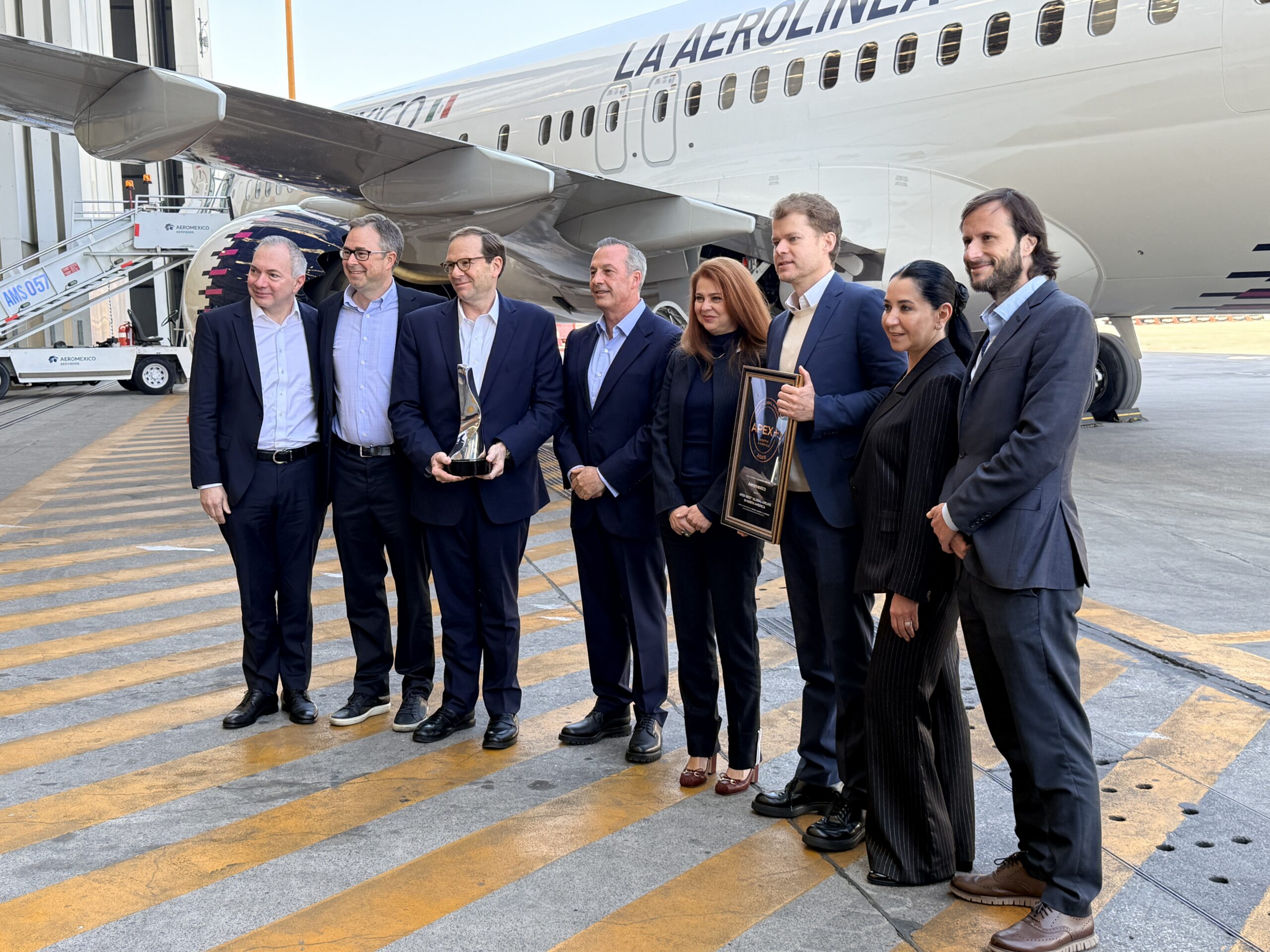
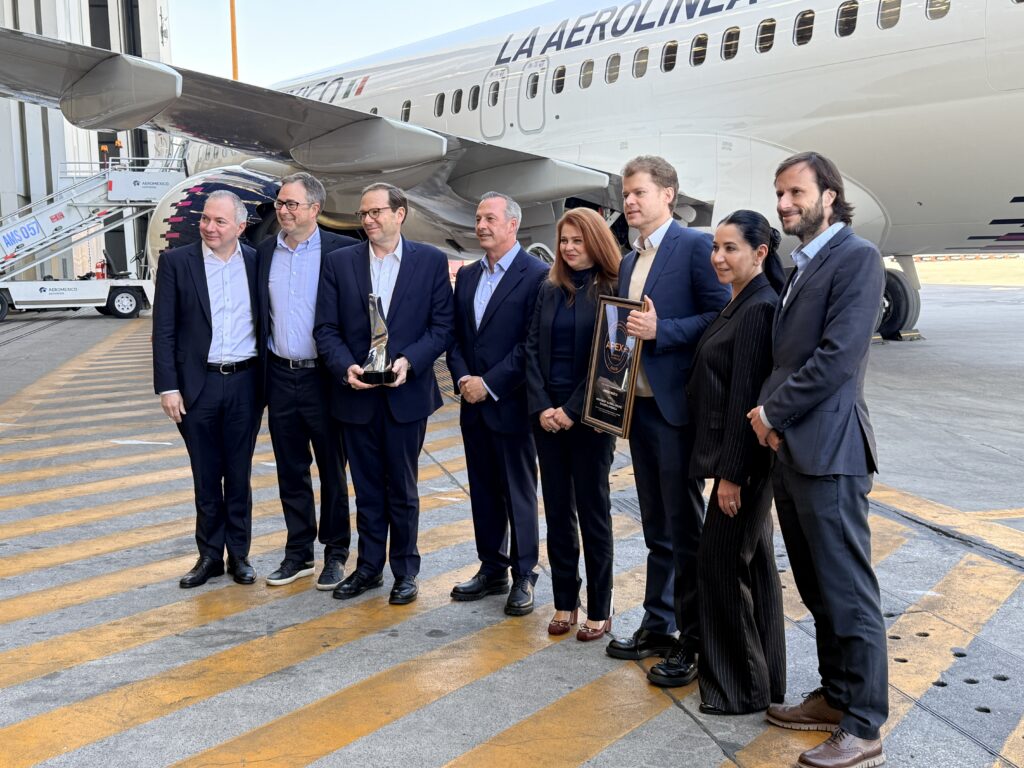
Today, APEX CEO Dr. Joe Leader attended an Awards Ceremony in the Aeroméxico hangar at Mexico City International Airport Benito Juárez (MEX) to celebrate the crowning of Aeroméxico as 2026 APEX Best Global Airline in North America based entirely on independently verified passenger feedback. Cirium was also in attendance to recognize that Aeroméxico had won the coveted award of being the most on-time global airline in 2025, marking the second year in a row the carrier has achieved the milestone. 

“Aeroméxico today becomes the first airline outside the United States to ever secure APEX’s Best Airline in North America distinction in APEX’s five-decade history,” Dr. Leader explained. “Based on a detailed review of the data, this recognition reflects a significant and sustained improvement in product quality, customer care, service delivery, and on-time performance, collectively elevating Aeroméxico into the top tier of airlines around the globe.” 

Aeroméxico is the World’s Most On-Time Airline, Twice

“It is incredibly hard to run an on-time airline at the best of times,” stated Cirium CEO Jeremy Bowen, who was also in attendance. “Doing it in 2025 with soaring passenger demand and with global challenges across the industry makes the performance of Aeroméxico even more remarkable.”

“Over the past five decades, [APEX has] worked with every major in the world, and none has gone through such a miraculous ascent as Aeroméxico.”
– Dr. Joe Leader, APEX

During the ceremony, Aeroméxico CEO Andrés Conesa took to the stage to deliver a speech in Spanish, translated by APEX Insights. “I want to start by thanking the 17,000 members of the Aeroméxico family, because our being here is the result of teamwork […] this achievement is yours,” he stated. “This year, we […] depart[ed] within 14 minutes or less of the scheduled time on 90 per cent of flights.

“We transported 25 million passengers last year. So, being at the average versus being the best means that 4 million customers arrived on time who otherwise would not have. That is the magnitude of leading compared to simply being average. It is very, very important. And the difference versus second place, instead of being 0.3 [per cent] as it was in 2024, is now three points. That is more than 10 times the gap we had in 2024. So, not only did we once again become the most punctual airline in the world, but we were by far the most punctual airline in the world,” Conesa said.

He went on to point out that Aeroméxico’s completion factor, or reliability index, is 99.7 per cent, which he said is “practically the highest in the industry.” He added, “Only 0.3 per cent of over 200,000 flights we operated were canceled, which is also a milestone at global level.” 
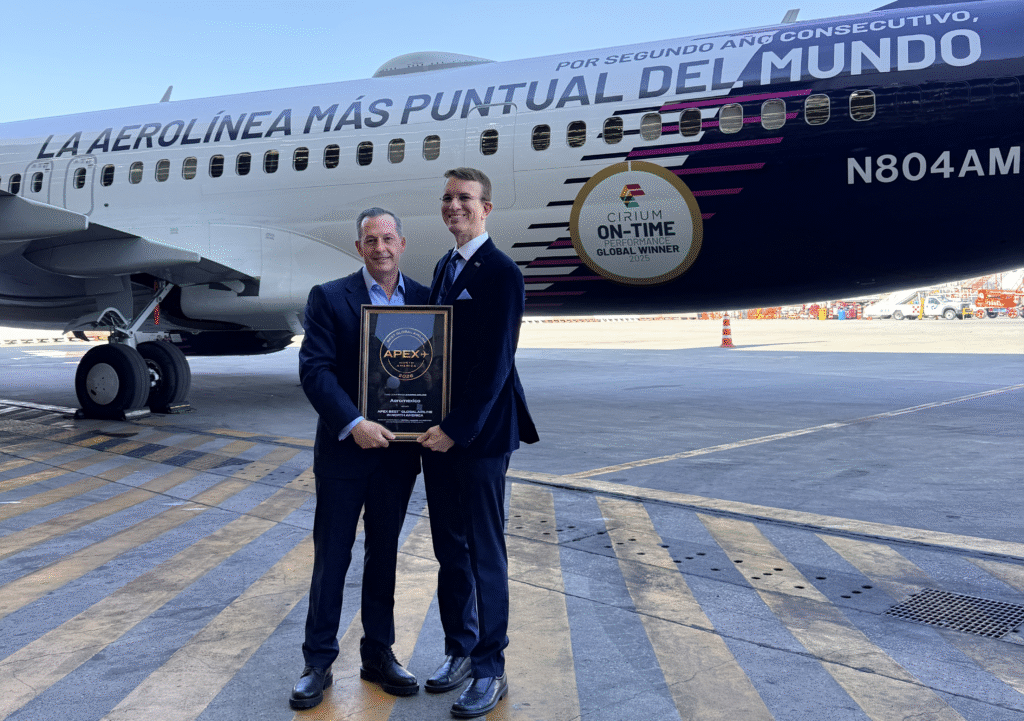
Pictured (left to right): Aeroméxico CEO Andres Conesa and APEX CEO Dr. Joe Leader hold the 2026 APEX Best Global Airline in North America award outside Aeroméxico’s hangar at MEX.

A Closer Look at Aeroméxico’s $1B Transformation 

On the topic of Aeroméxico becoming APEX Best Airline in North America, Conesa once again recognized the importance of the airline’s employees. He also noted that the carrier has invested $500 million in new technology each year for the past two years, which he believes is the reason Aeroméxico has surpassed a Net Promoter Score of 50 for the first time in its history. 

In particular, he highlighted the success of a new crew‑assignment system to “maximiz[e] both quality of life and […] productivity for all crews;” its weather anticipation technology; the better provisioning of parts at individual stations; and finally the 19 new Boeing 737 MAX and 787 jets that it took delivery of in 2025.

“Having a modern fleet gives you greater reliability, because of course they require less work, less maintenance than older aircraft, which in turn lets you have productivity and reliability,” outlined Conesa.

“I want to start by thanking the 17,000 members of the Aeroméxico family, because our being here is the result of teamwork.”
– Andres Conesa, Aeroméxico

Regarding Aeroméxico’s in-flight product, Conesa cited the years-long work it took to create consistency across its fleet, and all with a focus on premium offerings. He also heralded “the extraordinary onboard service that distinguishes [its] great and beloved airline.” 

Conesa’s comments come days after Aeroméxico Chief Digital and Customer Experience Officer Andrés Castañeda Ochoa highlighted the airline’s transformation in terms of in-flight entertainment and connectivity during a keynote speech at the recent APEX TECH event in LA, wherein he told delegates how it was focusing on AI and personalization to elevate the passenger experience.
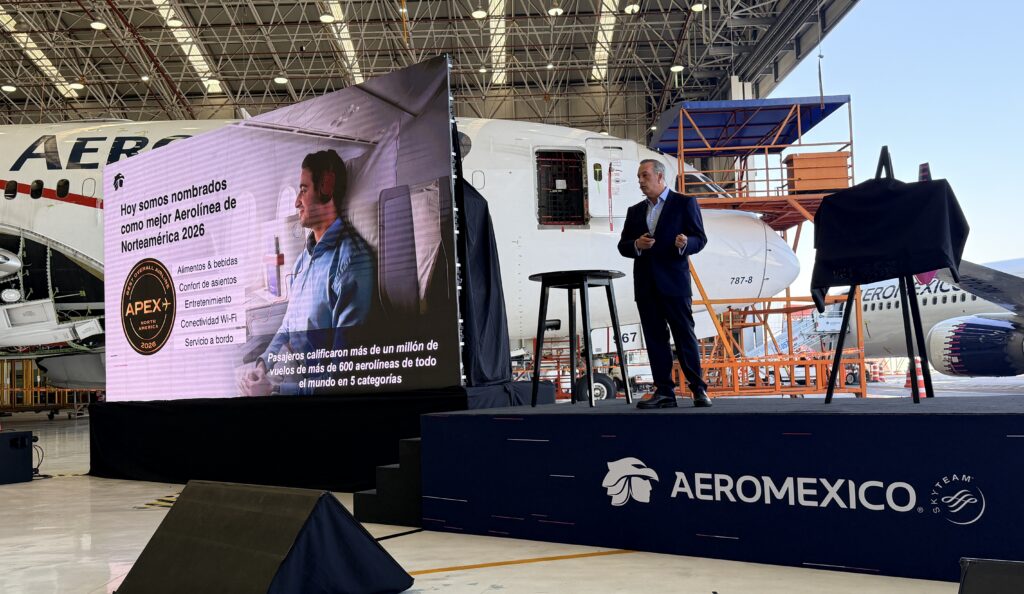
Pictured: Andres Conesa on-stage delivering a speech about winning the 2026 APEX Best Global Airline in North America award.

More Exciting Updates to Come in 2026

Moving forward, Conesa said passengers will soon benefit from reopening of the carrier’s refurbished Salon Premier lounges at MEX. “On the international side we are going to have a new à‑la‑carte menu with a premium selection of wines and mixology,” he said. “On the domestic side, we are going to have a sushi bar from renowned chefs, and phone booths with noise cancellation to provide privacy.” They are both due to open by the end of the first half of 2026.

Furthermore, he announced a new app, which he hopes will make the travel experience more seamless for all customers.

“Only 0.3 per cent of over 200,000 flights we operated were canceled, which is also a milestone at global level.” 
– Andres Conesa, Aeroméxico

Conesa concluded that he was proud that Aeroméxico was achieving reliability and profitability at the same time: “There is nothing that gives me more satisfaction than seeing all of this reflected in growth, in more jobs, and better‑paid jobs for everyone.”

These latest achievements build on Aeroméxico’s prior accolades. In 2025, the carrier was awarded APEX Best Entertainment in North America and APEX Best Seat Comfort in North America. It has also been recognized as an APEX Five Star Global Airline for 2026, marking the seventh time it has received the award. “Over the past five decades, [APEX has] worked with every major in the world, and none has gone through such a miraculous ascent as Aeroméxico,” acknowledged Dr. Leader.

APEX, the Airline Passenger Experience Association, analyzes more than one million passenger votes annually across nearly 600 airlines around the globe, drawn from travelers who routinely fly multiple airlines to provide a global benchmark grounded solely in customer voice and data.
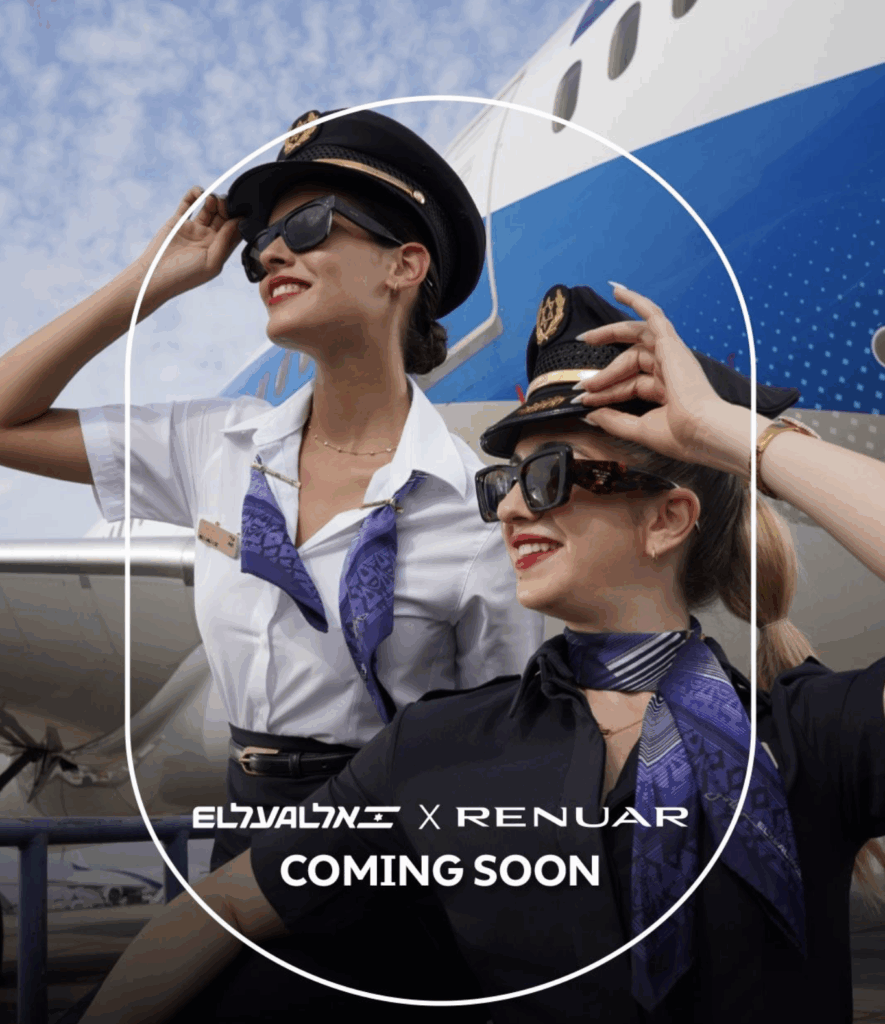
EL AL and Renuar Join Forces to Design New Crew Uniforms

EL AL and Renuar Join Forces to Design New Crew Uniforms
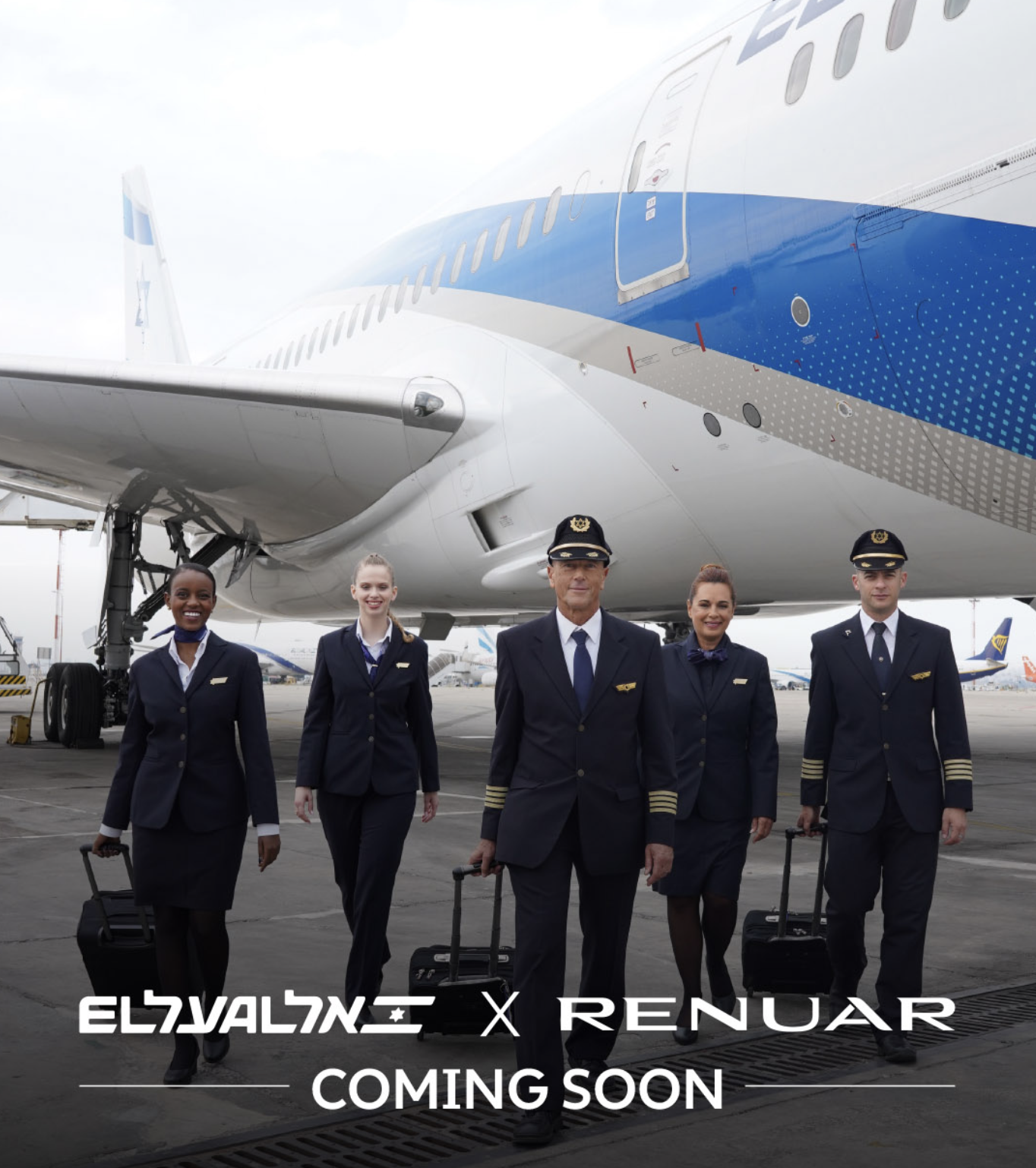
Photo via EL AL Israel Airlines

EL AL Israel Airlines (EL AL) has announced a new collaboration with Renuar, one of Israel’s leading fashion brands, to design and develop the carrier’s new uniforms. The partnership marks an important milestone in EL AL’s ongoing transformation, combining Renuar’s contemporary style with the carrier’s heritage and values. Together, the two brands aim to create a look that blends professionalism, comfort, and Israeli pride.

Designing for Comfort, Identity, and Pride

After a careful evaluation of several top Israeli fashion houses, EL AL chose Renuar to lead the creation of its new uniforms. The collaboration goes beyond a simple design project; it unites two leading Israeli brands that share deep local roots and a rising global presence.

“The meeting between contemporary Israeli fashion and EL AL’s heritage and history is an exciting and natural connection.”
– Yifat Pasternak, Renuar

“After many years in which our people have provided service wearing EL AL’s familiar uniforms, we are now embarking on an exciting process of refreshing the uniforms for both air and ground crews,” said Lee EL AL Head of Marketing Communications and Customer Experience Ben Hamo. “We are proud of the collaboration with Renuar and believe the result will reflect the transformation EL AL has undergone in recent years and its Israeli identity, while maintaining uncompromising comfort and quality.”

The project will move through several development stages, beginning with meetings and workshops with EL AL’s staff to understand the daily realities of their work. Flight attendants, pilots, and ground personnel will provide feedback on everything from comfort and practicality to temperature control and range of motion. The uniforms will serve as a unifying symbol for staff working both in the air and on the ground.

Photo via EL AL

Every detail, from fabric choice to fit, color scheme, and accessories, will be crafted to reflect professionalism and Israeli authenticity. The airline’s iconic blue and white palette is expected to influence the final design, highlighting EL AL’s identity as Israel’s national carrier.

“For us at Renuar, it is a great honor to take part in designing the uniforms for Israel’s largest airline,” said Renuar VP Marketing Yifat Pasternak. “The meeting between contemporary Israeli fashion and EL AL’s heritage and history is an exciting and natural connection. We will bring to the project the values that guide us, innovation, attention to detail, and a deep understanding of fashion along with the needs of EL AL’s service personnel who will wear these uniforms every day.”

“We are proud of the collaboration with Renuar and believe the result will reflect the transformation EL AL has undergone in recent years.”
– Ben Hamo, EL AL Israel Airlines

Modernization Driving a New Era for EL AL

The new uniforms will serve as a visible expression of EL AL’s broader modernization efforts. From upgraded cabins and new in-flight menus to enhanced lounges and digital services, the airline is refreshing every touchpoint of its passenger experience. The new look captures that renewal, reflecting EL AL’s balance of heritage and innovation.

Under the leadership of EVP Customer Service and Experience Oren Cohen Butansky, EL AL has reimagined what it means to fly with Israel’s flag carrier. “We aligned around one shared goal, to put the customers at the center of everything we do, from air to ground, from systems to culture,” he explained. 

That vision has driven major changes across the airline, from expanding its Dreamliner fleet and unveiling a new brand identity to introducing Israeli cuisine by Michelin-starred chef Assaf Granit, new TUMI amenity kits, and a redesigned King David Lounge at Ben Gurion Airport. Behind the scenes, an AI-powered service platform now manages more than 300,000 monthly interactions, streamlining communication and improving service quality.

Photo via Caught in the Moment Photography

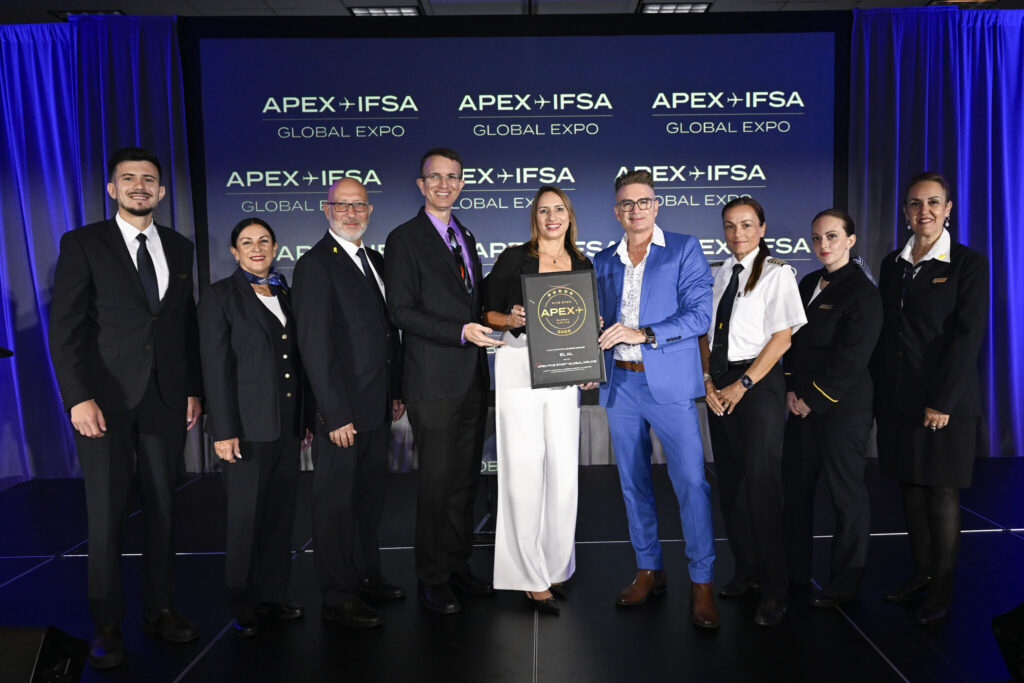
EL AL’s modernization is not only visible in its look and service but also in the recognition it continues to earn on the global stage. In a recent conversation with APEX CEO Dr. Joe Leader at the 2025 APEX Global EXPO, EL AL CEO Dina Ben Tal Ganancia shared how the airline’s approach blends world-class security with authentic hospitality. “Safety and security are the most important priorities. But people also want to feel warmth and care,” she said. “Our crews are not just service providers. They are sometimes therapists, shoulders to lean on. Feeling safe, trusted, and secure is part of the experience. It does not replace the smile or the service.”

Her vision redefines security as part of the passenger experience rather than an obstacle to it, combining protection with genuine care in a way that has strengthened EL AL’s brand. That approach has helped the airline earn an APEX Five Star rating for the fifth consecutive year, reaffirming its position among the world’s leading carriers.

APEX Global EXPO 2025: Mainline Aviation Serves Up the Future of In-Flight Dining

APEX Global EXPO 2025: Mainline Aviation Serves Up the Future of In-Flight Dining
Photo: Caught in the Moment Photography

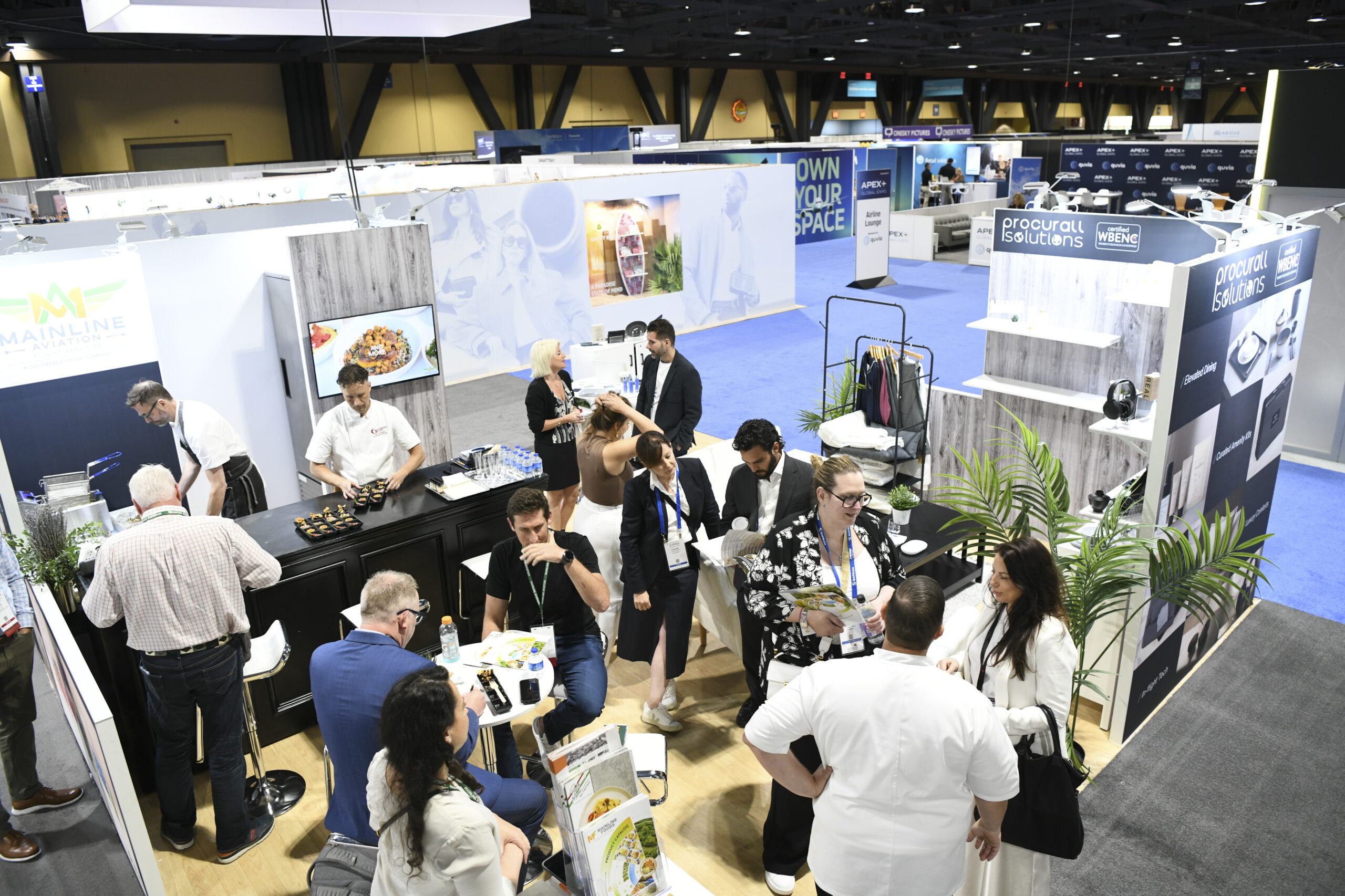
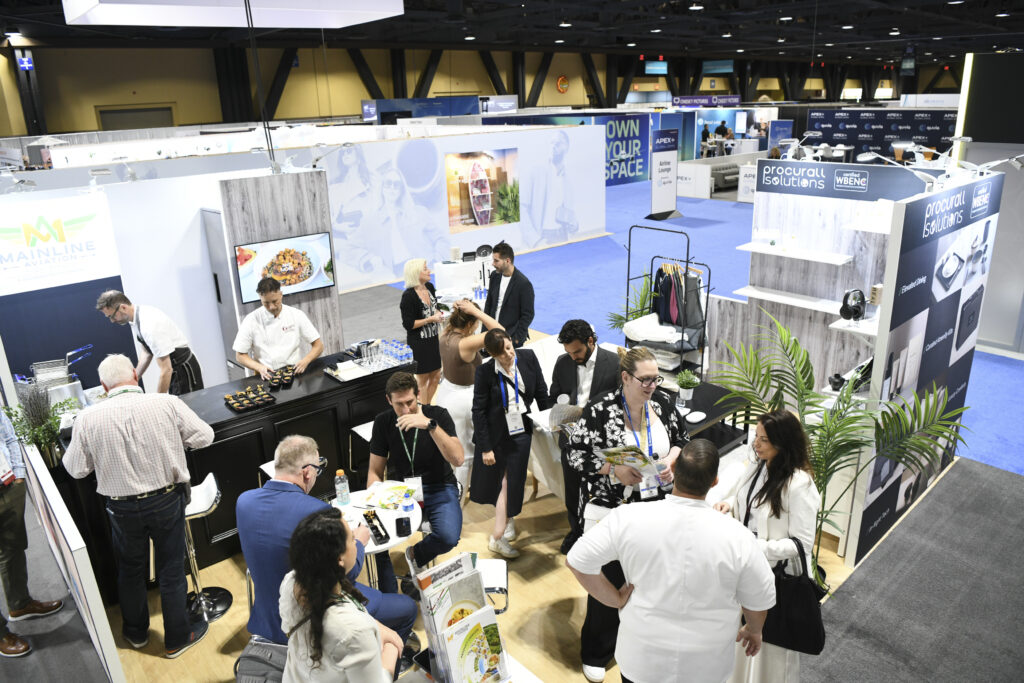
At the 2025 APEX IFSA Global Expo, Mainline Aviation Catering, long known for its premium catering services and airline partnerships, offered a glimpse into its recipe for success.

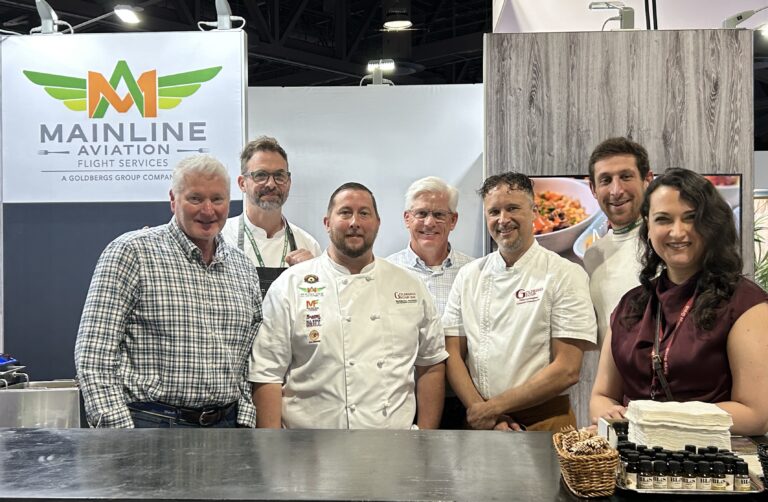
The company’s booth featured a private tasting experience hosted by CEO Bradley Saxe and the company’s culinary leadership team, including VP Culinary Marshall Rogers and award-winning chefs Caleb and Brian. They showcased how Mainline is blending creativity, technology, and hospitality to enhance passenger satisfaction at altitude.

Culinary Craftsmanship Meets Airline Precision

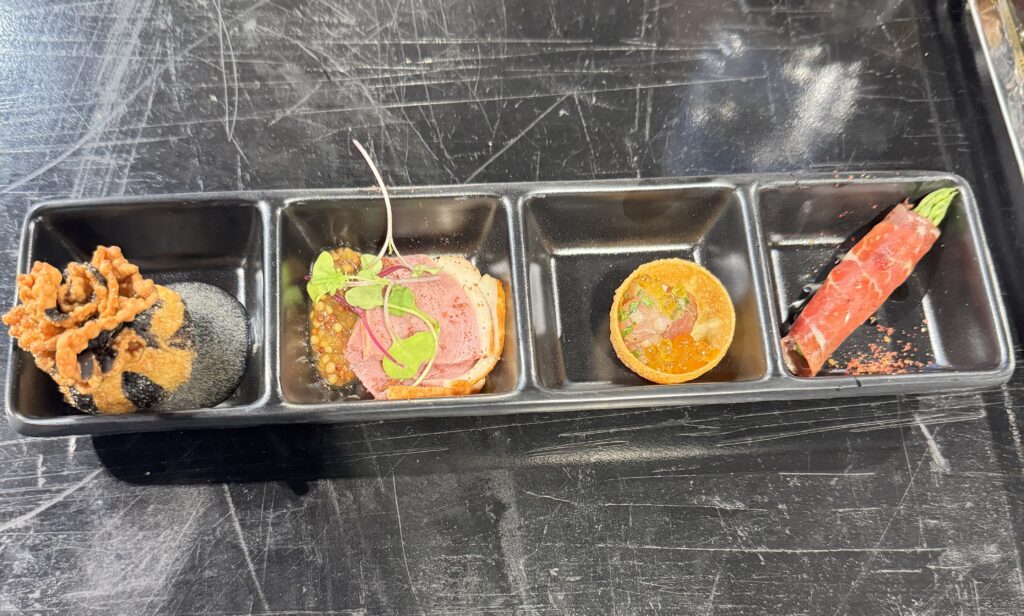
Mainline’s tastings were as much a showcase of craftsmanship as they were of logistics. The experience consisted of four dishes, which were a mix of products they manufacture and others from their exclusive partnerships.

Attendees sampled blue crab sacchetti crafted by Pasta Mami, Mainline’s own pasta company located in Marietta, Georgia. The pasta was accompanied by smoked duck sourced from Bromlak, a partner producer based in Canada; and paired with a Georgia Peach mostarda designed to showcase southern flavor with an international twist.

“Airline salads are often overlooked, but when they’re done right […] they become a highlight of the passenger experience.”
– Bradley Saxe, Mainline Aviation

The other dishes included tuna tartare with smoked caviar made by Bliss, Mainline’s dressing division; and bresaola with aged sherry drizzle from Haywood’s Provisions, Mainline’s charcuterie company, also based in Marietta. Each product reflected a balance between culinary creativity and scalability for airline service.

“We test everything just as it would be onboard,” Rogers explained. “Our R&D team uses the same ovens as the airlines, ensuring every flavor holds up at altitude. The company’s chefs, several of whom have previously worked with major airlines, bring deep operational knowledge to the process. Testing simulates the exact conditions onboard, allowing Mainline to fine-tune salt balance, moisture levels, and reheating times to preserve restaurant-quality dining on every flight.”

Launching a New Flavor Frontier

Among the company’s most exciting announcements at the APEX IFSA Global EXPO was the launch of its barrel-aged salad dressings line, a project two years in development. “These are made with California olive oil and aged in barrels to give each dressing a rich, balanced flavor,” said Rogers. “We have unveiled them at [the show] for the first time, and the response has been incredible.”

The collection includes classic vinaigrettes and chef-crafted blends designed for both in-flight use and retail applications. Each bottle is produced in Michigan and tailored to enhance freshness and texture, even in low-humidity cabin conditions. “Airline salads are often overlooked,” Saxe said. “But when they’re done right with quality greens, artisanal toppings, and flavorful dressings they become a highlight of the passenger experience.”

The new line, under the Bliss Dressings brand, joins Mainline’s growing portfolio of proprietary products, which also includes barrel-aged maple syrup and steak sauce aged in repurposed bourbon barrels. “We wanted to reuse those barrels to extract flavor and reduce waste,” Rogers explained. “It’s sustainability and craftsmanship working together.”

“Our R&D team uses the same ovens as the airlines, ensuring every flavor holds up at altitude.”
– Marshall Rogers, Mainline Aviation

Vertically Integrated for Quality and Scale

Mainline’s innovation extends far beyond the tasting table. Its business model combines airline catering, food manufacturing, and product branding under one roof. “We’re one of the few catering companies that’s vertically integrated,” Rogers said. “If we can’t find the perfect product, we make it ourselves.”

The company operates two kitchens in Atlanta and one in Nashville, working directly with major US airlines “In Atlanta, we work closely with the largest international carrier out of ATL, which is one of our longest partnerships,” Rogers shared. “We even help develop their menu concepts and test new ideas for upcoming meal programs.”

This hands-on approach allows Mainline to manage every detail from ingredient sourcing to plating to ensure consistency across flights. “We produce everything from business-class entrées to premium economy and economy meals,” Rogers said. “Each dish gets the same level of attention, no matter where it’s served.”

With operations currently supporting six airlines and plans for new kitchens, Mainline is poised to expand its culinary footprint across the Sun Belt and beyond. Growth for Mainline means more opportunities to serve airlines better. Rogers explained, “It’s about being close to our partners and adapting to their evolving needs.”

The Mainline Aviation team at the 2025 APEX IFSA Global EXPO. Photo: Mainline Aviation

The Future of Passenger Dining

Looking ahead, Mainline’s growth strategy includes both product innovation and strategic airline collaborations. The company also announced a forthcoming 2026 partnership with American Airlines, which will introduce new premium economy transcontinental and business-class offerings. The program will feature menu items developed through Mainline’s vertically integrated model, combining in-house production, brand partnerships, and chef-driven design. 

The company’s innovation model revolves around three key elements: quality assurance, operational consistency, and culinary creativity. Its dual identity as a caterer and food manufacturer allows it to experiment with recipes that are scalable, cost-efficient, and tailored for the unique demands of airline service.

By blending culinary artistry with technical precision, Mainline aims to help airlines differentiate themselves through food. As passenger expectations evolve, Mainline’s leadership sees dining as an emotional touchpoint, not just a logistical one. A meal can define how passengers perceive comfort and hospitality in the air.

As air travel continues to evolve, Mainline’s philosophy remains clear: great food creates connection, and connection defines experience. By uniting innovation, craftsmanship, and hospitality, Mainline Aviation isn’t just feeding passengers; it’s inspiring the future of dining in the sky.

IFSA Global EXPO 2025: ​​Tackling Cabin Waste is Key to an Increasingly Sustainable Industry

IFSA Global EXPO 2025: ​​Tackling Cabin Waste is Key to an Increasingly Sustainable Industry
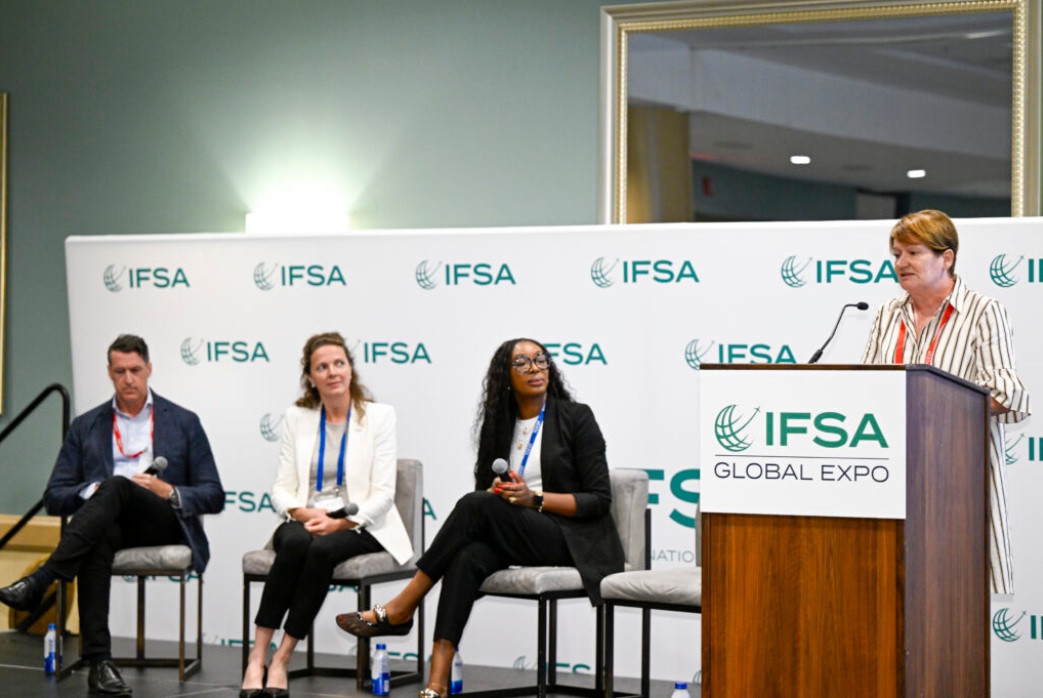
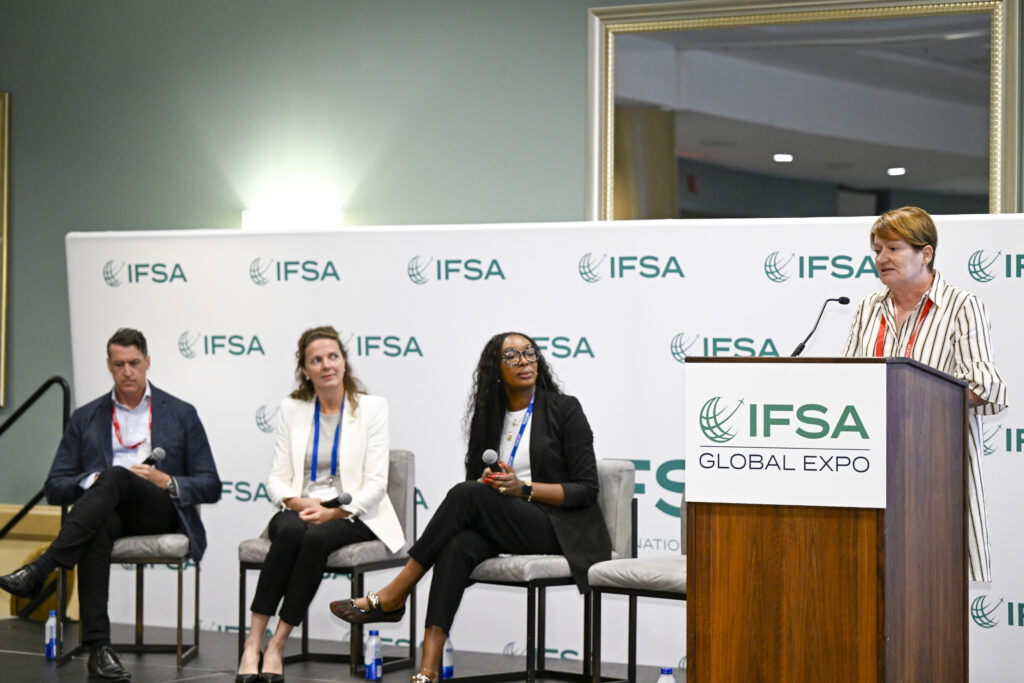
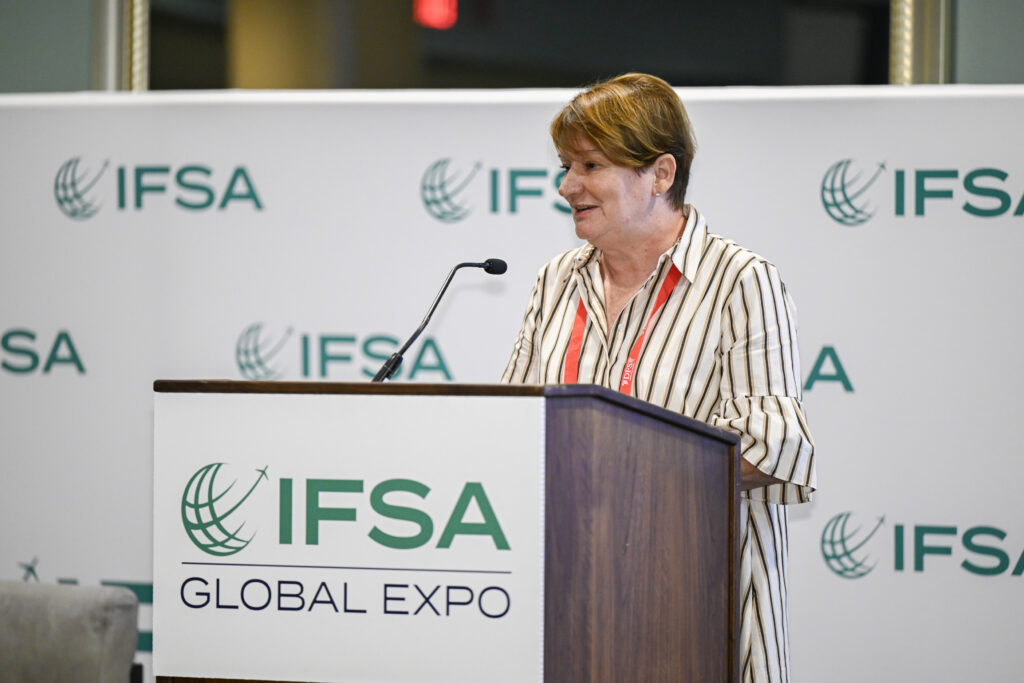
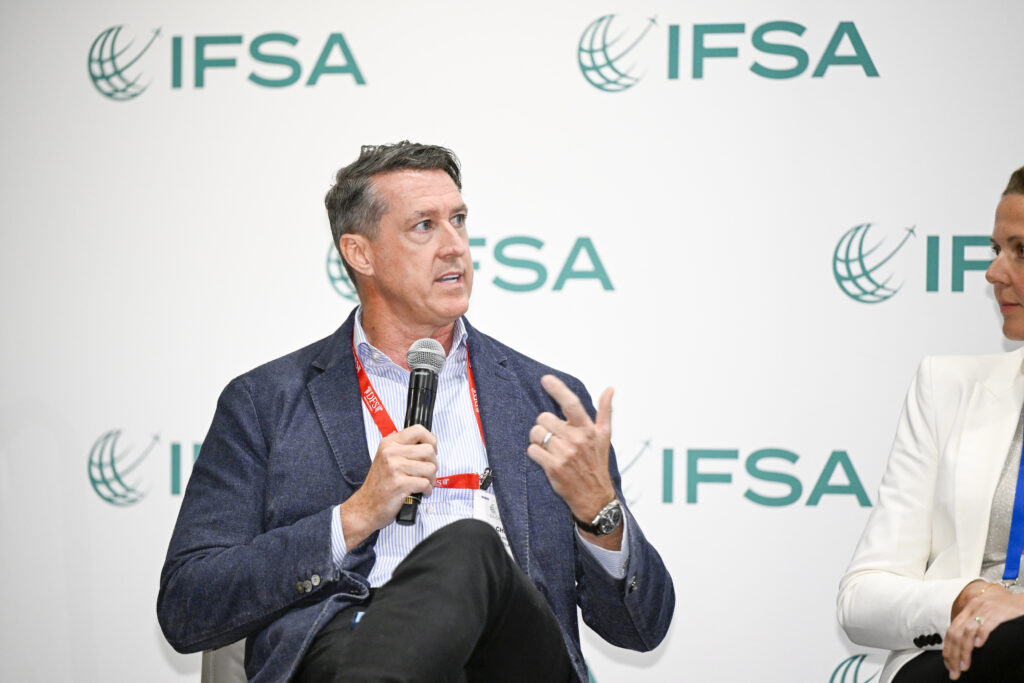
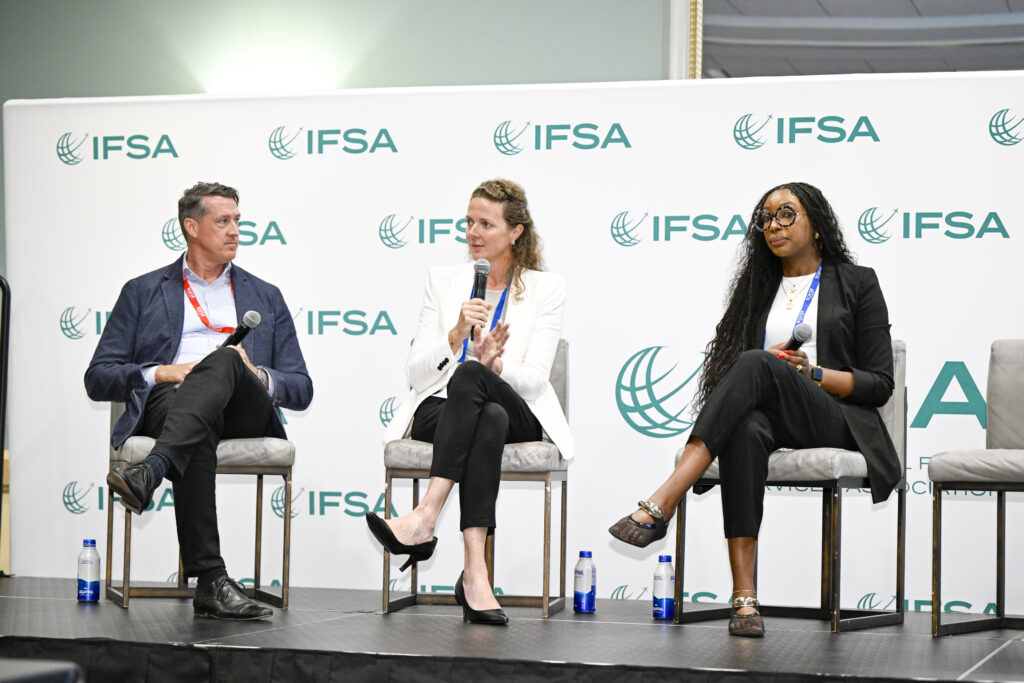
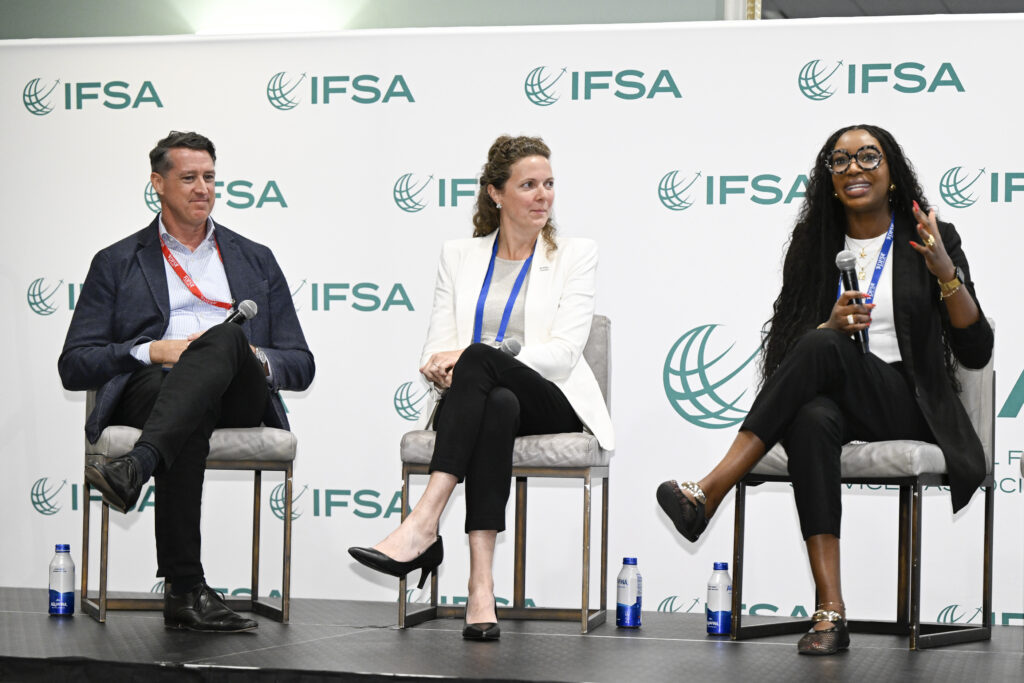
Pictured (left to right): gategroup North America CCO Chris Kinsella; KLM Food & Product Specialist Matrix de Vries; Delta Air Lines Innovation Strategist Tosin Durotoye; and Aviation Sustainability Forum (ASF) CEO Diana Cawley. All photos: Caught in the Moment Photography

At the 2025 IFSA Global EXPO 2025, a panel tackled how airlines can better manage cabin waste in the near term. Titled The Green Shift: Advancing Environmental Stewardship Onboard, the session highlighted the need to link strong operations with a deep commitment to sustainability.

Moderated by Diana Cawley, CEO of the Aviation Sustainability Forum (ASF), the panel featured Tosin Durotoye, innovation strategist at Delta Air Lines; Matrix de Vries, food and product specialist at KLM; and Chris Kinsella, Chief Commercial Officer of gategroup North America. Together, they shared the belief that better data, more innovative product design, and closer collaborations will ultimately mean reaching sustainability goals will become part of daily catering practices.

ASF Outlines the Reason for Acting Now, Not Later

Diana Cawley opened the session with an important warning, explaining that aviation fleets and passenger numbers are on track to more than double by 2050. Without action, the industry’s share of global CO2 emissions could rise from 3 per cent to almost 20 per cent. “The great news is the sector’s growing,” she said. “But with that, the waste is growing.” She continued that while sustainable aviation fuel will help in the long term, the immediate challenge is cabin waste.

“Total sealed beverage waste is 406,000 tons. We are not doing anything with that at the moment.”
– Diana Cawley, ASF

ASF studies this issue through cabin waste audits, using an IATA-approved method that categorizes all items left on aircraft by type. The results show a clear pattern. “What that roughly gives us is about 63 per cent of the waste being beverage and food,” Cawley said. Other contributors include plastics, paper, glass, and aluminium.

Rising passenger numbers are exacerbating the problem. Between 2024 and 2025, ASF tracked an increase from 4.7 to 5.2 billion passengers, which resulted in a rise from 3.6 to 4.0 million tons of cabin waste. “It is growing and growing unless you do something about this,” she stated.

All photos: Caught in the Moment Photography

Cawley advised the aviation industry to focus on four key essentials: understanding different regional regulations, developing the ability to reduce and recycle waste, enhancing the quality of their waste data, and linking financial costs to waste and fuel consumption.

She then pointed to the sheer scale of the opportunity: Airlines deplane about 13 billion plastic bottles and nearly 5 million aluminium cans every year. Even unopened items add up. “Total sealed beverage waste is 406,000 tons,” she said. “We are not doing anything with that at the moment.” To address this, Cawley argued, airlines require better data, standardized protocols, and onboard training, along with technology that can consolidate scattered efforts into tangible progress.

“I was able to capture one million drawers coming into our kitchens. That volume of data allows you to make these really confident, data-driven decisions.”
– Tosin Durotoye, Delta Air Lines

A Shift from Downstream Recycling to Upstream Design

gategroup North America Chief Commercial Officer Chris Kinsella described the caterer’s constraints and opportunities. Policy fragmentation is a daily reality that slows progress. “There’s not a standard global policy around recycling,” he said. “In the North American market, you have varying policies, whether it is country to country, state to state, airport by airport.” 

The company’s response begins with fundamentals and progresses with data. Baling cardboard, recovering cooking oil, capturing aluminium, and recycling pallets and shrink wrap remain essential. Composting pilots are running in Edmonton, with more sites targeted in the US.
The larger shift is design. “We need to shift as caterers from the downstream mentality to an upstream mentality,” Kinsella said. As such, gategroup now uses AI and visual insights in dish rooms to learn what is returned, what is consumed, and what goes missing. “Standard cabin waste reports” and a “waste consumption analysis report” now inform menu design and loading. “For the longest time, companies like ours did not have that metric,” he added.

From the airline side, KLM’s Matrix de Vries cited a regulatory breakthrough with immediate results. In 2024, the European Commission clarified the rules for Category 1 waste for inbound flights. “Any product that has not been in contact with food can actually recycle,” she said. That transformed inbound sorting in Amsterdam. “Out of the EU, the waste that comes in from our safety plus destinations, we can actually segregate some of that and send it to a recycling plant instead of sending it to landfill.”

Procurement also supports ethics and cost control when scaled with airline partners. On packaging, a gategroup sister company builds rotables with end-of-life recovery in mind. “Once they degrade, they are collected and then brought back to the factory, where they are ground. Those materials come back into play,” Kinsella said.

“In the North American market, you have varying policies, whether it is country to country, state to state, airport by airport.” 
– Chris Kinsella, gategroup North America

KLM Embraces Changing EU Regulations

The impact is tangible. On European flights alone, KLM collects about 80,000 kilograms of plastic wine bottles per year, a figure that rises on long-haul routes. The cost to enable it is modest. “I think the biggest investment that we had to do is training our crew in how to segregate it on the flight,” de Vries said.

The trick is teaching nuance. Crews must understand why inbound sorting to Amsterdam is permitted, while outbound sorting to the United States or other countries is not. Dutch crews have an advantage because sorting by material at home is second nature, but the airline still had to embed consistent procedures, she noted.

KLM’s cabin approach follows a simple mantra: reuse, reduce, recycle. The weight versus service balance is always present, de Vries acknowledged. Pull too much off the aircraft, and the customer may feel the cutback. Load too much and weight, fuel burn, and waste all rise.

The Case for Smart Loading

Delta Air Lines Innovation Strategist Tosin Durotoye argued that airlines cannot fix what they cannot see. “It is very hard to take action if you do not know what to focus on,” she said, highlighting that habit and the cultural urge to never run out can push ratios above real demand.

“You are in the kitchen, dumpster diving,” she said of Delta’s initial manual audits. However, scale arrived with the automation of the process. “I was able to capture one million drawers coming into our kitchens,” Durotoye said. The result was a clear view of preferences. “The volume of data allows you to make these really confident, data-driven decisions.”

That evidence paid off. “We have used technology at Delta Air Lines to save on millions of dollars,” she said, citing portion changes, product swaps, and smarter builds. Large sample sizes also win buy-in. “If I bring in the tech and I say, I looked at a million drawers, they are going to say, okay, tell us what you found.”

Pre-order helps, but it does not solve everything. Durotoye said that international routes benefit most from it, but that the concept of domestic upgrades introduce uncertainty that necessitates ongoing consumption analytics.

Delta reboards sealed beverages when permitted by the rules, while monitoring the fuel penalty associated with hauling unused weight.

“Out of the EU, the waste that comes in from our safety plus destinations, we can actually segregate some of that and send it to a recycling plant instead of sending it to landfill.”
– Matrix de Vries, KLM

Collaboration is Key to Cabin Waste Reduction Success

Throughout the discussion, collaboration kept surfacing as the essential part for the green shift towards less wasteful cabins. Cawley pointed to common standards that make life easier for everyone, even down to the colors of bags and labeling.

Kinsella asked airlines and caterers to meet upstream on the design choices that predetermine waste, and to use joint data to adjust menus. De Vries argued for international regulators to replicate the European clarity that unlocked meaningful recycling in Amsterdam. Durotoye pushed leaders to champion internal change agents who can introduce new tools and ways of working.

Audience questions reinforced the theme. Regarding composting, Kinsella confirmed the importance of active pilots and care in choosing the right facilities, as not all facilities accept the same inputs, including certain bioplastics. On ethical sourcing and cost, he encouraged airlines and caterers to leverage combined buying power and local procurement options, while still tailoring to each carrier’s brand and budget. “There is a tremendous amount of buying power,” one audience member observed, noting how other sectors have pooled demand to bring down costs for cage-free eggs.

Partnerships with technology providers are also maturing. A vendor who helped count Delta’s drawers asked how to maintain strong airline and caterer relationships. Kinsella asked for speed. “We are dipping our toes into a lot of work that was on a slide deck just about a year or two ago,” he concluded.

APEX Global EXPO: Saudia Brings Local Flavors to the Global Stage

APEX Global EXPO: Saudia Brings Local Flavors to the Global Stage
All photos: Caught in the Moment Photography

Saudia brought the flavors of the Kingdom of Saudi Arabia to the stage at the 2025 APEX/IFSA Global EXPO in Long Beach, California. During a live demonstration, in-flight chef Saad Alorabi plated a four-course menu inspired by its First Suite, which blended Saudi heritage with aspirational fine-dining presentation. The showcase was more than a culinary performance; it was a statement about Saudia’s evolving guest experience philosophy, where cultural storytelling and hospitality are at the center.
Where Tradition Meets Fine Dining

Within the Innovation Pavilion at IFSA Global EXPO, Saudia transformed the stage into a chef’s table. At the heart of the performance stood In-Flight Chef Saad Alorabi, who serves in Saudia’s premium cabins and helps design the airline’s menus. Before joining Saudia, he honed his craft in several high-profile culinary environments, including the Formula 1 STC Saudi Arabian Grand Prix 2023, where he was part of the elite VIP culinary team.

Alongside him was Senior Cabin Attendant Rakan Almutairi, a trained lawyer who now embodies the airline’s ethos of exemplary service and cultural pride. Together, the duo presented a live culinary demonstration, offering guests an exclusive tasting menu inspired by the airline’s First Suite experience on long-haul flights.

“Saudi hospitality […] is warm, abundant, and deeply personal, and it is why our crew are winning hearts around the world.”

“This four-course journey offers a window into the richness of Saudi Arabia’s culinary identity, reimagined for a luxury aviation context. Each dish was chosen to evoke emotion, showcase Saudi ingredients, and reflect the spirit of transformation embodied in Vision 2030,” explained Saudia Chief Guest Experience Officer Rossen Dimitrov.

The tasting began with a traditional welcome: golden Sukkari dates paired with Saudi coffee. This opening ritual led into the amuse-bouche: a warm Medjool date stuffed with goat cheese that mixed sweet and tangy flavors.

Pictured: Saudia In-Flight Chef Saad Alorabi during a live demonstration at the 2025 IFSA Global EXPO

Then the chilled appetizer was served. It was a caramelized fig, accompanied by a cranberry and caramelized onion chicken roulade. Served together with apple-celery yogurt, beetroot, and slow-roasted grapes, the dish reflected the Arabian tradition of pairing poultry with fruit.

For the main course, handmade saffron lobster ravioli in a lobster bisque with saffron cream and caviar enhanced the luxuriousness of the menu while rooting the dish story in Saudi history: Saffron symbolizes Arabia’s ancient trade legacy.

The journey closed with dessert: a pistachio and date chocolate mousse layered on a brownie base. By ending where it began, with dates, Saudia reinforced the importance of hospitality, connection and memory, which are all central to Saudi culture.

“Saudi hospitality is our secret ingredient,” said Dimitrov. “It is warm, abundant, and deeply personal, and it is why our crew are winning hearts around the world.” He explained that Saudia’s role is to show the world what Saudi hospitality truly means.

Pictured: Saudia In-Flight Chef Saad Alorabi tells the audience about the dishes he is creating onstage

Elevating the Guest Experience Across Cabins

Although the spotlight stayed on the live cooking, Saudia positioned the demo as a window into its broader service philosophy. In premium cabins, in-flight chefs bring restaurant techniques to the skies, while butlers orchestrate privacy and personalized attention. Saudia’s business class has introduced more flexibility with “Dine As You Like,” and even economy class has seen enhancements with improved plating and presentation. The latter led to the carrier receiving the 2024 Skytrax award for Best Economy Class Catering.

This attention to detail extends to Saudia’s non-alcoholic beverage program, which the airline believes is one of the most thoughtfully curated in the aviation industry. Guests in premium cabins can enjoy Jukes Cordialities as a non-alcoholic alternative to wine; celebrate with sparkling Rossino & Bellino; or enjoy a signature date smoothie.

“Each dish was chosen to evoke emotion, showcase Saudi ingredients, and reflect the spirit of transformation embodied in Vision 2030”

The presence of speciality French press coffee from Caffeine Lab – one of the Kingdom’s best roasteries – in premium classes, and a signature brew created for Saudia by Nairobi Coffee for economy-class passengers, reflects the same high level of care. “Each drink, like each plate, tells a cultural story,” explained Dimitrov. 

In 2025, Saudia also partnered with ELIE SAAB to debut couture-inspired amenity kits complete with fragrances, skincare products, and pouches designed from recycled materials. The collection has already won multiple awards, reinforcing Saudia’s growing reputation for providing a premium travel experience.

Pictured: Saudia Senior Cabin Attendant Rakan Almutairi serves lobster ravioli to audience members

At the same time, its BEYOND in-flight entertainment platform now offers more than 7,000 hours of content, with Apple TV+ originals, Lionsgate blockbusters, and curated Arabic partnerships signaling a balance between global reach and local pride.

Vision 2030 Translated Into Airline Hospitality

Saudia framed its IFSA Global EXPO showcase as both a cultural and culinary statement. By centering the demo around Saudi ingredients, rituals, and people, the airline aligned its service transformation with the Kingdom’s Vision 2030 agenda, which is a program designed to diversify the economy, expand tourism, and reintroduce Saudi heritage to the world.

As the Kingdom’s flag carrier, the airline aims to carry that transformation into the cabin, offering guests an experience that is both authentic and luxurious. The demonstration reflected this vision. Chef Saad offered a modern take on traditional Saudi ingredients, while Rakan showed the warmth and professionalism of the crew, whom Dimitrov called “the most memorable part of the journey.” Their presence highlighted that Saudia’s service transformation relies as much on people as on products.

Saudia’s presentation struck a balance between performance and realism. Plating mirrored galley conditions, service choreography reflected real cabin practice, and narrative tied each element of the menu back to culture. Rather than a spectacle, the showcase felt like a working preview of the airline’s future.

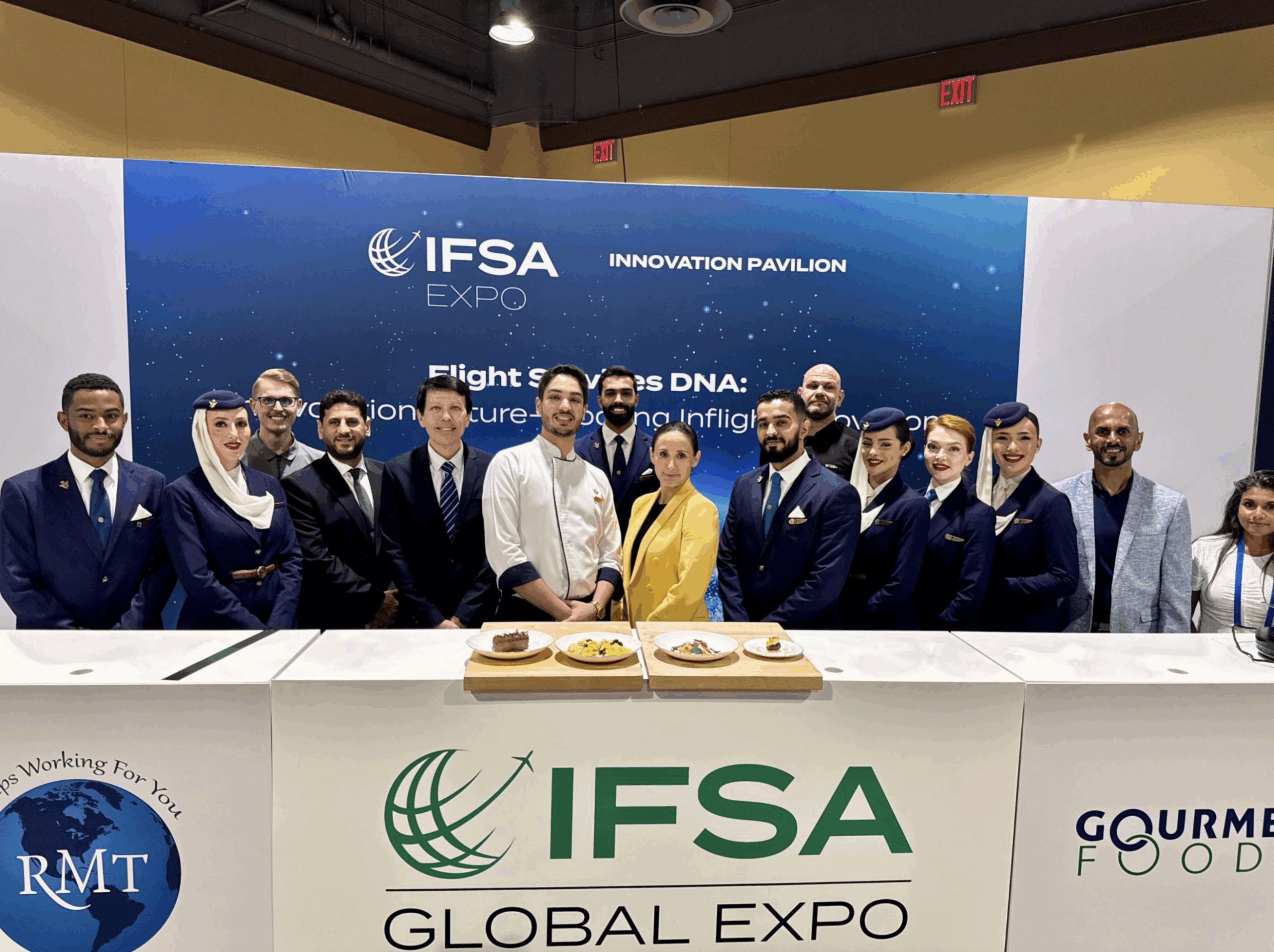
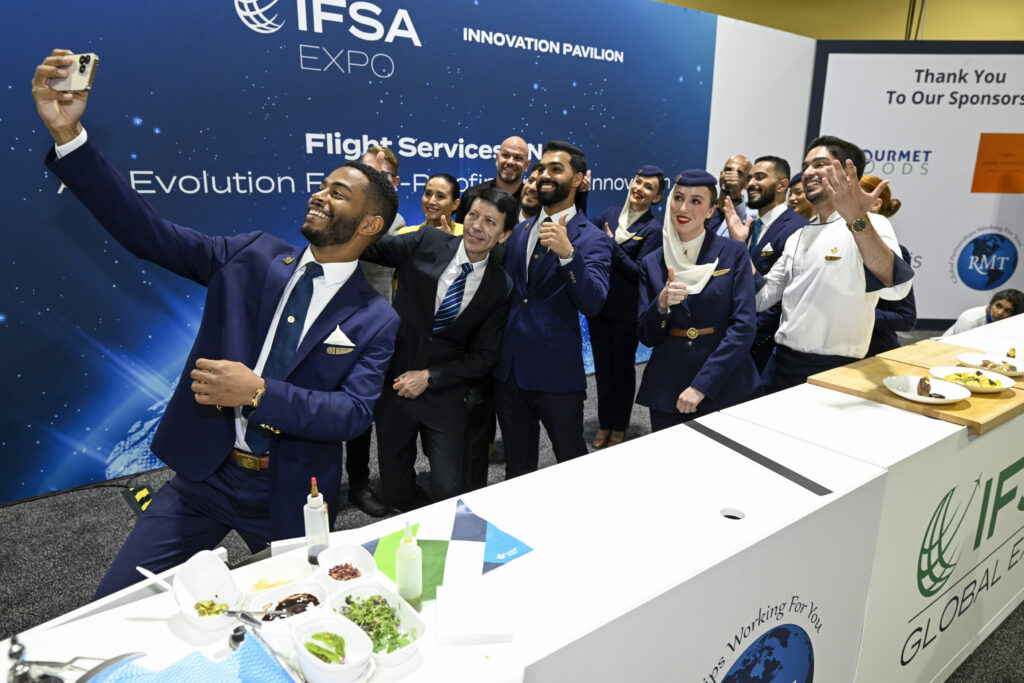
Pictured: The Saudia team take a selfie after their demonstration at the 2025 IFSA Global EXPO.

IFSA EXPO 2025: En Route Elevates In-Flight Dining with Dedicated US Cheese Program

IFSA EXPO 2025: En Route Elevates In-Flight Dining with Dedicated US Cheese Program
All photos via En Route

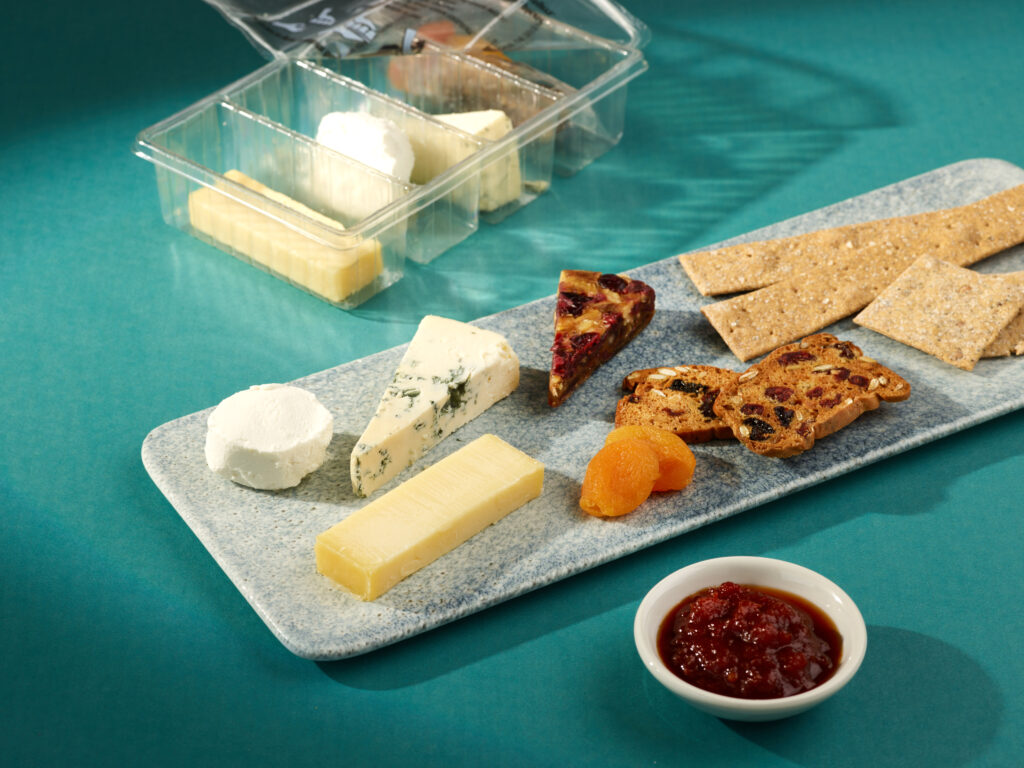
En Route has announced a dedicated US in-flight cheese program. In today’s competitive aviation industry, service differentiation is crucial, and En Route’s program gives airlines a fresh tool for building brand identity.

Redefining In-Flight Dining, Using Cheese

Cheese has long appeared on in-flight menus, often at the end of a business-class meal. En Route’s new initiative aims to change that, putting cheese in the spotlight by allowing airlines to create a passenger experience that links culinary culture directly to the journey.

The concept draws inspiration from the way airlines have elevated their wine programs. For decades, curated wine lists and sommelier partnerships have served as brand differentiators. En Route believes cheese can play a similar role, carrying stories of place, tradition, and craft. “Cheese can be a powerful part of the in-flight dining experience; it speaks to comfort, indulgence, and origin,” explained Nick Wiley, Managing Director at En Route.

While En Route just launched its US-dedicated cheese program, the company launched its first cheese program offering more than a decade ago. Over subsequent years, the program has grown through close collaboration with airlines and caterers, and today it is deployed in the UK, Europe, India, and Singapore.

The company identified the demand for a US program through discussions with regional airlines and caterers. Following a significant investment in its US operations, which means that every customer En Route serves in the region has a full team of specialists working as an extension of their team, it is now ready to deliver.

It will begin rolling out its new US cheese program during the final quarter of 2025 and continue through 2026. The aim is to offer US-based airlines and airline caterers a fully-managed, end-to-end solution. This includes selecting the cheeses and pairings, crafting the customer-facing experience, and ensuring the product is handled, presented, and served with care. 

Delivering cheese onboard poses unique challenges, from packaging and limited storage to cabin humidity and fluctuating temperatures, all of which require careful management. Drawing on its extensive experience, En Route will manage sourcing, cutting, packing, packaging, and delivery. The program can be tailored to different cabin classes and route types.

“Our new US cheese program is built to give airlines and airline caterers confidence through consistency, quality, and provenance. Whether it’s a first-class pairing or a thoughtfully curated economy snack, we can provide the right product every time,” Wiley added.

“Cheese can be a powerful part of the in-flight dining experience; it speaks to comfort, indulgence, and origin.”
– Nick Wiley, En Route

Authenticity and Adaptability Define En Route’s Program

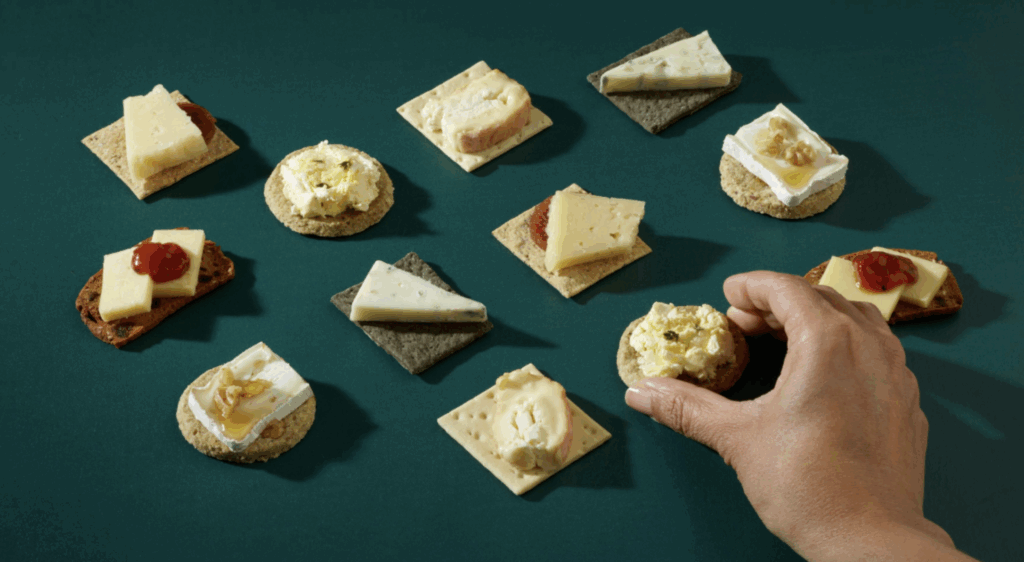
Curation is at the center of En Route’s cheese program. Each selection connects to place, process, and people. The company partners with regional producers, cooperatives, and farms to ensure authenticity, giving it access to more than 200 cheeses from dairies across the UK, Europe, North America, and South America. For US customers, this means a thoughtful balance of local cheeses and international selections. Each rotation is tailored to routes, passengers, and airline needs, with no one-size-fits-all model.

A major highlight is the seasonal rotation of premium cheeses, which keeps menus dynamic, relevant, and engaging year-round. Airlines can count on consistent quality across their networks while maintaining flexibility to adjust offerings by route or cabin.

For Tom Lay, En Route’s Marketing and Creative Director, one of its most popular offerings is the Santori Espresso. “It is a sweet BellaVitano cheese that has freshly-roasted espresso hand-rubbed over it for a delightful hit of coffee. We’ve also got a beautifully peppery blue cheese from California that blends really well with honey or salted caramel.”

This adaptability also allows food to reflect geography. A flight departing from Rome might feature Italian cheeses, while the return from New York could highlight American artisanal options. For passengers, this transforms travel into a cultural exchange rather than simple movement from one place to another. Storytelling onboard further enhances the experience, linking passengers to the origin and journey of the cheese they enjoy.

The program also adapts to different cabin environments. Lay explained, “In economy, individually wrapped portions can be served as part of a tray set or for a more premium offering, En Route can support the creation of custom packaging for a more robust cheese-and-cracker option. For first and business class, we have introduced a ‘rip’n’flip’ format that lets crew peel, flip, and serve the cheese with restaurant-quality presentation.”

IFSA Global EXPO Panel Preview: Inflight & In Style

IFSA Global EXPO Panel Preview: Inflight & In Style
Photo via Delta Air Lines

The “Inflight and In Style” panel session taking place at IFSA Global EXPO in Long Beach, California from September 9-11 will be led by Kaelis’ Chief Design Officer Manoj Pridhanani and will take a deep-dive into the world of brand experience. 

Panelists include Tiera Kelley, who headed up Cabin Services and Delivery at Riyadh Air until very recently. She will talk about what it takes to build a brand from the ground up, something she has prior experience of, having been part of the launch team at Virgin America. 

Ahead of the live discussion, Kelley outlined the fledgling airline’s approach by saying, “The way we centralized Riyadh Air’s in-flight experience or brand experience is with the city of Riyadh itself. And so it comes from the heritage, whether it’s the landscape or the ‘Hafawa’ everyone speaks about, and we make sure there’s a modern twist to the heritage of the Kingdom.”

By contrast, Delta Air Lines’ Senior Manager Onboard Brand Experience April Oliphant will be providing insight into what it’s like curating the in-flight experience for a 100-year old brand. “When I think about the work we do, I think about what’s going to be beautifully presented in our flight museum one day,” she explained. 

“In the world of aviation, this idea of ‘premiumization’ and brand partnerships are really, really important to our customers”
– Jenefer Jackson, United Airlines

Oliphant will also share the thinking behind Delta’s recent partnership with Missoni in terms of the two companies’ shared core values, as well as leveraging partnerships with fresh new brands like Shake Shack. Ultimately, she believes it’s about staying true to the airline’s “timeless authenticity.”

JetBlue’s General Manager Onboard, Lounge and Ground CEX Svender Singh will also join the conversation, focusing on how JetBlue finds a balance between leaning into its reputation for being a disruptor, while not taking things too far. “I’ll talk about the customer and what we’ve learned there in terms of brand partnerships and culinary partnerships – things that help us find that balance.”

Another airline discussing culinary partnerships will be United, who will be represented onstage by Jenefer Jackson, the carrier’s Director, Food & Beverage Programs. During a preparatory call before IFSA Global EXPO, Jackson outlined some of the topics she will focus on: “Obviously we are a global airline. We have a global footprint and we’re really committed to bringing authentic experiences for our customers onboard that connect with the communities and destinations that we serve.

“But in the world of aviation, this idea of ‘premiumization’ and brand partnerships are really, really important to our customers […] so how do we bring touches of exclusivity or luxury to our customers in every cabin that really identifies with our global network?” she continued. And yes, Jackson believes United’s Stroopwafel is a great example…

The “Inflight & In Style” panel session will take place in the LBCC Breakout Room from 3:20PM until 4:10PM on September 9. To find out about the other panels taking place at the IFSA Global EXPO, click here. 

IFSA Global EXPO Panel Preview: The Green Shift 

IFSA Global EXPO Panel Preview: The Green Shift 
Photo: Magda Ehlers via Pexels

The first IFSA-dedicated panel session at the 2025 IFSA Global EXPO in Long Beach, California from September 9-11 will focus on examples of how the participants are fostering environmental stewardship while maintaining operational excellence. 

Titled “The Green Shift,” the discussion will be moderated by Aviation Sustainability Forum (ASF) CEO Diana Cawley, who will begin by sharing insightful data regarding cabin and catering waste collated as part of ASF’s Cabin Waste Composition Audit program. The company’s audit tool was recognized in July 2024 by IATA as the industry standard for measuring and analyzing cabin waste. 

In a preview meeting ahead of the panel taking place, Cawley explained, “Whether it is the way they buy products, the way they sort their inventory or the way that they really understand the waste that they’ve got, lots of people are doing things on cabin waste and are seeing that actually they can make a difference there.”

Some of those Cawley is referring to are the panelists, who are there representing Delta Air Lines, KLM and gategroup North America. 

Matrix de Vries, who is responsible for the food and beverage experience across all cabin classes on a major part of KLM’s international network, will discuss how the carrier has implemented changes to its recycling operations as a result of recent clarification from the European Union on what is classified as Category 1 International Catering Waste (ICW). 

Cawley will also use this opportunity to inform the audience about the regulation de Vries is referring to.

 “Lots of people are doing things on cabin waste and are seeing that actually they can make a difference there.”
– Diana Cawley, Aviation Sustainability Forum

This sets the scene for an interesting discussion about how Gategroup is helping clients manage the challenging regulatory landscape in the US, which differs from the UK and EU. The company’s CCO North America Chris Kinsella noted, “There’s a lot going on in this region in terms of the authorities involved with recycling and there’s a significant cost at times that fluctuates quite a bit.”

However, Kinsella will reveal information about promising pilot programs with its customers, whether it is recycling cans and bottles or composting cardboard, pallets and even the cutlery used onboard. 

Finally, Delta Air Lines Innovation Strategist Tosin Durotoye will focus on how computer vision and AI technology has enabled the carrier to track consumption “to essentially see what’s coming off of our planes and back into our kitchens.”

Durotoye stated, “Because of this sort of data collection and the insights that we’ve been able to gain, we’ve been able to make productivity decisions and take action around how and what we board, optimizing our onboard space, optimizing our menu and more.”

“The Green Shift” panel session will take place in the LBCC Breakout Room from 2:00PM until 2:50PM on September 9. To find out about the other panels taking place at the IFSA Global EXPO, click here. 

Ben Kaufman Talks CX Strategy with Club JSX, Food & Beverage Updates

Ben Kaufman Talks CX Strategy with Club JSX, Food & Beverage Updates
Image via JSX

Despite positive ongoing customer satisfaction rates, JSX’s Ben Kaufman is on a mission to continue elevating the passenger experience across the regional airline.  

Offering a bridge between commercial and private flying, it’s no wonder that customer reviews of JSX are strong. In June, the carrier was awarded “Best Regional Airline in North America” as part of the 2025 APEX Best™Awards, powered by passenger insights gathered via TripIt® from Concur®. It has also just been ranked No.1 Domestic Airline in Travel + Leisure’s World’s Best Awards for the second year running. 

Not one to rest on its laurels, JSX is hoping to boost passenger satisfaction even further with the launch of its loyalty program, Club JSX, which took flight in late July. APEX Insights spoke to JSX Sr. Director Customer Experience (CX), Loyalty, Partnerships & PR Ben Kaufman, who is also a member of IFSA’s Innovation & Engagement Committee, to find out more. 

The program, which Kaufman said “was built on over 14 months of meticulous market research and planning,” allows members to earn five per cent back in Rewards for future flights across base fares, seat fees and pet fees, which can then be redeemed against up to 100 percent of a base fare.

“We’re taking a hard look at the entire end-to-end customer journey to identify areas where we can make the simple joy of flying JSX even more simple and even more joyful.”

“It may seem laughable to spend more than a year building a program that’s ultimately quite straightforward, but it was a priority for us to gain a deep understanding of what the JSX customer truly values and how our offerings can and should evolve to meet their needs and exceed their expectations,” he continued. 

Additional features include the ability to share Rewards with friends and family through ‘Family Pooling,’ and access to exclusive offers. “The exclusive offers we provide to our Club JSX Members are, at this stage, just for JSX products,” Kaufman explained. “This has already included early access to sales and a recent double Reward earnings offer on summer and fall holiday routes like Denver, Cabo and South Florida. Membership also provides access to certain routes that are not available to the general public. 

“While partner offers are very much on our radar, we want to first maximize the customer benefits for our core business. Offers will get progressively more granular and personalized, becoming increasingly reflective of how each unique JSX Customer utilizes our network.”

However, with only up to 30 passengers per flight, JSX’s boutique operation already provides a high-level of service to each one, so those with the most miles are not likely to reap special treatment in the same way that a two-million-miler on Delta would, for example.

Kaufman elaborated, “You’ll often hear our CEO Alex Wilcox say that the highest status we offer is ‘customer.’ Finding meaningful ways to express gratitude to our most frequent customers is important, but status tiers and sub-segmentation isn’t the JSX way – and they’d very likely inhibit the seamlessness of our product.

“Club JSX is in its infancy; we’ve only just scratched the surface of how we can unlock value for our Customers who enroll,” he noted. 

“Offers will get progressively more granular and personalized, becoming increasingly reflective of how each unique JSX Customer utilizes our network.”

“Beyond Club JSX, we’re taking a hard look at the entire end-to-end customer journey to identify areas where we can make the simple joy of flying JSX even more simple and even more joyful. You’ll see improvements rolling out across our technology platforms, in-station services, and onboard product.”

Changes have already begun being made in this regard, with JSX announcing a new snack menu back in May, which includes Octonuts Herbes de Provence Roasted Almonds, Cooper Street Brownie Chocolate Crunch Cookies, Jackson’s Kettle Cooked Sea Salt Potato Chips and more. 

The menu was designed together by Kaufman and JSX VP Hospitality Devin Burns, who joined the company just over 18 months ago in the new role after almost a decade heading up Food & Beverage at Omni Hotels. 

Kaufman explained, “Devin and I have a strong partnership, and our teams work in lockstep to set our crewmembers up for success with products our customers will love. With Devin only recently joining JSX and CX being newly formed, the spring snack refresh was both our first time in the driver’s seat. We shared a vision of implementing better procurement practices, choosing superior products, and delivering them with operational excellence. The results have been incredibly well received and customers and flight attendants both share consistent positive feedback.

“We just recently started a step-change for beverages, as well,” he stated. “We have boarded three products taking to the skies for the very first time – Western Son Texas Vodka, Dripdash Kyoto Style Cold Brew, and Spritz Del Conte. There’s much more coming – so stay tuned!” 

CJ ENM Brings K-Dramas to Emirates’ IFE

CJ ENM Brings K-Dramas to Emirates’ IFE
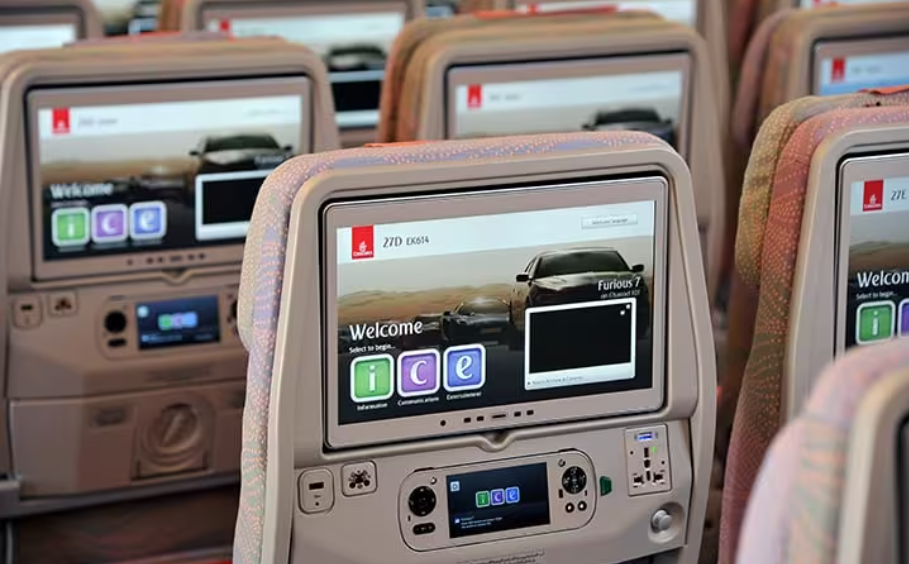
Emirates claims the economy class IFE screens on its A380 jets are the biggest in the sky. Image via Emirates

Korean entertainment continues to grow in popularity, and now, airline passengers will have access to more exciting Korean content. CJ ENM, a South Korean entertainment company, has announced a partnership with Emirates to bring four of its most acclaimed K-Dramas to the carrier’s ice in-flight entertainment (IFE) system. The deal was facilitated by content distribution and production company Circular Media.

The Astronomical Rise of K-Dramas

Throughout the past decade, K-Dramas have garnered immense popularity worldwide thanks to streaming platforms, social media, and a devoted global fan base. This has led to a growing global demand for high-quality Korean content, especially in travel entertainment. Several airlines have recognized the international appeal of Korean dramas and incorporated them into their IFE offerings, including Korean Air, Air Premia, Cathay Pacific, Japan Airlines, China Airlines, and now Emirates.

Since 1995, CJ ENM has been instrumental in expanding K-culture’s global reach and shaping Korean media’s global perception. In recent years, CJ ENM has worked to secure distribution deals with major streaming platforms and broadcasters worldwide. The partnership with Emirates further solidifies the Korean entertainment company as a major player in the international market.

A still from Guardian: The Lonely and Great God. Image via Circular Media

According to Sebastian Kim, VP of the International Content Business Department at CJ ENM, the deal is a “monumental moment.” He added, “We genuinely hope this in-flight exposure opportunity of our well-made titles brings joy, thrill, and happiness to all the customers who begin their journeys with the airline.”

CJ ENM’s Romantic Comedies Take Flight

Four of CJ ENM’s K-Dramas will be available on Emirates’ in-flight entertainment system: Guardian: The Lonely and Great God; Lovely Runner; Hotel Del Luna and What’s Wrong with Secretary Kim. 

Guardian: The Lonely and Great God is a 16-episode series written by Kim Eun-sook. The show is about a man who has lived over 900 years and seeks a bride to break his immortal curse and suffering by pulling out a sword stuck in him since the Goryeo period. In this quest to meet his bride, he encounters a grim reaper and other people he has connections to in their previous lives. The series aired on CJ ENM’s tvN between December 2016 and January 2017. It became a cultural phenomenon in South Korea and earned critical acclaim.

A promotional poster for Guardian: The Lonely and Great God. Image via Circular Media

Lovely Runner is a 16-episode series combining romantic comedy and fantasy starring Byeon Woo-seok and Kim Hye-yoon. In the show, Ryu Sun-jae, a major celebrity, ends his life, which devastates his top fan, Im Sol, but fate intervenes and transports Sol back 15 years to high school when Ryu and Im are students. Sol makes it her mission to protect Ryu and change the course of destiny. It initially aired on tvN in April 2024.

Hotel Del Luna is a 16-episode fantasy romance drama about an immortal owner of a hotel for ghosts (Jang Man-wol) and a human hotel manager (Goo Chan-sung) who is forced to work there. They get to know each other as they navigate their jobs and the hotel’s supernatural world. The series aired on tvN from July through September 2019 and was the most viewed tvN drama of 2019.  

What’s Wrong with Secretary Kim is a 16-episode romantic comedy that follows a romance between a narcissistic CEO (Lee Joon) and his assistant (Kim Mi). Lee’s world is shaken after Kim announces that she will resign, and in an attempt to change her mind, Lee does whatever he can to persuade her from quitting. The series aired on tnN from June through July 2018.

An Enhanced IFE Experience for Emirates Passengers

The partnership enhances Emirates’ entertainment offerings as it caters to K-Drama fans and new audiences interested in the genre. Emirates already offers a varied selection of Korean movies onboard, and the addition of this new content “underscores the growing global demand for high-quality K-Dramas,” according to Nicolás Valdés, CEO of Circular Media.

The partnership between CJ ENM and Emirates sets a precedent for the airline industry. As competition between airlines intensifies, offering passengers exclusive and diverse entertainment options can be a key differentiator. As K-Dramas continue to be at the forefront of global entertainment trends, other airlines will no doubt continue to integrate more international content into their entertainment systems.

How CSPs Are Evolving: Spafax on AI, Data, and OTT Strategies

How CSPs Are Evolving: Spafax on AI, Data, and OTT Strategies

Content service providers (CSPs) have long played a central role in airline entertainment, but their responsibilities are shifting. Airlines no longer see in-flight entertainment (IFE) as just a seatback screen filled with movies. Instead, they expect CSPs to serve as strategic partners—integrating AI-driven personalization, data analytics, and over-the-top (OTT) streaming into a seamless, revenue-generating passenger experience.

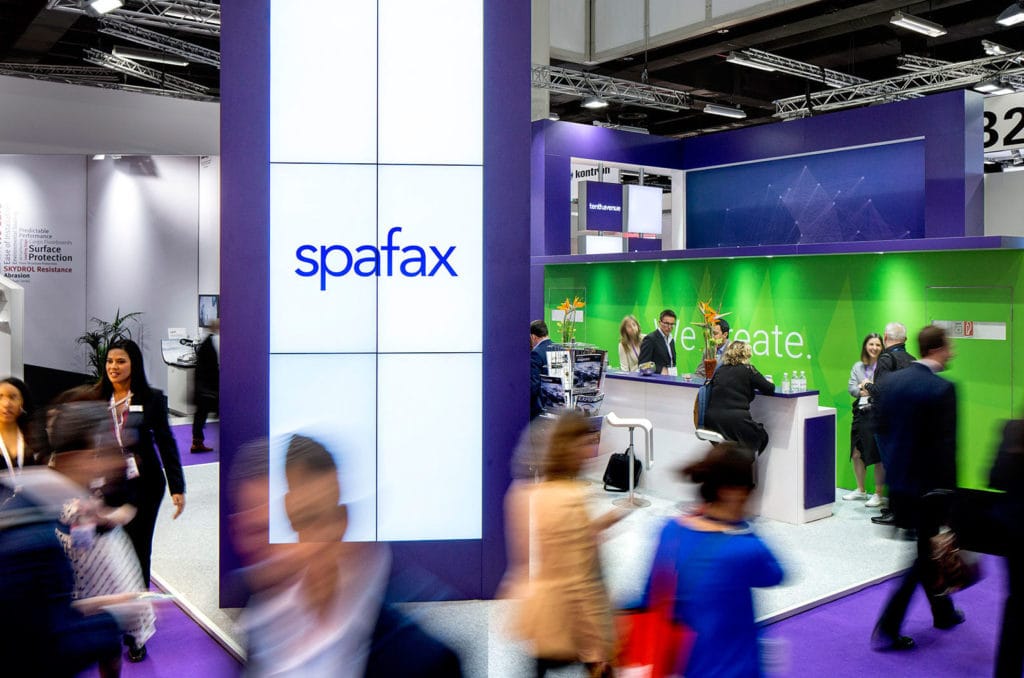
Spafax, a leader in airline content strategy, has adapted to these industry shifts by expanding its role beyond content licensing. Dimitrios Tsirangelos, Spafax Vice President of Business Development Technology and Innovation, believes the future of IFE depends on a broader approach. “We don’t just deliver content. We analyze, predict, and optimize content consumption patterns to create a truly personalized experience.”

As airlines refine their entertainment strategies, discussions at APEX TECH this May will continue shaping the industry’s direction. The event highlights how leading airlines and CSPs are using AI, connectivity, and new media platforms to create the next generation of passenger engagement.

From CSP to ESP: Experience-Centered Content Strategies

The role of CSPs has evolved from media suppliers to experience service providers (ESPs). Airlines expect more than curated content—they want entertainment strategies that extend beyond the aircraft cabin, encompassing lounges, preflight engagement, and even post-arrival interactions.

“Airlines will continue to rely on CSPs,” Tsirangelos said, “but the role is evolving toward end-to-end content orchestration, data analytics, and technology integration.”

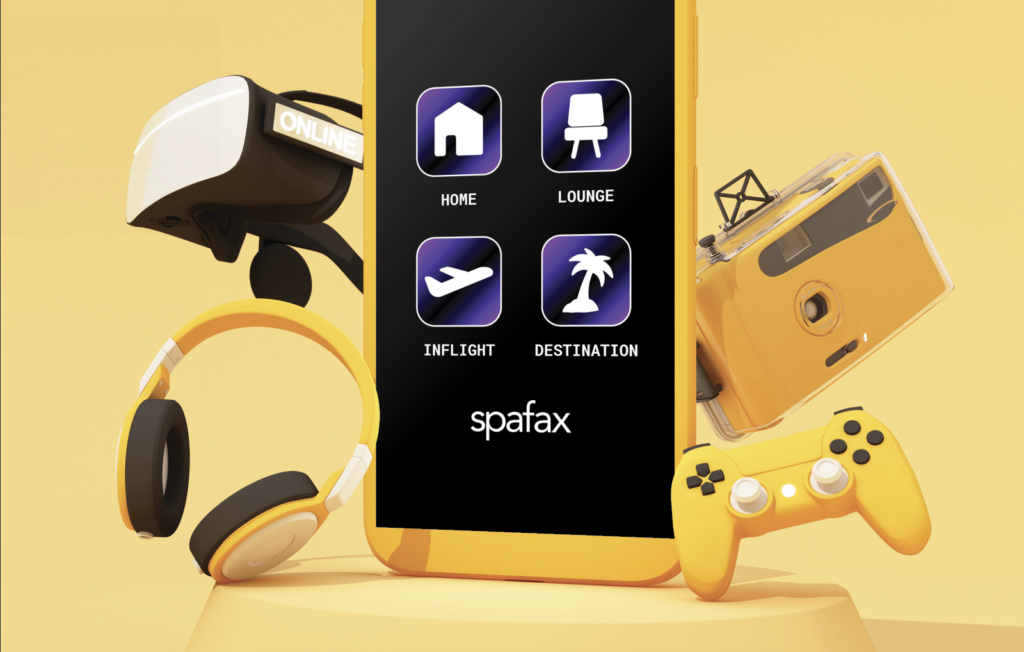
Spafax’s collaboration with Lufthansa Group reflects this shift. The company provides entertainment beyond seatback screens by integrating streaming options in lounges and preflight digital platforms. Across the industry, CSPs are building similar solutions, ensuring that content follows passengers throughout their journey rather than existing only in-flight.

This transition was a key theme at APEX TECH last year, where leaders from Emirates and Qatar Airways outlined how CSPs must play a larger role in connecting digital experiences across an airline’s ecosystem. Both carriers emphasized the importance of seamless integration between IFE, loyalty platforms, and passenger engagement tools.

AI-Driven Personalization: Data at the Core of IFE

The future of IFE relies on data, and CSPs are at the forefront of leveraging passenger insights to create more engaging content strategies. Airlines want entertainment platforms that adjust based on passenger demographics, route preferences, and individual viewing habits.

Spafax has placed personalization at the core of its approach. “We curate entertainment experiences by leveraging data, predictive analytics, and AI-driven content recommendation engines to match passenger preferences,” Tsirangelos explained.

For example, data shows that business-heavy short-haul routes often see higher engagement with news, finance, and productivity apps, while leisure-focused long-haul flights benefit from destination-themed content and family-friendly programming. AI-powered recommendation engines refine these choices further, ensuring a tailored experience for each traveler.

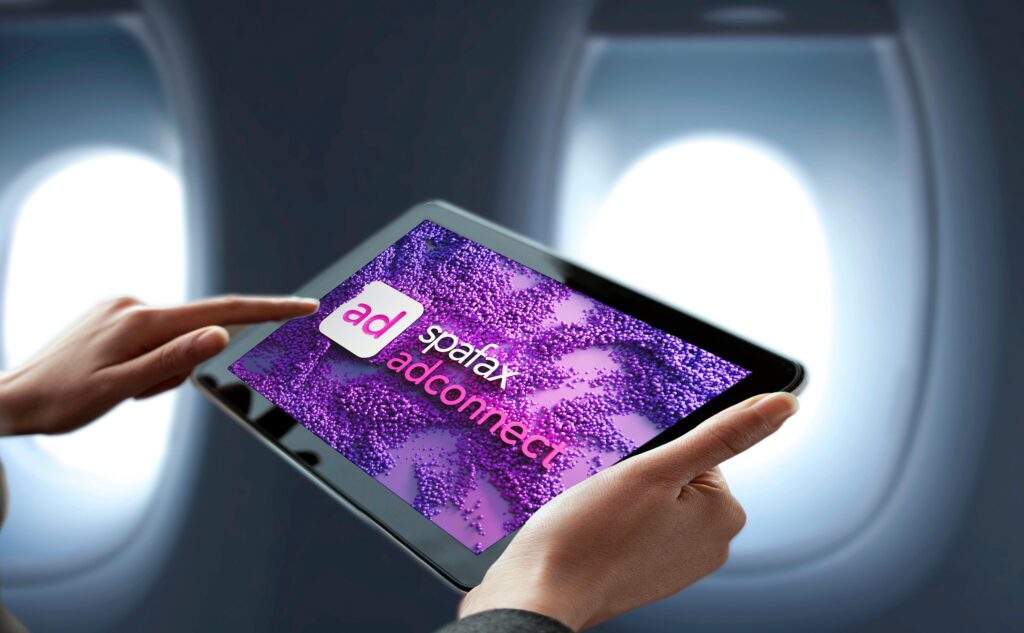
Spafax’s AD Connect platform integrates these insights with advertising and retail opportunities, helping airlines monetize their entertainment platforms. Airlines are already looking at ways to make IFE a revenue driver, with Qatar Airways at APEX TECH last year discussing its investment in AI-driven personalization to enhance content and advertising strategies.

OTT Streaming and Expanding IFE Beyond the Cabin

With in-flight connectivity improving, CSPs are prioritizing OTT streaming solutions. Airlines recognize that streaming services provide flexibility and cost advantages by reducing the need for large onboard media libraries. However, this shift requires CSPs to manage licensing complexities, bandwidth constraints, and content security.

Spafax showcased this approach with its Lufthansa lounge streaming initiative, demonstrating how airlines can extend entertainment beyond the aircraft. The company sees OTT as a fundamental part of the future, allowing passengers to start a movie at home, continue watching in a lounge, and finish in-flight.

“The OTT platform will facilitate seamless integration across different platforms—from seatback screens to personal devices, in lounges and preflight experiences,” Tsirangelos explained.At a previous APEX TECH, JetBlue discussed its approach to free streaming partnerships, highlighting how airlines are moving toward a more flexible, content-rich entertainment model. As connectivity costs decrease, more airlines are considering streaming-based IFE solutions, requiring CSPs to play a key role in managing the transition.

Monetization: How Airlines Are Turning IFE into a Revenue Driver

Entertainment strategies are no longer just about keeping passengers engaged; they are about driving revenue. Airlines are working closely with CSPs to integrate advertising, branded content, and e-commerce within IFE platforms.

Spafax’s AD Connect solution enables airlines to implement targeted advertising and personalized retail offerings. Tsirangelos believes that CSPs will play a larger role in developing these revenue models, helping airlines connect their entertainment platforms to advertising and shopping opportunities.

“We have the data and the software system to develop data-driven advertising solutions for airlines,” Tsirangelos said. “We enhance airline strategy and retail integration by helping to build exclusive media partnerships.”

Gamification and interactive engagement tools also contribute to IFE monetization. By integrating loyalty program rewards, digital storefronts, and real-time advertising opportunities, airlines and CSPs are exploring new ways to increase revenue without disrupting the passenger experience.

Investing in Emerging Technologies to Shape the Future of IFE

CSPs continue investing in emerging technologies to improve the entertainment experience. Gesture-based controls, AI-driven automation, and edge caching are some of the innovations shaping next-generation IFE platforms.

Spafax is already experimenting with eye-tracking and hands-free navigation, which could change how passengers interact with seatback entertainment. “We are investing in interface technologies such as mixed reality and automation for internal and external products,” Tsirangelos said.

Data fusion also plays a critical role in shaping IFE strategies. By consolidating content consumption metrics across lounges, mobile apps, and in-flight screens, CSPs help airlines refine entertainment offerings for different market segments.

At APEX TECH last year, Emirates detailed its approach to integrating AI and passenger data across multiple digital platforms, ensuring a cohesive experience. These discussions reinforce the role of CSPs in helping airlines bridge content strategies across various customer touchpoints.

How CSPs Will Define the Next Phase of IFE

As airlines move toward a fully connected, data-driven entertainment experience, CSPs must continue adapting. AI-driven content recommendations, OTT streaming, and advertising integration will define the next phase of IFE.

Spafax provides an example of how ESPs are evolving—shifting from content providers to experience service partners who integrate entertainment with branding, e-commerce, and passenger engagement strategies. The future of IFE depends on this broader, more flexible approach.

These trends will be explored further at APEX TECH, where industry leaders will continue shaping the future of airline content strategies and the evolving role of CSPs in the aviation industry.

Cathay Pacific’s State-of-the-Art IFE Interface Takes Personalization to New Heights

Cathay Pacific’s State-of-the-Art IFE Interface Takes Personalization to New Heights
All images via Cathay Pacific

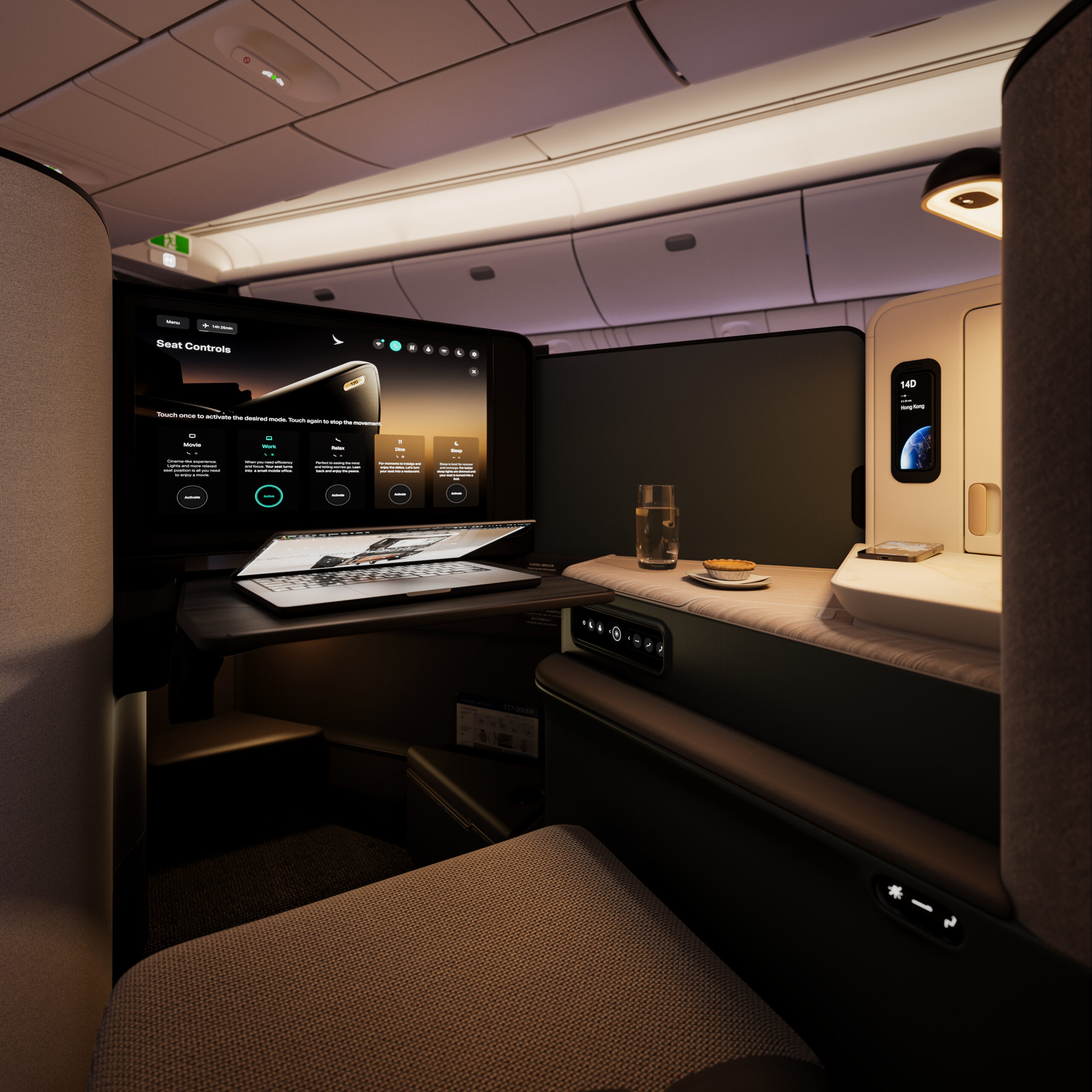
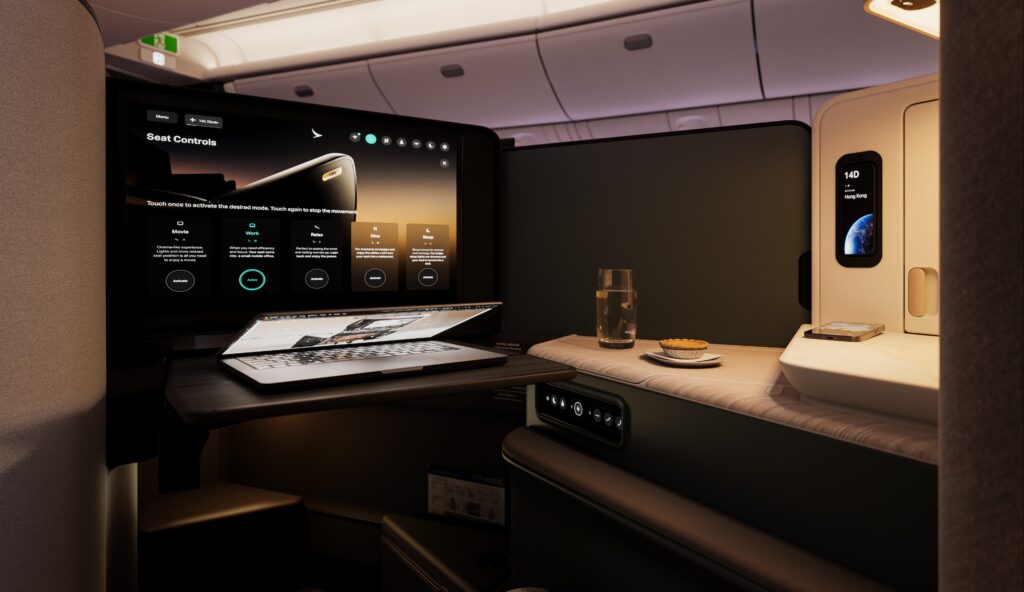
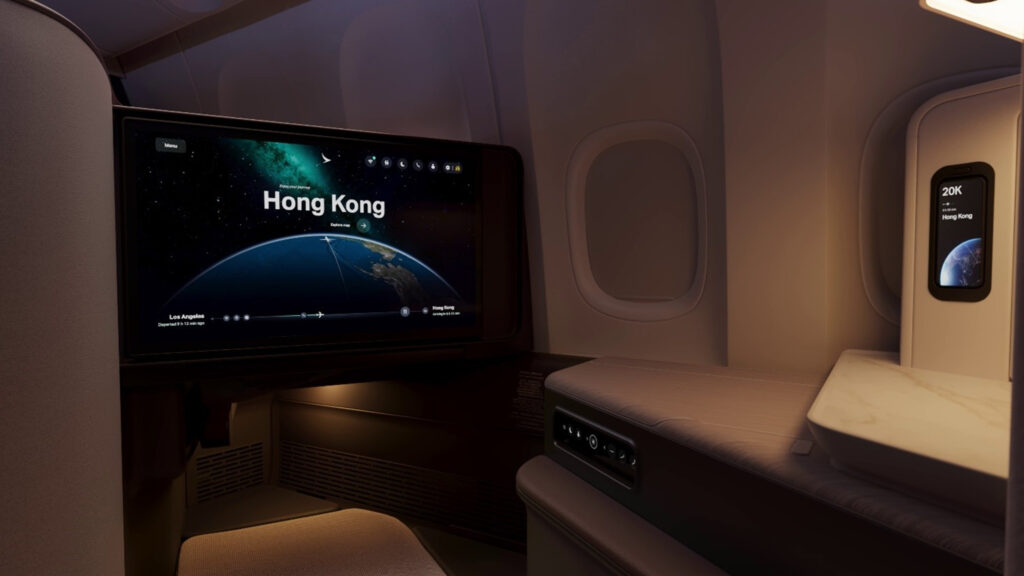
Cathay Pacific recently revamped its in-flight entertainment (IFE) interface in collaboration with Reaktor Aero. The resulting product, which debuted on a Boeing 777-300ER retrofitted as part of the airline’s ground-breaking Aria business-class suites, reaffirms Cathay’s commitment to providing its customers with a premium, personalized in-flight experience.

The system was designed for usability across 14 screens and three different aircraft types. It presents travelers with a harmonized experience no matter the aircraft model or screen resolution. According to Reaktor’s VP Michael Holler, it “is truly state-of-the-art, seamlessly incorporating the latest technology with a design that is elegant and intuitive to use.”

Cathay Pacific’s Head of Customer Experience – Connectivity & IFE Strategy Guillaume Vivet said the carrier undertook “rounds of customer interviews and usability tests, to ensure we were creating the right experience for our customers.”

A Holistic Approach to the Cabin Environment

The updated IFE interface provides travelers with enhanced control over their environment by integrating cabin technology with the seats. Vivet explained that one of the goals for the new IFE system is “to provide our passengers with an end-to-end personalized experience with continuity.”

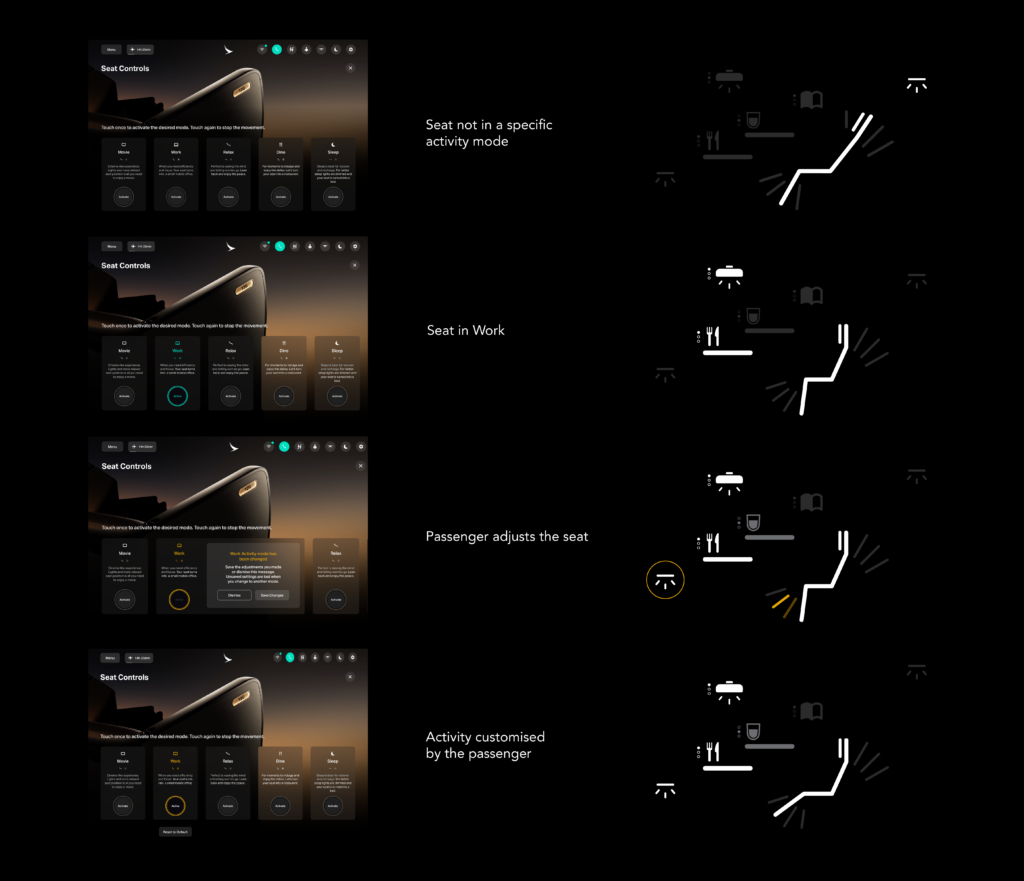
In the new Aria Suite business-class seat onboard Cathay’s retrofitted Boeing 777-300ER aircraft, the airline has five pre-set modes known as “Activity modes” that are curated for passengers: Movie, Relax, Work, Dine, and Sleep. Vivet said, “With one touch, we may put the passenger into defined settings consisting of seat positions and light settings that are suitable for the needs.”

In “Movie” mode, the seat is adjusted to a relaxed position with dimmed lights to create a movie theater-like experience. If passengers opt for the “Dine” setting, the seat is adjusted to the upright position in line with the dining table. Furthermore, a feature lamp shines a spot light on the meal table to enhance the presentation of the dishes served.

Once one of the pre-set modes is activated by the one-touch selection, “the IFE Interface will show a state change indicating that passenger is now in Relax mode, for example,” according to Vivet. What’s more, passengers can make further adjustments to the pre-set modes based on their personal preferences, and can save the settings so they can come back to that position later in the flight. 

Vivet commented, “This development was years of work involving many teams including Cathay, JPA Design, Reaktor, and IFE and seat vendors. From pre-design collaborations, ideation, design, development and testing to delivery, a project team from all over the world spent thousands of hours working towards one goal: to deliver a simple, user-friendly experience that elevates passenger comfort.”

Cutting-Edge Features

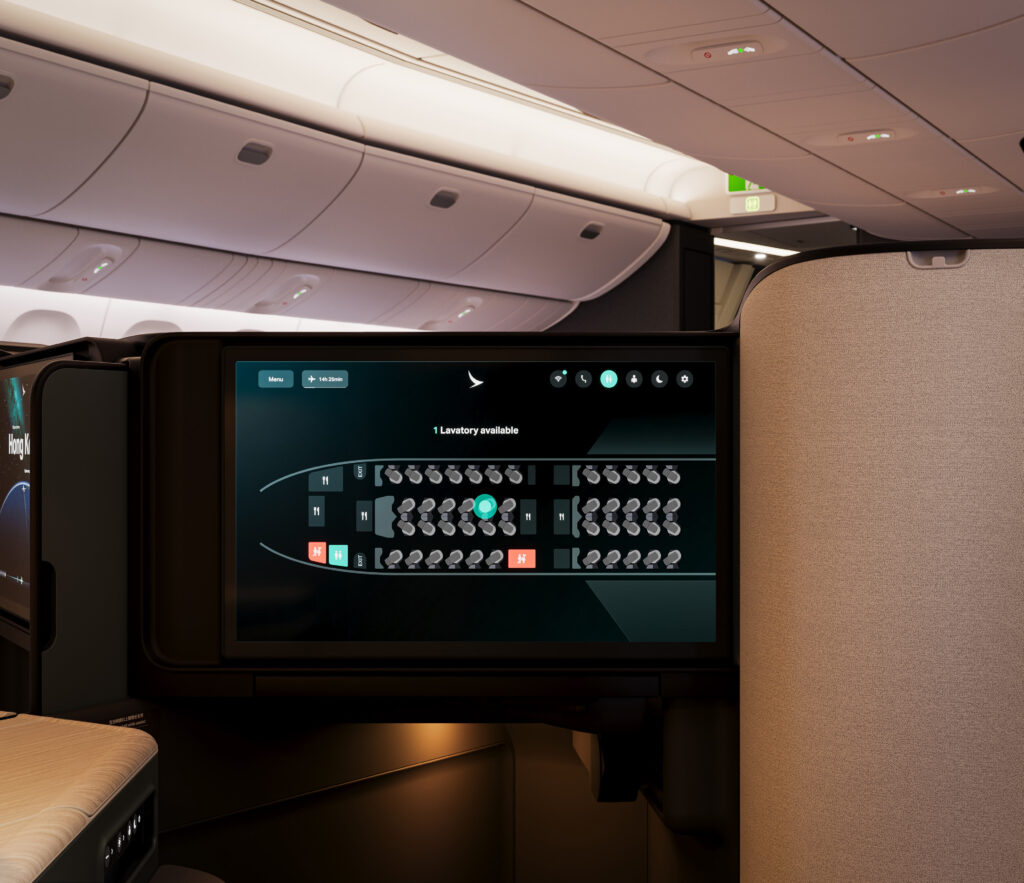
Elsehwere, Cathay Pacific also became the first airline in the world to embed lavatory status within the IFE system, allowing passengers to see which lavatory is unoccupied without leaving their seats. The interface displays the occupancy status of all the lavatories in the cabin at the top status bar, enabling passengers to easily check to see if the nearby lavatory is available. This feature, which is available in all classes, has been “one of the most well-received features by the public since it launched, which we are delighted about,” Vivet explained. Delta Air Lines also has a similar feature.

Another noteworthy feature of Cathay’s IFE interface is called “My Journey.” It combines flight tracking with entertainment by merging real-time flight paths and map layers (thanks to FlightPath3D’s API toolkit and widgets) to create an individualized game-like flight path preview.

In addition, it enables passengers to connect their Bluetooth headphones to the 4K ultra-high-definition seatback entertainment screens, enhancing travelers’ audio-visual experience.

Planning for the Future

Cathay is continuously updating the new interface with more features, and in the near term, it plans to allow passengers to customize the “My Journey” feature. Vivetsaid it will “enable passengers to plan and tailor their in-flight journey and, in addition to meal service, set their preferred time for sleep, movies, drinks, and more.” Other future developments under consideration include a messaging function that will allow passengers to make service requests directly to cabin crew. 

Whatever the future updates hold, it is clear Cathay Pacific is setting a new benchmark in terms of IFE user experience. The airline’s interface has already won Gold at the German Design Awards and the Red Dot Design Award in Brands & Communications Design. Most recently, it was announced as a finalist in the 2025 Crystal Cabin Awards. The winner for the latter will be announced at the Aircraft Interiors Expo in April.

Anuvu Partners with Headspace to Bring Mindful Content Inflight

Anuvu Partners with Headspace to Bring Mindful Content Inflight

In-flight entertainment (IFE) and connectivity provider Anuvu has announced a partnership with Headspace, the developer of the popular Headspace mental health app, which has over 100 million users worldwide. With air travel regularly associated with stress and fatigue, the partnership between Anuvu and Headspace provides passengers with a meaningful way to stay refreshed, focused, and calm while traveling. The Santa Ana-based company provides IFE service for many airlines, including Ethiopian Airlines, TUI Airways, Air Canada, Air Cȏte d’Ivoire, and Norse Atlantic Airways.

Through this partnership, airlines working with Anuvu will be able to bring mindfulness and meditation content, such as mindful living, anxiety, stress, and sleep, to passengers starting in Spring 2025. As Anuvu continues to innovate the IFE sector by offering engaging content, adding Headspace’s content to Anuvu’s extensive entertainment catalog, showcases the company’s commitment to wellbeing and enhancing the passenger experience.  Similarly, the partnership will enable Headspace to reach customers beyond mobile and desktop platforms and engage travelers in a setting where mindfulness and relaxation are especially beneficial. 

Headspace’s content was first made available inflight through its partnership with Virgin Atlantic, which began in 2011 as its videos and audio exercises were integrated into the airlines in-flight entertainment system. Since then, Headspace is available on twelve airlines and offered to over 800 million passengers annually. Partnering with Anuvu enables Headspace to offer its content to a broader audience. Sarah Cohen, Vice President of Content and Headspace, explained, “Partnering with Anuvu is a meaningful way for Headspace to expand our reach and bring mindfulness and mental health tools to people no matter where they are in the world.”

The partnership comes amid growing expectations from passengers for more wellness entertainment. According to Viasat’s 2024 Passenger Experience Survey, which gathered insights from more than 11,000 respondents worldwide who have traveled on an airplane within the past 12 months, 51% of participants want services to improve their wellness throughout their flight. As such, there has been a growing trend of airlines prioritizing passenger wellbeing, especially in the wake of increased travel stress. By integrating mental wellness content into IFE platforms, airlines can provide passengers with a more holistic travel experience emphasizing physical and mental health. 

Together, Anuvu and Headspace will offer travelers audio and video content that showcases tips to enhance sleep during travel, guided stretches that travelers can do while seated, and inflight meditation programs. Headspace’s content will provide moments of relief from stress to travelers while they are on the go. 

Simon Cuthbert, VP of content licensing and distribution at Anuvu, explained, “This partnership offers a unique opportunity for passengers to experience the impact of Headspace’s mental health content outside of their app-based programming, providing a moment of peace in the sky.” According to Anuvu, an estimated 40% of travelers experience some flight anxiety; as such, Headspace’s content will enable passengers to feel more relaxed during their flight. 

As Anuvu continues to expand its in-flight entertainment offerings for passengers worldwide, the company has also recently partnered with LEGO Group. Beginning in Spring 2025, Anuvu will be able to provide a wide array of LEGO Group’s animated content to airline audiences worldwide.

Viasat Survey Reveals Passenger Demand for a Hyper-Connected Future

Viasat Survey Reveals Passenger Demand for a Hyper-Connected Future

Viasat has released its findings from its 2024 Passenger Experience Survey. The annual report paints a very optimistic picture for the aviation industry, highlighting passengers’ expectations for hyper-connected air travel and high-speed internet as a core component of the passenger experience. The survey gathered insights from more than 11,000 respondents worldwide who have traveled on an airplane within the past 12 months. 

Emphasis on connectivity and entertainment 

The main takeaway from the survey is the importance of connectivity for passengers. The report found that 75% of participants would be more likely to select an airline that provides quality Wi-Fi. However, this is down from 83% in 2023 and 82% in 2022, yet up from 67% in 2018. Moreover, 22% of participants said they would not consider flying on a long-haul flight without connectivity.  However, according to the results, just providing access to in-flight Wi-Fi is not enough anymore, as 36% cited free or inexpensive Wi-Fi prices as an important factor, with 87% willing to watch ads to gain access to Wi-Fi. Just under half (47%) of participants believe watching adverts is a fair trade-off for free connectivity. 

Besides the cost and quality of connectivity, a substantial number (71%) of passengers say that personalized entertainment that can be accessed through in-flight Wi-Fi, such as streaming platforms, is of particular importance. Moreover, 41% stated that the ability to access these streaming platforms such as Netflix and Amazon Prime would improve their experience, while 33% of respondents stated the availability to stream music from platforms such as Spoitify and Apple Music would have a similar effect. Today, passengers flying on American Airlines can stream music for free from their Apple Music account. Similarly, Emirates offers free streaming from Spotify for inflight music and podcasts. It does not stop there, as 94% of respondents still want to use their device on flights that already have seatback entertainment. Most of the passengers (46%) want to use their device to access the internet or social media, whereas 29% want to use their device to work or for shopping. 

That’s not all, over half (55%) want an augmented entertainment and sensory in-flight experience, including mixed reality windows displaying information about passing landmarks, panoramic floor-to-ceiling windows, and VR entertainment systems. Similarly, 51% want services that will improve their wellness and comfort throughout the duration of the flight, ranging from health and wellness sensors to an inflight spa or gym to biometric seating that adapts to their body. 

Only a handful of airlines have put social spaces in their A380s, with Virgin Atlantic having one across its entire fleet. There is little to no evidence that these seating configurations will come to fruition. For lighting, airlines have lighting systems specific for sunrise/sunset and northern lights displays and have begun utilizing them more and more. 

Passenger trends and airline challenges 

In the rapidly evolving air travel landscape, connectivity has become a focal factor influencing passenger choices and airline strategies Overall, the survey underscores an immense shift in passenger expectations toward more connected and personalized in-flight experiences. What’s more, the growing demand and expectation for seamless connectivity highlight trends that emphasize technology’s important role in enhancing passengers’ travel experience. Travelers want connectivity and seek tailored services such as real-time travel updates, customized entertainment options, and digital payment solutions. 

As Don Buchman, Vice President & General Manager, Commercial Aviation at Viasat, explained, “The airlines that are the first and fastest to embrace this direction of travel are likely to enjoy considerable commercial advantage and customer loyalty as a result.”

This report is another example of the broader passenger trends regarding connectivity and another reason airlines face increasing pressure to upgrade their in-flight entertainment and connectivity (IFEC) systems. However, airlines face many challenges adapting to customer expectations even as passenger preferences evolve. For starters, in order for airlines to upgrade their planes with advanced connectivity, it requires a substantial investment, which airlines need to balance with operational efficiency.  Secondly, lots of technological advancement still needs to be done to ensure consistent, high-speed connectivity throughout different areas and altitudes. There is also a cybersecurity risk, and enhanced connectivity can make the aircraft and airline more susceptible to cyber-attacks; as such, there would need to be a significant investment in security measures. 

In the meantime, airlines are using advanced technology to address these challenges. For starters, artificial intelligence (AI) powered customer service chatbots are being utilized to enhance response times and passenger engagement. Airports and airlines are using biometric boarding processes that reduce passenger wait time. Furthermore, airlines have begun adopting satellite-based broadband and 5G-enabled networks that offer faster and more reliable in-flight internet access. Airlines are partnering with in-flight entertainment and connectivity providers such as Viasat to integrate seamless connectivity solutions in their fleets. Lastly, airlines have started enhancing passenger personalization. Thanks to advanced data analytics and machine learning airlines can provide a personalized in-flight experience based on the travelers preferences. 

As passengers’ expectations shift, airlines have to balance navigating the challenges related to infrastructure and cost with innovations that enhance the travel experience. By integrating these technologies and strategies, airlines can not only position themselves at the forefront of a hyper-connected future but will also aim to create a more efficient and personalized travel experience. 

Air China’s Dr. Zhihang Chi opens APEX TECH with Keynote Address on Elusive Nature of PaxEx

Air China’s Dr. Zhihang Chi opens APEX TECH with Keynote Address on Elusive Nature of PaxEx

APEX TECH 2023: Day One – Self-described “technologist turned business executive” Dr. Zhihang Chi, Air China’s Vice President & General Manager, North America opened his keynote address yesterday at the APEX TECH by apologizing for the rain. Which, in a round about way, reinforced his overriding message that the airline passenger experience is often defined by forces beyond the airline’s control. 

“My personal view is that APEX, which I understand stands for airline passenger experience, is probably the trickiest subject in our business, because it is so subjective, and is so elusive, so personal, pleading, fickle and volatile,” said Chi. “The same passenger under identical circumstances, can have a completely different experience, perhaps because of his or her physical or mental state.”

Dr. Zhihang Chi

Noting that he recently had the best hamburger ever on a Cathay Pacific flight but that next time he might crave a Caesar Salad instead, Chi joked that that’s how elusive and fickle even he himself can be and that is why it’s “virtually impossible to enumerate all aspects of the passenger experience.”

Chi then encouraged TECH attendees to ask themselves when they think the passenger experience begins and also, perhaps even more importantly, when it ends. 

“These days, we talk a lot about the end-to-end passenger experience, meaning leaving the home to arriving at the destination. But as long as APEX stands for airline passenger experience … any efforts by an airline to control and internalize the passenger’s complete journey and total experience will be counter productive,” said Chi. “Grasp all, grasp none, as the old saying goes.” 

Even the experiences that can be influenced and controlled by an airline are tricky, added Chi, because oftentimes the issue has nothing to do with the carrier’s customer facing staff, or people, but everything to do with what’s happening behind the scenes. 

Citing Air China’s accounting department, home-based call center and maintenance people as being the real unsung heroes of the carrier’s passenger experience, Chi added that technology is also key in keeping passengers happy these days. 

“Technology is critical but it doesn’t need to be fancy. We don’t necessarily need the newest and coolest but each airline needs to understand our own positioning based on which technology solutions work, then create baby steps to deliver continuous improvements. Or as they say, in Japan: kaizen.”

After sharing a few amusing anecdotes about a recent flight from Europe, Chi wrapped up by noting that in his view, the airline passenger experience is all about setting the right expectations. 

“The same passenger can be perfectly happy flying on an ultra low cost carrier when he travels on a family vacation and on a full service carrier, when he travels on his company’s time.”

“Always under promise and over deliver and focus on reducing variability,” said Chi. “Personally, I was totally impressed with the service in first class on Emirates. But I’m also equally impressed with my experiences on Southwest. Always happy, always over-delivering.”

Opinion: A Passenger-Centric Retail Strategy is Key to Airline ROI

Opinion: A Passenger-Centric Retail Strategy is Key to Airline ROI
José Lirio Silva

José Lirio Silva is head of Onboard Retail, Europe and managing director at Retail in Motion GmbH. He has extensive experience in retail: prior to joining the company in 2014, José worked at METRO Group, where he expanded and managed the Customer Led Category Management department and acted as head of Corporate Program Office. In this instalment of In the Hot Seat, Silva discusses how a humanized retail strategy can be the way to a traveler’s heart.

Onboard retail programs offer airlines room for growth in various areas, including passenger satisfaction, brand alignment and cost reduction. By offering travelers a broader selection of products from brands they already trust, airlines have the opportunity to improve satisfaction rates and pave the way for passenger centricity.

José Lirio Silva, Retail inMotion

What are some products that airlines should consider stocking for today’s pandemic-weary travelers?

Retail demand has largely remained constant, so airlines are offering the same products as before, but with better processes in place to curb interaction and boost hygiene standards. Trends such as sustainable packaging, food traceability and healthy eating, which were gaining momentum before the pandemic, will still influence travelers’ choices.

What does it mean to be “passenger-centric”?

The term “passenger-centric” has different connotations. It can be surprising the customer and over-delivering on their expectations, but it can also mean that offering the best quality/price ratio. It’s all about making everything as convenient as possible for passengers.

What are some different ways airlines can curate a truly compelling, unique and successful retail offering?

First, the airline should be clear about their value proposition and brand promise. Then, they need to find a suitable retail brand partner that will enhance this promise and help create a strong, niche brand-positioning strategy. By doing this, airlines can leverage their distinct position and use in-flight services to deliver on their promise of quality and choice.

How has in-flight retail evolved during the pandemic? Do travelers still have an appetite to shop, and will a retail program provide a consistent return on investment during this critical time?

Even before the pandemic, travelers had started to become more conscious about their consumption habits. The pandemic simply reinforced this. Passengers have not lost their appetite to shop, but we are seeing a change because they are doing it in a more conscious way.

Regarding a consistent return on investment, I think a balance can be found between a purely margin-driven program and a program that is solely focused on customer satisfaction. Retail inMotion offers a well-balanced mix of both these concepts.

What does a company like Retail inMotion bring to the table for airlines looking to launch or revitalize their retail program?

Our technology is reliable, easy to use and scalable. We have a team composed of experienced catering operators, creative category managers and talented designers. Additionally, we always deliver on our commercial promises.

We listen and we ask questions until we fully understand airlines and their brand values so that we can offer them individualized solutions and partnerships tailored to their needs and expectations. When it comes to our customers, we do not believe in a one-size-fits-all approach.

How can a retail program be an extension of an airline’s brand values? Can you provide an example courtesy of one of your customers?

The way we see it, a retail program must highlight and enhance an airline’s brand values.

A great example is our “Swiss Saveurs” program with SWISS in Geneva. Every aspect, from product selection to menu design, focuses heavily on sustainability and “Swiss-ness,” if you will.

https://twitter.com/RetailinMotion/status/1338453897606799363

Airport Food Delivery Trend Picks Up During Pandemic

Airport Food Delivery Trend Picks Up During Pandemic
Transavia has taken airport delivery one step further, partnering with Just East to enable meal delivery directly to aircraft. Image via Transavia

Airport delivery services aren’t new – AtYourGate launched in March 2018 – but the trend has gained momentum as travelers avoid lining up at airport kiosks due to COVID-19.

Travelers may be venturing out, but they are apt to be anxious and wary about spending time in airport retail shops, food courts, restaurants and other high-traffic areas. The same technology available for ordering food and retail for curbside pickup or delivery in cities is now present in many airports.

In-Terminal Food Pickup

At Los Angeles International Airport (LAX), a new airport-wide program called LAX Order Now, makes it easier for passengers to use their mobile devices to order food for pickup at dozens of restaurants.

Grab and Unibail-Rodamco-Westfield Airports (URW Airports) are partners in the program, which lets passengers order directly from the LAXOrderNow.com site or by scanning QR codes in the airport. Order updates and alerts are sent to customers, who pick up their sealed orders at designated locations in the terminals. 

The program expands on some services that were already in place, but the airport-wide marketing and streamlined online ordering experience makes it easier for passengers to find and use. Right now, the program offers pickup only, but in-terminal delivery is planned for the next year.     

“Partnering to keep people safe and healthy in the airport is key to restoring confidence in travel,” said Mike Salzman, EVP and group director, URW Airports, in a statement.

In-Terminal Food Delivery

AtYourGate, an app that allows passengers to have food delivered to them at the gate, is now available at 11 airports (JFK, LGA, EWR, BOS, MSP, SAN, SJC, ONT, PDX, SNA, and BUR), with another dozen launching this year.

The company has also partnered with Grab and has plans to work together in at least 55 airports, allowing passengers to choose between pickup or gate delivery. According to Livney, the first Grab/At Your Gate program will launch soon at Philadelphia International Airport (PHL).

Food Delivery to the Plane

In a pilot program that bypasses airport concessions entirely, low-cost Transavia Airlines (part of the Air France-KLM group) is partnering with home food delivery service Just Eat to offer meal delivery to the plane.

Passengers on selected flights from Amsterdam are offered the option to use Just Eat’s platform to preorder a meal prepared by Dutch catering company iFleat. The meals are delivered to the plane by the Just Eat team, “after which the cabin crew serves the meals to the passengers,” Transavia said in a statement. “This reduces the number of crew contacts and enhances Transavia’s service with fresh and healthy meals whilst promoting safe and responsible conditions.”

In-Terminal Food and Retail Pickup and Delivery

A new partnership between e-commerce platform Grab and 3Sixty Duty Free now allows travelers to use their mobile devices to shop and order retail items for in-store pickup or gate delivery at Dallas Fort Worth International Airport (DFW).

The partnership expands Grab’s service offerings beyond food to retail and gives both domestic and international passengers throughout the airport an alternate way to purchase duty-free products.

“International travel is virtually non-existent right now,” said Jeff Livney, chief experience officer at Grab, “but a lot of products in duty-free stores are available for purchase by any traveler. So, this expands the reach of duty paid.”

The program currently offers perfumes and cosmetics from 3Sixty Duty Free for touchless ordering, pickup or in-terminal delivery at DFW, but Livney said other duty paid categories, such as fashion, confectionary and local products will be added soon.

“We’re looking to expand the program with 3Sixty into other airports and to work with other retailers as well,” Livney said.

SEA Airport Restaurant Revives Menu With African Cuisine

SEA Airport Restaurant Revives Menu With African Cuisine

Africa Lounge Sambusas
Africa Lounge customers can now order savory sambusas, fried plantains and jollof rice. Image via Seattle-Tacoma International Airport

As the pandemic caused Seattle-Tacoma International Airport vendors to contemplate closing shop, Jerry Whitsett and Rod O’Neal decided to pivot and introduce what they believe is the first menu of African dishes in a US airport.

When it opened in 2004, Africa Lounge at Seattle-Tacoma International Airport (SEA) stood out from other airport eateries with a décor featuring leopard prints, hand-painted murals and a custom-made metal elephant head over the bar.

“We batted around different ideas and decided to do something a bit different and create an oasis. A lot of airports were pretty sterile environments back then and we were looking for a more colorful theme,” said Jerry Whitsett, who co-owns the restaurant with Rod O’Neal. The choice of décor paid off: In its first year, Africa Lounge received a “Most Innovative Concept” award from Airports Council International – North America.

Africa Lounge owners Rod O' Neal and Jerry Whitsett
Africa Lounge owners Rod O’ Neal (left) and Jerry Whitsett. Image via Seattle-Tacoma International Airport

While SEA’s Africa Lounge has remained a successful, calm oasis along an increasingly busy concourse, the classic American fare served – burgers, chicken wings, etc. – never really matched the surroundings. The only African menu items were the names of two beers – African Amber and Serengeti Wheat – brewed at Mac & Jack’s Brewery in Redmond, Washington.

When the pandemic began, business at Africa Lounge, like every other restaurant, bar and shop at the airport, just about ground to a halt. “It’s no secret that our business was down 95% at some point,” Whitsett said. “But we survived 9/11, we survived changes at the airport and we will survive this.”

Burgers, nachos, chicken wings and some standbys are still on the menu, but now passengers can order savory Central African fried pastries, called sambusas, filled with spicy beef or vegetables. The sides include fried plantains with tangy sauces and jollof rice, a West African staple made with tomatoes, peppers, onions and spices. The classic Seattle salmon platter now comes with fried plantains and jollof rice as well.

These and other African dishes still to be added to the menu are the brainchild of Yves Maganya, the general manager of Africa Lounge, who hails from Democratic Republic of Congo. The recipes are adapted from meals Maganya and his family make and eat at home.

The African influence at SEA’s Africa Lounge now extends to the bar. Mac & Jack’s African Amber is still on draft, but now the drink menu includes an unusual selection of South African wines and African-inspired cocktails, including a Capetown Mule; a Malawai Shandy; an Awassa Manhattan made with whiskey, bitters, and Ethiopian coffee liquor; and a Dawa (which means ‘medicine’ in Swahili) made with tequila, lime honey and brown sugar. And in a nod to caffeine-crazy Seattle, the Africa Lounge now also serves coffee from a local African-owned small business that sources single origin and fair-trade Ethiopian coffees.

SEA Africa Lounge Interior
SEA’s Africa Lounge features leopard prints, hand-painted murals and a custom-made metal elephant head over the bar. Image via Seattle-Tacoma International Airport

“We wanted to add an experience that was unique to this airport and to any US airport,” said Africa Lounge operations manager Tate Knutsen, who notes that, in addition to the African dishes, the South African wines, the Ethiopian coffee and the African-inspired cocktails, the lounge now has an African music soundtrack as well.

Africa Lounge co-owner Jerry Whitsett says passengers returning to the airport are slowly discovering the new menu. But he says airport employees, including those from Seattle’s large African community, embraced it right away.

What We’re Made Of: Ellie Parkes, John Horsfall

What We’re Made Of: Ellie Parkes, John Horsfall

Ellie Parkes, John Horsfall, with one of her two dogs in company.

What We’re Made Of is a Q&A series that looks at how companies in the aviation industry are tackling challenges brought on by the COVID-19 pandemic. We’ve had to adapt to changes in where, when and how we work, but we are resilient. If you would like to share your experience, e-mail editor@apex.aero.

Ellie Parkes
Business Development Manager, John Horsfall
Location: Huddersfield, England
Day 35 of working from home
Date of writing: April 17, 2020

Where are you writing from?
I’m at my kitchen table. My husband also works from home and has his office in the living room. I think I get the better deal though as this room gets the sun for most of the day… and the coffee is close to hand. We’ve also got our two trusty dogs for company and amusement.

How are you trying to maintain “business as usual” or communicating with your team?
With an international customer base, a lot of our normal communication is by e-mail, conference calls and video chats, so the day-to-day isn’t so different, but we’ve missed out on customer visits and WTCE trade show.

“Passengers will be seeking reassurance in terms of hygiene, but on a deeper level, a need for a calming, comforting in-flight experience.”

What’s your new office attire or go-to comforts at home during this time?
I’m still getting ready as if I were going to the office – I like to have that routine. But I’m opting for chunky knit socks and one of John Horsfall’s blankets around my shoulders if it’s a cold day. We just published a blog about how textiles can bring us comfort, and that’s definitely the case right now.

Have you or anyone you know been directly affected by COVID-19?
I have family and friends working in the NHS caring directly for COVID-19 patients. Thankfully none of them are showing signs of the disease, but it’s extremely worrying for them and their families.

What news outlets are you following?
BBC, Reuters, Al Jazeera, CNN and China Daily

How are you passing time?
With my background in textile design, making and crafting are still my favorite hobbies. TV-wise we’ve been watching a great new Danish Series called Ride Upon the Storm.

Can you share some specific challenges your business has faced as a result of the outbreak? How did you overcome them and how can the industry learn from your experiences?
New orders are unsurprisingly scarce right now. In addition, many of our close contacts have been laid off or furloughed, so it’s undoubtedly tough for the whole industry. However, John Horsfall have been strategic supply partners to many international airlines for over 40 years now. Together with a relatively lean model, and historical financial stability, we’re hopeful for the future. In terms of supply chain, we experienced some small delays when the outbreak of the virus hit China in January, but thankfully we and our clients had already forward ordered to cover the Chinese New Year shutdown, so we didn’t encounter much disruption. Our geographically wide supply base has also proved crucial, and is something we continue to develop.

Can you give an example of generosity or kindness displayed by your company or one of your colleagues during this crisis?
We’re really proud of our business support exec’ James who has been accepted as an NHS volunteer responder, helping with essential food and pharmacy deliveries in the local community. Our staff is also using our design skills to produce/knit/crochet headbands and ear protectors for local healthcare staff, making their PPE more comfortable.

Some companies may have been inspired to create new product lines, or redesign existing product or services as a result of the pandemic. How is it driving innovation?
This is certainly part of our product development strategy; we’re using this quiet time to focus on re-developing some key bedding and blanket products for post-COVID cabins. Passengers will be seeking reassurance in terms of hygiene, but on a deeper level, a need for a calming, comforting in-flight experience. This may include using technical textiles, specialist fabric treatments or using pure, natural fibers which can be laundered at higher temperatures. Our designers are also exploring the power of color to enhance mood and soothe anxieties.

Read more about the coronavirus impact on the air travel industry, including APEX’s position on the matter, and subscribe to the APEX Daily Experience newsletter to stay up to date.

What We’re Made Of: Federico Heitz, Kaelis

What We’re Made Of: Federico Heitz, Kaelis

Federico Heitz, Kaelis, has been working with supply chain partners to secure access to PPE.

What We’re Made Of is a Q&A series that looks at how companies in the aviation industry are tackling challenges brought on by the COVID-19 pandemic. We’ve had to adapt to changes in where, when and how we work, but we are resilient. If you would like to share your experience, e-mail editor@apex.aero.

Federico Heitz
CEO, Kaelis
Location: Madrid
Day 31 of working from home
Date of writing: April 27, 2020

Are you in lockdown right now?
Yes, for more than one month now. Kaelis asked all employees to work from home one week before the government ordered the lockdown.

Where are you writing from?
My home office.

What’s your new office attire or go-to comforts at home during this time?
Business casual. Maybe a bit more casual than usual.

“We are dedicating our full resources built in the last 23 years of managing supply chains globally to the fight against COVID-19.”

Have you or anyone you know been directly affected by COVID-19?
Yes. People I know have been affected by COVID-19 and some of my friends’ parents and grandparents have passed away, unfortunately.

What news outlets are you following?
Twitter, LinkedIn, The Economist, and Spanish newspapers online.

How are you passing time?
With our #fightcovid19 project, frankly, I’m working more than ever. On the weekends, I’m spending time with the kids, indoor cycling, reading books (Antifragile: Things That Gain From Disorder by Nassim Nicholas Taleb), watching Ozark, having several video calls with family and friends and doing barbecues.

Describe where your business was at the end of 2019. What were your goals/projections for 2020?
We had a fantastic 2019. We experienced a growth of 50% in revenue and added a few new customers and contracts. Our projections for 2020 were to keep the growth rate in spite of the current situation and with the help of our #fightcovid19 project that is having excellent results.

Can you share some specific challenges your business has faced as a result of the outbreak? How did you overcome them and how can the industry learn from your experiences?
We experienced, as everybody in this industry has, requests for delivery delays and also payment delays by some customers. We have decided to cooperate with them and be flexible on finding solutions that are workable for both parties. Our company has more than 23 years of building strong supply chains all over the world, so we quickly adapted to the new scenario. We have since joined the fight against COVID-19 and are now providing PPE to airlines, health organizations and anyone else who may need them.

How prepared was your company to instate remote working during the COVID-19 pandemic? Any tips on how to remain productive under these new circumstances?
We had no problems as all our platforms are based in the cloud. Most of our team already worked from home from time to time before the coronavirus outbreak.

Can you give an example of generosity or kindness displayed by your company or one of your colleagues during this crisis?
We used our supply chain capabilities to procure 20,000 blankets to donate to the Red Cross, the Order of Saint Lazarus, several hospitals, field hospitals and homeless shelters in Spain and Madrid’s General Directorate of Emergencies and Civil Protection. The current scenario has also given us the opportunity to join forces with Neurored, S4G Consulting, several logistics partners and global payment network Veem to offer a Salesforce-based secure and encrypted online platform where corporations, NGOs, healthcare and government institutions can place, pay for and track orders of PPE.

Some companies may have been inspired to create new product lines, or redesign existing product or services as a result of the pandemic. How is it driving innovation?
We are currently dedicating our full resources built in the last 23 years of managing supply chains globally to the fight against COVID-19 by offering PPE products such as masks, goggles, gloves, sanitizing gels and wipes, and other protective gear. Kaelis has also designed the Self-Protective Pocket Pouch (SP.3), which contains PPE essentials and can be customized with additional items.

What’s one thing that will never be the same again for commercial aviation?
We are aware that new rules and regulations will apply for all of travel industry.

Read more about the coronavirus impact on the air travel industry, including APEX’s position on the matter, and subscribe to the APEX Daily Experience newsletter to stay up to date.

What We’re Made Of: Mark Russell, Linstol

What We’re Made Of: Mark Russell, Linstol

What We’re Made Of is a Q&A series that looks at how companies in the aviation industry are tackling challenges brought on by the COVID-19 pandemic. We’ve had to adapt to changes in where, when and how we work, but we are resilient. If you would like to share your experience, e-mail editor@apex.aero.

Mark Russell
CEO, Linstol
Location: Naples, Florida

Day 21 of working from home
Date of writing: April 22

Where are you writing from?
My home office is about a quarter mile from our official offices. I spend the mornings working from my den and then move to the back patio in the afternoon to enjoy a little bit of the outside.

Have you or anyone you know been directly affected by COVID-19?
I’ve got a very close friend who is working on the frontlines. She has flown to New York City to set up surge hospitals to help take care of the overflow of patients.

“A lot of the Linstol employees have school-age children that will be e-learning. We will convert one of our boardrooms to allow parents to bring their children into the office and establish a “classroom.”

Describe where your business was at the end of 2019. What were your goals/projections for 2020?
Linstol had finished a record year in 2019. We were ready to expand into new territories and with new product lines in 2020 and had anticipated another major growth year across all of our divisions.

Can you share some specific challenges your business has faced as a result of the outbreak? How did you overcome them and how can the industry learn from your experiences?
Our initial challenge was with our China-based supply chain as they worked through the early days or the coronavirus shutdown. I am pleased to say we were able to make over 90% of our deliveries on time, even with production slowdowns. I’m extremely impressed with the way our staff has continued to work with customers to overcome the variety of challenges we are facing today.

How prepared was your company to instate remote working during the COVID-19 pandemic? Any tips on how to remain productive under these new circumstances?
Within days, we were able to continue to provide seamless customer support, and that is directly attributed to our IT team, led by Jenny Bremer. We have regional Zoom calls daily and our VP’s and commercial directors have done a great job at keeping staff engaged. Virtual backgrounds have provided a daily dose of humor.

What’s one thing you would do to better prepare your business to weather a similar storm in the future?
I’m not sure we can ever prepare for having 100% of our customers grounded globally simultaneously for weeks.

Can you give an example of generosity or kindness displayed by your company or one of your colleagues during this crisis? 
As part of our Linstol in the Community program, we have been able to provide donations of PPE to various hospitals, frontline workers, local police departments, hospice workers and a variety of other individuals in need. I had the pleasure of dressing up as the Easter Bunny and visiting a few US employees’ children on Easter Sunday, practicing good social distancing, of course.

Can you describe any new working procedures that you have/will implement in light of new health and safety guidance?
We will come back to our offices slowly. Desks and workspaces will be rearranged to allow for social distancing. A lot of the Linstol employees have school-age children that will be utilizing e-learning. We will convert one of our boardrooms to allow parents to bring their children into the office and establish a “classroom” to enable those without childcare to still be able to work.

Where do you see your company or the industry in six months from now? One year?
In a recovery mode for sure. We are anticipating that the slow return to a new normal really won’t start until the third quarter of 2020 and it will most likely be a year or two before a full recovery is possible.

Read more about the coronavirus impact on the air travel industry, including APEX’s position on the matter, and subscribe to the APEX Daily Experience newsletter to stay up to date.

What We’re Made Of: Cindy Lam, Clip

What We’re Made Of: Cindy Lam, Clip

Cindy Lam (center), Clip, connecting with her colleagues in Switzerland, via video conference from Hong Kong.

What We’re Made Of is a Q&A series that looks at how companies in the aviation industry are tackling challenges brought on by the COVID-19 pandemic. We’ve had to adapt to changes in where, when and how we work, but we are resilient. If you would like to share your experience, e-mail editor@apex.aero.

Cindy Lam
Director, Clip
Location: Hong Kong
Date of writing: April 4, 2020

How are you trying to maintain “business as usual” or communicating with your team?
With our head office in Hong Kong and our design studio in Lausanne, Switzerland, we are used to working long-distance. Our go-to platform is actually WhatApp. We find it’s the fastest and most flexible.

What news outlets are you following?
The South China Morning Post for following the situation in Asia. And the Swiss national broadcasting organization RTS for the regular update from the Swiss government.

How are you passing time?
This time seems to be perfect for tackling things that have been lingering on bucket lists. Our team has been keeping busy by reupholstering old furniture, painting walls, knitting, growing plants, baking bread, making photo albums, and of course, doing all kinds of creative activities with the kids.

“Maintaining a continuous product supply and coming up with sustainable innovations are still at the core of our business.”

Describe where your business was at the end of 2019. What were your goals/projections for 2020?
Last year was our best so far. Projections for 2020 were heading in the right direction, especially in January and February, until things progressively got worse in March. Our goals for the rest of year are bleak. Even if the virus goes away, the recovery of the aviation industry will be a gradual and slow rebound. The way of life as we know it is forever changed; we just don’t know how much yet.

How prepared was your company to instate remote working during the COVID-19 pandemic? Any tips on how to remain productive under these new circumstances?
Hong Kong has not faced a lockdown per se, but to ensure the welfare of our team and to respect social distancing, we extended the option of working from home two weeks ago. To remain productive, we each have defined projects and targets as well as our working hours so we know who can be reached when.

What’s one thing you would do to better prepare your business to weather a similar storm in the future?
Cash is king and if you have extra – that will hopefully get you through the worst. But we don’t know how long this crisis will last, this is the worrying part.

Some companies may have been inspired to create new product lines, or redesign existing product or services as a result of the pandemic. How is it driving innovation?
We’ve been busy working to create new products that will improve passenger and crew comfort. Maintaining a continuous product supply and coming up with sustainable innovations are still at the core of our business. We strive to have new products and concepts ready to be introduced as soon as we see an uptake in flights again.

How do you feel about your government’s response to the crisis?
Some believe our government has done a good job due to the low infection and mortality rates. However, some criticize decisions that would have been more impactful if effected sooner, such as closing borders and stopping travel between Hong Kong and China. Hong Kong has not come up with any kind of scheme to help the many thousands who are out of a job, especially in the hospitality and aviation related services. The UK, in comparison, is paying 80 percent of salaries for those who are unemployed.

Where do you see your company or the industry in six months from now? One year?
I’d like to see that we are on the mend, that the crisis has passed and airlines are taking to the skies again. But this global pandemic has profoundly changed the very essence of what is normal. People will think twice about their choices to fly to London or New York City for a meeting. They might ask, “Can this be done by conference call instead?” Wish I could tell the future on this one!

Read more about the coronavirus impact on the air travel industry, including APEX’s position on the matter, and subscribe to the APEX Daily Experience newsletter to stay up to date.

What We’re Made Of: Erdmann Rauer, LSG Group

What We’re Made Of: Erdmann Rauer, LSG Group

What We’re Made Of is a Q&A series that looks at how companies in the aviation industry are tackling challenges brought on by the COVID-19 pandemic. We’ve had to adapt to changes in where, when and how we work, but we are resilient. If you would like to share your experience, e-mail editor@apex.aero.

Erdmann Rauer
CEO, LSG Group
Location: Düsseldorf
Day 24 of working from home
Date of writing: April 15

Are you in lockdown right now?
Yes, Germany is still in lockdown until May 3.

Where are you writing from?
I am at home with my family in Düsseldorf, using different spots in our house as my office space: The dining table, for example – or my daughter’s desk when I need silence for Skype calls.

How are you trying to maintain “business as usual” communicating with your team?
Frankly speaking, I have never been a big supporter of working from home. I prefer the real interaction with people, the personal exchange of ideas and thoughts. But I’ve been pleasantly surprised at how we’ve all managed to stay in touch and how well our internal processes are being followed. Some of our teams are even sharing online lunches together.

“We should not limit ourselves by thinking the way we’ve been used to, but rather show courage and the will to try something new.”

What news outlets are you following?
I am following a number of international media outlets. In particular, the Spanish media because they represent an extreme case within Europe. CNN is my source of information for the North American market. I also follow official scientific bodies like the Robert Koch Institute and the Johns Hopkins University Coronavirus Resource Center.

How are you passing time?
When I’m not working, I’m spending time with my family. This lockdown has provided me with the precious opportunity to be more involved in the daily life of my children, in which I am normally not during the week.

Describe where your business was at the end of 2019. What were your goals/projections for 2020?
2019 was a record year in terms of revenue for us. We also anticipated finding a new shareholder for our international LSG business in 2020 that would support our strategy and be ready to invest in it.

Can you share some specific challenges your business has faced as a result of the outbreak? How did you overcome them and how can the industry learn from your experiences?
Due to all the flight restrictions and fleet groundings, plus reduced service levels on board, we’ve had to temporarily ramp down several of our facilities around the world. This had to happen in a quick, but  in a process-oriented manner. In addition to the effects on our normal business, the sales activities for our international LSG Group business had to be put on hold. In such uncertain times, the most important leadership task in my view is to remain calm and maintain the communication flow with your staff. Besides that, our focus is clearly on securing our liquidity – this will be key to managing the crisis.

How can we, as an industry, work together and rebound from this unprecedented crisis?
We have to be positive and open our minds to the opportunities the crisis might offer. Maybe we can find new ways of working together. The point is, we should not limit ourselves by thinking the way we’ve been used to, but rather show courage and the will to try something new.

Where do you see your company or the industry in six months from now? One year?
It will take months, or most likely, even years. Maybe there will even be a complete reset within our business. The market will definitely be smaller, which will increase competition. As a market leader, we are already in contact with several of our customers, making plans to provide them with adequate solutions for their ramp-up and beyond.

What’s one thing that will never be the same again for commercial aviation?
In my view, there will have to be new processes at airports, for example at check-in, because the social distancing issue will be with us for quite some time. I also believe that the meaning of globalization will be recalibrated and redefined.

Read more about the coronavirus impact on the air travel industry, including APEX’s position on the matter, and subscribe to the APEX Daily Experience newsletter to stay up to date.

APEX in Profile: Antony McNeil

APEX in Profile: Antony McNeil

Antony McNeil
Global Food & Beverage Director
Singapore Airlines

Antony, who hails from Melbourne, oversees the strategic direction and design of the onboard food and beverage experience at Singapore Airlines. He has more than 30 years of global hospitality and culinary experience, spending time in North and Southeast Asia as well as Dubai. He was previously an international hotelier and worked with five-star luxury hotel brands before he moved into the world of flight catering.

FAST FACTS
Location: PER
Recently watched: Once Upon a Time … in Hollywood
Favorite airport restaurant: Modern American Steak House at CPH
Passport stamp you wish you had: Antarctica – South Pole
The future of flight will be: Sustainable

In-flight meals have a bad rap. How can we change this?
Having spent years in the hospitality industry, I’ve learned this: The basics (techniques and processes) will always set you up for success – that’s why they are taught. In terms of food design, keep it relevant, authentic and use the best seasonal ingredients available. Talk to your customers to understand them and evolve with their insights. Consistency is king. Remove complexity and focus on delivering great food and beverage (F&B) experiences. Personalization helps, with passengers preselecting their meals through SIA’s Book the Cook menu, for example. Better aircraft cabin designs that improve humidity can also influence a passenger’s experience of a meal.

Singapore Airlines has partnered with AeroFarms in Newark. What do aeroponic farms mean for flight catering?
It sets a new culinary standard for sustainably grown produce and flavor and freshness. The greens are locally grown, pesticide-free, non-GMO and have consistent quality and year-round availability. Operationally, this means we can grow our greens according to demand using forecasted passenger loads. This reduces the likelihood of oversupply and waste and allows our customers to enjoy farm-fresh produce that has been harvested less than one day prior to our flight departure from Newark.

How has social media affected the food and beverage that airlines serve their passengers?
Social media is putting the global F&B community on a platform, calling out those who are not performing and supporting those who are great in their field. This means passengers on Wi-Fi can post live updates while in flight, and airlines can respond in real time. It drives the airline and F&B operator to be constantly on their game, as there is a greater need to ensure the consistency of in-flight experiences for all customers.

How can in-flight catering be more€¯sustainable?
Airlines should try to source locally as much as possible, reducing waste while looking for opportunities to eliminate single-use plastics, and recycling where they can. They should also challenge suppliers to provide cost-efficient and neutral pricing so that the aviation community can afford to adopt these initiatives for the benefit of everyone’s future travel experiences.

What are some of the trends you have your eye on?
Kids’ meals: If children are happy, parents can rest easy, relax and enjoy their travel experience. Also, non-alcoholic distilled spirits: I would like to see where this leads us. And snacks that are healthier and higher in quality.

If you could hop on a plane for any meal right now, where would you go and what would you eat?I would go home to Singapore to fire up my barbecue and cook a dry-aged rib eye steak on the bone with béarnaise sauce, make a simple green salad and oven-roasted potatoes with garlic, rosemary and sea salt. And I would accompany the meal with an Australian red wine, the Henschke Keyneton Euphonium 2013.

APEX in Profile: Antony McNeil was originally published in the 10.2 April/May issue of APEX Experience magazine.

  • Leadership
  • APEX Staff
  • Committees
    • Committees
    • Working Groups
  • Sponsorship & Advertising
  • Partners
  • Pressroom
  • Contact Us

Connect With Us

APEX Logo
  • About
  • Events
  • Awards
  • Industry News
  • Membership

Daily Newsletter

©Airline Passenger Experience Association (APEX) . All rights reserved.
Code of EthicsPrivacy PolicySite Map