


Mexican ULCC Viva to Deploy SES Multi-Orbit IFC on 100 Aircraft

Share
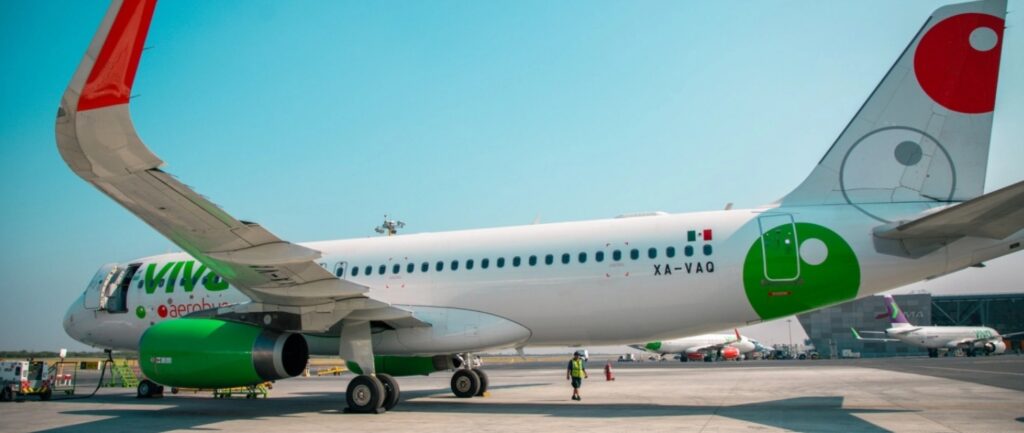
In the coming years, Mexican ultra-low-cost carrier (ULCC) Viva will install SES’s multi-orbit satellite inflight connectivity (IFC) service across 100 narrowbody Airbus aircraft, including 60 A320s and 40 A321s.
Viva will be the first Mexico-based airline to offer its IFC service using SES’s new electronically steered array (ESA) antenna, which operates between geostationary (GEO) and low-Earth orbit (LEO) satellites. The ESA, which stands at less than seven centimeters tall, is part of Airbus’s modular “Airspace Link” HBCplus IFC program and is currently on its way to being certified for linefit installation on Boeing jets. SES claims it enables speeds of up to 275Mbps per passenger.
“Connectivity today is not a luxury – it’s part of how people live, work, and travel,” said Viva Chief Digital Officer Pablo Gómez Gallardo. “Our goal is to make flying fit seamlessly into our passengers’ digital lives, instead of forcing them to disconnect. With this service, being in the air no longer means being offline.”
“Carriers throughout the Americas are leading the way when it comes to the most advanced connectivity.”
– Mike DeMarco, SES
The move bolsters Viva’s appeal to cost-conscious passengers that still want to remain connected as it expands further into the US. From May, the carrier will begin operating services between Bajío International Airport and two destinations in Texas: Houston and San Antonio. Aviation Week noted, “Viva has now started or announced 15 new US routes since the beginning of the COVID-19 crisis. Six of the services are from Mexico City and four from Monterrey.”
SES President of Mobility Mike DeMarco added, “Viva’s passengers will soon benefit from reliable, multi-orbit satellite connectivity that will provide the same fast and dependable internet access they enjoy at home no matter where or when they fly. SES’s partnerships with growing airlines like Viva highlight how carriers throughout the Americas are leading the way when it comes to the most advanced connectivity.”
In December 2025, it was announced that Viva is planning to enter a merger with fellow Mexican ULCC Volaris, which does not currently offer inflight Wi-Fi. However, according to Aerotime, it is understood that the two companies “will still operate independently and maintain their own distinct brands,” instead forming an airline group.
For SES, the contract comes at a time when the company is rapidly expanding its presence as an inflight connectivity service provider. Last December, its IFC went live on the first of 100 aircraft it is equipping across the Abra Group, which consists of Avianca, GOL and Wamos Air. In April, SES announced that Japan Airlines will also equip 20 Airbus A350-900s and 21 Boeing 787-9s with its multi-orbit IFC system.