Log in    (Log in help)
APEX
IFSA
FTE
APEX Logo
  • Join
  • About
  • Events
  • Industry News
  • Membership
  • Awards
  • Join
  • About
  • Events
  • Industry News
  • Membership
  • Awards
   Log in

Secondary News Article Categories: Thought Leadership & Brand

APEX, RedCabin to Host Webinar on Certifying New Aircraft Cabin Innovations

APEX, RedCabin to Host Webinar on Certifying New Aircraft Cabin Innovations

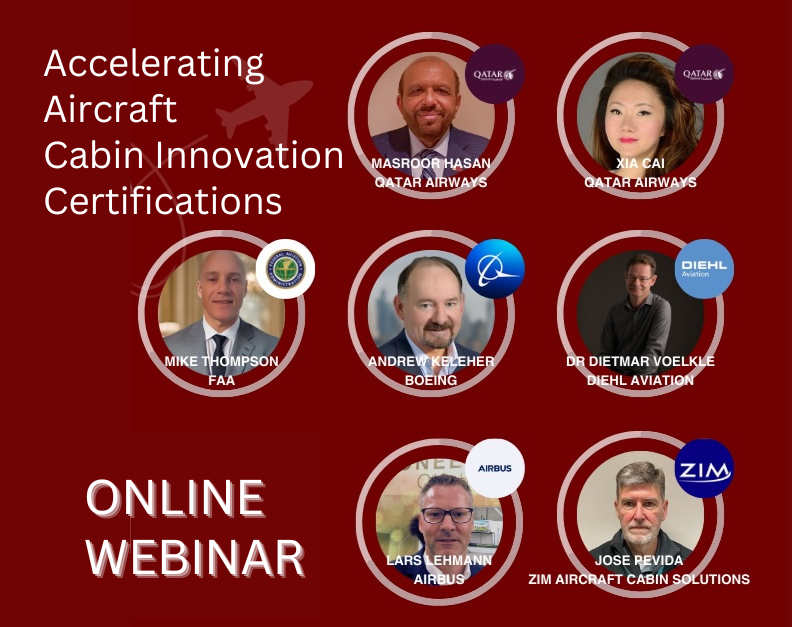
APEX and RedCabin are coming together on Tuesday May 14 at 11:00 AM EDT to broadcast an hour-long live webinar focused on “Accelerating Aircraft Cabin Innovation Certifications.” Register here.

Hosted jointly by APEX CEO Dr. Joe Leader and RedCabin Founder and CEO Monica Wick, the webinar will feature esteemed panelists including Mike Thompson, Manager of the Cabin Safety Division at the Federal Aviation Administration (FAA); Xia Cai, SVP Product Development & Design at Qatar Airways; Andrew Keleher, Boeing Technical Fellow for Cabin Development, Engineering and Certification; Dr. Dietmar Voelkle, VP Research at Diehl Aviation; Jose Pevida, SVP Engineering & Product Development at ZIM Group; and Lars Lehmann, Head of Engineering for Cabin & Cargo Architecture and Technology at Airbus. 

The hour-long session will be split into four different sections, which will be followed by a Q&A. The first section will explore “Regulatory and Certification Challenges,” taking a deep-dive into the hurdles faced by the industry when it comes to speeding up the integration of new, passenger-centric aircraft cabin designs that incorporate sustainable materials without compromising on the safety standards. 

The second part of the webinar will look at “Balancing Innovation with Safety and Compliance,” particularly with regards to how regulatory foresight can be embraced as part of product development processes to make sure new designs are compatible with today’s industry landscape. 

From there, the panelists will move on to a discussion about “Streamlining the Certification Process” in the face of ever-more complex cabin innovations. This section will also focus on effective ways to meet certification processes, including the adoption of optimized engineering processes among the relevant companies represented during the webinar. 

“The aviation industry is packed with brilliant designers and engineers committed to bringing aviation interiors innovation to market. The challenge is ensuring new innovations can be certified successfully.

Monica Wick, RedCabin

Finally, the participants will zoom out to explain how they are, or soon hope to be, “Leveraging Emerging Technologies in Cabin Design.” While the FAA’s Mike Thompson will consider which emerging technologies hold the most promise for transforming safety protocols and compliance mechanisms in cabin design, the others will be encouraged to give examples of how their organizations are championing technologies like artificial intelligence, virtual reality and the Internet of Things. 

The webinar is the first in a series of collaborative events between APEX and RedCabin. 

Monica Wick, founder and CEO of RedCabin, commented, “The aviation industry is packed with brilliant designers and engineers committed to bringing aviation interiors innovation to market. The challenge is ensuring new innovations can be certified successfully. The purpose of this webinar is to help cast light on the process, offer opportunities for guidance and drive more innovation into the passenger experience.”

“This seminar exemplifies our commitment to leading the industry forward, ensuring that every breakthrough in cabin design not only enhances passenger experience but does so within the framework of rigorous certification standards,” stated APEX CEO Dr. Joe Leader. 

To register for the webinar, follow this link.

To view APEX’s original press release regarding the webinar, click here.

Loop Chair Concept from Studio ID Champions Circular Design 

Loop Chair Concept from Studio ID Champions Circular Design 
All images via Studio ID Design

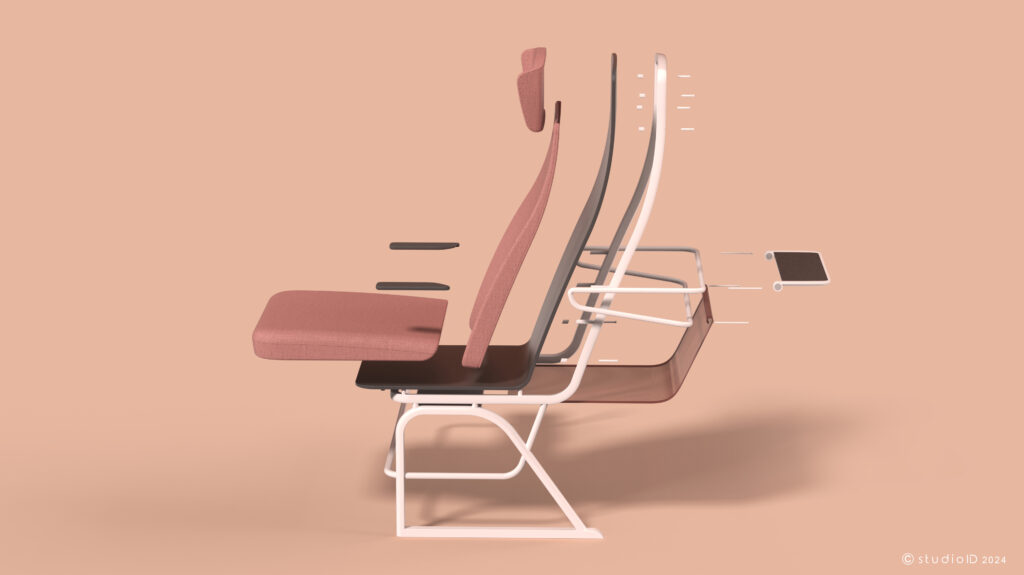
Daniel Clucas and Isabella Pour, who co-founded design agency Studio ID Design in December 2023, are the brains behind a new aircraft seating concept dubbed the “Loop Chair,” which is based on the philosophy of circular design. 

Although Clucas worked with Acumen Design Associates for 16 years on exciting projects including JetBlue’s Mint and Studio offerings, Recaro’s first business-class seat and the ACCESS expanding disabled lavatory, he said he “wanted to focus exclusively on sustainability in the industry to make sure everything [he] was doing was pushing that needle forwards.”

“The system consists of a basic structural frame that stays on the aircraft for successive refits.”

So began conversations with his business partner Isabella, who is an Associate Environmentalist certified by the Institute of Environmental Management Assessment (IEMA), the global professional body for environmental and sustainable businesses, about how things could be done differently. 

The patent-pending Loop Chair is the result of their brainstorming, and with it comes a new business model for airlines and seat manufacturers. Clucas explained, “The modular system consists of a basic structural frame that stays on the aircraft for successive refits. It features mechanical fastenings for all the other parts of the seat, from the cushions to the fold-down tables to the literature pockets.” 

This means that rather than airlines ripping out the entire aircraft seat every five to ten years, which then ends up in landfill because it is chemically bonded together as well as potentially being made up of difficult to recycle composite materials, each individual module can be easily detached and then repaired, upgraded or replaced with something totally different. 

The Loop Chair system has benefits for both the airline and the environment. “The airlines can do much quicker and more frequent repairs and upgrades if they don’t have to wait until the end of the lifecycle of the entire seat before they can get something new. Maintenance-wise, any replacements can simply be completed on-wing, drastically reducing aircraft downtime and ensuring that the airlines’ fleet stays more cohesive, rather than some cabins featuring old products and some new while traditional, time-intensive retrofits take place.”

“Along with being up there with the lightest economy seats, due to the simplicity of the design, the modularity takes it one step further from an environmental impact perspective”

Keeping all the different parts of the seat separate also means designers and manufacturers can more easily make use of monomaterials, making them far easier to reuse or recycle. For example, Studio ID Design’s concept seat features a small table, a simple 3D knitted literature pocket and 100% recycled wool dress covers, with a frame made from recycled aluminium. 

As well as taking into account the seat’s longevity and how it is dealt with at “end of life,” the Loop Chair has been designed to be lightweight. “There are no unnecessary parts or cladding,” Clucas noted. “Look at the armrest – there’s no big vacuum form around it. Along with being up there with the lightest economy seats, due to the simplicity of the design, the modularity takes it one step further from an environmental impact perspective.”

Clucas envisions a future where the airline owns the structural frame, and “all the other parts are essentially leased and hired from from the manufacturer, so they go back after a certain amount of time. The manufacturer then knows what they’re made of and how to recycle or repair them, or even re-upholster them to sell to a different airline. It keeps materials in their highest value state, which is key to their circularity.” 

Although different suppliers could make different parts of the chair, Clucas acknowledges this presents some challenges in terms of certification. “Obviously every time you swap a piece out, it will affect the centre of gravity of the chair, so it’s easier to keep everything in-house because then the seat manufacturer is always responsible for the testing.” However, he said if airlines want something in particular from one company, they could always get an independent company to do the certification. “It’s a bit more tricky logistically, but it’s not insurmountable.”

“The patent covers the modular system, so it could definitely accommodate … something more luxurious.”

In terms of potential customers, Clucas foresees the seat being suited to regional aircraft, particularly new hybrid or electric models where sustainable design is already in the aircraft’s DNA. Due to its flexibility, he also thinks the system would work well for a long-haul economy-class product or even a regional business-class seat. “The patent covers the modular system, so it could definitely accommodate a center console, bigger headrests, bigger screens and bigger tables for something more luxurious.”

The next step for Studio ID Design is to take the concept to airlines and manufacturers and gauge interest in the product. Clucas and Pour already have discussions lined up, and will also be at the Aircraft Interiors Expo in Hamburg to speak about the Loop Chair in more depth.  

Clucas will also be representing the Green Cabin Alliance at the show, and moderating a panel session titled “Sustainable and Cost-Effective Strategies” at the Passenger Experience Conference on May 27. 

2024 IFE Content Trends, According to West Entertainment

2024 IFE Content Trends, According to West Entertainment
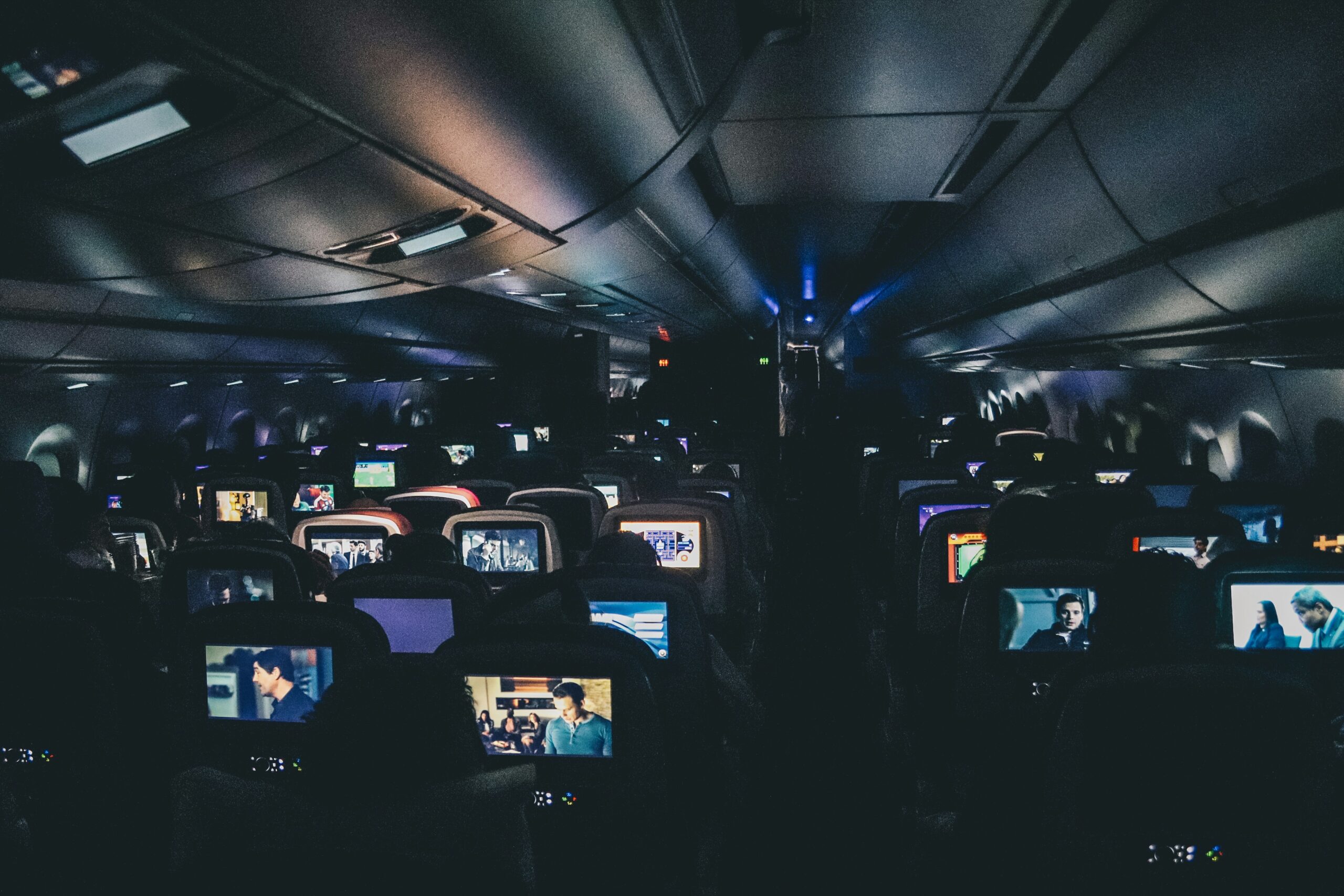
Photo: Ethan Hu via Unsplash

This content is brought to you by APEX Media in partnership with West Entertainment

APEX Media recently spoke to West Entertainment’s newly appointed SVP Entertainment Asif Khan, about the in-flight entertainment (IFE) trends the content service provider (CSP) is expecting to see playing out in aircraft cabins around the world this year. 

Khan joined West Entertainment in December 2023 following over a decade with Etihad Airways, where he occupied the role of Head of IFEC and Publications.

In-keeping with trends on the ground, he believes there is an ongoing shift in viewing tastes, with airlines and passengers demanding high-quality, original content similar to what is available via their streaming services at home.

Added to this, Khan says there is a growing sense of superhero and sequel fatigue, evidenced by the disappointing performance of some of the latest superhero-themed titles and sequels at the box office. “On the other hand, original storylines like Barbie and American Fiction, which weave humor with a strong social message, are doing well in theaters,” he explains.

The combined effect of these trends is that airlines are now demanding more and more partnerships with streaming brands as part of their onboard entertainment. Khan expands, “The halo effect of associating with well-known entertainment brands and providing access to original content is a win-win for the airline.”

Other content trends he thinks will flourish in 2024 include the introduction of more short-form content onboard – “Think Tik-Tok,” he says. Furthermore, he predicts podcasts will take over more and more of the audio budget traditionally reserved for onboard radio.

“People don’t behave on planes like they do on the ground … they tend to go outside their normal viewing parameters depending on what they feel like in the moment and end up trying something new.” 

Asif Khan, West Entertainment

In terms of generating a winning formula for IFE content, Khan is excited by artificial intelligence (AI) and its applications when it comes to data analytics: “The increased use of AI will open up many new opportunities in terms of content personalization for airline passengers.” This is something West is exploring as part of its own analytics service, West DnA (Data & Analytics), which aims to help airlines make the most of their IFE budget with smart content choices based on viewership data and more. 

Khan asserts that an analytical, data-led and usage-based approach to generating a content library for an airline is far more reliable than the previous method of getting passenger feedback via surveys, where their answers were not necessarily truthful. “The issue is that people don’t behave on planes like they do on the ground. Passengers aren’t having to watch what they would with friends or family in the air, which typically influences their choices,” he explains. “Instead, they tend to go outside their normal viewing parameters depending on what they feel like in the moment and end up trying something new.” 

However, AI isn’t a silver bullet. “There are other nuances to programming content for airlines, including cultural and censorship requirements. In other words, the human touch is still required when it comes to curating IFE.”

One area where Khan foresees automation continuing to dominate is throughout the content delivery workflow. West Entertainment is catering to the burgeoning demand for increased efficiency by enhancing its workflow engine, WE by West. “New features that will be added to WE by West Version 2.0, which is coming soon, will include full Power BI integration for better data insights, improved deal and budget tracking features, and an enriched user interface,” he confirms. 

West Entertainment is a sponsor of the upcoming APEX TECH event in Los Angeles from 28-29 February, 2024. Multiple members of the team will be present at the show, with President Kate Groth set to take part in a workshop on “Exploring different data points (environmental, personal, behavioral), how to capture them and how to use such data across the passenger journey” as well as a panel session on “How to curate the best personalized media content offering.”

APEX TECH Unveils Quartet of Interactive Workshops: IFC Spotlight 

APEX TECH Unveils Quartet of Interactive Workshops: IFC Spotlight 
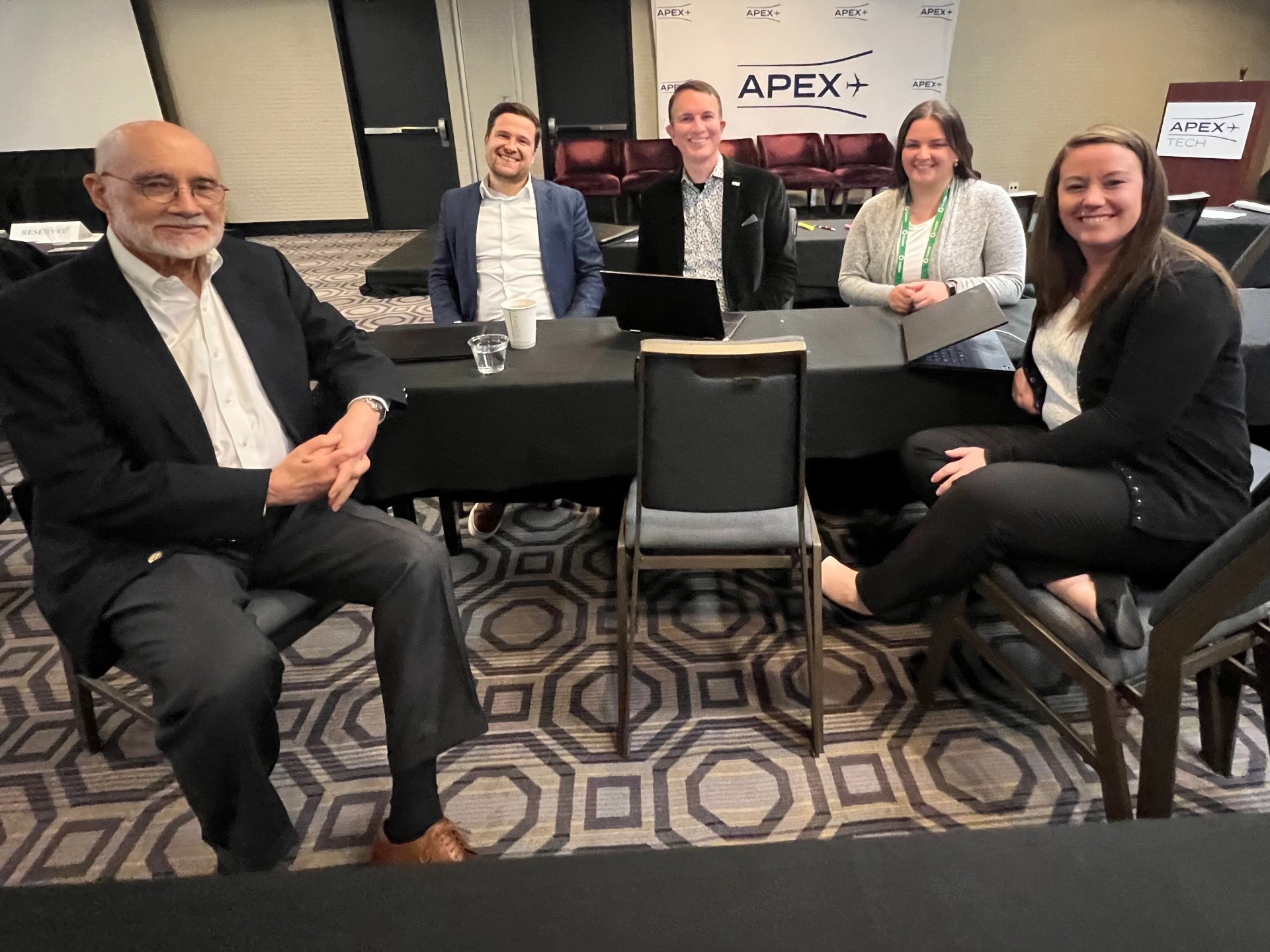
Photo (left to right): Content Management and IFEC Consultant Michael Childers; APEX TECH Chair Jonas von Krüchten; APEX/IFSA CEO Dr. Joe Leader; APEX/IFSA Director Lauren Costello; and APEX General Manager Courtney Truelove during the first planning meeting for APEX TECH 2024.

The Airline Passenger Experience Association (APEX) has announced four dynamic workshops for its upcoming APEX TECH event from 28-29 February at the Los Angeles Airport Sheraton Gateway.

One of the four workshops will consist of three optional sessions that take a deep dive into in-flight connectivity (IFC), and has been created to evaluate how cutting-edge technologies will affect the IFC landscape for airlines as well as their impact on the passenger experience.

“In-flight connectivity is one of the central pillars on which innovation in the aircraft cabin depends. From improving safety to elevating customer service, generating revenues and connecting passengers with loved ones on the ground, it is a core component in the future of commercial flying,” commented APEX CEO Dr. Joe Leader. “With the advent of LEO satellites alongside electronically steered and phased array antennas, we are at the precipice of a new dawn in IFC, one that as an association APEX wants to help shape for the maximum benefit of all.” 

How Do We Measure the Quality of Experience?

The first optional session within the IFC workshop, “How Do We Measure the Quality of Experience?” will encourage attendees to consider the most salient factors when it comes to quantifying the passengers’ user experience. 

The content of the session aims to imbue industry stakeholders with a detailed oversight of the potential impact that an airlines’ IFC offering has on a passenger, and the potential for increased brand loyalty and customer satisfaction should the passenger have access to a uniform experience across the airlines’ fleet. 

APEX TECH Chairman Jonas von Krüchten said, “The inner-workings of an in-flight connectivity system may remain an enigma to both airlines and passengers, but understanding how a passenger interacts with an IFC service and the aspects that affect how the service is perceived should not be. This session aims to empower airlines with the knowledge to measure and assess their current and prospective connectivity offerings, a more active approach to which can result in happier customers, increased airline revenues and improved communications, as well as transparency between airlines and suppliers.”

IFC Technology: Relevance and Readiness of ESAs, SW Defined Modems, and More

The second optional session for attendees in the IFC workshop at APEX TECH, “IFC Technology: Relevance and Readiness of ESAs, SW Defined Modems, and More,” will dig into the intricacies of electronically steered antennas (ESAs) and software-defined modems, and their potential to transform IFC. 

It will provide airlines that are curious about adopting these pioneering technologies with an understanding as to their maturity levels, flexibility and scalability, as well as any barriers to entry. 

APEX Lifetime Achievement Award Winner Michael Childers explained, “New IFC technologies, with their promises of reduced weight and drag, dramatically improved speeds and minimized costs for airlines are an exciting prospect, but the road to their adoption is not without potential speedbumps. This session will demystify the capabilities and commercial readiness of ESAs and software-defined modems to provide airlines with realistic expectations about what can be achieved and when.”

Portal or Not: Different Angles on a Seamless Passenger IFC Journey

The third optional session in the IFC Deep Dive  workshop at APEX TECH, “Portal or Not: Different Angles on a Seamless Passenger IFC Journey,” will zoom in on whether airlines should be making the most of their captive audience with a customized portal through which passengers access the IFC service, or whether they should be allowed to roam free.

The discussion will center around the pros and cons of using portals and how they are perceived by passengers. Then, the session will go further, exploring new and alternative approaches to generating a branded and customized IFC user experience to airlines’ advantages.

“These sessions have been designed to encourage our delegates to think outside the box,” commented APEX General Manager Courtney Truelove. “At APEX, we truly believe the sky’s the limit when it comes to harnessing the benefits of IFC, and we are interested to hear how APEX TECH attendees think the industry can optimize the initial gateway to a passengers’ IFC experience.”

The First of Four Workshops at APEX TECH

The four APEX TECH workshops, including an IFC deep-dive, are scheduled to provide a platform for discussing various aspects of the airline industry. Each workshop in the series includes three session options, offering participants a range of topics to explore. The workshops are designed to present new insights and strategies relevant to airline operations and passenger experiences. 

As well as the “IFC Deep Dive” sessions, APEX TECH attendees will have the opportunity to delve into three more exciting workshops. The others will focus on ”Ancillary Revenue Use Cases,” “Content Delivery” and “Data.” 

Each workshop promises to offer participants cutting-edge insights and actionable strategies, which is central to APEX’s role as an association advancing the airline passenger experience industry.

Runway Girl Network’s Mary Kirby moderates APEX TECH Space Ecosystem Convergence panel

Runway Girl Network’s Mary Kirby moderates APEX TECH Space Ecosystem Convergence panel

APEX TECH 2023: Day One – Runway Girl Network Founder and Editor, Mary Kirby opened her panel discussion, How Space Ecosystem Convergence Will Affect Inflight Connectivity, yesterday with a hat tip to Dr. Joe Leader who she thanked for getting her off the farm in Pennsylvania and back “on the runway” to APEX TECH to discuss the magic of the space ecosystem convergence. 

“As a journalist covering this space, I have to say it’s absolutely dizzying,” noted Kirby about her panel’s topic. “Amongst others who have mentioned it today, I think a lot of this stuff sounds like magic and I think that’s what keeps the wonder in me going and then it’s just amazing what’s happening out there in this space.”

Moderating a panel featuring Mike Pigott, EVP Connectivity, Anuvu; Dave Bijur, SVP Commercial Aviation, Intelsat; Scott Rees, Senior Director of Operations – Connectivity, Panasonic; Neale Faulkner, Regional VP, Inmarsat Aviation; and Nick Galano, Director of Starlink Sales, SpaceX, Kirby and company discussed a wide range of topics covering everything from frictionless connectivity to the role that Wi-Fi rolling will have in connectivity moving forward and what Faulkner referred to as the upcoming “glut of capacity.” 

But one of the highlights of the discussion came from SVP Commercial Aviation’s Bijur on the subject of bandwidth. 

“[The airlines] want more and that’s what we’re going to continue to deliver,” said Bijur. “Airlines are going to have to always contemplate when is the right time for me to put more hardware on this aircraft? And anybody on the panel, I think, as their network grows, or as their constellation grows, that’s going to require certain changes to the aircraft as technology develops.

“We still have wireless access points on the airplanes, some of which are 12 years old, right? And airlines are resistant to change and I get why, because they don’t want to mess with the airplane and frankly, it’s not that bad. It’s survivable. But as technology evolves, as time goes on, I think airlines are going to want to do that.

“So whether it’s Gen2 or Gen12 I’m not really sure. But at some point … everybody in this room really is going to have to think about when is the right time for me to do that. Leaving airplanes on the same technology for ten years is the same as leaving the same iPhone in your pocket for ten years. Doesn’t work. Doesn’t make sense.”

Another highlight came when Kirby, and a question from the attendees, steered the discussion toward the subject of space sustainability.

“You can’t explore space if it’s a mess up there,” said SpaceX’s Galono.

“It is important for us to try to set best practices for the industry there. And for us, when you come down to the design of the satellite in terms of sustainability, when end of life happens, it doesn’t stay in space. It will actually naturally de-orbit … no debris comes back down to the earth. In terms of sustainability, we’re very transparent in terms of where we put our satellites. Where’s the orbit? Where’s it gonna go? All of these sorts of things are very important to us in terms of space sustainability, because innovation is important. And there’s no way we get better by making space terrible for everyone.“

Faulkner agreed, adding that he thinks the way space is being managed right now on a global scale is “scary.” 

“We know what we’re doing with our satellites [and] there’s no one here that is irresponsible at all in putting satellites up and disposing of them at end of life,” explained Faulkner. “There’s a lot of regulatory framework around that today and it’s not really an issue now. But with the huge amount of satellites that are going up it’s  starting to become problematic. So I’m worried about it right now, it needs to be more controlled.” 

“Yeah, and the layman is worried about it as well,” added Kirby. “It’s getting kind of crowded up there.”

APEX TECH 2023: Day One – Meet Incoming APEX TECH Chair Jonas von Krüchten

APEX TECH 2023: Day One – Meet Incoming APEX TECH Chair Jonas von Krüchten

APEX TECH 2023: Day One – Newly-minted APEX Board Member and incoming APEX TECH Committee Chair, Von Krüchten sits down with APEX Media for a chat about this week’s TECH, the continued convergence of IFC and IFE and his lifelong love affair with aviation. 

Jonas von Krüchten is the Head of Strategy and Business Development at AERQ. Aside from leading the foundation of AERQ for Lufthansa Technik and then transitioning there on day one as an integral part of the leadership team, von Kruechten previously worked at Lufthansa Technik doing business development for IFE/CMS systems for business jets. 

APEX MEDIA: Please tell us about yourself — your history, where you grew up and maybe even a little bit about what you wanted to be when you were a kid?

JONAS VON KRUECHTEN: Of course! I grew up in Hamburg, Germany and I studied in a university close to Hamburg whilst also working for a bigger corporation. As long as I can remember I have wanted to become a pilot (I know, cliché) or a veterinarian. 

APEX: Aha. Very different career paths.

VON KRUECHTEN: Yes. After a three-week internship at a vet, I could rule this idea out very quickly. Even though I later on decided not to pursue a commercial pilot career, I still did my private pilot’s license to fulfill this dream.

APEX: Nice. What was it that first drew you to aviation?

VON KRUECHTEN: The house I grew up in was on the final approach of one of the HAM runways. When this runway was active – only 5% of all traffic – the aircraft would fly right over my parent’s house and I would watch them from the window or the backyard. Early on I could tell the different aircraft types apart and developed a fascination. With a friend I would ride my bicycle to the airport and watch the planes. My first flight was with my dad and two siblings to Friedrichshafen, Germany. I wanted to get on an airplane so badly, so my dad used his miles to take us kids flying.

APEX: Talk to us about your career in aviation technology. What changes have you seen in IFEC technology over the years?

VON KRUECHTEN: I started with Lufthansa Technik in 2012. After rotating through a few interesting corporate projects in M&A, Strategy, Finance as part of a post-grad management trainee program, I moved to IFEC for business jets in 2014. 

Since 2018, I have been fully involved with the foundation and ramp-up of AERQ, which focuses fully on commercial aviation. I effectively started in IFC with the introduction of LEO constellations, increased worldwide GEO HTS coverage and the potential this brings to the market, both individually and in conjunction. The advancements in IFC will put our industry on a migration path from legacy IFE to a more digitally-connected, passenger-centric flight experience.

APEX: Talk to us about your position as incoming APEX TECH Committee Chair. What do you hope to bring to your new role? 

VON KRUECHTEN: I am honored to take over as APEX Technology Committee Chair and humbled to see the wealth of expertise the Technology Committee’s leadership team, as well as so many other involved volunteers, have been contributing to APEX; not just in preparation of this TECH event but also throughout the year as part of working groups. 

Throughout the last years, I have observed how great technology has impacted passenger experience but also how many great, innovative solutions seem to struggle to find their way into the aircraft cabin.

One of the reasons is that the respective use case is sometimes unclear – what is in it for the airline and the passenger? APEX TECH can play an increasing role in looking at technology a bit more holistically by adding more discussions around use cases, customer benefits and/or pains solved. Thus, increasing the relevance of the conversation also for airlines and other stakeholders from ours or adjacent industries.

APEX: This week’s APEX TECH has some exciting sessions and speakers lined up, talk to us a little bit about that and maybe what you see as the overall theme of this conference?

VON KRUECHTEN: I agree, this year’s lineup is pretty impressive. Connectivity is and will be the main driver for new digital business models and services in the cabin.

The first two days of the show focus around connectivity, its evolution and disruption potential for legacy IFE business models. Day three digs deeper into advertising and content meta data-related innovations and business potential. As an overall theme I would see the increasing proliferation of high speed (and low latency) connectivity in aircraft cabins and the opportunity this brings.

APEX: There’s been a definite convergence of IFE and IFC of late, how do you think airlines can best prepare for the ever-evolving demands of tech-savvy passengers moving forward?

VON KRUECHTEN: IFE and IFC have to ultimately converge as passengers demand it. (Free) internet onboard is a key enabler for passengers to remain in control of their personal space and experience. This desire will only increase as new IFC solutions become available, and airlines start and/or continue to cater to this core passenger request. 

To address future passenger needs, systems onboard need to become more flexible by adopting and pushing a software-first development mindset. The goal must be to drastically lower the cost and time to make changes to the passengers’ onboard digital experience. Thus being able to react to passenger needs much quicker, being able to tailor experiences better and lower the hurdles to innovation on board.

IFSA & ASF Partner to Further In-Flight Services Sustainability

IFSA & ASF Partner to Further In-Flight Services Sustainability
The APEX/IFSA Board of Governors meeting taking place on-stage at the 2021 APEX/IFSA EXPO. Image: Stephanie Taylor

A strategic partnership has been formed between the International Flight Services Association (IFSA) and the Aviation Sustainability Forum (ASF).

As a result, they will support the memberships of both associations, ‎the industry’s governing bodies and aviation as a whole to develop sustainable in-flight service solutions.‎

The ASF’s mission is to improve the sustainability and circularity of passenger in-flight products and services. It does so by bringing together companies across the supply chain to share knowledge and to commission research regarding new solutions and standards.

IFSA is a global non-profit trade association serving the needs and interests of airline and railway companies as well as caterers and suppliers who provide onboard services on regularly scheduled travel routes.

At the 2021 APEX/IFSA EXPO in Long Beach, California, the APEX/IFSA Board of Governors, which consists of airline CEOs and Presidents, selected sustainability as one of two priorities for the associations to address. This strategic partnership with ASF enables IFSA to contribute directly to this goal. 

The 2021 EXPO event also saw the APEX/IFSA Board of Governors approve that to qualify for future Four-Star and Five-Star awards as part of the APEX Official Airline Ratings, they must make information about their sustainability initiatives easily available to the public.  

In addition, to qualify for the aforementioned awards, each ‎airline must make incremental improvements to their sustainability efforts each year ‎in an ongoing commitment to sustainable aviation.‎

APEX Tech Webinar: Are Inter-Satellite Links the Future of IFC?

APEX Tech Webinar: Are Inter-Satellite Links the Future of IFC?
Image: Dylan Bueltel via Pexels

A recent APEX Tech webinar, “The Consultant’s Corner: Suitability of LEOs for Airline Passengers,” explored the advent of new mega-constellations that operate in non-geostationary (NGSO) orbits and signal a move away from traditional geostationary (GEO) satellites. This round-up looks at the first part of the webinar.

Before the first part of the session began, each of the speakers gave their thoughts on the news about Viasat’s acquisition of Inmarsat and what it could mean for the aero market. NSR Analyst Brad Grady asked if the deal was a response to the emergence of low-Earth Orbit (LEO) constellations, and how far the verticalization of the in-flight connectivity (IFC) market might go. 

All three panelists agreed that it creates a whole host of potential synergies. Nathan de Ruiter, Euroconsult Canada’s managing director, said that Viasat will benefit from access to new markets, such as maritime, as well as new customers in the lead-up to the launch of Viasat-3. He also believes that while Viasat-3 will concentrate connectivity in parts of Asia, Inmarsat’s network will provide it with valuable back-up capacity. 

Tim Farrar, president at Telecom, Media and Finance Associates, returned to this idea of a natural synergy between the two companies later when discussing the idea of inter-satellite links. He explained, “There’s 100 times the difference in capacity needed over an airport versus over the ocean. Viasat provides high-capacity regional coverage and Inmarsat has low-capacity global coverage.” 

However, while these synergies exist, Farrar is also aware of the potential for serious disruption to the IFC industry as a result of the acquisition. “Inmarsat’s business is almost 100% indirect … It is reliant on iDirect, ThinKom, Honeywell, etc. All of that is up in the air because Viasat is focused on supplying its own technology, on building everything itself.”

In a similar vein, Peter Lemme, president at Totaport and blogger at satcom.guru, posed a question about whether other players will now collect around Ka-band provider Thales, which recently launched SES-17, or whether operators like Eutelsat, Hughes and SES will decide they want to play a bigger role in the market. Even if the latter becomes the case, Grady pointed out that for airlines, the emphasis appears to be on the service provider and what they can offer, with the satellite operator being considered as an afterthought.

This discussion led into the first of the webinar’s key topics: “Tailwinds propelling airlines toward broadband mega-constellations.” Grady set the scene with a short presentation outlining the fact that many LEO satellites, with their smaller area of focus compared to GEOs, spend their time over the ocean where there’s no target population, creating the need for operators to maximize their utilization by honing in on mobility routes. 

De Ruiter said, “Demand is concentrated for 300 to 500 kilometers around airports. No single network can serve all that, so we do need more capacity and more bandwidth at those hotspots. There’s lots of focus on NGSO capacity as it can provide more throughput at a lower cost.” Nonetheless, the panelists recognised that it’s unlikely that NGSO satellites will have the capacity to serve these hotspots on their own. This is where Lemme said the idea came from for networks to have a “GEO overlay.”

Although an “integrated solution” may work best for the end-user, there are still questions about what this would look like. Grady argued, “The word “hybrid” means so many different things to different people. Does it mean having multiple providers, like we see in the US? Does it mean having a hybrid fleet, with some aircraft using GEO and some using LEO connectivity? The list goes on.” 

Lemme said that any aircraft that can switch between GEO and LEO connectivity will have to support two modems, but was optimistic about the availability of new technology that can support that. 

Farrar voiced concerns that network and technology designs are optimized for the highest source of capacity demand, which for Starlink, for example, will be the consumer business. In this scenario, Farrar said the goal would be to produce the lowest cost terminal, which may or may not be optimal for the IFC market, and might not deliver the quality of service that airlines and passengers demand. Despite this, de Ruiter said that airlines are still an attractive proposition for satellite operators, as their contracts can achieve large volumes.  

Grady rounded off the session by saying that inter-satellite links will be mission-critical for the next-generation of growth in IFC and across the broader communications industry, and that every company with global aspirations has the concept in its future roadmap somewhere. “I think everybody needs to do a little bit of everything in order to be successful,” he concluded.

APEX members can access the full recording of the webinar here.  

Spafax Studio Creates Custom Digital Experiences for Travel Brands

Spafax Studio Creates Custom Digital Experiences for Travel Brands
A still from Etihad Airways’ latest safety video, created by Spafax Studio. All images via Spafax

As well as fulfilling the traditional roles of a content service provider, for the past few years Spafax has been working with airlines and travel companies to create branded content from scratch. The company is now bringing this capability to the fore with the official launch of Spafax Studio.

Earlier this year, Spafax launched Spafax Studio, which is the creative wing of the company’s content technology service. “It really began in 2017 under the creative direction of Jonathan Gilbert, our VP Digital Content and Innovation, and has since grown into a global network of creative studios targeting the international traveler,” said Jessica Sammut, director of Corporate Communications at Spafax. 

So, what kind of projects does Spafax Studio undertake? “We work across branding, branded content, PR, digital, social and experiential and partnership campaigns,” Sammut explained. “We believe that delivering digital experiences is the future of entertainment.” 

Spafax Studio completed a project for Heathrow Express to coincide with the launch of its new train service during the fourth quarter of last year. It involved producing a new creative strategy, visual identity and a suite of branded content including customer information videos for Heathrow Express TV, which is available via HD screens onboard its new fleet of Class 387 trains. The project has been shortlisted for the APEX/IFSA Awards under the “Best Airport Innovation” category. 

A still from the ident created by Spafax Studio for Heathrow Express TV.

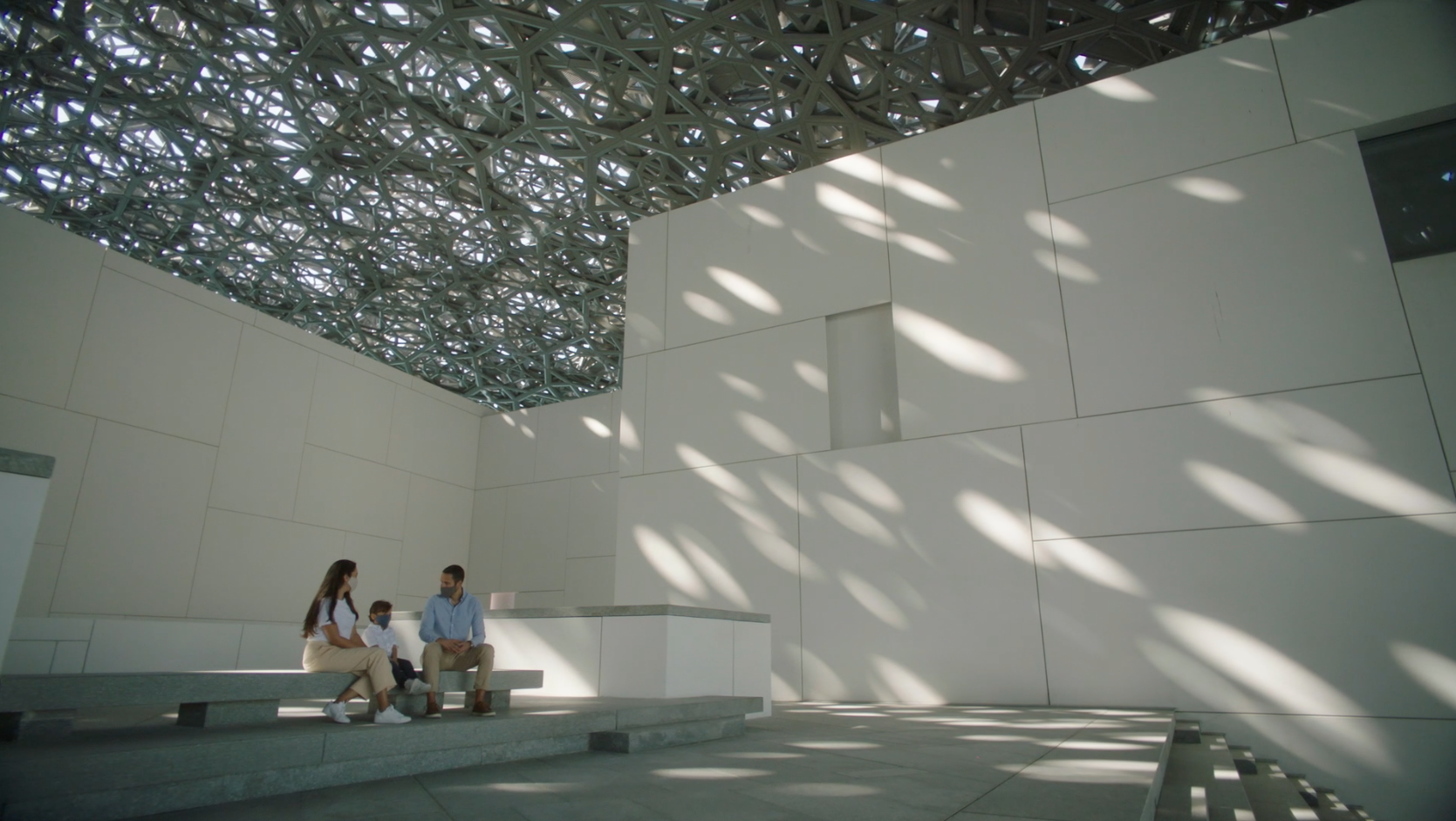
“We’re also incredibly proud of our latest safety video production for Etihad Airways,” added Sammut. “It was filmed during the middle of the COVID-19 pandemic and was described by Travel + Leisure as “one of the world’s most beautiful safety videos.” Shot at Abu Dhabi’s Louvre Museum, it draws inspiration from Abu Dhabi, a centre of art and design, whose characteristics are embodied and reflected by Etihad Airways. We saw it as an opportunity to inspire and evoke a sense of excitement around travel again.” 

In a continuation of its goal of being a thought-leader in the in-flight entertainment space, Spafax has also launched a new podcast. Sammut elaborated, “It’s called Future Screen and offers listeners informed and entertaining insights into the future of Out-Of-Home marketing, travel media and onboard entertainment. In each episode, we bring together insights from these colliding industries, featuring guests from Spafax and its partners – and the best part is, you don’t have to be an “avgeek” to enjoy it!”

The pilot episode, launched in July, is about what travel looks like in a post-pandemic world. It sees  Jonathan Gilbert explain the importance of inspiring travel through creative production and Jean-Marc Thomas, Spafax Asia’s managing director, exploring the future of the digital passenger experience.

[PHOTOS] Avelo Airlines Takes to the Skies

[PHOTOS] Avelo Airlines Takes to the Skies
All images: Chris Sloan, The Airchive

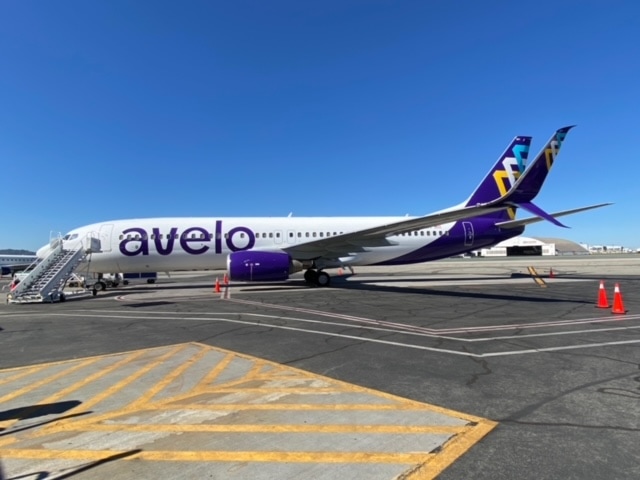
Just a few short weeks after announcing its business plans, Avelo Airlines has entered into service. Chris Sloan, founder of The Airchive, spoke to the carrier’s chairman and CEO, Andrew Levy, before taking a seat on the first flight.

On April 28, following a ribbon-cutting ceremony, Houston-based ultra-low-cost carrier (ULCC) Avelo Airlines (Avelo) completed its inaugural flight between Burbank and Santa Rosa using a Boeing 737-800 aircraft. It is the first US carrier to launch during the pandemic, but will be closely followed by David Neeleman’s startup, Breeze Airways, in May.

Ladies and gentleman, CEO Andrew Levy has cut the ribbon. @AveloAir is ready to fly! pic.twitter.com/nxi4DQvjIP

— Chris Sloan (@airchive) April 28, 2021

Avelo is led by Andrew Levy, who served as president of Allegiant, but Levy told APEX Media it is far from a clone of the latter: Allegiant’s routes connect small markets with leisure destinations, while Avelo is connecting underserved cities using secondary airports in metropolitan areas. Levy also said Avelo’s operating costs are 25% lower.

With Burbank as its first base, Avelo is initially hoping to attract Los Angeles traffic to secondary airports like Phoenix-Mesa Gateway in Arizona and Ogden-Hinckley in Utah, alongside nine other destinations. However, with three additional 737-800s – two owned and one leased – due by end of this year, Avelo is also planning to introduce a secondary airport base, likely on the East Coast.

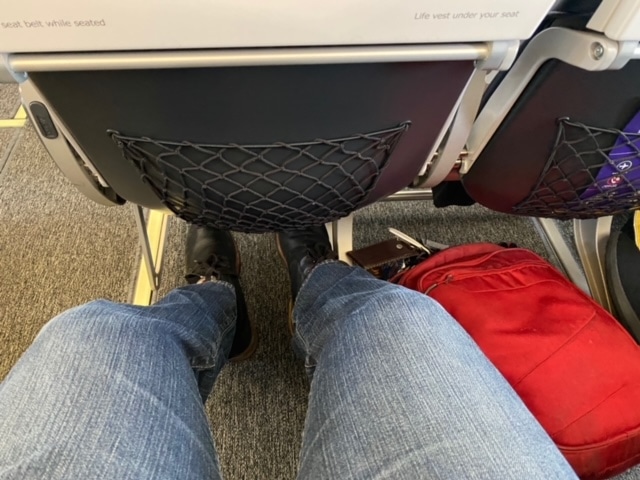
189 seats on @AveloAir 737-800 but 60 seats are extended legroom. CEO Andrew Levy says they cleaned out the cabin and started fresh removing a galley and bulkhead for extra room. Pitch ranges from 29” to 35” and the slimline seats recline. pic.twitter.com/N7yzSu2FhW

— Chris Sloan (@airchive) April 28, 2021

The carrier is taking an alternative approach to passenger experience compared with most ULCCs. It all hinges on Avelo’s aim to embody what it calls “The Soul of Service.” Levy explained, “We’ve made an effort to hire people that embrace our values, and I hope it’s a point of distinction.” While half of the inaugural flight’s cabin crew were industry veterans, the others were working their first flights.

It is also aiming to offer good service from an operational perspective. For example, Avelo won’t charge change fees, and checked bags only cost $10 each. According to Levy, encouraging customers to check their luggage will reduce turnaround times and improve the passenger experience. Carry-on luggage is priced at $35 per bag.

Likewise, Avelo’s aircraft cabins aren’t out to put a squeeze on passengers. Its 737-800s will operate at their 189-passenger capacity, but all the seats recline. Sixty seats offer extended legroom, with a pitch of between 32- and 35-inches, while standard seats have a 29-inch pitch. Levy revealed that the Acro Aircraft Seating slimline seats installed on its first 737-800 were originally destined for another airline that went out of business.

Regarding the cabin design, Levy said, “We really cleared out whatever wasn’t necessary. The 737-800s have really large galleys, so we opted for one galley and took out the other one. As a result, we’ve opened up the cabin.”

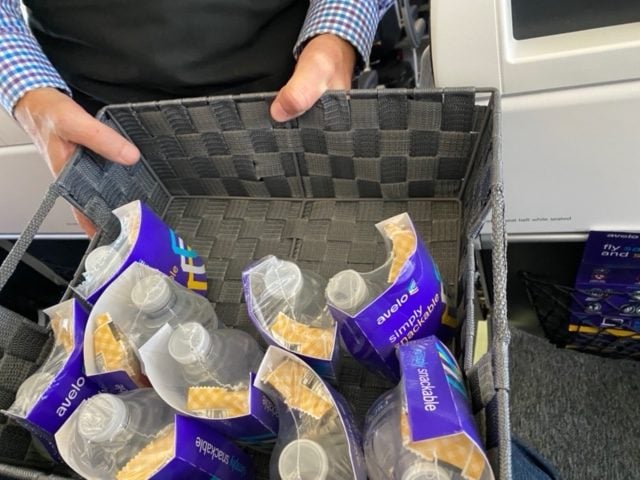
Avelo’s flights average under two hours, but passengers are given a complimentary sealed package consisting of a bottle of water, a cookie and hand sanitizer when boarding. Soon, the airline will introduce a limited food and beverage menu, but the free water will remain.

Levy said Avelo will think about adding in-flight connectivity “when there’s better technology that’s about to start to get rolled out,” but declined to give further details. Considering the length of the flights, it is unsurprising there is no seatback power.

The carrier is investing in digital marketing and will eventually appear on meta-search platforms but will not rely on online travel agents or third-party platforms for its distribution. Much like Allegiant, customers will have to go directly to the website or app to book. The fares, if nothing else, are sure to snag travelers’ attentions – Avelo’s introductory ticket prices begin at $19 each way.

Quick Takes: Terri Davies, Global Eagle

Quick Takes: Terri Davies, Global Eagle

Quick Takes is a Q&A series designed to connect content companies with prospects while in-person events are postponed due to the COVID-19 pandemic. Lights, camera, action!

Terri Davies
SVP, Content & Media Services, Global Eagle Entertainment
Location: Los Angeles


How has the pandemic affected your content slate or schedule?
The effect of the pandemic on the media and entertainment industry in general has been astonishing. Traditional release models that appeared to be unshakable have been challenged as cinemas have closed, production has slowed, and streaming to the home has become the focus for most major studios. This has disrupted the conventional content pipeline and, like everybody in the industry, we have had significantly fewer big theatrical new release titles made available to us. As viewers in lockdown at home have discovered and delighted in more non-traditional content through the various streaming platforms, so too have we discovered new and enjoyable content that we are excited to bring to our clients.

What releases are you most looking forward to?
We are looking forward to offering Minari to our clients in July, which won the 2021 Golden Globe for Best Motion Picture – Foreign Language, Best Supporting Actress Oscar, SAG and BAFTA awards, the US Competition Grand Jury Prize and an Audience Award at the 2020 Sundance Film Festival! We are also looking forward to releasing First Cow, Bios, Distant, The Good House and The Duke.

What is your outlook on the state of the industry moving forward?
Professionally and personally, we are feeling optimistic as the COVID-19 vaccine becomes more widely available. Over time, the industry will recover, but every part of the in-flight entertainment (IFE) ecosystem will need to adapt to yet another new normal. We expect to see changes in both the type of traveler that is flying and the type of content they consume.

Airlines have had to evaluate how and where they spend their budget, and IFE budgets have been scaled back as a result. This is one of the many reasons we’ve created Iris, a simplified, cost-effective IFE subscription service that bundles content into channels that are refreshed
monthly and provide flexibility and choice to the airlines, while remaining affordable.

Do you find peoples’ viewing habits have shifted in terms of what they watch and how they watch it? How does your company’s content adapt to this new reality?
With the constant rise in streaming service subscriptions, there is a level of expectation when it comes to choosing what to watch. Content libraries need to be intuitively curated and displayed so the passenger can navigate and make their selections with ease. We are excited to be working on AI-driven auto-recommendations to mirror the at-home streaming experience.

We believe IFE will grow into a service where specialist, inaccessible or exclusive content can be discovered alongside traditional movie and TV titles. Short-form mobile content and digital native content have been overlooked in IFE, and Global Eagle is thrilled to bring unique content from partners like Complex Media Network to airline audiences worldwide.

Theatrical windows have been all but eliminated, do you think this is temporary?
Yes. The theatrical window and desire for viewers to lose themselves in a great story on the big screen will always prevail. However, the duration and exclusivity of the window and the type of content to be released theatrically has already changed and will continue to evolve as streaming service subscriptions continue to rise. Today, each of the major studios, including Netflix and Amazon, are trying out different strategies with regard to the type of content that will be released theatrically, along with the duration of the theatrical window and simultaneous day/date or accelerated release in the home. As we return to some type of normalcy and people return to the cinema, the financial results of each model will start to take shape and we anticipate that further change. The adoption and trial of new models will continue for the foreseeable future.

[PHOTOS] LIFT’s Paradym Concept Provides Flexibility for Long-Haul Single-Aisle Aircraft

[PHOTOS] LIFT’s Paradym Concept Provides Flexibility for Long-Haul Single-Aisle Aircraft
All images via LIFT Aero Design

LIFT Aero Design (LIFT) has come up with a new cabin seating concept for single-aisle jets of the future, which it envisions will have a wider fuselage than today’s Airbus A320 and Boeing 737 families of aircraft.

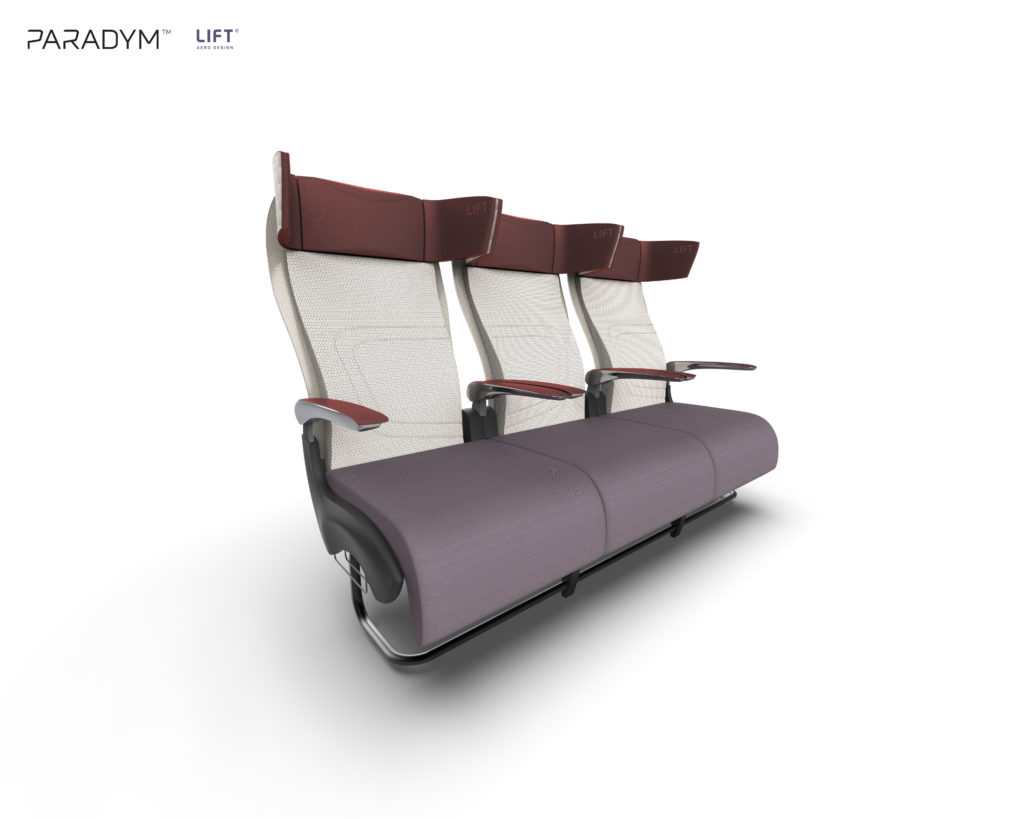
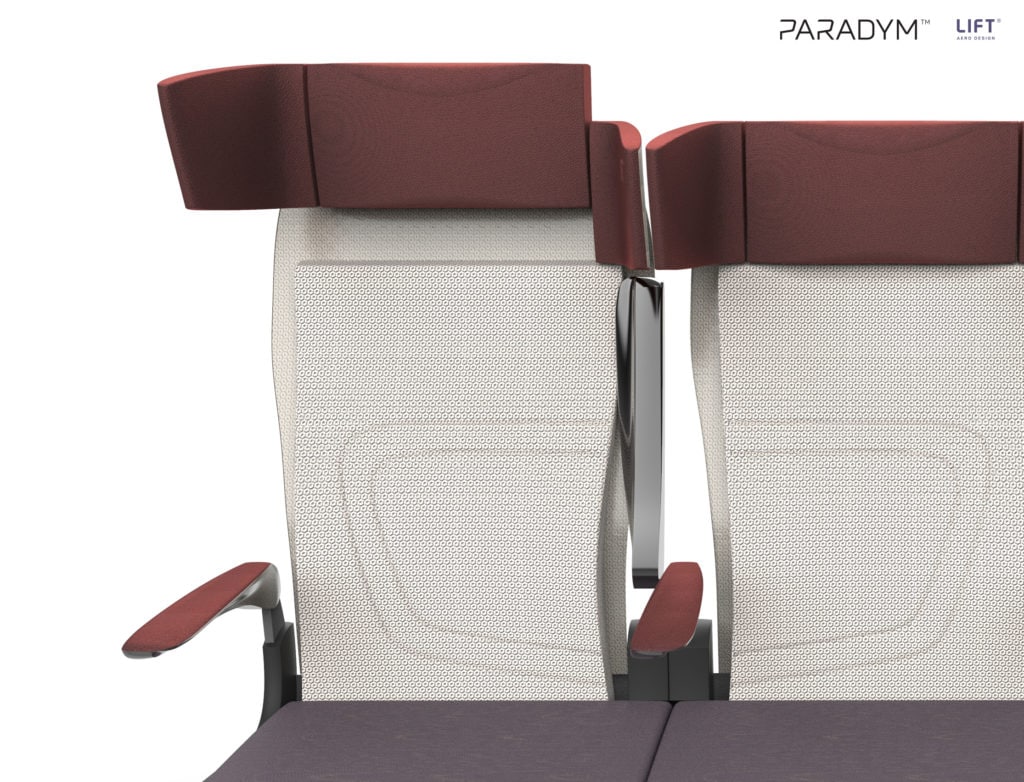
A concept from LIFT, dubbed Paradym, sees the entire cabin equipped with the same 3 x 3 configuration using a wide triple-seat setup. Each of the three seats feature 20 inches of width between armrests, an increase from the current average of 17 or 18 inches. For comparison, LIFT said the three seats would be nearly as wide as a row of four standard economy-class seats.

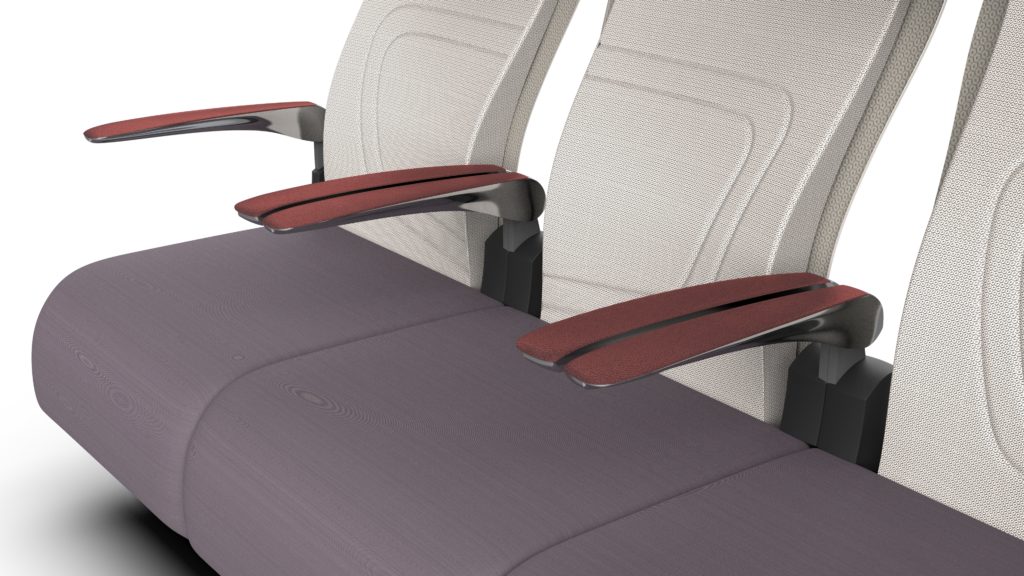
Dual armrests provide passengers with more personal space

The company designed the three seats so that they can be quickly and easily modified to accommodate different levels of service, including economy and premium economy, as well as a lie-flat option. For example, with dual armrests at each seat, not only does every passenger have two dedicated surfaces, which creates an improved perception of hygiene, but a row can be transformed into a premium economy offering simply by blocking the middle seat and selling the aisle and window seats either side.

Furthermore, by raising the front of the seat bottom cushions, Paradym can be transformed into a five-foot, nine-inch flat surface to form the basis of an economy flat, premium economy flat or business light flat product, depending on the additional amenities offered by the carrier.

This element of the design echoes airlines’ move towards offering a cheaper lie-flat option than in traditional business class – think Air New Zealand’s Skynest or Lufthansa’s Sleeper’s Row – but with extra width that LIFT says makes Paradym suitable for a far higher percentage of travelers than three standard economy-class seats. 

The armrests can be lifted to create a lie-flat offering

The design house believes this cabin configuration concept offers greater flexibility for airlines and lessors, as each triple-seat can be sold as a different product. In fact, LIFT is positioning Paradym as a win-win, with costs lowered due to less spare parts being needed, and revenue maximized as seating can be sold directly in line with demand. The company thinks this is a particularly promising prospect for low-cost and hybrid carriers.

The removal of dividers between traditional cabin classes could also pave the way for other enhancements to the aircraft cabin, such as larger overhead bins, more workspace and storage in galley areas and larger lavatories.

As well as looking at the bigger picture, LIFT has also focused on smaller, but no less important details. For example, Paradym’s curved bottom seat cushions would stop the seating from pressing into the back of passengers’ knees, and the tapering of the sides of each seat allow the arms to rest in a more natural position. 

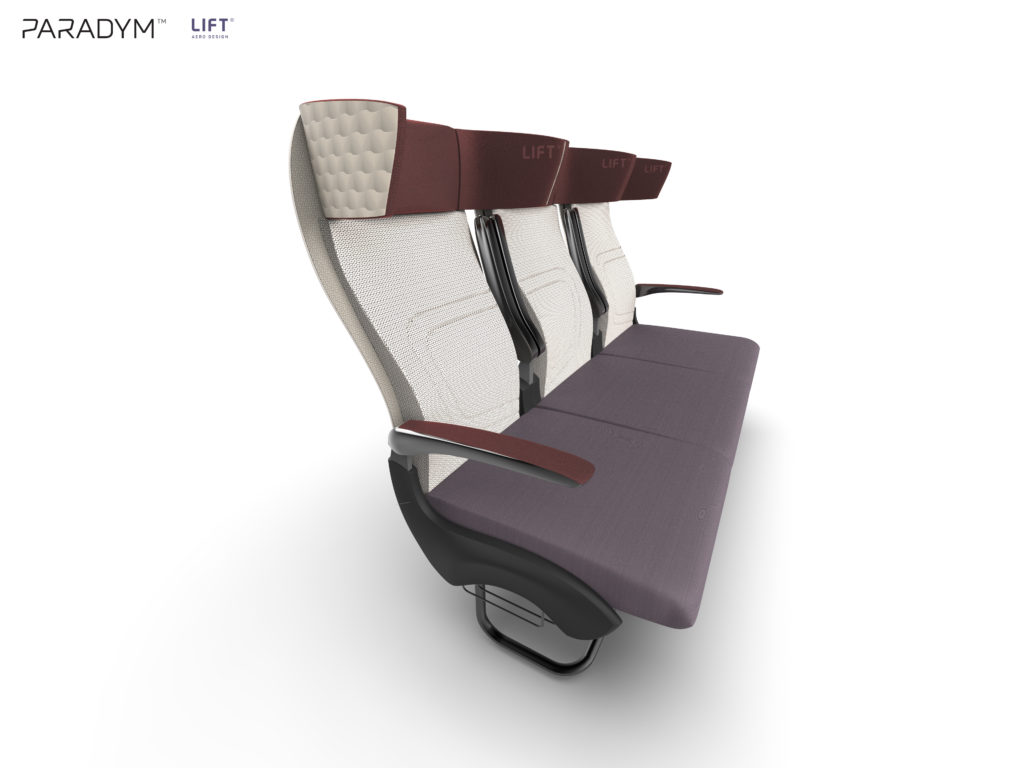
Large, wrap-around headrests offer the opportunity for brand differentiation

A wrap-around headrest with large cocoon-like wings not only offers enhanced comfort, it also presents a new opportunity for airlines to differentiate their branding.

Daniel Baron, managing director at LIFT, said, “In economy-class seat programs, the number of surfaces that can be customized is often limited to fabric or leather, a few plastic parts and seatbelt color, but with Paradym there are more options to customize the color, material and finish (CMF). The outer surfaces of the headrests could be plastic or a decorative laminate with a customized design or texture. The same goes for the vertical tapered portions of the seat that frame the cushion, and for the armrests. Clever use of textures can go a long way to communicate a brand or product’s soul and proposition.”

While the introduction of single-aisle aircraft with wider fuselages could still be years away, Baron believes that Paradym is also great option for airlines wanting to replace quads – rows of four economy-class seats  – on wide-bodies including Boeing 777s and A330s.

Quick Takes: Natalie Gomez, Auditorium Films

Quick Takes: Natalie Gomez, Auditorium Films

Quick Takes is a Q&A series designed to connect content companies with prospects while in-person events are postponed due to the COVID-19 pandemic. Lights, camera, action!

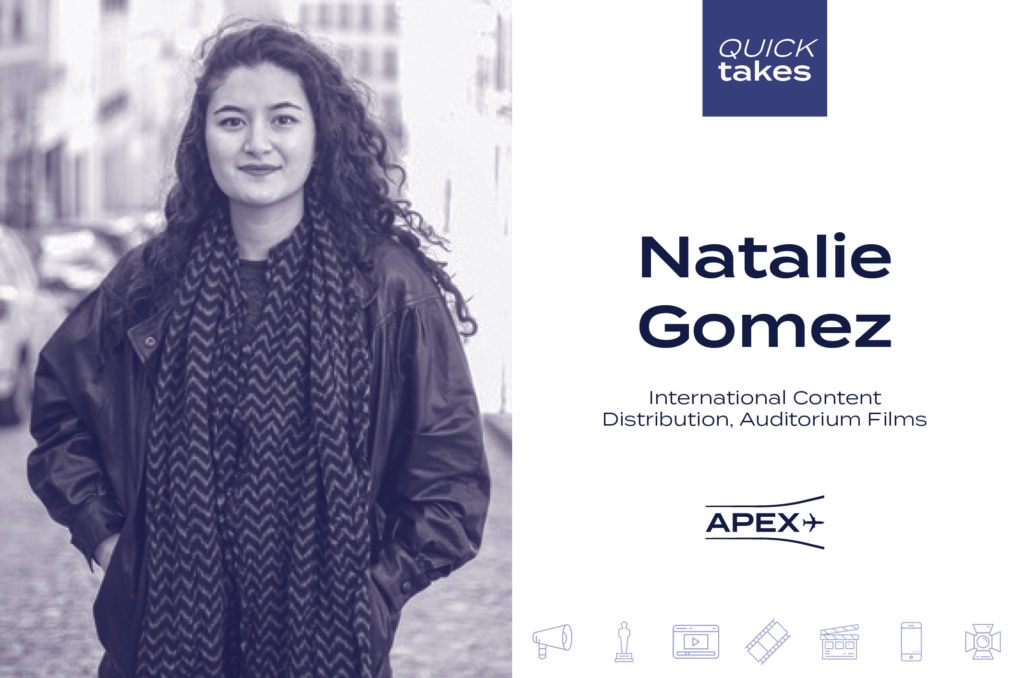
Natalie Gomez
International Content Distribution, Auditorium Films
Location: Paris

How has the pandemic affected your content slate or schedule?
As a distributor of performing arts audiovisual content working closely with producers in the sector, we’ve seen productions around music festivals be replaced with new formats (interviews with regular festival artists, for example), filmed without an audience or altogether cancelled.

However, we have started representing several new producers looking for help to distribute their content. We represent 30 producers today with a catalogue of hundreds of concerts that have not been distributed before, including artists such as Jamiroquai, Arctic Monkeys, Mika and more. This brings the full Auditorium Films catalog to over 1500 programs.

We also distribute the subscription video on demand (SVOD) music service Qwest TV by Quincy Jones, which has a continually expanding catalogue. We had started curating “Qwest TV corners” on airlines such as Emirates, but have not had the opportunity to renew airline content due to the pandemic.

What releases are you most looking forward to?
We are distributing an ongoing electro/pop series called Passengers in locations of travel and culture like Charles de Gaulle Airport and Musée d’Orsay.

We are also looking forward to co-productions with major concert venues such as the Teatro Real, Madrid, and a new series of original concerts with famous artists in iconic spaces around the world called The One.

What is your outlook on the state of the industry moving forward?
2020 has pushed the industry to be more creative. Producers are reinventing themselves and working around restrictions to bring new content and new formats. As long as this continues, we can expect a brighter future for content moving forward.

Do you find peoples’ viewing habits have shifted in terms of what they watch and how they watch it? How does your company’s content adapt to this new reality?
Peoples’ media consumption has grown, especially in the SVOD and free ad-supported streaming television (FAST) sectors. More and more new SVOD platforms are developing, and Auditoriums Films’ new client base is reflective of this.

Qwest TV has also adapted its offer and expanded to three new FAST music channels available on Samsung TV+: Qwest TV Jazz, Qwest TV Classical and Qwest TV Mix.

Theatrical windows have been all but eliminated, do you think this is temporary?
Depending on where and how cinemas reopen, as well as the type of content, theatrical windows will continually change to adapt to the current situation. There will be a before and after, and we expect these windows will be more flexible in the future.

Read more about the impact of coronavirus on the air travel industry, including APEX’s position on the matter, and subscribe to the APEX Daily Experience newsletter to stay up to date.

Quick Takes: Judy Barlow, APT Worldwide

Quick Takes: Judy Barlow, APT Worldwide
Judy Barlow

Quick Takes is a Q&A series designed to connect content companies with prospects while in-person events are postponed due to the COVID-19 pandemic. Lights, camera, action!

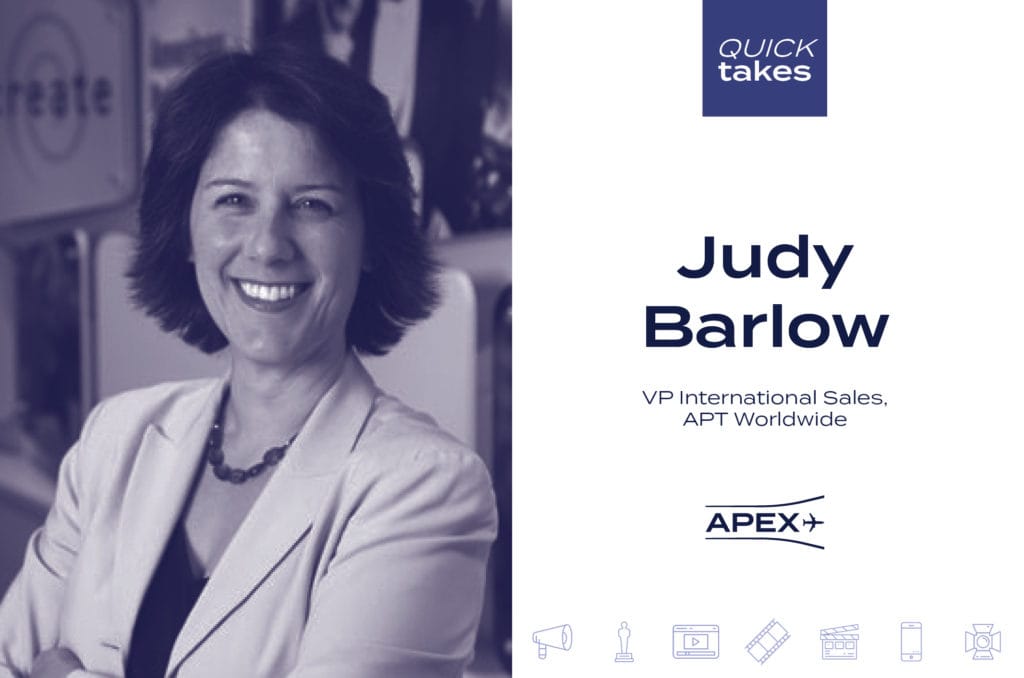
Judy Barlow
VP International Sales, APT Worldwide
Location: Boston

How has the pandemic affected your content slate or schedule?
Fortunately, we haven’t experienced any major delays with our content slate or schedule. Many of our travel series were already in post-production and so this year we’re able to offer new seasons of several popular series, including Outside Beyond the Lens, Curious Traveler and Rick Steves’ Europe. Food and in-studio series were a bit challenged and had to adjust their formats to observe protocols, but we’re pleased to be bringing out a new season of Christopher Kimball’s Milk Street Television, which has both in-studio and travel segments. In our documentary collection, most of those were far enough along to be completed.

outside beyond the lens

What releases are you most looking forward to?
We’re really excited to be bringing out some new documentaries in addition to our series and lifestyle programs. They include a fascinating ob-doc about a chef hoping for another Michelin Star in The Inn at Little Washington: A Delicious Documentary, and a new take on sharks without all the gore in Great White Shark. We also have a music doc featuring Cuban musician Eliades Ochoa of the Buena Vista Social Club, and another engaging music program called Discover The Firebird. And finally, we have a charming documentary called The Book Makers about people who craft stunning, handmade books which are works of art in themselves.

What is your outlook on the state of the industry moving forward?
Now that the existing inventory has been brought to market, I think we may see a slight lag in production of new content until producers can secure new financing and start traveling again. With the vaccines being rolled out, and a better understanding of the coronavirus, we hope that funding will accelerate. We do know the time during the lockdown has been well-spent in inventing new concepts, ideas, planning, development and pre-production activities, so our producers are ready to go just as soon as there is a green light!

Do you find peoples’ viewing habits have shifted in terms of what they watch and how they watch it? How does your company’s content adapt to this new reality?
Definitely people have grown accustomed to watching things when they want, and as much as they want. So a greater volume of content is needed all at once, instead of a limited, slow rollout. But also people are looking for content that will give them a chance to enjoy things vicariously that they can’t currently do while in lockdown, like with our doc Rick Steves Egypt: Yesterday and Today. And they’re looking for content that will improve their lives. We’ve seen this with nostalgic content, like our series The Joy of Painting with Bob Ross. Viewers in these uncertain times have really gravitated to Bob’s soothing voice, and encouraging words, even if they never pick up a paint brush. It’s just relaxing to watch him paint! And we’re happy to have a doc about Bob a well, called Bob Ross: The Happy Painter.

Theatrical windows have been all but eliminated, do you think this is temporary?
I do think this is temporary, and people will be eager to do communal activities like going to the movie theatre as soon as it is safe to do so!

Read more about the impact of coronavirus on the air travel industry, including APEX’s position on the matter, and subscribe to the APEX Daily Experience newsletter to stay up to date.

Quick Takes: Larissa Abid, BBC World Service

Quick Takes: Larissa Abid, BBC World Service
Larissa Abid

Quick Takes is a Q&A series designed to connect content companies with prospects while in-person events are postponed due to the COVID-19 pandemic. Lights, camera, action!

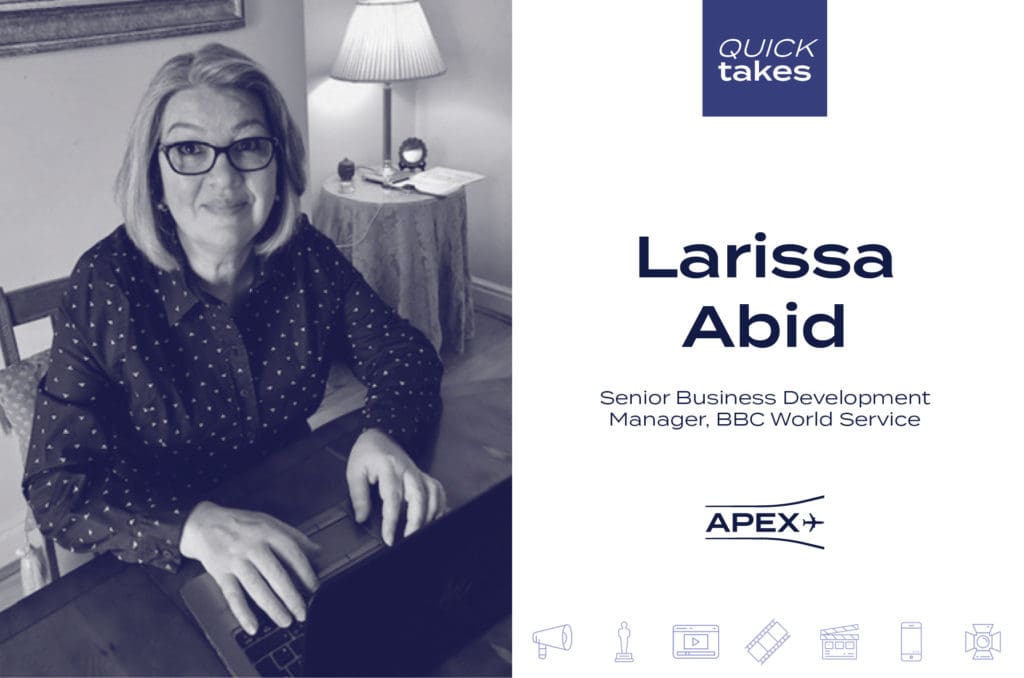
Larissa Abid
Senior Business Development Manager, North America/Caribbean Region & BBC Radio International, BBC World Service
Location: London

How has the pandemic affected your content slate or schedule?
COVID-19 has brought new challenges to many industries around the world and broadcasting is no exception. Multiple lockdowns in England, increased health and safety regulations and high levels of staff sickness had a direct impact on the availability of fresh BBC programming. However, as time went on, teams have been able to adapt to new ways of working.

Live music programs and BBC Proms, a huge season of world-renowned live concerts from the Royal Albert Hall, have been cancelled, but production teams have adapted to provide inspiring performances from the archives. Virtual audiences have also been gaining popularity since June last year, when light-hearted science program, The Infinite Monkey Cage, took on the challenge of regaining a live audience atmosphere.

There has also been new and original content that has delighted listeners and brought people together. From Grounded with Louis Theroux – which saw Louis, stuck at home during lockdown, tracking down high-profile people he’s been longing to talk to – through to educational comparisons between Shakespeare’s plague and COVID-19.

Grounded with Louis Theroux

What releases are you most looking forward to?
The last year has seen airlines and CSPs looking for lighter content (comedy, readings), some dramas, classical and popular music – a clear indication that passengers around the world were trying to escape the realities of COVID. Given that the aviation industry is still not in pre-COVID mode in terms of passenger turnaround, we expect similar trends to continue.

BBC’s Festival of Funny, which took place across February and March, features an array of brand-new comedy content from across the BBC, while also celebrating classic British comedy. BBC Radio International will have a selection of these programs available to provide some uplifting comedic relief.

In addition, entertainment audio content from the BBC will continue to delight audiences in the UK, in the skies and around the world. This spring you can expect treats for listeners of every age. BBC Radio International’s specialist music output is second to none, and as we look forward to longer, sunnier days, our audience can enjoy new series on rock ‘n’ roll and Latin beats, plus a celebration of both country music and jazz.

What is your outlook on the state of the industry moving forward?

Contactless solutions, robotics and automation will continue to proliferate. Thus, passengers’ personal electronic devices will play an exponentially more important role in the in-flight experience, where they will be used as a remote control for seatback IFE systems.

Traveler content preferences will most likely remain the same; it’s how this is consumed that will change. It is therefore important for airlines to ensure the availability of all types of content on board, and cater to all age groups.

Do you find peoples’ viewing habits have shifted in terms of what they watch and how they watch it? How does your company’s content adapt to this new reality?
Radio listening habits around the world have definitely changed, but will they slide back to previous habits as life moves slowly back to normal? We do know that primetime radio audiences, traditionally during drive-time, saw a direct impact as people stopped driving to work. Listening selections also changed, with an interest in lighthearted listening that offered an escape from the heavy COVID news that saturated the airwaves.

Yet with so much quality content available from BBC Radio International, airlines can count on creating a positive outlook and ambience on-board that enhances the passenger experience.

Read more about the impact of coronavirus on the air travel industry, including APEX’s position on the matter, and subscribe to the APEX Daily Experience newsletter to stay up to date.

Quick Takes: Alessandro DiGiovanna, Terry Steiner International

Quick Takes: Alessandro DiGiovanna, Terry Steiner International
Alessandro DiGiovanna

Quick Takes is a Q&A series designed to connect content companies with prospects while in-person events are postponed due to the COVID-19 pandemic. Lights, camera, action!

Alessandro DiGiovanna
Director of Sales and Marketing, Terry Steiner International
Location: New York

How has the pandemic affected your content slate or schedule?

The pandemic didn’t disrupt our content slate as much as it impacted the speed at which we announced titles. Prior to the pandemic, TSI was offering 10-12 titles per month. Now we’ve scaled back to reflect the demand of the industry, we’re offering a maximum of six per month. We’re being very selective with our acquisitions and remain vigilant about offering high quality content to our non-theatrical clients.

What releases are you most looking forward to?

  • Queenpins, a funny crime comedy with Kristen Bell and Kirby Howell-Baptiste
  • Dog, a road trip comedy starring Channing Tatum and an adorable dog
  • Clarice, The Silence of the Lambs spin off series

What is your outlook on the state of the industry moving forward?

We foresee a slower recovery than we had originally anticipated for the in-flight business, with noticeable improvements beginning primarily in Q3 and Q4 of 2021.

With people desperate to travel, airlines will want to have fresh content onboard. But we don’t expect them to refresh as often as they used to until there is more confidence that consistent travel, especially internationally, has officially returned.

Do you find peoples’ viewing habits have shifted in terms of what they watch and how they watch it? How does your company’s content adapt to this new reality?

Documentary series and lighthearted content have rapidly grown in popularity over the last year. People enjoy the captivating narratives of docuseries but also crave something light, even peaceful, to distract them from the harsh realities caused by the pandemic.

TSI is making a conscious effort to acquire titles that offer escapism, such as Sylvie’s Love, which is a beautiful story about love, life, and jazz set in 1950s Harlem.

Additionally, TSI has partnered with Sharecare Windows, offering wellness and relaxation content that’s primarily dialogue free, making it accessible to all airlines around the world.

We’ll also be working on entertaining series such as Playing with Power: The Nintendo Story to offer engaging insights into topics audiences love such as video games.

Theatrical windows have been all but eliminated, do you think this is temporary?

Yes and no. For blockbusters, we anticipate a theatrical window remaining if the title is important enough to a major studio. We believe there will be different types of releases depending on the title, but the window will definitely be shorter. For independent films, day and date releases have been a common occurrence for years – so unless it’s a buzzy title, we expect this tradition to continue.

Read more about the impact of coronavirus on the air travel industry, including APEX’s position on the matter, and subscribe to the APEX Daily Experience newsletter to stay up to date.

Quick Takes: Isabella Del Grande, ABC Commercial

Quick Takes: Isabella Del Grande, ABC Commercial
Isabella Del Grande

Quick Takes is a Q&A series designed to connect content companies with prospects while in-person events are postponed due to the COVID-19 pandemic. Lights, camera, action!

Isabella Del Grande
Sales, Transport, ABC Commercial
Location: Australia

How has the pandemic affected your content slate or schedule?
I’m delighted to say that due to our robust content slate, the pandemic didn’t really affect our pipeline. We had a lot of finished content readily available and were quick to offer programming across various genres to clients who urgently had slots to fill due to delays in production.

What releases are you most looking forward to?
Our binge-able new comedy Aftertaste and our powerful documentary Firestarter: The Story of Bangarra, are currently doing fabulously on the festival circuit.

Following the hype of the Test match earlier this year, we’re also excited about Capturing Cricket: Steve Waugh In India, a wonderful travelogue following the famous cricketer as he explores India for the first time.

Going to air next week is female-led comedy Fisk, which is guaranteed to be a great companion piece to Aftertaste.

And lastly, in the kids space, The Wonder Gang is an engaging new series, answering intriguing questions like “Why do fish swim in schools?” and “Do spiders have ears?”.

Aftertaste. Image via ABC Commercial

What is your outlook on the state of the industry moving forward?

It’s wonderful to see in-flight entertainment picking up again as travel restrictions ease. We worked hard to keep in touch with IFE content providers throughout the pandemic, even while flight activity was reduced to nearly zero, and it’s great to see these clients now coming back to us for new content. We’re also thrilled to see our latest and greatest programming on aircraft, welcoming travelers back to the sky.

Do you find peoples’ viewing habits have shifted in terms of what they watch and how they watch it? How does your company’s content adapt to this new reality?

We have definitely noticed an increase in demand for uplifting content. We are happy our rich catalogue, filled with award-winning content across the lifestyle, arts and music, science and wildlife genres, is able to cater to this. We have no shortage of positive programming which is just what we all need as we navigate our way through these testing times.

Read more about the impact of coronavirus on the air travel industry, including APEX’s position on the matter, and subscribe to the APEX Daily Experience newsletter to stay up to date.

Factorydesign Broadens HeadZone Availability to Include More Seating Models

Factorydesign Broadens HeadZone Availability to Include More Seating Models
Images via Factorydesign

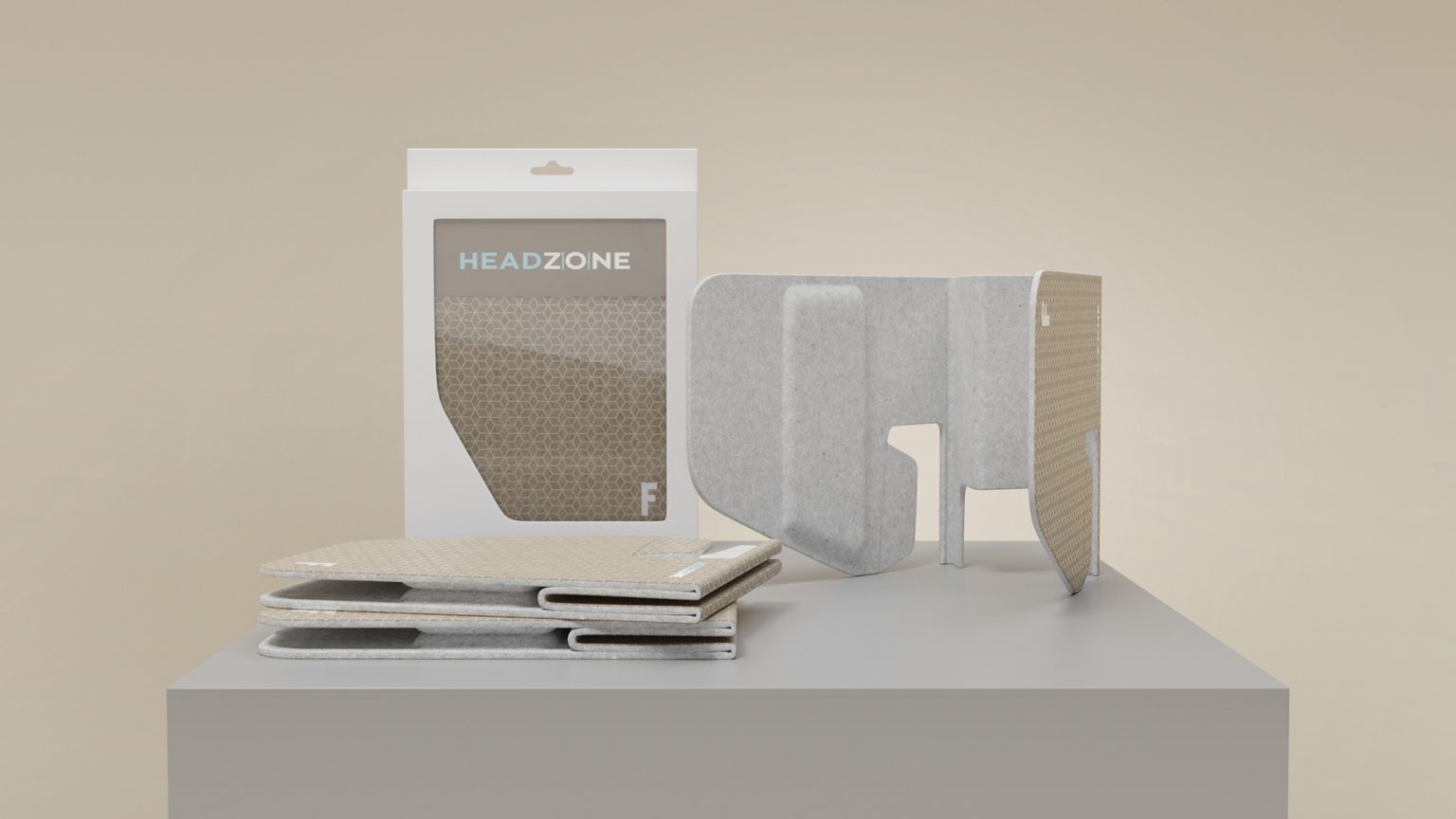
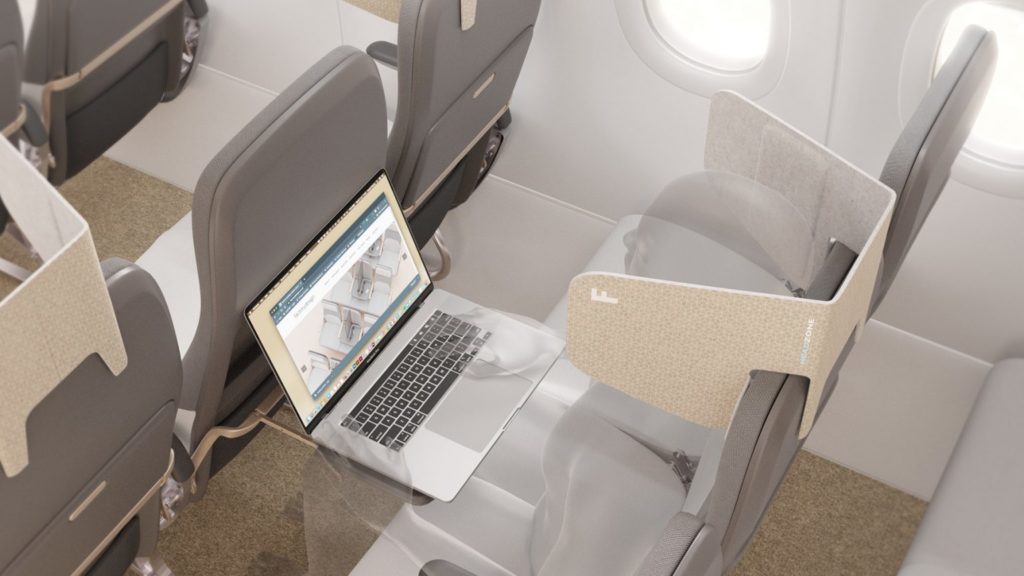
One of the more attention-grabbing passenger separation concepts to emerge from the COVID-19 crisis was HeadZone, conceived by Factorydesign. The simple, eco-friendly portable barrier was praised for its ability to create personal space in cramped quarters. While initially intended for use with economy-class seats on short-haul flights, it is now being manufactured for a variety of seat models.

HeadZone is a foldable cardboard partition designed to rest on top of a seat, creating a semi-enclosed space around a passenger’s head. It can be provided to travelers gratis if airlines choose to subsidize the cost through branding and sponsorships printed directly on the cardstock. Lightweight and reusable, the creators of HeadZone hope that travelers will use the product after the pandemic has ended.

In November, Factorydesign partnered with aircraft interiors supplier Global Aviation Distribution to produce and distribute HeadZone following interest from airlines. HeadZone can now be configured to fit long-haul seats with headrests, which is something that Adrian Berry, director at Factorydesign, said the design team always aspired to do. “Because the method of manufacture is cutting and folding, we have been able to develop a variety of solutions as to how HeadZone may fit,” he explained. Berry admitted that it’s sometimes difficult to fine-tune the fit remotely based on minimal information, but the process is quick nonetheless. “On seats with headrests and the different mechanisms involved, there is not always a single solution; we like to provide alternatives.”

HeadZone is environmentally friendly in many ways: weighing in at 3.7 ounces, the product saves airlines more fuel than permanent cabin interiors modifications. It can be reused and recycled: Berry said HeadZone is robust and can fold flat to the size of an A4 envelope. Airlines also have a bevvy of options when it comes to customizing the product. Eco-inks can be used to further increase its sustainability, designs can be incorporated that reflect the airline’s brand and cabin, antimicrobial coatings can be applied and it can be manufactured in different thicknesses.

HeadZone may soon take flight, as Berry confirmed that several airlines are testing the product. For those planning on selling the product to travelers, the cost would range between $2.50 and $4 each.

PIT Solidifies Reputation as Center of Innovation

PIT Solidifies Reputation as Center of Innovation

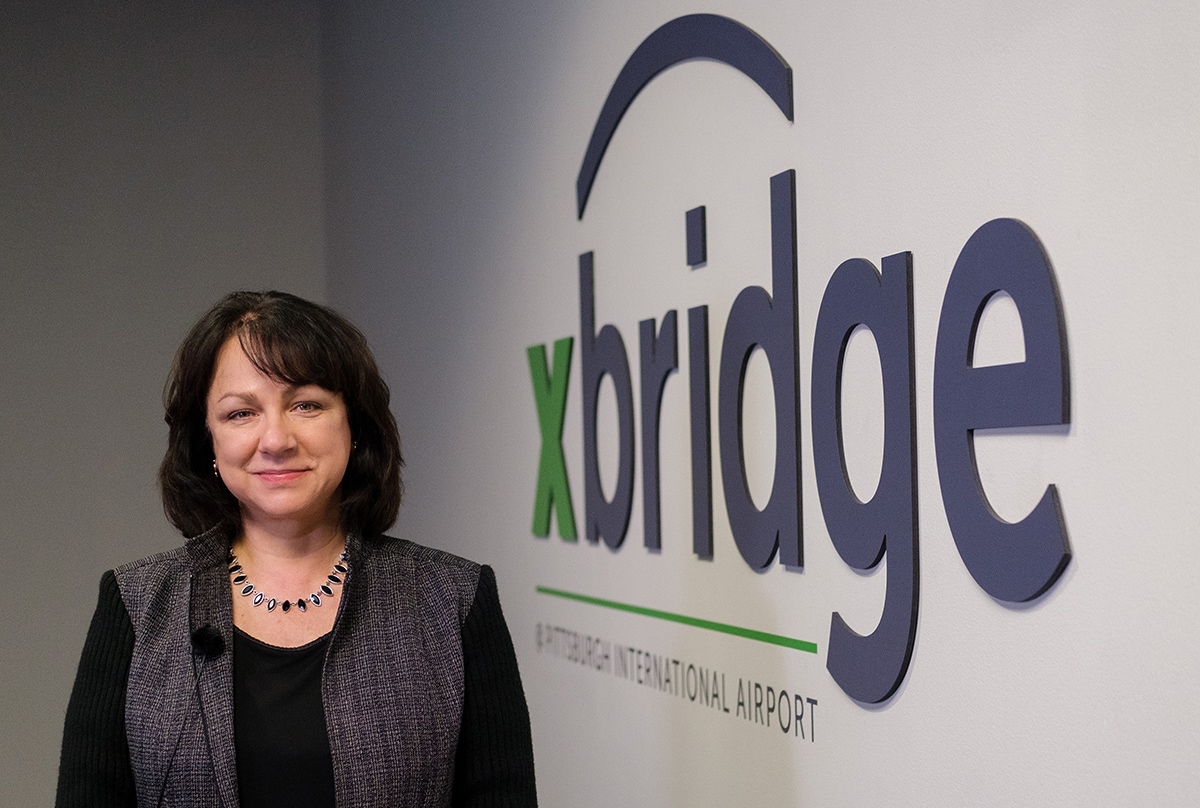
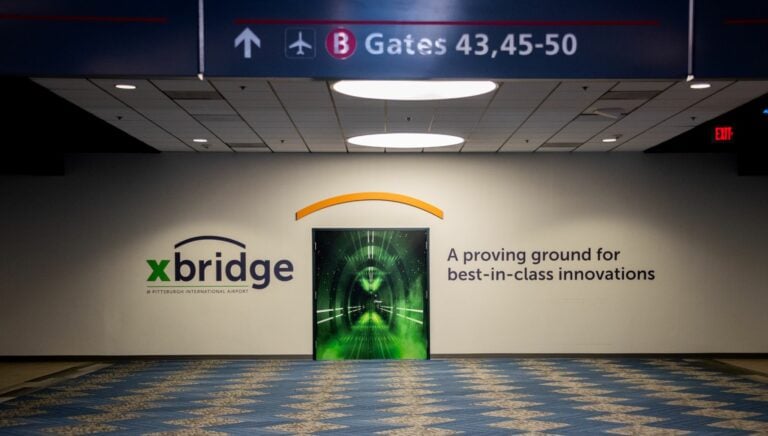
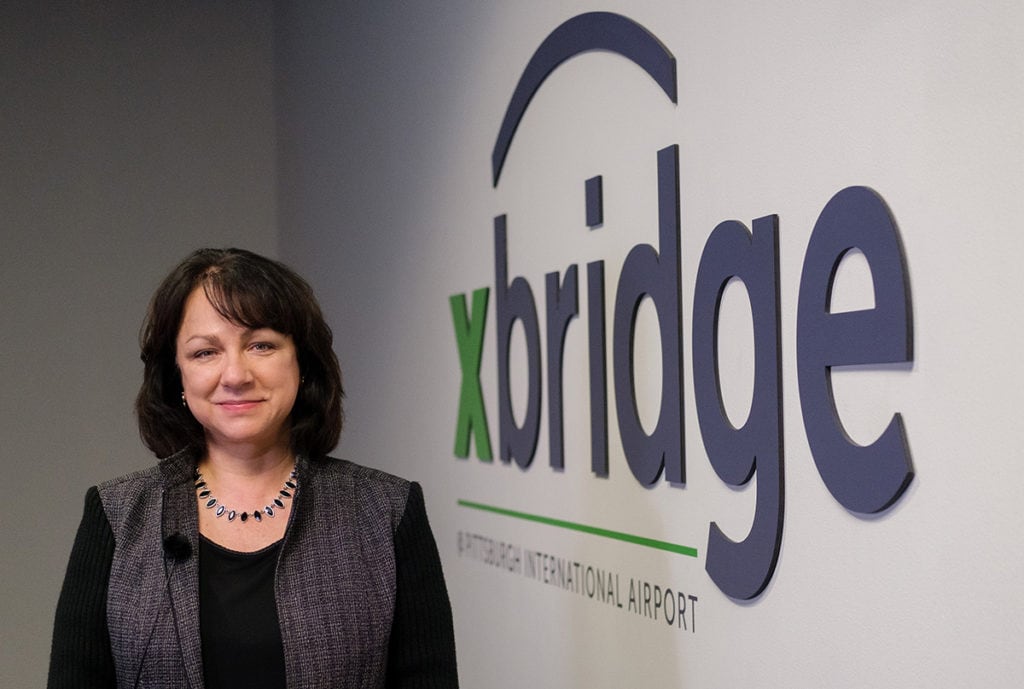
The xBridge at Pittsburgh International Airport (PIT) is a place where companies can collaborate and get creative. Now that three local firms have joined, the space is buzzing with new ideas poised to increase efficiency and safety during a time when new solutions are being welcomed with open arms.

For PIT’s airport operator Allegheny County Airport Authority, partnerships with tech companies extend beyond the superficial, especially if the xBridge is involved. Spun out of the facility’s need for a physical space to test high-tech prototypes in a real-world environment, the xBridge is a 10,000 square-foot location at the end of Concourse B featuring a jet bridge and ramp area. Katherine Karolick, senior vice-president of Information Technology at PIT, is quick to point out that the physical space xBridge provides is only as valuable as what it’s used for. Thanks to regular brainstorming and ideation sessions, xBridge churns out minimal viable products much sooner than a traditional product development model would allow, which delivers value for passengers and airline partners sooner too.

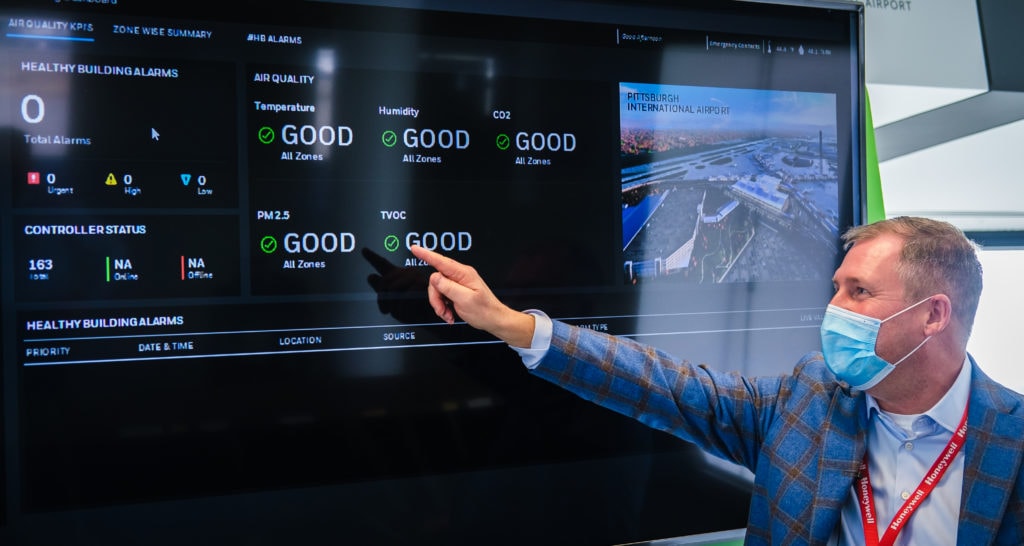
The first company involved with xBridge was Honeywell, which developed a dashboard that measures air quality in real time and adjusts the HVAC system based on the level of carbon dioxide, humidity, volatile organic compounds and particulate matter. Trials were successful, and the airport is considering expanding the technology throughout the airport.

Honeywell’s John Isherwood provides a demonstration of the airport air quality dashboard inside PIT’s xBridge. (Photo: Beth Hollerich, Pittsburgh International Airport)

Now, three other companies will test and develop their products at xBridge: Carnegie Robotics, RE2 and Zensors. All the firms are based in Pittsburgh, and two of them have previous ties to the airport. Zensors deployed an artificial intelligence system in 2019 that inspects security camera footage to calculate queue wait times. Now the company says it’s ready to take its product to the next level and analyze a myriad of other data points. “We want to be able to run artificial intelligence on the gate when the planes are loading. For example, we’ll start looking at what type of baggage is brought on board,” said Chris Harrison, co-founder,  Zensors. He added that the company will explore applications around litter and restroom utilization as well.

Carnegie Robotics is using xBridge as a testing ground for its autonomous floor scrubbers. Four of them roam the airport already, and the company now has its sights set on building more advanced models with stronger ultraviolet lamps. “It’s been great to be able to work at the airport to test it here at a time when there’s a lot of stress on hospitals,” said Carnegie Robotics’ chief financial officer, Daniel  Beaven.

RE2 develops mobile robotic arms for use in a variety of complex environments that provide human-like capabilities beyond traditional industrial arms. The company’s mission is to empower humans to do their jobs safely and efficiently. RE2’s CEO, Jorgen Pedersen, noted that having access to a real-world testing ground provides the company with invaluable data that it uses to make informed decisions.

While partnerships can create new revenue streams, Karolick said this is not the driving force behind the airport’s innovation efforts. She mentioned that xBridge is helping the airport save money, as it tests some of the materials it’s considering for use in its billion-dollar terminal modernization program. “We can use proposed finishes and fixtures in the xBridge and get first-hand experience with installing and maintaining them before committing to them.”

Katherine Karolick, SVP IT, Pittsburgh International Airport

Most importantly, xBridge delivers solutions at speed during a time of crisis. “We don’t have the luxury of taking months to plan out projects, and years to build. Passenger counts at PIT were down 63% last year. We need to accelerate solutions to the industry that ensure the safety of our passengers and reduce costs for our airline partners.” Expect xBridge to continue tapping into the rich pool of startups, tech firms and universities in Pittsburgh. “The xBridge brings it all together.”

Airline Panel Reveals What’s on the Horizon for IFEC

Airline Panel Reveals What’s on the Horizon for IFEC
APEX Viasat Thought Leadership Session
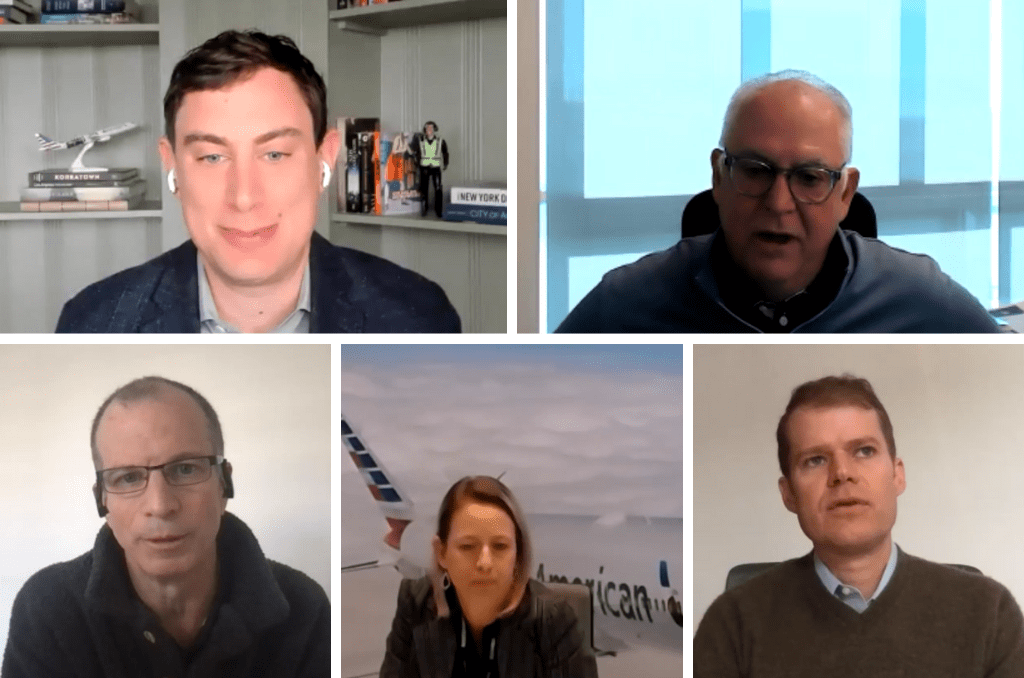
Clockwise: Brian Sumers, Rick Baldridge, Andres Castaneda, Clarissa Sebastian and Don Buchman

On January 27, APEX and Viasat hosted a revealing virtual thought leadership session that shed light on how the in-flight connectivity landscape has shifted since the onset of the COVID-19 pandemic. Viewers were also able to ask their questions live. APEX members that missed it can watch the recording here.

As the coronavirus pandemic drags on, some casual observers of the aviation industry are legitimately wondering if the situation will ever return to normal. The panel of executives featured in the latest APEX digital thought leadership session, however, are optimistic that the industry will bounce back. More specifically, they are confident in the investments they have made in in-flight entertainment and connectivity (IFEC).

For Viasat, the pandemic is a small hiccup in the context of its ten-year growth plan. The company steadfastly believes that opportunities for growth in this sector will not change. “Airlines are very demanding,” said Rick Baldridge, Viasat’s president and CEO, during his fireside chat. He was referring to the high expectations placed on IFEC providers for consistency and reliability of service.

It’s a reflection of what today’s travelers want most: the ability to enjoy in-flight connectivity that matches the standard they experience at home. Baldridge noted that recent growth in demand for robust streaming capabilities demonstrate how important it is for Viasat to focus heavily on adding spectrum and bandwidth.

During the ten-month period since the crisis began, leisure travelers have outnumbered their business-oriented counterparts. But this has not led to a difference in IFC takeup rates, and the activities that these travelers partake in while online haven’t changed much either. Baldridge explained that audio, video and even VPN connections are still the order of the day. “Just because they’re not traveling for business, it doesn’t mean they don’t have a job,” he said, encouraging airlines to recognize the work-from-home connectivity needs of leisure travelers.

“We’re shifting away from providing things for the sake of things and really drilling into what the brand’s core values are.”

Clarissa Sebastian, American Airlines

The panelists that appeared during the second half of the broadcast confirmed that recent IFEC usage rates remained comparable to pre-pandemic levels. Andres Castañeda, VP at Aeromexico; Clarissa Sebastian, managing director, Premium Customer Experience at American Airlines; and Don Buchman, VP at Viasat, all shed light on what kinds of trends they were seeing in this space. All parties agreed that they could bring a lot of innovative products to market, but the crisis has taught them to be speedier with this process for the sake of getting feedback early, instead of taking months to craft a perfect offering that has fallen out of vogue by the time of release.

During tough economic times, it also makes sense to be more judicious with IFEC deployment. Buchman said Viasat understands this and has been cooperative with airlines, working with them to identify ways of reducing expenditure while keeping customer satisfaction high. While sponsorships can go a long way towards covering the cost of connectivity, unlocking content based on what passengers most want to watch is also wise, Buchman said. He referenced the spike in demand for live sports when an important match is underway as an example where having access to one channel is more valuable to customers than having multiple options available.

Content is clearly still important to airlines, but there are other facets to IFEC now being considered too. Dynamic and personalized advertising is being scrutinized by American Airlines and Aeromexico, and Viasat is very keen on deploying artificial intelligence, machine learning and data analysis to introduce new efficiencies in flight operations.

During the session, Viasat also stated its case in the seatback versus bring-your-own-device debate. To glean more insights on this and other areas of the rapidly evolving IFEC space, APEX members can watch the free session here.

ACA/IFSA Announce Publication of In-Flight Service Guidelines

ACA/IFSA Announce Publication of In-Flight Service Guidelines
ACA IFSA

The highly-anticipated ACA/IFSA COVID-19 Guideline is now published. The document represents the first time both parties have collaborated on a publication of this magnitude. By making it available online, free of charge, ACA and IFSA hope to support the global aviation and airline ‎catering industries as they continue to respond to the pandemic.

Staff at airlines, airports and catering companies always take safety to heart. During the COVID-19 pandemic, a crisis like no other in recent memory, service companies needed to adapt quickly to a new reality and ensure that the over 3 billion onboard meals produced and delivered ‎every year could continue to be served safely. During this time, the International Flight Services Association (IFSA) and Airline Catering Association (ACA) saw an opportunity to combine their expertise and create comprehensive guidelines that companies around the world can reference to bolster their existing crisis plans.

The guidelines were designed to be pragmatic, and feature specific examples describing how stakeholders can re-engineer spaces and operations to win the fight against COVID-19. IFSA’s executive director, Lauren Costello, explained that the resulting document is an ideal starting point for companies looking to create business-specific ‎procedures and training materials tailored to their regional health requirements. “The guidelines illustrate the roles for various staff, as well as how to communicate externally with local and/or national government authorities, customers and suppliers,” she said.

“Members who volunteered for the working group brought their unique expertise to the development of the ACA/IFSA COVID-19 Guideline.”

Lauren Costello, IFSA

The ACA/IFSA COVID-19 Guideline supersedes former individual ACA and IFSA guides. It provides instructions on how to create a pandemic committee, assess risk, implement company-wide control measures and more. It also features handy checklists in the annex section that can help catering businesses weed out key risk factors upon a restart of operations. While COVID-19 is not a foodborne illness, many risks remain in the service sector, the guidelines were designed to limit infection of staff, visitors, ‎‎contractors, customers and passengers as much as possible, Costello noted.

Professionals from airlines and caterers to suppliers and industry consultants formed the core of the working group that prepared the Guideline. “IFSA and ACA collectively represent the most skilled individuals in the airline ‎catering space. Members who volunteered for the working group brought their unique expertise to the development of the ACA/IFSA COVID-19 Guideline,” Costello said. They scoured dozens of documents from top agencies including Airport Council International, CDC, EASA, FDA, IATA, WHO and other governing bodies in order to produce the most comprehensive guidance available.

Costello expressed pride in being able to collaborate with ACA on joint guidelines. Previously, both agencies have worked together on regulatory issues in the US and Europe and have appeared together at events and on panels to share industry insights on key issues. Commenting on the accomplishment, ACA’s managing director Fabio Gamba ‎said, “This industry has shown time and again how adaptable and resilient it can be. And we are glad we could, together with our colleagues from IFSA, bring our contribution with this very comprehensive guidance which is publicly available.”

Download the ACA/IFSA COVID-19 Guideline here.

[PHOTOS] JetBlue’s A220 Design Capitalizes on Long-Haul Comfort Features

[PHOTOS] JetBlue’s A220 Design Capitalizes on Long-Haul Comfort Features
All images via JetBlue

JetBlue has unveiled the design of its new Airbus A220-300, which promises customers an elevated passenger experience traditionally associated with long-haul flights on wide-body aircraft.

JetBlue’s first A220 was delivered to the airline’s home at John F. Kennedy International Airport’s Terminal 5 in New York on December 31, 2020, and is the first of 70 the carrier has on order.

A video tour captures the cabin’s sophisticated finishes

“With the A220, we’ve taken a state-of-the-art aircraft and added our award-winning touch to bring to life an experience only JetBlue could dream up,” said Jayne O’Brien, head of Marketing and Loyalty, JetBlue. “We look forward to welcoming customers on board our newest aircraft, with incredible onboard comfort, one-of-a-kind design elements, and unparalleled entertainment and connectivity.”

Among many passenger-pleasing features are roomy 18.6-inch wide Meridian seats from Collins Aerospace, finished with vegan Ultraleather fabric in soothing shades of blue with tangerine highlights. Laid out in a 3-2 configuration, the seats are embedded with Thales AVANT 10.1-inch, 1080P high-definition in-flight entertainment (IFE) screens and feature in-seat power with AC, USB-A and USB-C ports.

Each of the 140 seats – including six rows of “Even More Space” seating – are equipped with enhanced cushions for comfort, a contoured seatback design at knee level to boost legroom, and adjustable headrests. They also offer passengers room to nest, with compartmentalized mesh seatback pockets for water bottles and personal items.

The airline’s commitment to keeping passengers connected at altitude continues, with JetBlue’s A220s becoming the first of the type to be equipped with Viasat’s in-flight connectivity to power its free high-speed Fly-Fi service. Additionally, passengers can enjoy 30 channels of DIRECTV on their seatback screens, with DVR-like pause and rewind functionality, full seasons of shows, hundreds of movies, and premium content from HBO and SHOWTIME.

Other IFE features include a picture-in-picture function, an enhanced 3D flight map offering multiple ways to track the time to destination, and personal handheld device pairing capabilities to allow passengers to use their devices as a remote for the IFE screen or as a gaming controller.

JetBlue has enhanced the A220’s already ultra-modern design, playing up standard features by introducing larger windows and higher-capacity overhead bins. It has custom-programmed LED mood lighting with varying lighting scenarios that change with the time of day or phase of flight. Galley partitions also were re-designed to improve privacy near crew workspaces, and the aircraft’s three lavatories feature subway tile pattern details and gender-neutral signage. The front and rear wall panels incorporate a Morse code dots and dashes decorative pattern. 

The A220’s favorable operating economics support JetBlue’s long-term strategy to ensure a well-managed, low-cost business model that is resilient to current market conditions. The aircraft’s Pratt & Whitney geared turbofan engines also support JetBlue’s environmental sustainability goals, offering double-digit fuel and carbon emissions improvements versus its Embraer 190 aircraft. JetBlue has announced plans to achieve net-zero carbon emissions across all operations by 2040.

JetBlue plans to fly the A220 in a mix of existing and new routes and markets. The first will enter scheduled service in mid-June between Boston and Fort Lauderdale. New markets will be evaluated in the future as more A220 aircraft join JetBlue’s fleet.

Op-Ed: COVID Will Revolutionize Premium Economy, Says Cabin Design Expert

Op-Ed: COVID Will Revolutionize Premium Economy, Says Cabin Design Expert

In this instalment of APEX Media’s Op-Ed series, Expert Opinions, Matt Cleary, director of Industrial Design and co-founder of ACLA Studio, explains why the pandemic is a catalyst for innovation in the premium economy cabin. He believes that privacy, personal space and amenities are key factors that will drive new growth in this market segment.

Over the past 20 years, we have witnessed significant investment in the business-class cabin. An outgrowth of this can be seen in the innovations spanning many airlines, starting with lie-flat beds all the way to smart layouts that gain direct aisle access for all passengers, and now most recently to the introduction of individual suite doors.

Premium economy class (PYC) is the next cabin that we will see significant investment in, not only from airlines but most importantly from passengers and businesses. Travelers desire a more private (and distanced) comfortable product offer when compared to the economy-class experience. Businesses will be leaner in their travel expenditure whilst still wanting to offer certain travel benefits employees, which are not available at the back of the aircraft.

When looking at the present benefits of the current PYC cabins, which are in most cases adaptations of domestic first-class seats for wide body aircraft, there is a lackluster appeal in multiple areas. When comparing an economy-class seat to an existing PYC seat, it often comes with a few more inches of legroom and an additional inch or two in width, as well as your own armrest, a cocktail table and occasionally a footrest. This equates to a relatively small percentage increase in real estate gained whilst commanding often more than double the price of the economy-class seat.

It is for these reasons that a future PYC cabin that works harder to offer benefits in privacy as well as comfort, personal space and amenities will drive new growth in this market segment and attract more passengers willing to invest in their flight experience. Similarly, innovation can come in configuration and geometry optimization that will not sacrifice the overall real estate of the cabin, and will therefore transform the novel cabin into a significant profit center for airlines.

When comparing Delta and Lufthansa’s latest A350-900 aircraft, both have a similar total capacity, however Delta has opted for a PYC cabin with capacity for 48 passengers while Lufthansa’s has capacity for 21 passengers. Both airlines opted to maintain similar capacity in economy class and adjust the business-class cabin to add or reduce PYC seats.

Should Delta’s strategy prove to be the right decision and set a precedent for other airlines to follow, we are perhaps at a transition point whereby PYC cabin capacity is on the rise. In many ways this transition is a cyclic process: Since the elimination of first class by many airlines, the business-class cabin is taking the top spot and the PYC of tomorrow will likely become the business class of the future. In my view, this transition will only be seen in full with further innovation in the PYC cabin.

The aviation industry undergirds the fabric of domestic and international travel. I am a firm believer that the industry will rebound successfully after this unexpected shakeup, with the unprecedented upheaval of the industry acting as a catalyst for creative design and innovation that will alter the passenger experience for the better.

Matt Cleary is director of Industrial Design and co-founder of ACLA Studio, a transportation and design studio based in Los Angeles. He was born and raised in the UK studying Industrial Design at Bournemouth University. He gained his experience working in the aircraft interiors industry working for companies such as AIM Altitude and Zodiac Seats UK before moving to California to be part of the Advanced Concepts Team of Zodiac Seats. In 2017 Matt co-founded ACLA Studio with his business partner Victor Carlioz.

[PHOTOS] Milan Says “Buongiorno” to Etihad’s New Amenities and Daily Dreamliner Service From Abu Dhabi

[PHOTOS] Milan Says “Buongiorno” to Etihad’s New Amenities and Daily Dreamliner Service From Abu Dhabi

Image: Buzz Products

A 17th century Baroque palace in the heart of Milan served as the backdrop for Etihad Airways’ celebration of new amenity kits by Italian luxury brand Acqua di Parma, the recent deployment of Dreamliners on its Abu Dhabi-Milan route and its lasting commitment to the Italian market – over 10 years since its entry.

In celebration of Etihad Airways’ recent deployment of Boeing 787-9 Dreamliner aircraft on its daily flight to Milan and its new amenity kits by Acqua di Parma, the airline hosted a reception at the Palazzo Clerici, located in the center of the Italian city. The new Dreamliners, which began servicing the route last month, feature 28 Business Studios and 271 Economy Smart Seats, and will soon be among the first in the airline’s fleet to feature its new Economy Space seating. Milan became Etihad’s first Italian destination when it began offering flights to the city in 2007, and continues to represent an important market for the Middle Eastern carrier.

Image: Buzz Products

“Etihad has carried over 1.4 million guests to and from the city, and the route continues to enjoy strong demand from both business and leisure travelers alike,” said Robin Kamark, COO. Etihad Aviation Group COO . “The tremendous support and recognition Etihad has received in recent years from Italian guests, partners and stakeholders has been instrumental in strengthening our position as a leader in this important market.”

Image: Buzz Products

The event at the Italian Baroque palace, once home to the influential Clerici family, also served as a backdrop to highlight the airline’s long-standing partnership with Italian luxury brand Acqua Di Parma. The two first collaborated in 2014 when the airline began offering its toiletries in The Residence cabin on its Airbus A380 fleet. On display at the reception were the fruits of the brands’ latest tie-up, brokered by amenity kit supplier Buzz Products: a redesigned first-class kit in a new shape and new, yellow zipper pouches for business class. Also showcased at the event was the craftsmanship that goes into the making each of Acqua Di Parma’s yellow hatboxes and crystal bottles.

“We are extremely selective when choosing brands to associate with, but partnering with a world-leading airline like Etihad was a natural choice,” said Laura Burdese, CEO and President of Acqua di Parma. “I see this partnership as an enhancement of a relationship founded on the same shared values of excellence and quality.”

Getting Down to Business: The Pocket Travel Concierge

Getting Down to Business: The Pocket Travel Concierge

Illustration: Lalalimola

Road warriors today are more self-sufficient and resourceful than ever: They book their own travel, do their own expenses and make room for extracurricular activities around work trips. In the multipart series,“Getting Down to Business,” we look at the shiny tools inside the modern business traveler’s kit. This segment examines a digital platform that promises to be your very own pocket concierge throughout your travels.

If time is money, then TripActions could save companies 90 percent of what they’re spending in labor to book flights and accommodations for business trips. It estimates the average time it takes an employee to find the right flight for the right fare and book a hotel room is 60 minutes – and claims its travel management platform can help the employee do the same in six. TripActions’ algorithms roll flight and hotel-room availability with corporate travel policies so employees don’t have to do the guesswork as to whether the premium economy seat they’re about to purchase is something that will be covered on the company dime.

TripActions wants to own business-trip-planning end to end, including the part that involves claiming expenses. But instead of designing its own ecosystem, it chose to partner with airfare distributor ATPCO and source flight information from Sabre and hotel rates from Bookings Holdings. It has even won over American, Delta and Southwest airlines, some of which had previously restricted their  flight information from appearing on third-party platforms, by working to ensure their range of products and services are properly displayed for users to compare. (Just consider the confusion around basic or premium economy offerings across different airlines.)

At the end of the day, TripActions provides companies with a better top-line view of their travel spend while also enabling employees to have the most pleasant journey possible by bringing a sense of humanity and humor – it brought bacon to users who joked they craved it – to business travel.

Like most conveniences these days, those offered by TripActions are packaged inside a smartphone app, but they’ve also added access to customer service support around the clock, so if you’re stranded in Tallinn without your luggage, someone can work on getting your bag on track while you shop for a new toothbrush and suit.

While TripActions aims to remove some of the inefficiencies in business travel planning with technology, the company believes it’s still worthwhile to have humans on hand to respond to the more complex questions and logistical issues that tend to arise while one is traveling abroad. In fact, it is partnering with coworking company WeWork to set up local teams at their offices around the world.

“Getting Down to Business” was originally published in the 9.3 June/July issue of APEX Experience magazine.

C-Suite: Sanjiv Kapoor, Chief Strategy and Commercial Officer, Vistara

C-Suite: Sanjiv Kapoor, Chief Strategy and Commercial Officer, Vistara

A career in aviation was supposed to be Sanjiv Kapoor’s one-way ticket away from the turbulence of India in the 1970s. Little did he know that his great gig in the sky would lead him back to where the idea came to be.

Growing up in 1970s Calcutta where power outages lasted 12 hours a day, Sanjiv Kapoor would look forward to visits from his uncle who worked for Pan American World Airways in Munich. He, with his German wife and their children in tow, would bring exotic gifts and tales of travels to Tehran, Hong Kong, Tokyo and Honolulu. Their stories, along with Kapoor’s love for the genre-defying music of Pink Floyd and the Airfix model airplane kits his father brought back from business trips to England, offered him a sense of escape and convinced him that a career in aviation was the ticket to a life of adventure.

LEARNING TO FLY

Kapoor, now chief strategy and commercial officer of Vistara, was brought up in a well-to-do progressive household and went to one of the most prestigious private schools in Calcutta (now Kolkata), La Martinière. As Kapoor recalls, the school embodied India – its students representing all the ethnic groups and religions that had sizable populations in the city at the time, including Indian, Anglo-Indian, Indian-Chinese, even Armenian. The education emphasized sports and games, as well as open debate, and was liberal in its views and approach, actively encouraging social interaction between the sexes despite running separate boys’ and girls’ schools.

It was here that Kapoor met his wife, whom he started dating in Grade 11. The two were also president and vice-president, respectively, of the Interact Club, an association whose mission is to tackle the social causes present in today’s society. “Leaders were taught to be assertive and articulate, to question the status quo, and to make a difference,” Kapoor says. “Some may have considered us (uncharitably) to be westernized, alienated, urban elites, but … it gave us very broad-minded global outlooks.”

This passion for civic duty followed Kapoor, even after he graduated from Dartmouth College and held roles at airlines such as Northwest, GMG and Vistara competitor SpiceJet, with stints at Temasek Holdings, Bain & Company and others in between. These jobs took Kapoor to the Bay Area, Minneapolis-St. Paul, Singapore, Moscow, London, Dhaka and more.

Compelled to encourage Indians to participate in reducing India’s trash output, Kapoor founded the non-governmental organization A Garbage Free India in 2010. “It really saddens me that despite our magnificent history and culture, despite the tremendous advancements and contributions we as Indians have made since Independence in 1947, at the street level we are one of the least civic-conscious countries in the world, where so many educated people seem to not think twice about throwing their litter on the streets, about treating the outdoors as a giant garbage bin,” he says. 

IT’S WHAT WE DO

Responsible for overseeing the airline’s operations, Kapoor’s day-to-day tasks include analyzing how to make the most of the rebranded Freedom Fares through promotions and deciding on products including in-flight entertainment and connectivity for the airline’s upcoming 13 Airbus A321s and six Boeing 787-9s. “Our recent aircraft order captures how we see the next five years or so,” Kapoor says, adding that he’s evaluating potential domestic and international routes for the fleet.

Vistara
Vistara’s Fly Higher campaign encourages millennial travelers to not compromise on the air travel experience. Image via Vistara

Vistara currently flies to 22 destinations within India – and from Delhi, Kochi and Bengaluru to London’s Heathrow Airport via Mumbai through a domestic codeshare with British Airways. Operating international routes means Vistara is better able to offer a consistent passenger experience all the way to the end of the journey. And then there is Kapoor’s duty of hiring ground and cabin service crews.

When it comes to recruiting fresh talent, some airlines may demand that job candidates have professional aviation industry experience. For Kapoor, who has seen startups flip their industries upside-down and is grappling with how Vistara can learn from their successes, this isn’t a requirement. At a hackathon hosted by the airline and held simultaneously in Delhi and Bengaluru in 2017, Kapoor said he tends to hire aviation bloggers and social media influencers.

“For these people, their work is their passion, and that is really the best situation for both the individuals and the company. If they can analyze airlines and devise route networks for free as a hobby and blog about it, imagine what they can do if they worked for an airline and got paid for it? These young folks also have deep networks in the Indian AvGeek community, and often identify competitor moves and network changes even before they are officially announced, by studying schedules and aircraft rotations in their spare time,” Kapoor says.

FULL IMMERSION

Just before the new year, Vistara also launched Fly Higher, a multimedia marketing campaign that insists discerning millennial travelers should not compromise on their high expectations for a career, lifestyle – or air travel. In the promotional videos, young professionals settle for no less than Vistara’s business and premium economy classes, and “look forward to flying again.”

“The business is extremely cyclical and moves quickly from feast to famine; nothing can be taken for granted.”

Kapoor aims to spread the notion of high standards across his teams, as well as, emphasizing the importance of being open, transparent and refusing to give up, while not underestimating ruthless airline competition: “There is the perception that the high rate of growth in recent years for aviation in India must mean it is a very healthy and profitable business. The business is extremely cyclical and moves quickly from feast to famine; nothing can be taken for granted,” he says.

Last year, Vistara earned a spot on Twitter’s list of top 10 brands in India, based on video views. This might be a draw for young talent who see the airline name among the likes of Google, Samsung and Huawei-owned smartphone brand Honor.

If Kapoor’s plan is to learn from the Ubers and Airbnbs of the world, then his vision for the future of Vistara is on the right track. “We see ourselves as growing in a controlled manner, slowly extending our footprint within and outside India and becoming the undisputed first choice for discerning travelers within, to and from India. We are here for the long haul (no pun intended), and realize this is a marathon, not a sprint.”

This article was originally published in the 9.1 February/March issue of APEX Experience magazine.

Posts navigation

Newer posts
  • Leadership
  • APEX Staff
  • Committees
    • Committees
    • Working Groups
  • Sponsorship & Advertising
  • Partners
  • Pressroom
  • Contact Us

Connect With Us

APEX Logo
  • About
  • Events
  • Awards
  • Industry News
  • Membership

Daily Newsletter

©Airline Passenger Experience Association (APEX) . All rights reserved.
Code of EthicsPrivacy PolicySite Map