Log in    (Log in help)
APEX
IFSA
FTE
APEX Logo
  • Join
  • About
  • Events
  • Industry News
  • Membership
  • Awards
  • Join
  • About
  • Events
  • Industry News
  • Membership
  • Awards
   Log in

Secondary News Article Categories: Entertainment & Connectivity

IWD 2026: APEX/FTE Celebrate Female Leaders Advancing Passenger Experience Innovation

IWD 2026: APEX/FTE Celebrate Female Leaders Advancing Passenger Experience Innovation
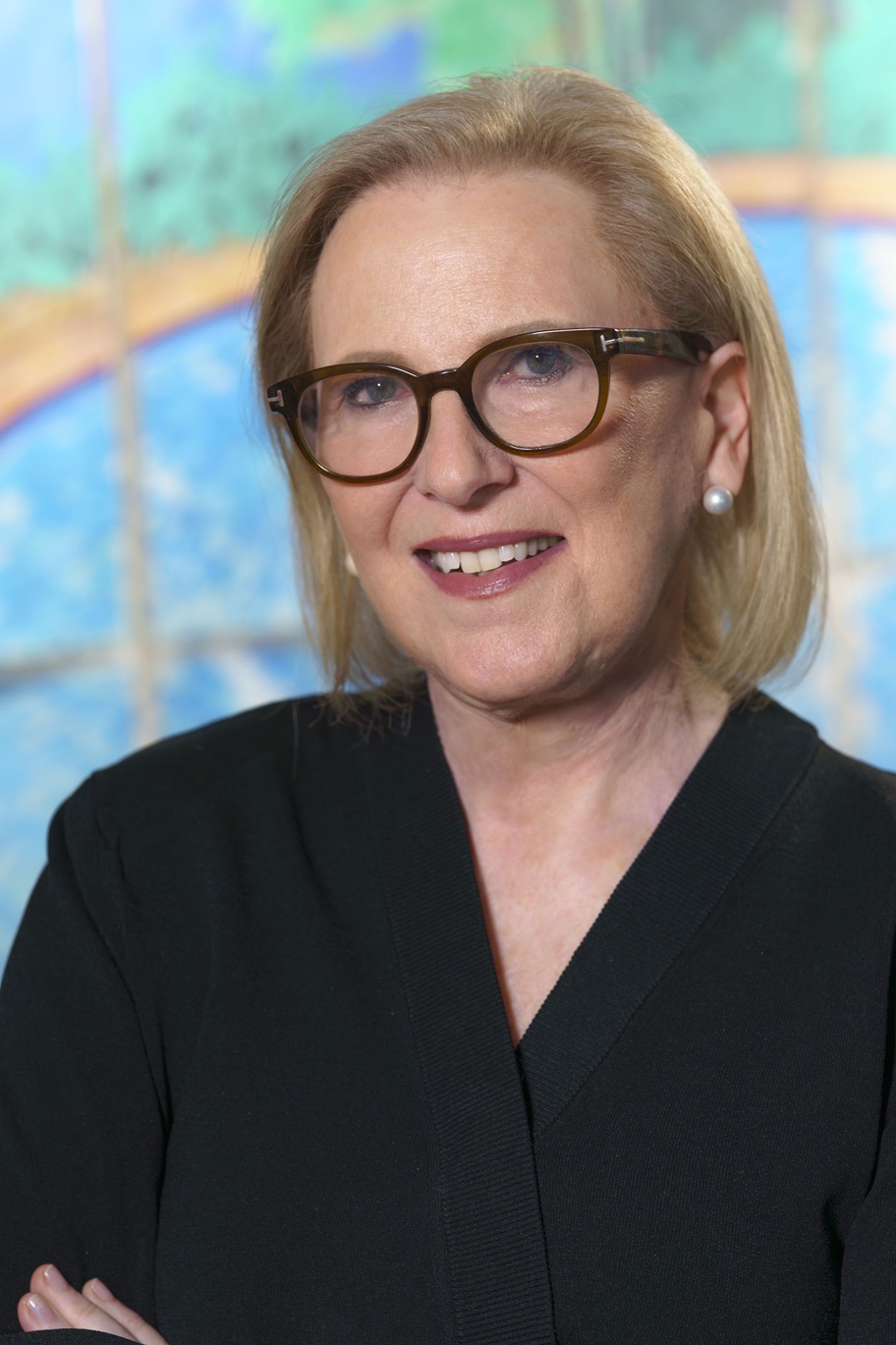
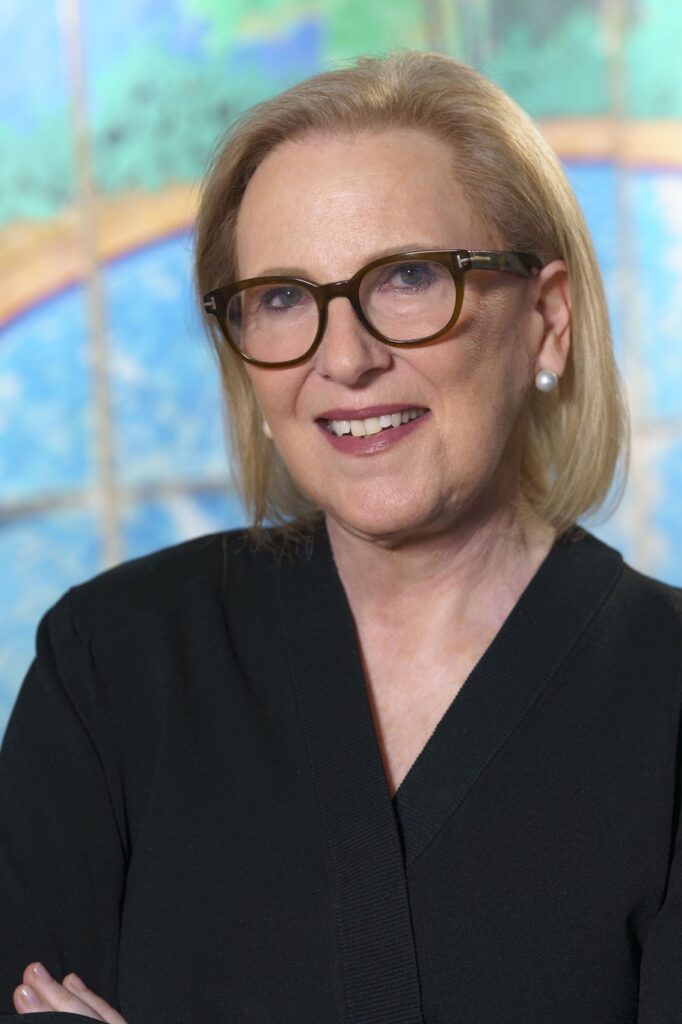
Pictured: Anuvu EVP Media & Content Estibaliz Asiain

To celebrate International Women’s Day, APEX is publishing interviews with female leaders at its member companies who are pushing the envelope when it comes to passenger experience. The conversations will form a week-long series, with one being shared each day. In the third installment, we hear from Anuvu EVP Media & Content Estibaliz Asiain, who is also a member of the APEX Board of Directors. These interviews were initially featured on the Future Travel Experience website. 

APEX: Can you share a brief overview of your career journey – and what drew you towards innovation leadership within aviation? 

“One challenge has been ensuring that experience-led innovation […] is valued alongside engineering and operations.”

Asiain: My career in aviation started at a young age. After many years in banking, my father started a small CSP business in Spain, which gradually became a vendor for Spanish airlines. I was in IT sales when, due to a change in employer, I had a gap and went to “help” my dad for a couple of weeks. I never joined the new company, because I found aviation so exciting.   

The innovation piece came later, when I joined Anuvu. The company had innovation in its DNA through the non-CSP services it delivered, such as connectivity and data analytics. I have been privileged to see how we have innovated on the content delivery side of aviation, becoming a thought leader and first to market across multiple initiatives that continue to redefine the in-flight experience. 

APEX: As we approach International Women’s Day, how would you assess the progress the aviation industry has made towards gender equality – particularly in leadership and innovation roles? Where is meaningful progress being made – and where does the industry still need to accelerate change? 

The aviation industry has made meaningful progress in gender equality, particularly in recognizing the importance of diverse leadership and elevating more women into visible innovation roles. We’re seeing stronger mentorship networks, leadership development initiatives, and a broader commitment to representation across the ecosystem. 

That said, women remain underrepresented in senior, technical, and operational leadership positions. The challenge now is accelerating advancement, not just entry, by ensuring equitable access to sponsorship, decision-making influence, and career-defining opportunities. 

Sustainable progress will come from embedding inclusion into leadership pipelines and culture, so diversity isn’t an initiative; it’s a standard. 

APEX: From your experience, what unique challenges and opportunities have you encountered as a woman leading innovation in aviation – and how has diversity of perspective influenced innovation outcomes? 

Leading innovation in aviation as a woman has meant operating in an industry that has traditionally been technical and male-dominated. One challenge has been ensuring that experience-led innovation, such as storytelling, passenger engagement and emotional connection, is valued alongside engineering and operations. 

But that has also been the opportunity. 

“Innovation must be scalable, secure, and aligned with long-term goals.”

I’ve found that bringing a passenger-first perspective shifts the conversation from “what can we build?” to “how will this make someone feel at 35,000 feet?” Innovation isn’t just about infrastructure; it’s about relevance, representation, and connection. 

The diversity of perspective has directly influenced better outcomes. When leadership reflects different lived experiences, we challenge assumptions more effectively and design solutions that serve a broader range of travelers. In content especially, diverse voices shape what stories are elevated and how passengers see themselves reflected onboard. 

Inclusive leadership doesn’t just change who is in the room, it changes the results. 

APEX: How do you foster a culture of innovation within your organization, particularly in a highly regulated and operationally complex industry like aviation? 

Innovation in aviation requires discipline as much as creativity. We foster it by creating safe spaces for ideas while grounding everything in operational reality. That means encouraging cross-functional collaboration across content, product, engineering and operations, so innovation is both aspirational and executable. 

We also stay relentlessly passenger-focused. In a regulated environment, constraints are real, but they often spark smarter solutions. When teams understand the “why” behind the experience we’re trying to create, innovation becomes purposeful rather than experimental. 

APEX: What innovation initiatives are you currently leading that are reshaping the passenger journey – whether through digital transformation, operational efficiency, or new technologies and experience concepts? 

We’re focused on reshaping the journey through smarter content ecosystems, personalization, and more seamless digital touchpoints. That includes leveraging data insights to curate more relevant entertainment, expanding streaming and onboard platform capabilities, and exploring immersive and next-generation viewing environments. 

The goal is simple: make the inflight experience feel less static and more connected to how passengers consume media on the ground. 

“Aviation and technology need diverse voices, not just to improve representation, but to build better solutions.”

APEX: How are technologies such as AI, robotics, automation, and the Internet of Things influencing your innovation roadmap – and how do you prioritize investment in emerging technologies? 

AI and automation are transforming how we analyze content performance, forecast demand, and optimize curation. They allow us to move from reactive programming to more predictive, insight-led strategy. But importantly, these technologies enhance our teams, they don’t replace them. Human judgement, cultural understanding, and creative instinct remain essential, especially in content and passenger experience. 

When prioritizing investment, we focus on technologies that materially improve the passenger experience or meaningfully increase operational efficiency, while empowering our people to work smarter and more strategically. Innovation must be scalable, secure, and aligned with long-term goals.  

Technology is an enabler; people remain the differentiator. 

APEX: What advice would you give to the next generation of women aspiring to leadership roles in aviation and technology? 

Prepare and educate yourself to be the best in your field. Be resilient and strong. Ask for opportunities if they don’t come your way.  

Be confident in the perspective you bring. Aviation and technology need diverse voices, not just to improve representation, but to build better solutions. 

Seek sponsors, not just mentors. Stay curious about both the technical and commercial sides of the business. And don’t wait until you feel 100 per cent ready. Growth often happens in the stretch roles.

To view the rest of the interviews in this week-long series, click here.

How LATAM’s New Dreamliner Experience is Reinventing Long-Haul Flying

How LATAM’s New Dreamliner Experience is Reinventing Long-Haul Flying
All images via LATAM

With the entry into service of three upgraded Boeing 787-8 aircraft last April, LATAM became the first carrier in South America to offer private business-class suites with sliding doors. The carrier is now halfway through its ambitious whole-cabin retrofit program for a total of 24 787-8 and 787-9 Dreamliners, a project worth around US$360 million, which it hopes will position LATAM as one of the world’s leading airlines. APEX Insights spoke to LATAM Director of Cabin Interior & IFEC Jaime Cornejo Swett to gain deeper insight into the design process and the standout features of the new offering.

Creating an Industry-Leading Passenger Experience

The new cabin interiors were created during a multi-year process in collaboration with long-term partner PriestmanGoode, and according to Cornejo Swett, the retrofit represents “more than a product upgrade.”

“The refresh of LATAM’s entertainment and onboard service offerings was conceived as part of a fully integrated design process, developed in parallel with the new cabin interiors.”
– Jaime Cornejo Swett, LATAM

Instead, it is part of a “holistic vision where design, comfort, hospitality and regional identity move in the same direction. By integrating South American inspiration, premium materials, advanced technology and human-centered design, we are redefining how passengers experience long-haul travel with LATAM. This evolution supports our goal of delivering an end-to-end experience that feels distinctive, warm and world class.”

LATAM has been recognized as an APEX Five Star Global Airline for four consecutive years, an award which focuses highly on the quality of the onboard experience, but Cornejo Swett believes the new 787 cabins will further improve passenger loyalty and satisfaction. He said reception for the overhauled Dreamliners has already been overwhelmingly positive, with “early indicators and customer feedback show[ing] a positive trend” in terms of Net Promoter Score (NPS).

At the time of writing, nine of LATAM’s ten 787-8 jets have been retrofitted with the new interiors, as well as two of the fourteen 787-9s in scope. The remaining aircraft are scheduled to be completed by the second half of 2026, with each requiring one to two months’ work at LATAM’s specialized maintenance bases in São Paulo, Brazil, and Santiago, Chile.

Premium Business Suites Offer Privacy, Enhanced Comfort

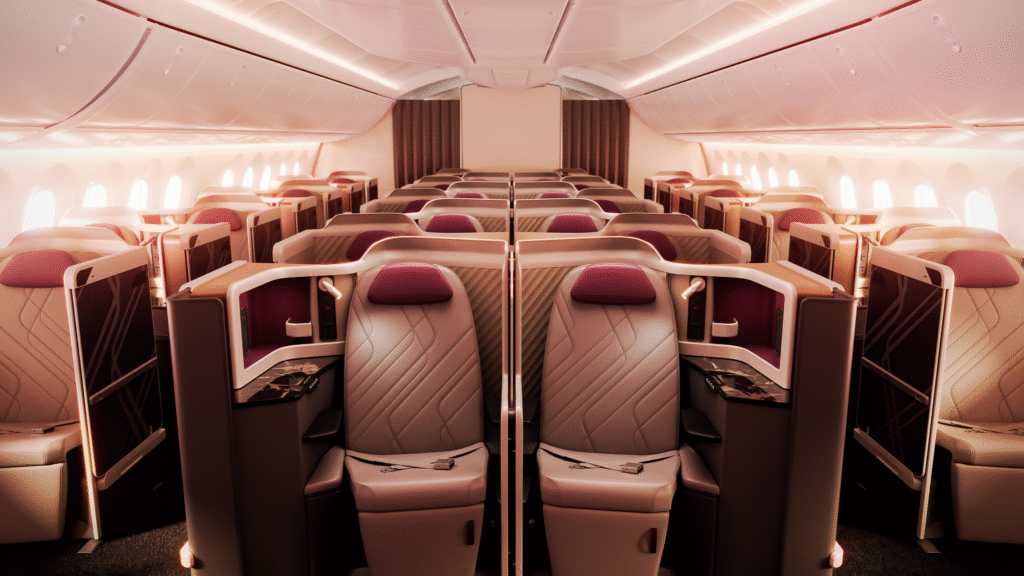
There are 20 Premium Business suites available on the 787-8 and 30 on the 787-9, both based on the RECARO R7 platform. Each aircraft type features a 1-2-1 layout with a honeymoon configuration available for the middle seats should passengers traveling together want to create a shared experience.

Cornejo Swett said the R7 was chosen for its ability to deliver a premium long-haul experience while allowing a high level of customization: “Compared to the base product, we increased the suite height to enhance privacy, developed a dedicated shoe stowage compartment, and even integrated a real granite table to elevate the material quality and perceived premium feel.”

The full-flat beds range from 76- to 81-inches in length, depending on the aircraft type and cabin configuration.

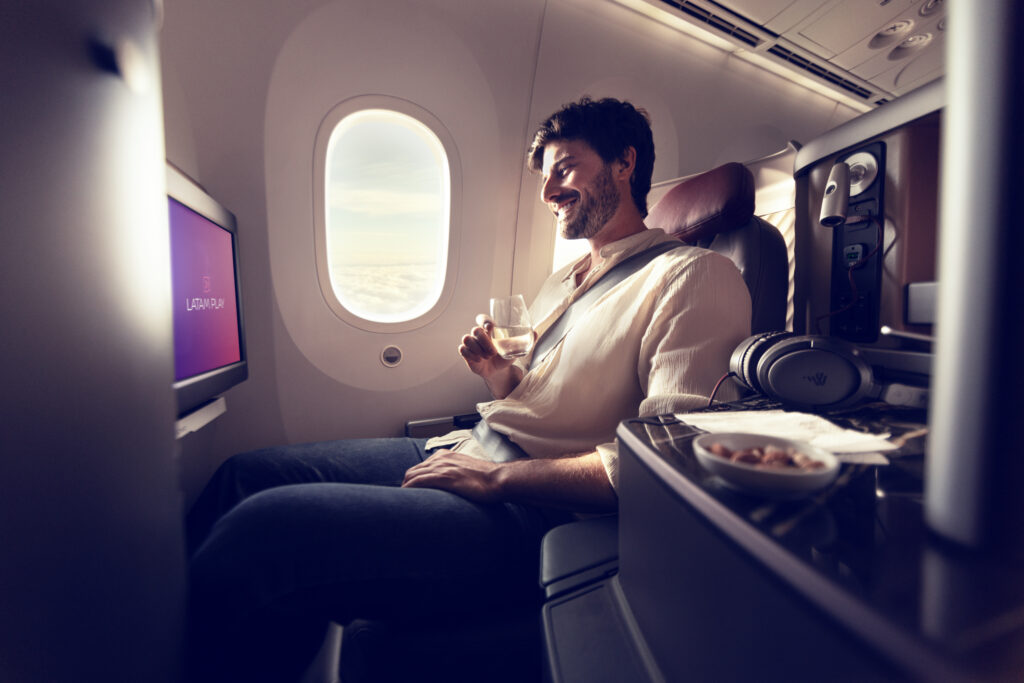
Bedding includes a soft, full-seat mat that covers the entire seat with elastic fittings to ensure secure attachment while still allowing seamless use of the three-point seatbelt. Cornejo Swett continued, “The bedding set also includes a dedicated bag with a pillow and a duvet designed with two distinct sides, one in peach skin microfiber for a fresher feel and the other in microplush for added warmth, allowing passengers to choose their preferred level of comfort.” Redesigned slippers complete the rest and relaxation experience.

Furthermore, passengers can create their own micro-environment with personal lighting control. There is a personalized reading light at each seat, complemented by PSU lighting integrated into the overhead bins, as well as a ‘do not disturb’ button within the suite.

Drawing Inspiration from South American Landscapes

Cornejo Swett noted, “Inspiration from South America is expressed through a carefully curated use of colors, textures, patterns, and forms that reference the region’s landscapes, combined with contemporary design cues. For instance, the dress cover and decorative foil draw inspiration from the north of Chile and its desert landscapes, while the real granite table references the Andes mountain range that runs across South America.

“The inner shell design is inspired by Lençóis Maranhenses in Brazil, translating its flowing forms into a refined, modern surface,” he went on. “These elements not only serve an aesthetic purpose but also a functional one. For example, the inner shell helps reduce ambient cabin noise, enhancing the overall sense of comfort and privacy. Together, these design features create a cohesive environment where South American identity and functionality are seamlessly integrated.”

The influence of the region is also plain to see in LATAM’s latest business-class amenity kits. Six different colorways represent six different locations, from the Atacama desert to Salar de Uyuni, the world’s largest salt flat. The kits include skincare from Costa Brazil, which harnesses responsibly sourced Amazon rainforest actives.

“By integrating South American inspiration, premium materials, advanced technology and human-centered design, we are redefining how passengers experience long-haul travel with LATAM.”
– Jaime Cornejo Swett, LATAM

IFE, Onboard Service Designed to Complement the Cabin

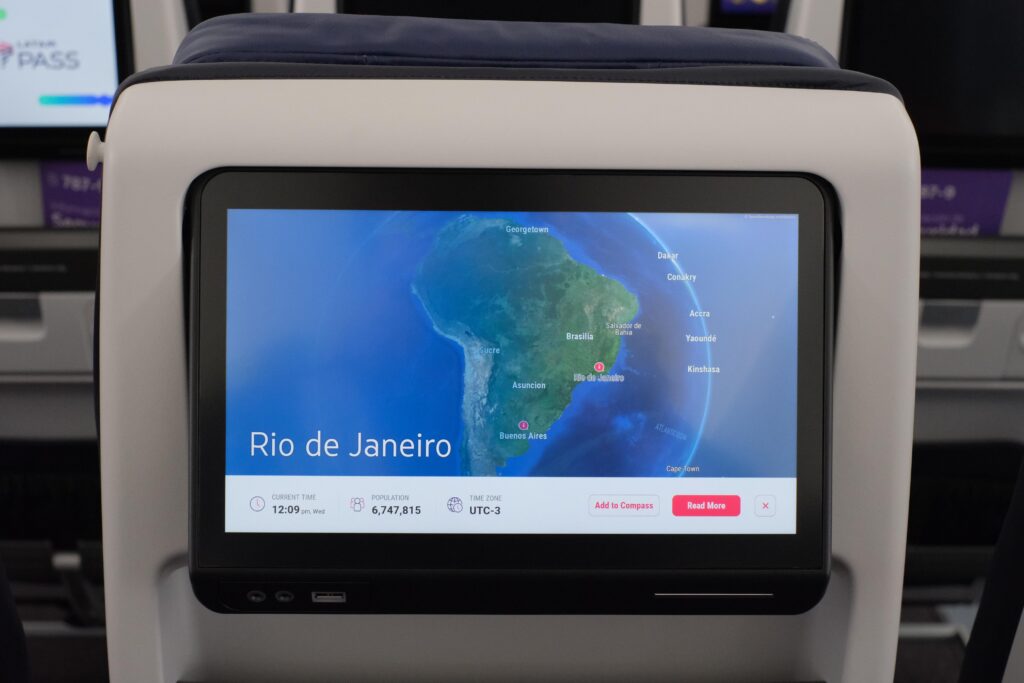
The updated 787s feature Panasonic Avionics’ PAC eX3 in-flight entertainment (IFE) system, with more responsive 18-inch screens in Premium Business and 12-inch screens in economy as well as access to Panasonic’s Arc moving map. Bluetooth connectivity allows passengers to pair their personal headphones with the IFE in Economy.

“The refresh of LATAM’s entertainment and onboard service offerings was conceived as part of a fully integrated design process, developed in parallel with the new cabin interiors to ensure a seamless and coherent passenger experience.” stated Cornejo Swett. “Within the IFE, a carefully curated color palette was aligned with the cabin tones, allowing for a slightly bolder and more expressive approach appropriate for a digital entertainment space, while remaining fully harmonious with the physical interiors.

“We are approaching the launch of a new graphic user interface for our entertainment system. This platform now allows LATAM to update design, branding, and navigation quickly, resulting in a more personalized experience. Furthermore, the use of the brand elements across IFE and onboard services was intentionally selective, appearing only at defined moments and touchpoints to enhance brand recognition and visual flow without creating sensory overload,” he continued.

The IFE content library spans over 330 movies, 1,250 TV shows and 950 albums available alongside a selection of LATAM Originals, exclusive pieces of content created for the airline that reflects the cultural richness, diversity, and stories of South America.

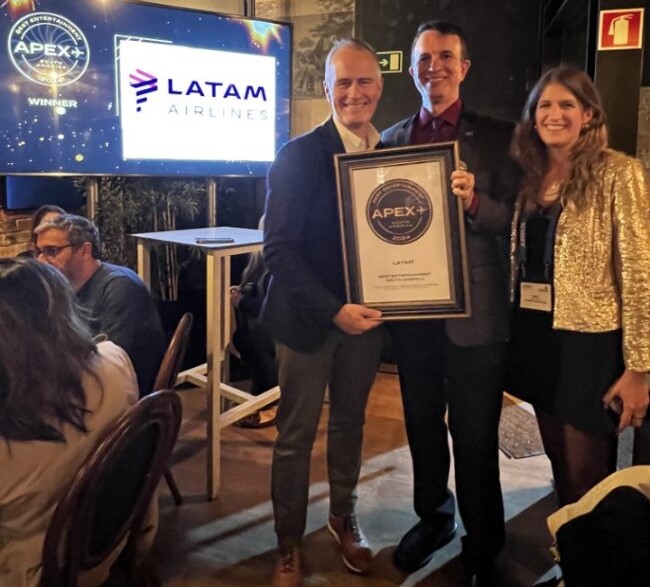
At the recent APEX Content Market event in Dubai, LATAM was awarded APEX Best Entertainment in South America based on votes from over one million verified passengers on flights across over 600 airlines using the TripIt® from Concur® app.

In addition, LATAM is rolling out high-speed in-flight Wi-Fi across its wide-body fleet, including its Dreamliners, in partnership with Viasat. The installation of Viasat Amara, which is powered by a multi-orbital network of geostationary (GEO) and low Earth orbit (LEO) satellites, will begin this year as part of a US$60 million investment.

When it comes to the food and beverage experience in LATAM’s Premium Business, passengers now enjoy enhanced coffee offerings, three course lunch or dinner menus, and a renewed beverage selection, all presented with tableware and service elements aligned with the new cabin aesthetic.

“Inspiration from South America is expressed through a carefully curated use of colors, textures, patterns, and forms that reference the region’s landscapes.”
– Jaime Cornejo Swett, LATAM

Comfort is Also King for Economy-Class Passengers

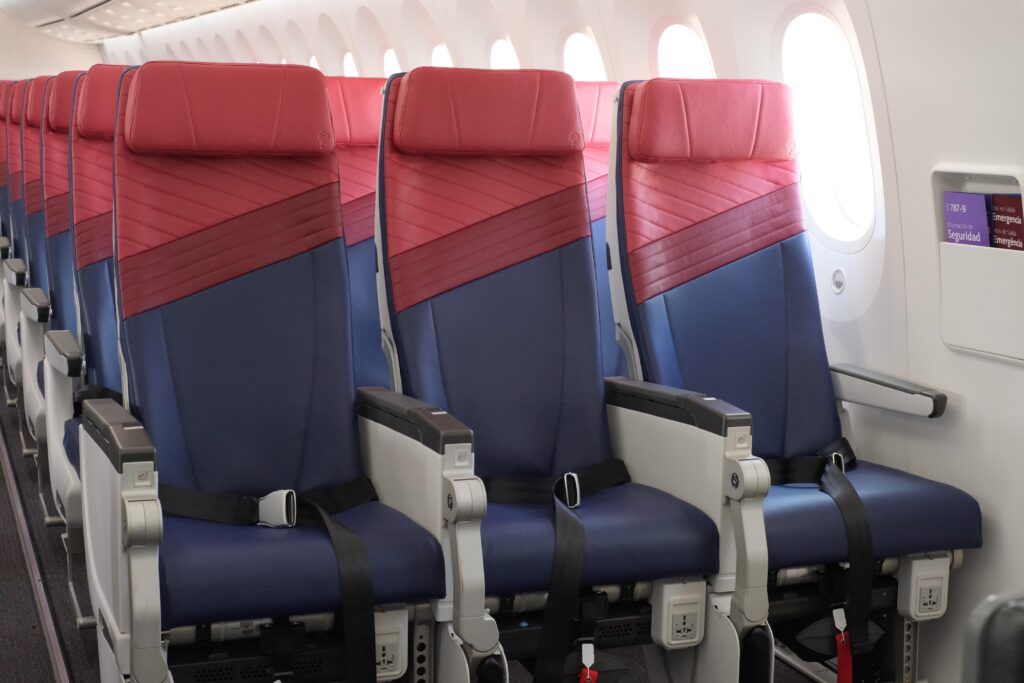
On the Boeing 787-8, the cabin layout also includes 48 seats offering an elevated economy-class experience, dubbed LATAM+, with 35-inches of seat pitch and an seven-inch recline; and 203 economy-class seats. For the Boeing 787-9, LATAM offers 57 LATAM+ seats and 213 standard economy-class seats. Both aircraft feature the same 3-3-3 configuration in economy to ensure consistency across the fleet.

LATAM opted for Recaro’s CL3710 seat in economy, which was developed based on human centered ergonomic studies to ensure maximum comfort on long-haul flights. Its slim and modern design enhances the perception of space, while carefully engineered cushioning improves comfort over extended periods. The carrier selected all available comfort features for the seat type to deliver the best possible passenger experience, including a six way adjustable headrest, comfort cushions and improved armrest.

The seats are clad with GenPhoenix’s ELeather, which is produced by repurposing leather off-cuts and fibers from the manufacturing process that are then reengineered using advanced technology to create a high quality, durable material.

Innovation Across Every Passenger Touchpoint

LATAM’s investment in a premium passenger experience does not stop at its Dreamliners. LATAM Airlines Group is also investing in its regional fleet, having ordered 24 Embraer E195-E2s, with options for a further 50 of the type.

On the ground, it recently announced plans to open a new airline lounge at Lima’s Jorge Chávez Airport as well as a new space in São Paulo’s Guarulhos Airport, which is expected to open in 2027. In the coming years, it said it will expand the LATAM lounge at Miami International Airport in the US.

The airline group’s bullish approach to elevating its products and services is enabled by strong growth, both in terms of passenger numbers and profits. On February 3, LATAM announced it carried an average of over 239,000 passengers per day, marking an 8.2 per cent capacity increase versus the previous year. It also disclosed an NPS of 54 points, the highest in the group’s history.

It posted a net income of US$1.5 billion, representing a 49.4 per cent increase compared to 2024. “We closed 2025 satisfied with the progress made in the consolidation of LATAM. The results reflect a strengthened business model, supported by a differentiated value proposition, consistent operational execution and financial discipline, which has enabled the group to grow profitably and sustainably,” said LATAM Airlines Group CEO Roberto Alvo.

APEX Content Market 2026: APEX Best™ in Entertainment Awards Ceremony

APEX Content Market 2026: APEX Best™ in Entertainment Awards Ceremony
All photos: Muhammad Noor

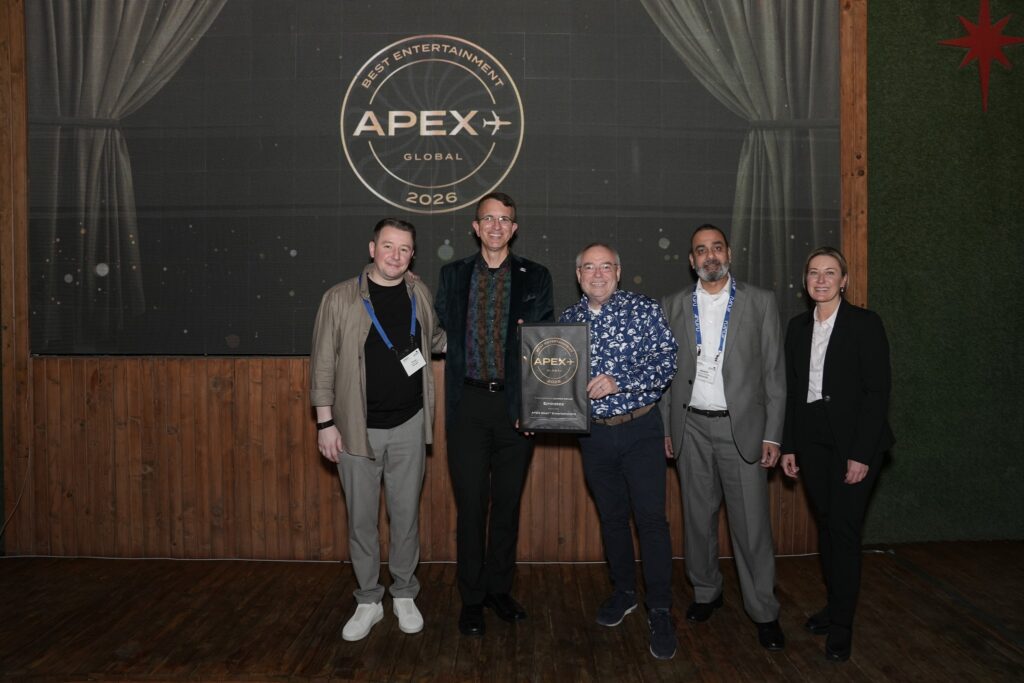
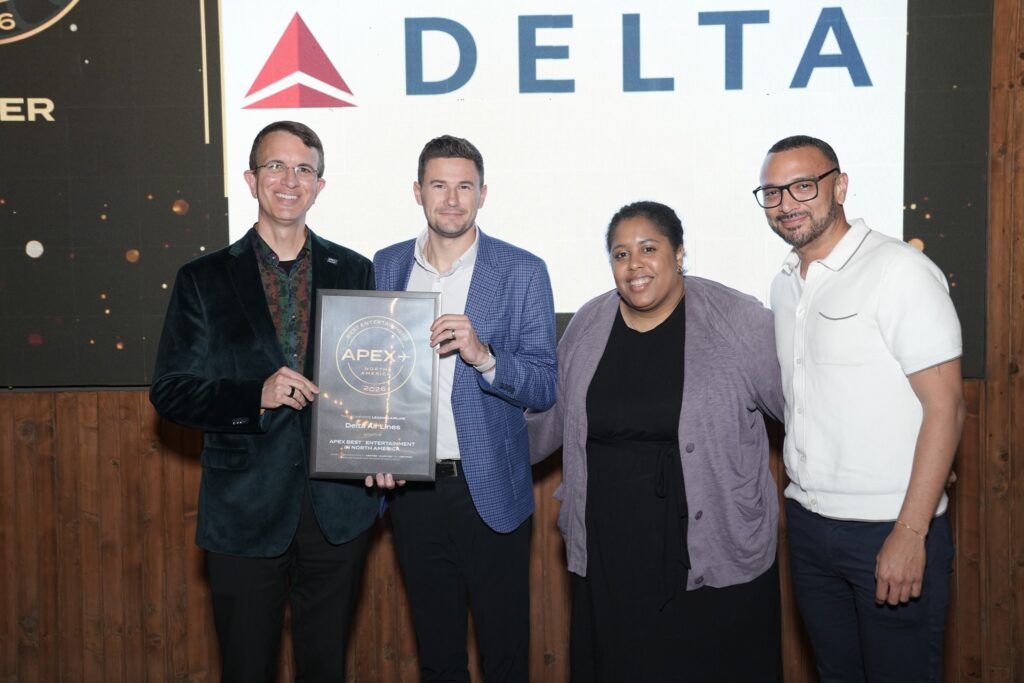
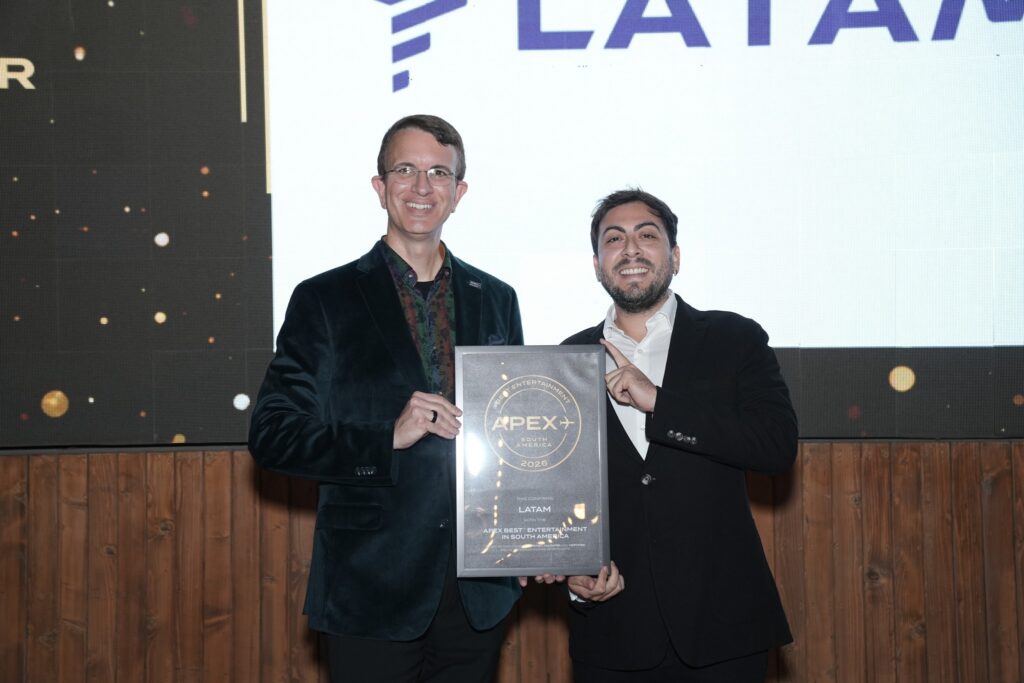
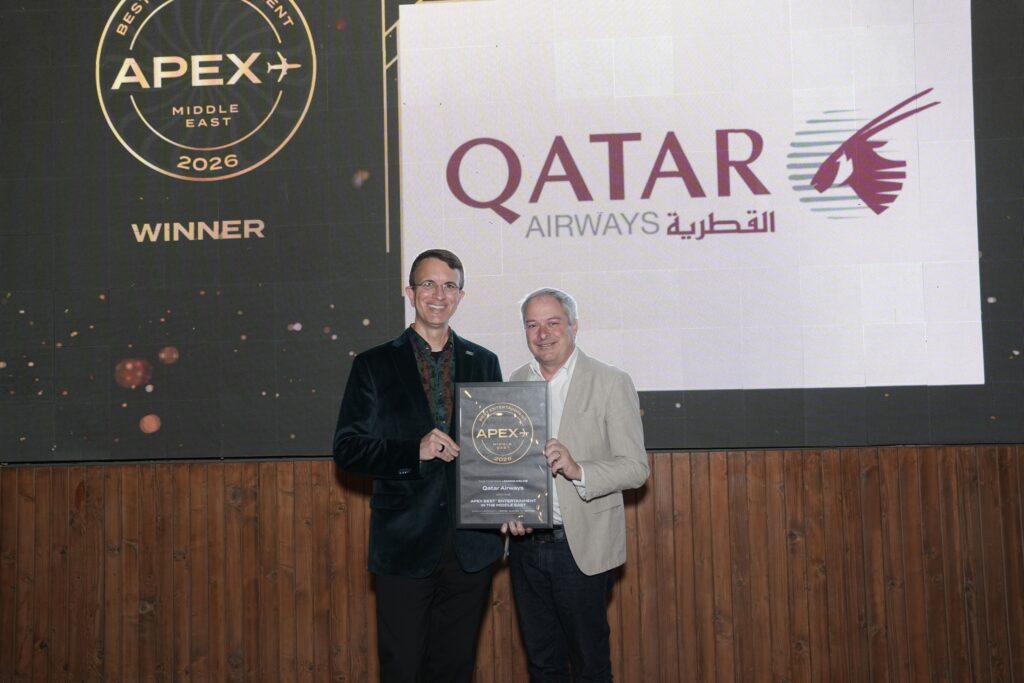
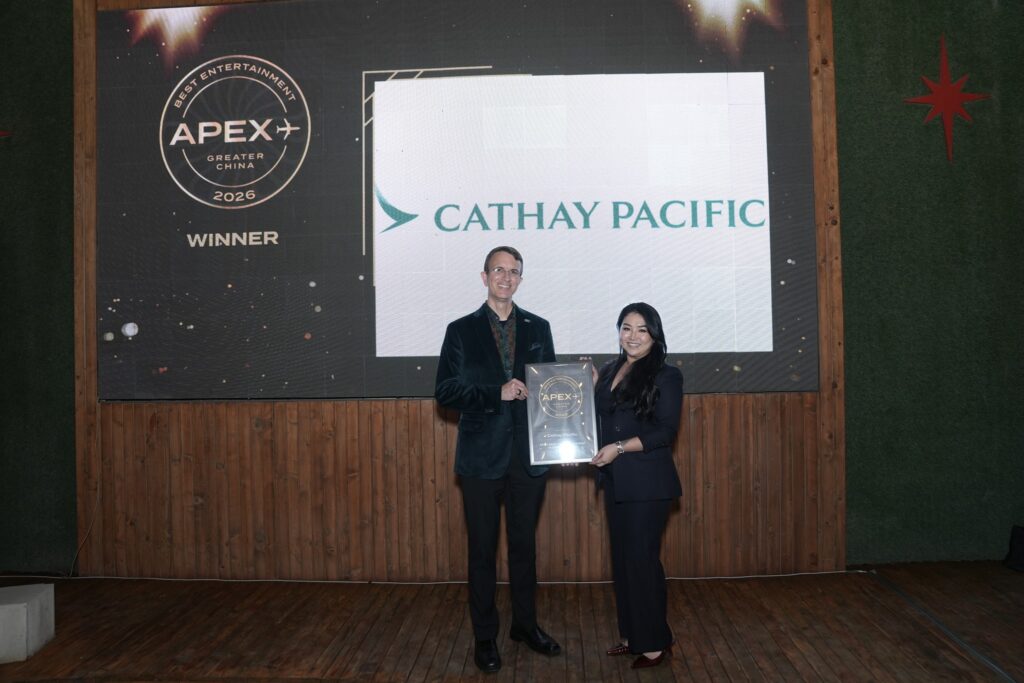
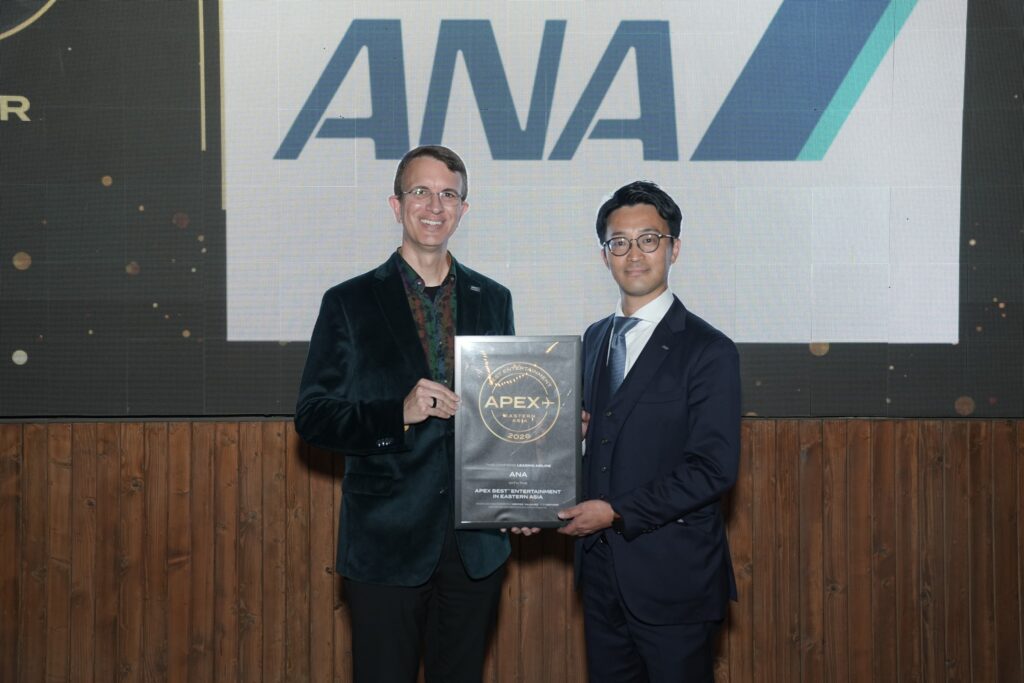
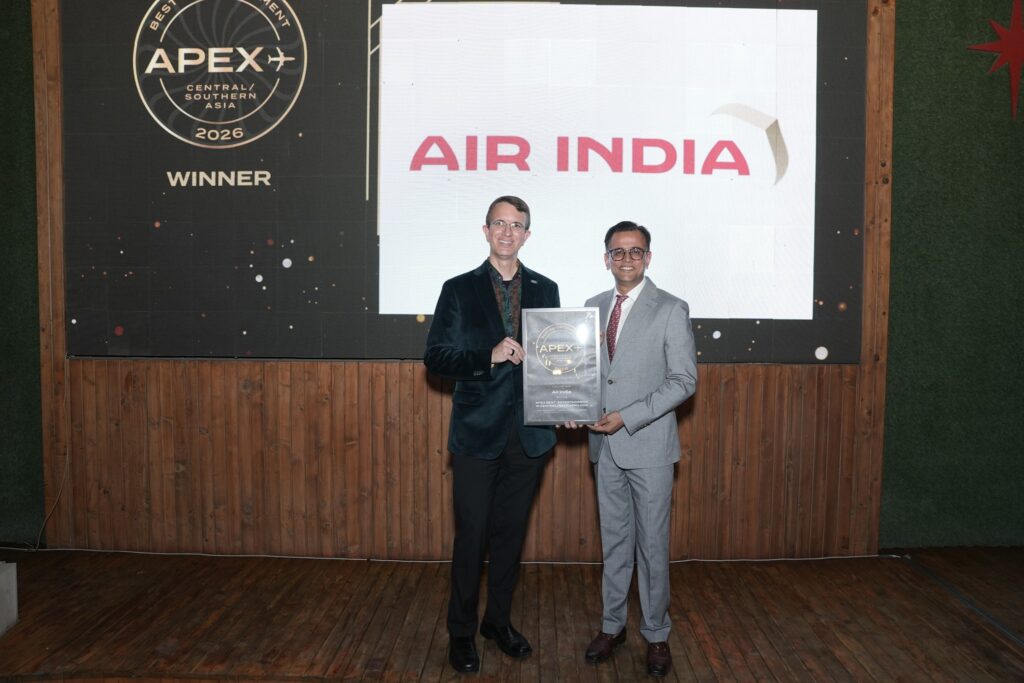
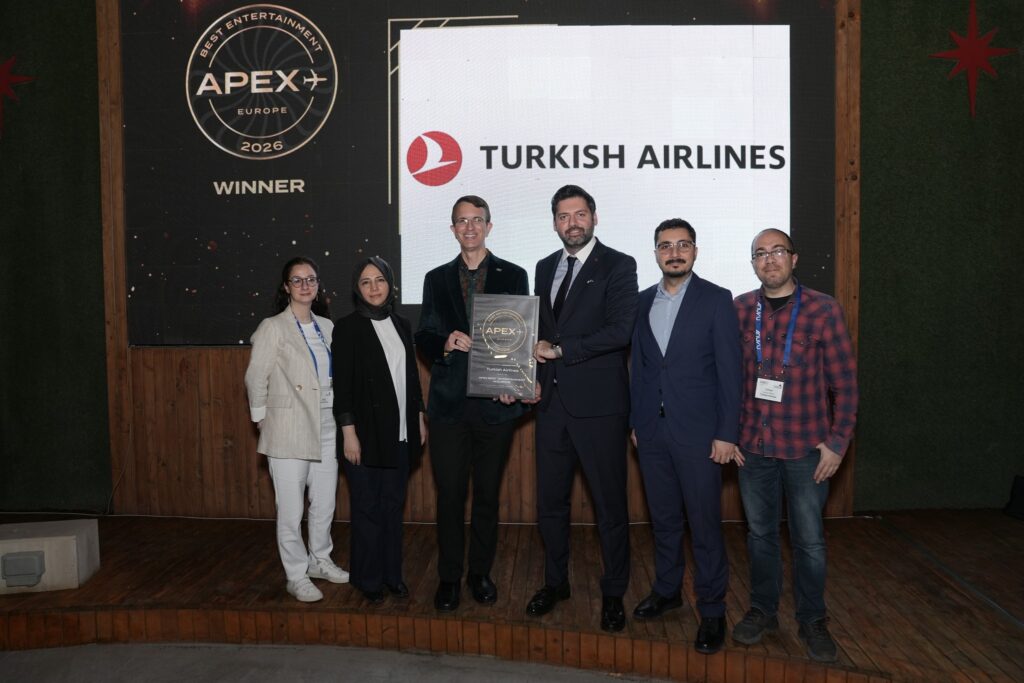
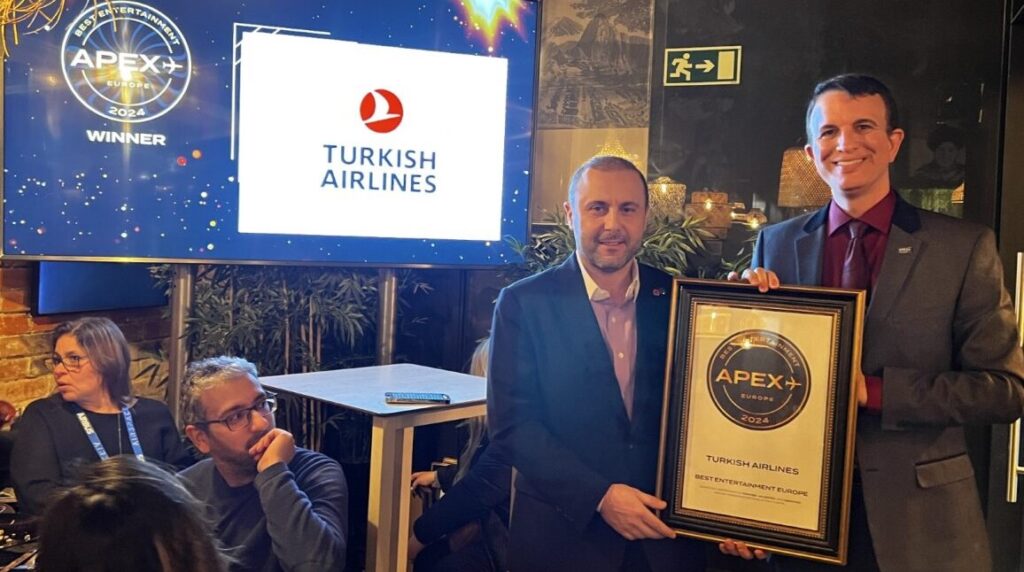
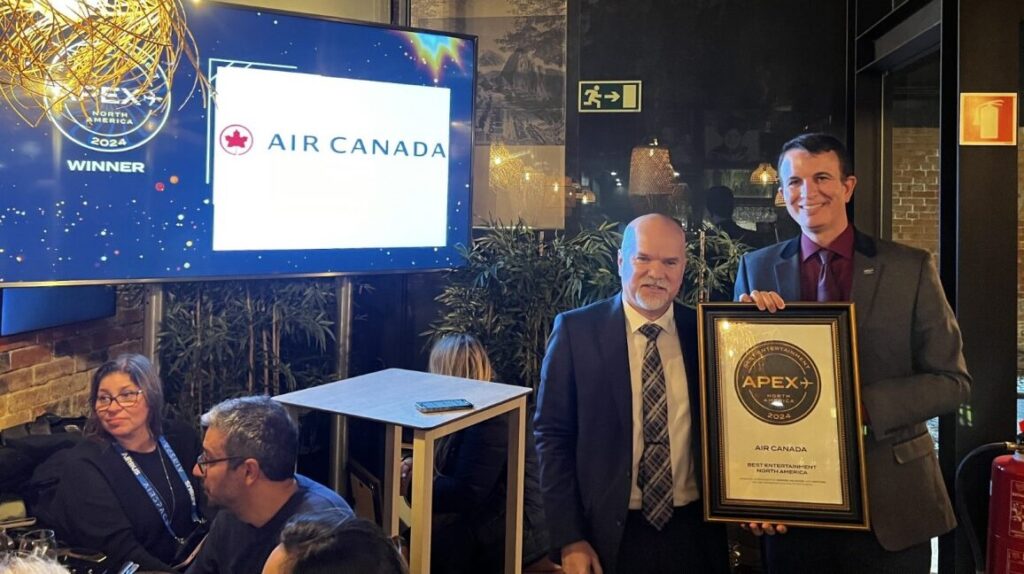
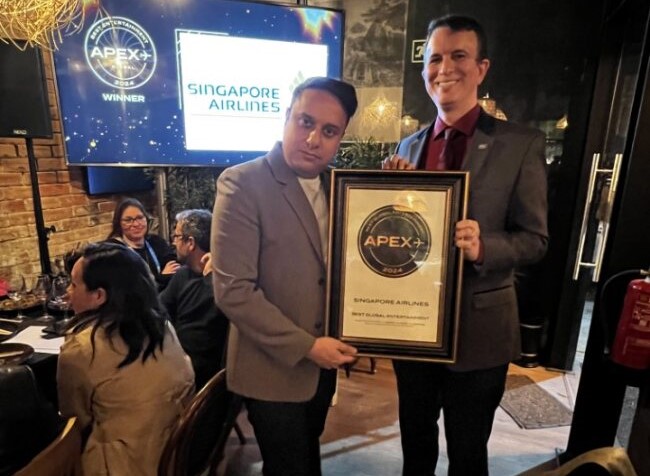
During the 2026 APEX Content Market in Dubai, APEX presented airlines with the APEX Best™ Entertainment awards across different categories: Global, Greater China, Middle East, Eastern Asia, Central/Southern Asia, North America and South America. Winners were announced ahead of the famous annual quiz that takes place at Content Market in the Warehouse Beer Garden located within Le Méridien Dubai Hotel & Conference Centre.

The APEX Best™ Awards capture votes from over one million verified passenger votes on flights across over 600 airlines from TripIt® from Concur® app, which uses a single-screen rating system available via all major mobile platforms that empowers airline passengers to swiftly evaluate their flight experience in under 15 seconds.

APEX Best™ Global Entertainment
Emirates

APEX Best™ Entertainment in North America
Delta Air Lines

APEX Best™ Entertainment in South America
LATAM Airlines

APEX Best™ Entertainment in the Middle East
Qatar Airways

APEX Best™ Entertainment in Greater China
Cathay Pacific

APEX Best™ Entertainment in Eastern Asia
All Nippon Airways (ANA)

APEX Best™ Entertainment in Central/Southern Asia
Air India

Best Entertainment in Europe
Turkish Airlines

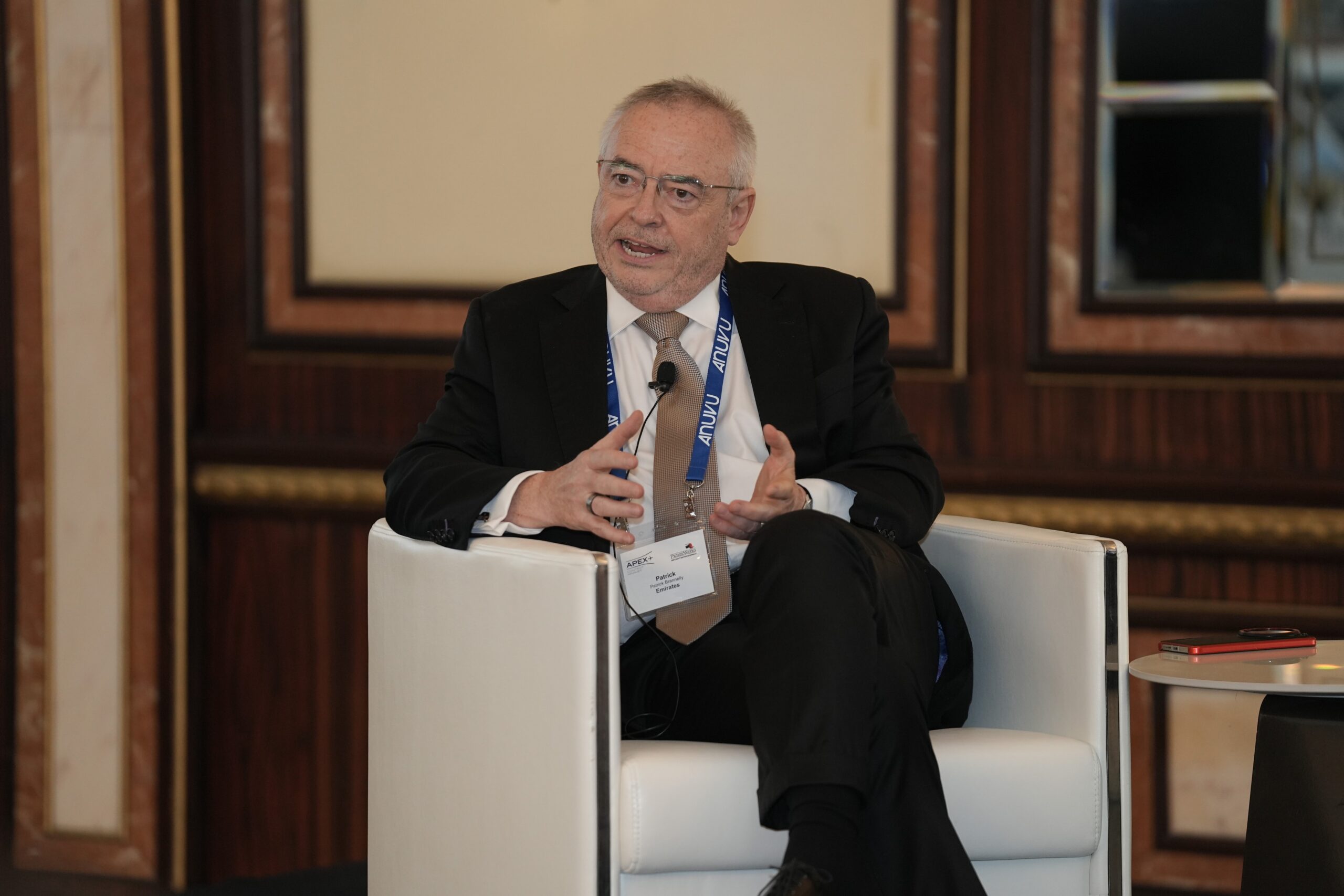
APEX Content Market 2026: Emirates’ Patrick Brannelly on Why its ice IFE Offers a Better Experience than Streaming at Home

APEX Content Market 2026: Emirates’ Patrick Brannelly on Why its ice IFE Offers a Better Experience than Streaming at Home

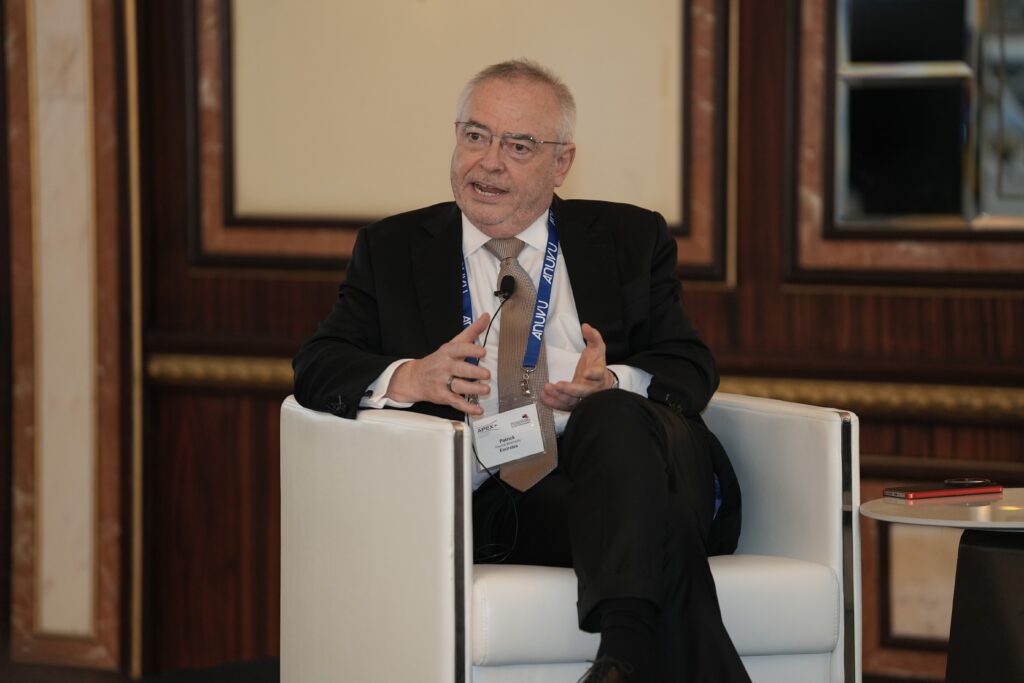
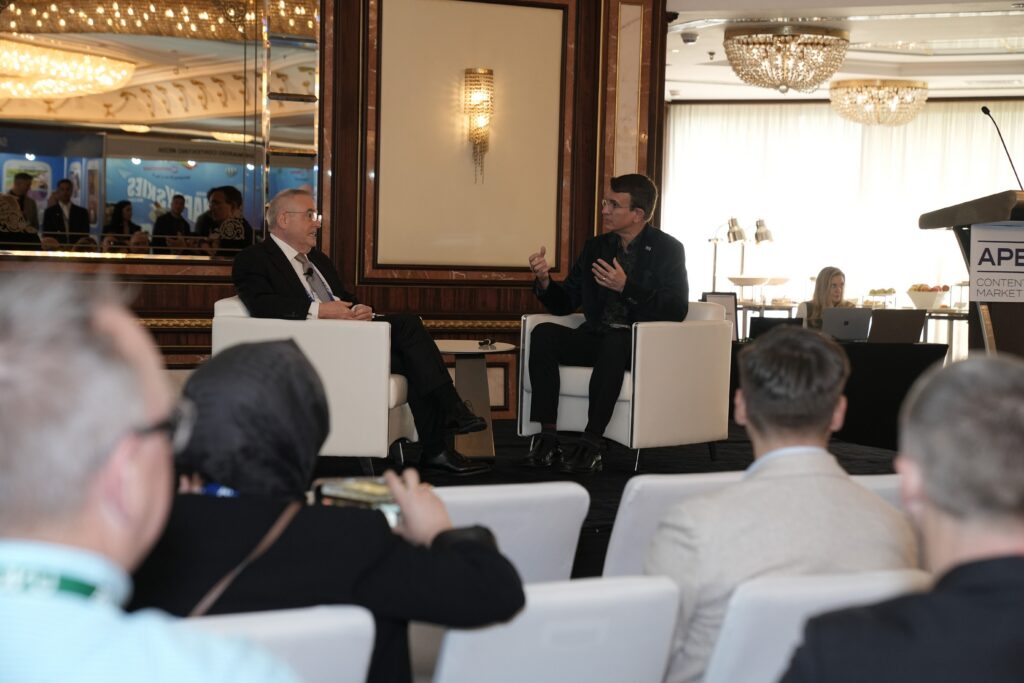
During a thought leadership session during APEX Content Market in Dubai this year, Emirates SVP IFE & Connectivity Patrick Brannelly took part in a conversation with APEX Group CEO Dr. Joe Leader on “Striving for the Best in IFE & Connectivity… and Beyond.” Brannelly was effusive about the value added by an airline offering a broad-ranging, eclectic mix of content onboard, arguing Emirates provides a more engaging viewing experience than streaming services do on the ground.

How Emirates Provides the Best IFE in the World

Dr. Leader began the discussion by asking what Brannelly believes secured Emirates the 2026 APEX Best Global Entertainment Award, which is based on verified passenger feedback. Brannelly confessed of his team, “We are never happy with anything that we’ve done. We know that things will get better in the future, they always have in the history of human life. So, you just need to say well, at which point between now and the future are you going to make something better?”

“The need for connectivity is absolute.”

He said Dubai as a country takes a similar attitude, investing meticulously in its ‘product.’ The ultimate goal for his team, he added, is to drive loyalty, the same goal as the cabin crew and everyone else who works for Emirates. “If people get on the plane and say ‘I wish I had that at home,’ I’m a very happy bunny.”

Streaming Services Not a Threat to Traditional IFE

When asked about whether streaming is in the process of changing IFE beyond recognition, Brannelly told Leader he thinks it is less disruptive to airlines than initially envisaged. “Everybody I know seems to moan there’s nothing to watch on Netflix. I’m sure there’s great stuff on there, but you exhaust it because it’s sitting right there at home, and you binge-watch everything.

“I think we’re better than streaming, because streaming is quite myopic in what it’s offering. Streaming services are going through a massive evolution at the moment, and I think they’re probably going to evolve to where we are. They’ve already got massive movies, great television and you’re already seeing games on Netflix. Live TV, [we’re] already seeing some live content, but news, sport, that’s not there at the moment, and it’s really messy at home going in and out of 10 or 15 different streaming services. We’re making it simple, and that’s what gives people a great experience,” he said.  

Good IFC is Critical for a Positive Passenger Experience

Brannelly was forthright on the importance of a strong in-flight connectivity product. “I think all of you are using more gigabytes on your phone this year than you were a year ago. The consumption, the need for connectivity, is absolute. And if you take it away, somebody feels upset.”

This, he argued, is the reason why he believes that connectivity has replaced food as the most complained-about aspect of a flight. “No matter how good the food was, the food was rubbish. It would just be the thing to kick the airline about, until connectivity came on, and then that was even worse,” he joked. 

Brannelly acknowledged Emirates’ role as an early adopter of IFC, remembering back to the days of “Swift64 and all the other legacy solutions,” but admitted that nothing has been able to meet passengers’ satisfaction, until now.  

“If somebody gets on the plane and watches the most popular movie, we’ve really not done anything.”

In November 2025, the airline announced it was installing Starlink’s IFC service fleetwide. At APEX Content Market, Brannelly confirmed Starlink is already live on 14 aircraft at the time of writing and was being installed on a more jets every couple of days. He said the installation – which involves the addition of two antennas on a Boeing 777 and three on an Airbus A380 – can be achieved in a day, but it takes a little longer to remove the old hardware and to integrate live TV, which is a very important part of Emirates’ offering. “I think only five or six airlines run it,” he claimed. 

“I think the technology wasn’t there [in the past], and it certainly couldn’t keep up with the growth in demand from customers,” Brannelly explained. “But now, we get to be connected with a low-Earth orbit (LEO) network, we have more wireless access points (WAPs), multiple antennas […] and we have more than enough bandwidth for everybody to do every single thing that they want […] I’m confident that these future networks and the infrastructure on the aircraft and the ground is absolutely solid.”

In terms of connectivity enabling the loading of content to the aircraft far more quickly, Brannelly shared the opinion that it may not be practical. While it sounds “great” to “license an episode on the 17th of the month and on the 18th of the month it’s on the plane,” he elaborated, you actually “need to run a department with some structure and monthly deadlines. And having deadlines every day is not easy on people.”

“I’m confident that these future networks and the infrastructure on the aircraft and the ground is absolutely solid.”

The Privilege of Access to World-Class Entertainment

Brannelly rounded off the discussion with a prediction that nothing major will change IFE in the next five years, certainly in terms of how ice operates, as the industry moves too slowly. “We’ve got 250 legacy aircraft and you can’t change them overnight because the supply chain is so terrible in this industry.”

He did, however, voice his opinion that second-screening won’t last, something he is glad about. “The directors that make these films and TV shows want your full attention. Let’s give it to them for a couple of hours and absolutely enjoy the entertainment […] I think there’s very few times in our busy life we get time to sit and spend eight or nine hours or [watching content], and entertainment is such a pleasure.”

Finally, he made a passionate request to content creators to keep making films and programs. “Just keep it coming, and work with us to see how we can get people off the beaten track. If somebody gets on the plane and watches the most popular movie, we’ve really not done anything. If they get off the plane having watched something they never thought they would have watched, when […] you change their thinking […], that’s fantastic.”

To read more about which new titles companies attending APEX Content Market 2026 have on offer, click here. 
APEX Content Market 2026: Euronews Expands Offering to Include Airline-Branded Content

APEX Content Market 2026: Euronews Expands Offering to Include Airline-Branded Content
All images via Euronews

Euronews is expanding its in-flight content portfolio to help airlines turn screen time into meaningful storytelling for modern travelers. The international news network is introducing new original series and creative partnership formats tailored specifically for airline cabins. Ahead of APEX Content Market in Dubai, Euronews Head of Out of Home Natalia Lanchak explained how the company sees in-flight entertainment (IFE) as a space where journalism, culture, and discovery meet.

Stories Designed for the Modern Traveler

Euronews’ latest programming push centers on the idea that travelers want content that connects them with the world around them. The company has unveiled a new line-up of original series and custom partnership opportunities designed specifically for in-flight environments.

“At Euronews, we see IFE as a powerful space for storytelling,” Lanchak said. “Our mission is to deliver content that travelers genuinely engage with, stories that spark curiosity, reflect diversity, and add meaning to their journey.”

“Our mission is to deliver content that travelers genuinely engage with, stories that spark curiosity, reflect diversity, and add meaning to their journey.”

The first addition is Grand Voyager, a presenter-led travel series hosted by Lilly Douse. Each episode dives into cultural destinations with depth, from the vibrant souks of Qatar to surprising creative hubs around the world. The series treats travel as exploration rather than sightseeing, which fits naturally with an audience on the move.

Euronews complements that sense of discovery with The Food Detectives, a culinary investigative series that follows European experts examining food authenticity and supply chains. The show connects with passengers who care about sustainability, where their food comes from, and the cultures they encounter while traveling.

For travelers who want to stay informed, Euronews brings its flagship morning program Europe Today to the cabin. Broadcasting from Brussels, the show delivers political, social, and business updates in real time. Airlines can integrate the program as video, podcast, or newsletter content, allowing flexible placement across their entertainment ecosystems.

The Big Question adds a reflective dimension by gathering influential voices to discuss economic and societal shifts. Lanchak says airlines are increasingly requesting intelligent programming that sits comfortably alongside documentaries and premium news. The aim is not only to inform passengers, but to create moments of reflection during the journey.

Euronews designed the portfolio with multi-lingual audiences in mind. The network’s international reach allows airlines to serve diverse passenger bases while maintaining editorial credibility. For carriers, the benefit lies in offering content that feels globally relevant without losing local nuance.

APEX Content Market is a Chance to Deepen Airline Relationships

Beyond licensing finished programs, Euronews is building collaborative storytelling partnerships with airlines. The company now offers co-created content that blends editorial production with airline branding, extending their narratives across in-flight, digital, and social channels.

“We collaborate closely with each airline to design experiences that reflect their values,” Lanchak said. “Whether highlighting sustainability journeys, destination stories, or innovation, Euronews can produce editorial grade content that builds trust, not just visibility.”

Projects range from custom short films to campaigns that connect the seatback screen with platforms on the ground. Euronews reaches more than 400 million households across 160 countries, giving airline partners a way to extend in-flight storytelling beyond the cabin.

“Whether highlighting sustainability journeys, destination stories, or innovation, Euronews can produce editorial grade content that builds trust, not just visibility.”

APEX Content Market serves as a meeting point for these conversations. It is where airlines search for editorial partners, not just distributors. The focus shifts from filling content libraries to shaping the passenger experience through storytelling.

For Euronews, credibility remains central to every partnership. Its newsroom background guides how it produces in-flight content, ensuring branded projects still feel trustworthy. Lanchak believes passengers recognize authenticity quickly, especially in a cabin where attention feels more focused.

As airlines build richer in-flight ecosystems, Euronews positions itself as both a storyteller and collaborator. Its updated line-up blends journalism, travel, and cultural insight into programs that treat flight time as an opportunity instead of downtime.

To read more about which new titles companies attending APEX Content Market 2026 have on offer, click here. 
Riyadh Air Opts for NSG Connectivity On Board Incoming A321neos

Riyadh Air Opts for NSG Connectivity On Board Incoming A321neos
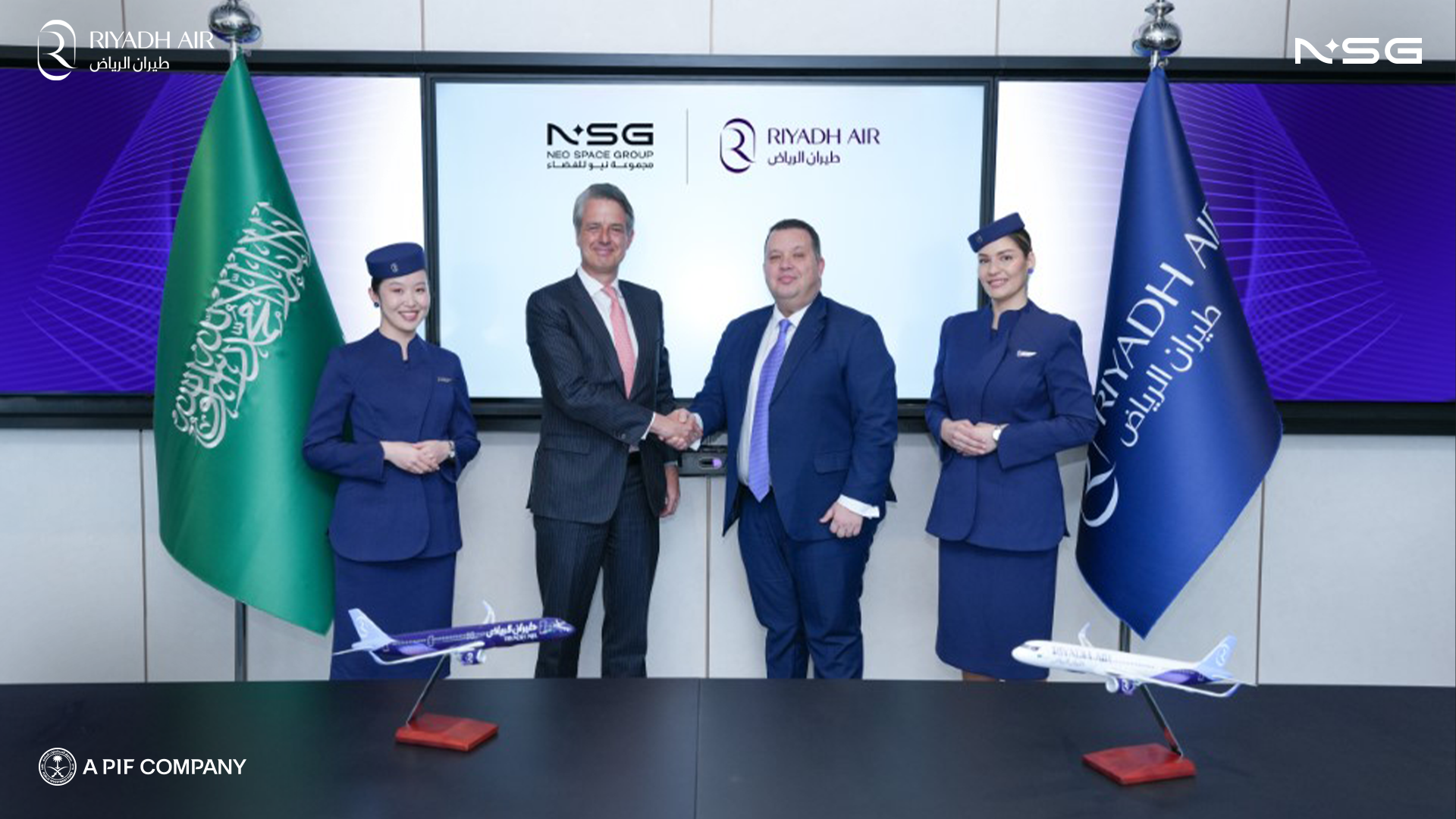
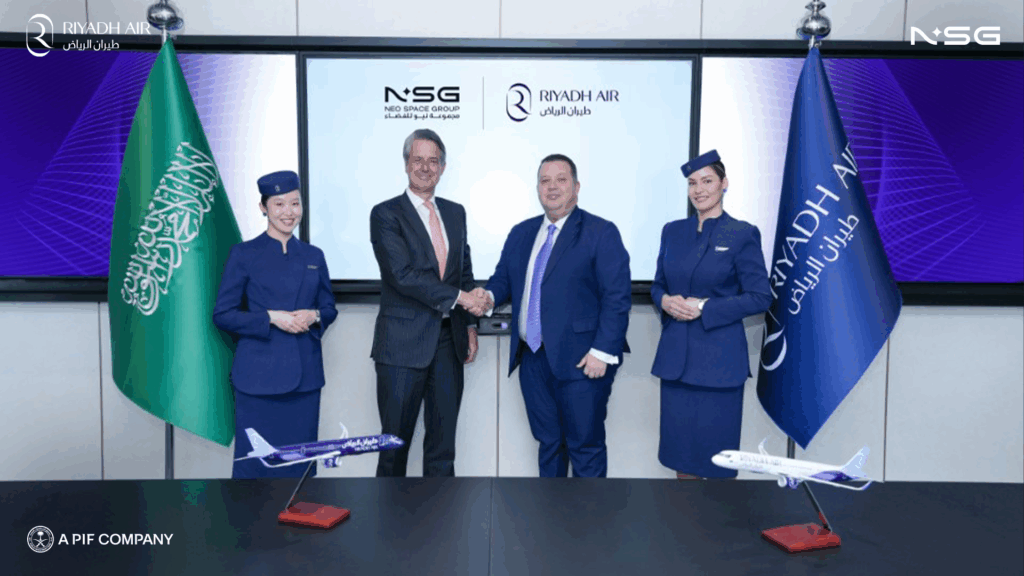
Pictured: Riyadh Air crewmembers with Neo Space Group CEO Martijn Blanken (left) and Riyadh Air CFO Adam Boukadida. Photo via Neo Space Group

Riyadh Air has selected Neo Space Group (NSG) to provide in-flight connectivity (IFC) services on its incoming Airbus A321neo fleet. The carrier ordered 60 of the type in October 2024. Both Riyadh Air and NSG are part of Saudi Arabia’s Public Investment Fund (PIF), which is the driving force behind the Kingdom’s Vision 2030 initiative that aims to transform the country into a global transportation hub.

The first A321neo equipped with NSG’s Skywaves platform, which was brought in-house following the NSG’s acquisition of Display Interactive in September 2025, is scheduled to be delivered to Riyadh Air during the fourth quarter of this year line-fit with IFC and will operate on short- to medium-haul routes. 

“As the world’s first digitally native airline, Riyadh Air is reimagining what air travel can be by fusing advanced technology, seamless connectivity, and authentic Saudi hospitality.”
– Adam Boukadida, Riyadh Air

Skywaves will be powered by Airbus HBC+ hardware including the Thinkom Ka2517 antenna, which is already installed on over 1,700 aircraft worldwide. It leverages the SES’ Open Orbits network that provides global coverage using middle-Earth orbit (MEO) and geostationary (GEO) satellites.

IFC offering speeds of up to 300Mbps will be free to access for members of Riyadh Air’s Sfeer loyalty program. Passengers will be able to sign up during their flights using a simple registration process. NSG said passengers can use the service to stream, message, browse, game, and stay productive at 35,000-feet in the same way they would on the ground. 

“This partnership underscores NSG’s commitment to innovation and to delivering best-in-class connectivity across Saudi Arabia,” said Neo Space Group CEO Martijn Blanken. “We are proud to collaborate with Riyadh Air to create a digitally seamless experience for passengers, reflecting the Kingdom’s vision for the future of aviation.”

Riyadh Air CFO Adam Boukadida stated, “As the world’s first digitally native airline, Riyadh Air is reimagining what air travel can be by fusing advanced technology, seamless connectivity, and authentic Saudi hospitality […] We are dedicated to setting new global standards for digital aviation, leveraging the ambitious Saudi technical infrastructure that truly brings this partnership to life.”

“This partnership underscores NSG’s commitment to innovation and to delivering best-in-class connectivity across Saudi Arabia.”
– Martin Blanken, Neo Space Group

Riyadh Air entered into commercial service with flights between Riyadh and London Heathrow on a Boeing 787-Dreamliner last October. Viasat provides the in-flight Wi-Fi service onboard the carrier’s long-haul aircraft. 

In terms of in-flight entertainment, Riyadh Air has opted to install Panasonic Avionics’ (PAC) Astrova system. The airline was the launch customer for PAC’s Modular Interactive design tool to easily update the IFE user experience, and worked with FlightPath3D for over a year to design its 3D moving map. 

It becomes the third carrier to choose NSG’s in-flight connectivity offering for its Airbus A321neos after national carriers THAI Airways and Uzbekistan Airways. The first THAI Airways A321neo equipped with NSG’s Skywaves platform is set to take off later this quarter. 

Immfly Acquires Data Clarity to Create Data-Driven Retail & Connectivity Ecosystem

Immfly Acquires Data Clarity to Create Data-Driven Retail & Connectivity Ecosystem
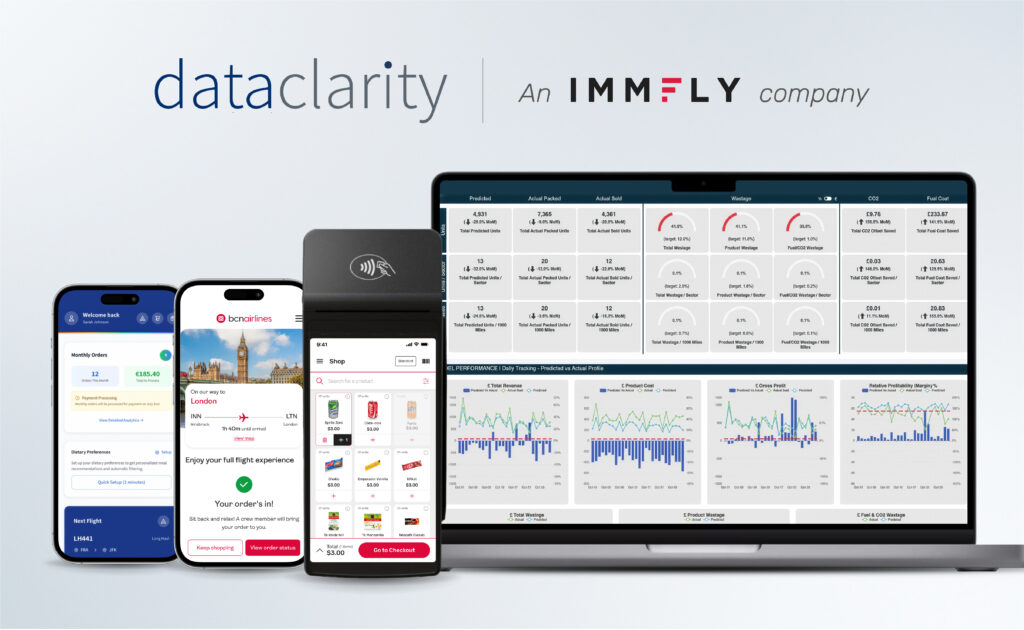
Image via Immfly

Earlier this month at the World Aviation Festival in Lisbon, Portugal, Immfly announced its acquisition of UK-based Data Clarity, which provides AI-driven forecasting, integration, analytics, and engagement solutions for the aviation industry. 

Immfly said the combination of its onboard digital solutions together with Data Clarity’s data intelligence platform will create a unified, data-driven ecosystem spanning passenger engagement, in-flight connectivity, and retail forecasting. 

The company predicts the resulting benefits of this ecosystem will include increasingly personalized passenger offerings, which will enhance airline revenue while enabling more streamlined operations and reducing waste. 

“This partnership sets a new standard for how data and onboard experiences combine to deliver clarity, control, and growth for airlines worldwide.”
– Kevin Carrick, Data Clarity

Integration of Immfly and Data Clarity’s solutions have already begun, with the unified platform expected to be ready for deployment during the second quarter of 2026. Immfly Executive Chairman and Co-founder Jimmy M. von Korff stated, “The initial phase will focus on combining the best of each company’s solutions into a single, unified ecosystem. Beyond that, the acquisition brings a strong emphasis on unlocking new value from data – delivering insights and recommendations that airlines simply don’t have access to today. 

“Airlines are able to deliver a new level of personalization by drawing on interactions across personal devices, seatback IFE touchpoints, and even pre‑flight orders and bookings,” he continued. “By combining these data sources, we help airlines anticipate preferences and create more relevant, tailored experiences that go well beyond traditional onboard retail.”

This is supported by the crew, who von Korff said will have ”access to real‑time data on passenger preferences and inventory […] Our integrated point‑of‑sale systems and in‑seat ordering solutions, powered by this data, streamline service, increase sales opportunities (and commissions, where applicable), and enhance the overall passenger journey.”

”The acquisition brings a strong emphasis on unlocking new value from data – delivering insights and recommendations that airlines simply don’t have access to today.”
– Jimmy M. von Korff, Immfly

von Korff continued that operations will also be smoother: “Our advanced forecasting and warehousing solutions enable precise stock tracking and smarter provisioning. By aligning supply with real demand, airlines reduce waste and fuel burn while ensuring the right products are available onboard.”

Both companies already work with a significant roster of airlines. Earlier this year, Immfly announced the first German customer for its onboard digital solutions in leisure carrier TUI, as well as celebrating its expansion into North America in partnership with Canada’s Flair Airlines. Last year, Data Clarity agreed to provide easyJet with its ClarityNexus data integration solution. 

“Together, we’re not simply responding to industry change, we’re driving it”, said Data Clarity CEO Kevin Carrick. “This partnership sets a new standard for how data and onboard experiences combine to deliver clarity, control, and growth for airlines worldwide.”

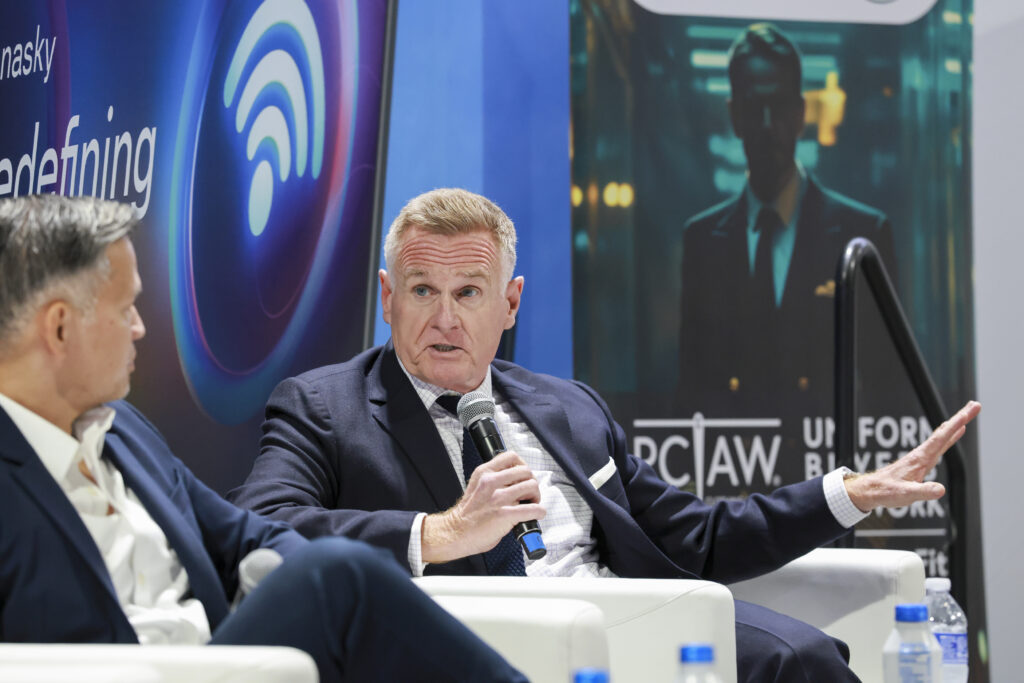
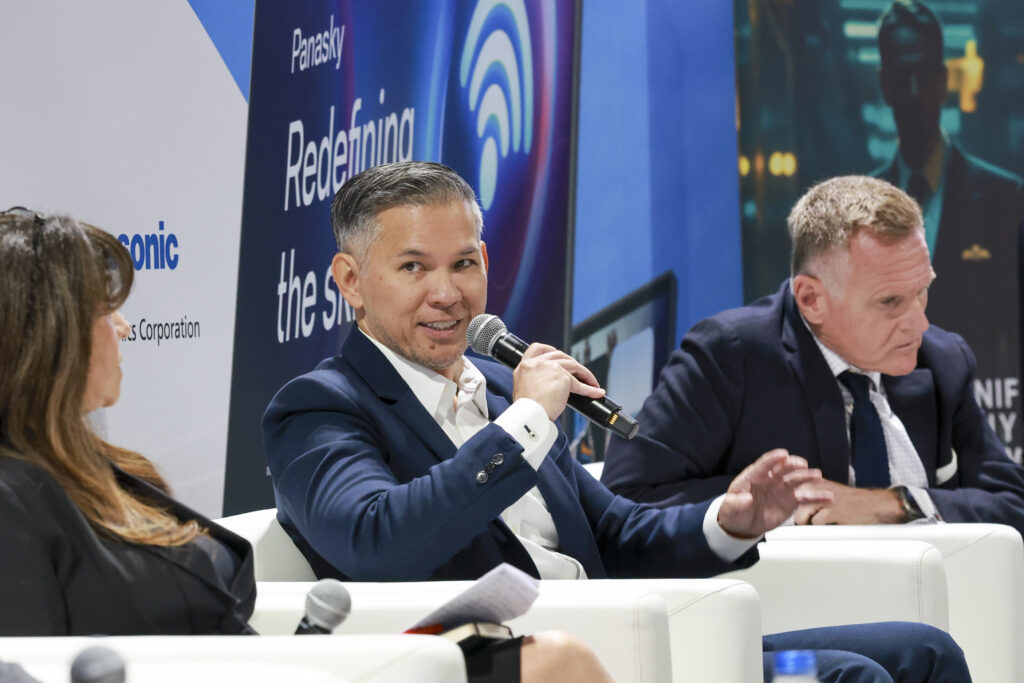
APEX EXPO 2025: Airlines Need a Holistic IFE Experience Across Seatback Screens, PEDs

APEX EXPO 2025: Airlines Need a Holistic IFE Experience Across Seatback Screens, PEDs
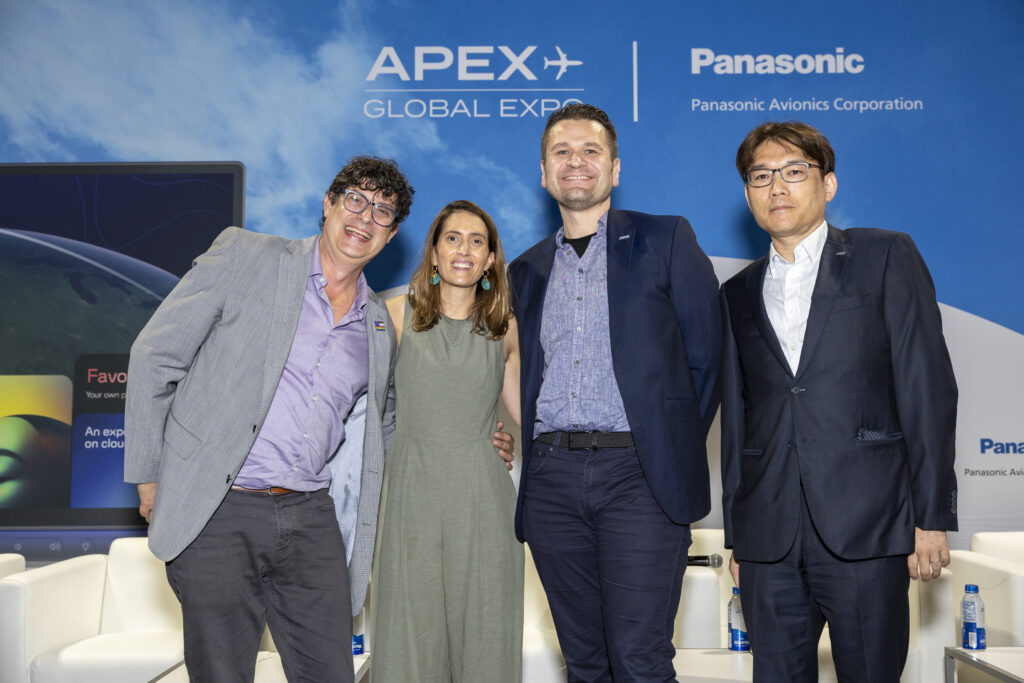
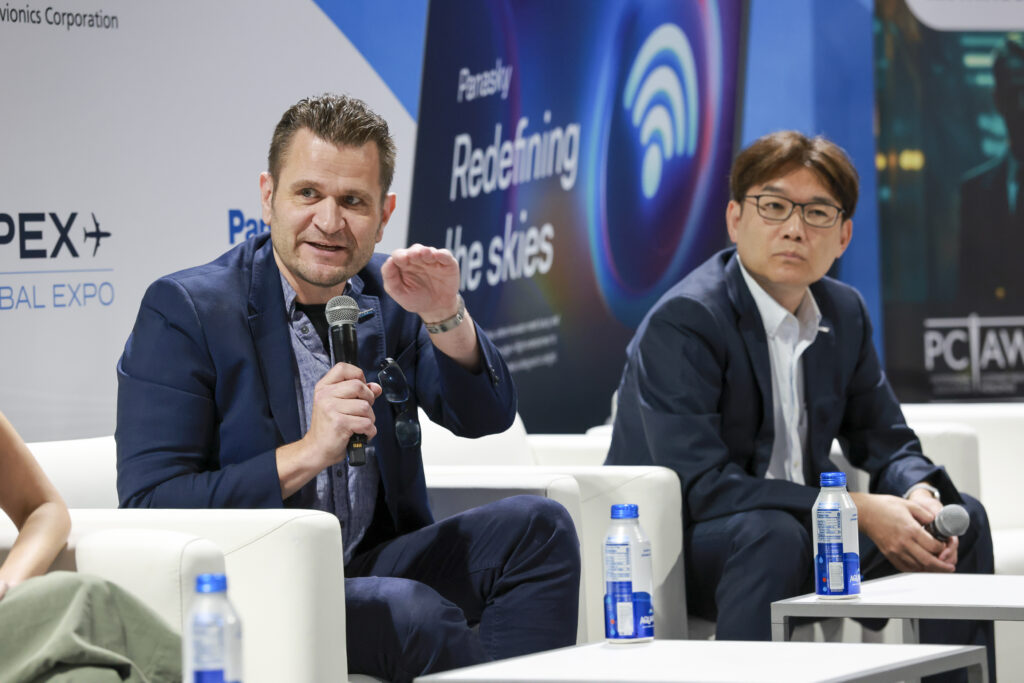
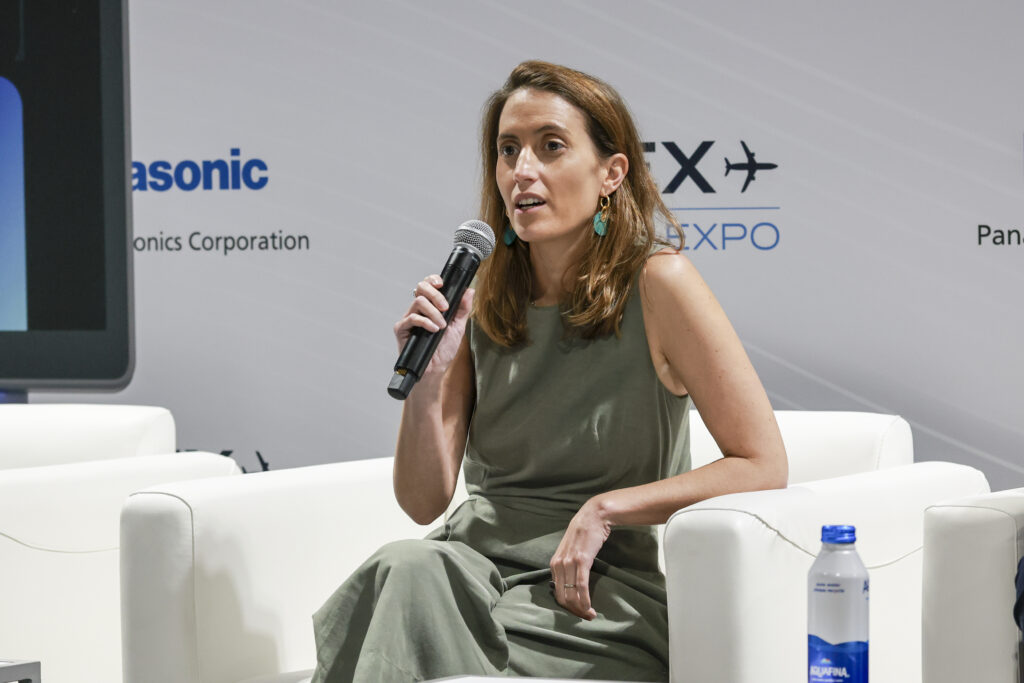
Pictured (left to right): PaxEx.Aero editor Seth Miller; Aeromexico Director for IFEC and Technology On Board Dolores de Iturbe Vera; Panasonic Avionics SVP Product Management and Strategy Andy Masson; and ANA Director of Cabin Products and Services Planning Katsunori Maki. All photos via Caught in the Moment Photography

At the 2025 APEX Global Expo, the future of in-flight entertainment (IFE) took the spotlight during a panel moderated by PaxEx.Aero founder Seth Miller, which brought together three leaders with very different perspectives: Aeromexico Director for IFEC and Technology On Board Dolores de Iturbe Vera; ANA Director of Cabin Products and Services Planning Katsunori Maki; and Panasonic Avionics SVP Product Management and Strategy Andy Masson.

Together, they explored how the intersection between personal electronic devices (PEDs) and seatback screens is re-shaping IFE. The discussion highlighted both opportunities and challenges as airlines seek to ensure flexibility, personalization, and affordability in the connected cabin of the future.

PEDs Bring About Rising Passenger Expectations

The panel session opened with Miller asking how consumer behavior on the ground has shaped in-flight expectations. Panelists agreed that passengers’ expectations have changed dramatically as a result of widespread use of streaming platforms and increased multi-screening. 

Masson pointed to research conducted by Panasonic with passenger groups around the world. “The expectation of the passenger has gone up significantly, very much driven by personal devices: iPhones, iPads, Samsung phones. The integration between social media and streaming is much heavier. Short-form media has become more used, and multi-screen use has become much higher,” he explained.

He described how younger generations can easily switch between multiple devices, for example watching television while texting on phones and playing games on tablets. This multi-screen environment, he argued, has become the new normal and is reshaping how travelers view the in-flight experience.

For airlines, this means in-flight systems must provide more personalization. “Now it is much more of a get on board and ‘Welcome Mr. Smith, here are your loyalty points and your curated experience.’ That expectation is being driven from the consumer space,” Masson said.

The Enduring Value of the Seatback Screen

Despite the growth of personal device usage and the increasing reliability of in-flight Wi-Fi, de Iturbe Vera stressed that the seatback screen continues to hold value for many travelers. She described it as both practical and symbolic.

“Passengers expect Wi-Fi on board to work just as well as at home, and it is getting there, but I personally do not think it is there yet,” she said. “At the same time, there is a very romantic kind of person who gets into the airplane, sees the screens, and says ‘wow, this experience is going to be amazing.’ They love not being connected for 12 hours because it is the only place where you can disconnect.”

“We cannot remove [seatback screens], because they give choice.”
– Katsunori Maki, ANA

The curated nature of seatback content also plays a role. “Yes, Hollywood blockbusters are the most watched, but there is space for niche content,” de Iturbe Vera added. “The airplane is a perfect moment to watch something you would not normally do at home. Later passengers tell me, ‘I had no idea I could watch this documentary.’” 

Maki reiterated this, pointing out that seatback monitors are also communication tools. “We cannot remove them, because they give choice. They are also the last touchpoint with the passenger,” he said. He pointed out that seatback screens are useful for more than just entertainment, as they can help with safety and create opportunities to sell extra products or services. 

“Since COVID, we removed the paper duty-free catalog. The seatback monitor may help as one communication tool with passengers. For some carriers, it is also a good tool for ancillary services like duty-free shopping. That is why the seatback monitor is still required.”

He added that generational differences influence how passengers interact with content. “Some younger generations are more comfortable checking out with their devices, but other generations still prefer paper or seatback options. We believe both need to coexist during this transition.”

Connectivity and the Challenge of Maintaining Engagement

While in-flight Wi-Fi offers freedom, it can also draw passengers away from airline platforms altogether. “What we are finding is that when people go onto Wi-Fi, they are not in the airline’s digital ecosystem anymore. If they want duty-free, they are more likely to go onto Amazon or eBay than to the airline,” Masson said.

This dynamic has led suppliers and airlines to focus on building interfaces that hold attention and encourage interaction with airline-branded services. “It is more about creating the environment you want, with integration and exploration of that interface,” he explained.

De Iturbe Vera agreed, pointing to Aeromexico efforts to expand in-flight engagement. “How can we take the in-flight experience to the next level? How can we keep you in this sphere, letting you know more about the airline, where we fly, and what we offer?” she asked. 

Both Aeromexico and ANA are also grappling with the challenge of tailoring content for global audiences. “Originally the majority of ANA passengers were Japanese, around 60 per cent. But recently our network has expanded, and now on some flights foreign passengers are more than 60 per cent,” Maki said. “We are trying to increase choice in languages and content for non-Japanese customers.” 

Aeromexico is facing similar shifts. “We started putting a lot more Japanese content in front of passengers that we did not have before, while also expanding our Mexican library. Latin America is very influenced by Hollywood, but we also want to highlight our own culture,” de Iturbe Vera said.

When [in-flight Wi-Fi] is free, usage goes up to 40 per cent. When it is paid, it stays in the teens.”
– Andy Masson, Panasonic Avionics

Flexibility, Cost, and the Push for Free Wi-Fi

The discussion then turned to future-proofing investments in a fast-moving tech landscape. Airlines cannot replace systems as quickly as consumer electronics, but passengers still expect regular upgrades.

De Iturbe Vera pointed out that innovation cycles in aviation are slow and expensive. “I was surprised by how little competition there is for vendors in both connectivity and IFE. That makes it difficult for airlines to demand bigger changes. Outside the aircraft, technology is moving so fast. Inside, changes take far longer and cost far more,” she said.

Masson responded by outlining Panasonic’s efforts to design upgradeable systems. “We adjusted the architecture [of our IFE solution] so it can be upgraded physically and through software. For example, if USB-C becomes USB-D, it can be upgraded. Now we move microprocessors out of the screen and into areas where they can be changed more easily. That allows us to deliver consumer-level innovation onboard.”

Another recurring theme was connectivity, especially the question of whether Wi-Fi will eventually be free across all airlines.

“Passengers want free Wi-Fi all the time, everywhere. The airplane is not the exception. Probably eventually we will get there,” de Iturbe Vera said. She suggested creative approaches like advertising could help subsidize costs.

Maki agreed that the trend is moving toward free connectivity. “Generally speaking, the industry is trying to open free Wi-Fi. United, Air France, and many others have announced free streaming-capable Wi-Fi. The passenger demand is getting higher, so at least we want to open the door to allow them to use their content on the seatback screen,” he said.

Masson cautioned that the economics vary by airline. “Some carriers are happy to pay US$20,000 a month to a provider and let every passenger use it. Others are not. It becomes a decision based on strategy. But we see when it is free, usage goes up to 40 per cent. When it is paid, it stays in the teens,” he explained.

“The airplane is a perfect moment to watch something you would not normally do at home.”
– Dolores de Iturbe Vera, Aeromexico

Looking Ahead

As the panel closed, the panelists acknowledged that predicting the future is difficult, but all agreed on a few constants: the need for personalization, flexibility, and a balance between seatbacks and PEDs.

Maki summarized ANA’s vision: “From a customer point of view, the simple expectation is that the experience in the air should be the same as on the ground. That means high-bandwidth Wi-Fi and streaming capable systems are required. At the same time, seatback monitors remain important because they give choice across generations and nationalities.”

De Iturbe Vera emphasized the passenger’s perspective: “At the end of the day, what captivates the customer is either useful or interesting content that keeps them engaged with the airline, not just their own device.”

Masson pointed to the supplier’s role in enabling that balance. “Much of what we do is making sure the system is upgradeable, so airlines can keep pace with consumer technology. That way, the in-flight experience does not fall behind what passengers have at home.”

APEX EXPO 2025: Shemaroo Contentino Marks Ten Years of IFE Leadership

APEX EXPO 2025: Shemaroo Contentino Marks Ten Years of IFE Leadership

The in-flight entertainment (IFE) landscape in India has undergone a significant transformation in the last decade. A major force behind this change has been Shemaroo Contentino, the subsidiary of Shemaroo Entertainment dedicated to airline distribution. Celebrating its tenth anniversary, the company has cemented itself as a leading provider of premium Indian content for airlines worldwide, claiming to command an impressive 90 percent share of the market.

Building a Market from the Ground Up

Ten years ago, Indian IFE content was scarce and often overlooked, but Shemaroo Contentino established a clear and lasting framework for its growth and success. Entering a market with little structure, the company created a framework that brought together studios, content service providers (CSPs), and airlines in a way that worked for everyone. It ensured fair visibility for content owners, steady revenue for partners, and curated experiences for passengers. This became the foundation of its success, built on trust and openness. 

“Every stage of building Shemaroo Contentino has been special,” explained Shemaroo Contentino Managing Partner Murtuza Kagalwala. “From starting out as the youngest IFE content provider from India to leading the market today, it has been a fulfilling journey. Trust and transparency have been the core attributes of our success. Working with content partners with complete openness and commitment laid the foundation of our growth.”

Image via Shemaroo Contentino

Beyond simply filling a gap, Shemaroo Contentino helped redefine how airlines viewed Indian content as part of their overall IFE strategy. What once seemed niche soon became a key part of global programming, driven by the company’s data-driven insights into passenger demand. By showing airlines that Indian movies and television could drive both engagement and satisfaction scores, Shemaroo Contentino positioned local storytelling as a global asset rather than a regional add-on.

Expanding Indian Entertainment Across Global Airlines

Now, ten years later, Shemaroo Contentino believes it holds a 90 percent share of premium Indian content in IFE, offering more than 3,000 movies, 25,000 TV episodes, and 1,500 music tracks in over 15 languages.

Clients include major international names such as Emirates, Etihad, Singapore Airlines, Qatar Airways, Qantas, Delta, United, ANA, Virgin Atlantic, and Air New Zealand, among many others. 

“Partnering with over 100 airlines, content partners, and more than 25 CSPs worldwide has been a major milestone,” Kagalwala said. Early on, it was a challenge to convince airlines to go beyond a few TV episodes and take full sets of web series. That said, “it proved worthwhile as today, more than 25 airlines regularly license OTT shows from us, which strongly validates that choice,” he continued.

The company’s strength comes from a network of over 125 content partners. Shemaroo Contentino works with top Bollywood studios like YRF, Dharma Productions, Applause Entertainment, Maddock, Jio Studios, Z Studios and JioStar, as well as regional studios such as SVF, Whitehill Studios, A P International, Homescreen, and Mango Movies. This reach ensures both Indian and non-Indian travelers can enjoy a wide variety of programming.

Showcasing the Future of Indian Content at APEX EXPO 2025

As Shemaroo Contentino celebrates its tenth anniversary, the company is focused on future opportunities. “The times are changing, and so are we,” said Kagalwala. “Our goal remains the same: make Indian content available on every airline in the world. With over 35 million Indians and South Asians living abroad, we know the demand is everywhere.”

The company is also preparing for new delivery models. “We’re exploring content created specifically for airlines and supporting carriers as they adopt wireless IFE systems,” he added. “Another exciting step is expanding into more international languages beyond Indian, including English. Many global producers and distributors are already in touch with us to bring their titles to the skies, and we are taking steady steps in that direction.”

This forward-looking vision is on display at the 2025 APEX Global EXPO, where Shemaroo Contentino is showcasing blockbuster films in Hindi and regional languages, and popular web series from India’s leading OTT platforms. They are also promoting Thriller Universe, a curated package of four major thrillers for airlines. The showcase highlights how the company continues to evolve while staying true to its mission of making Indian stories travel across the skies.

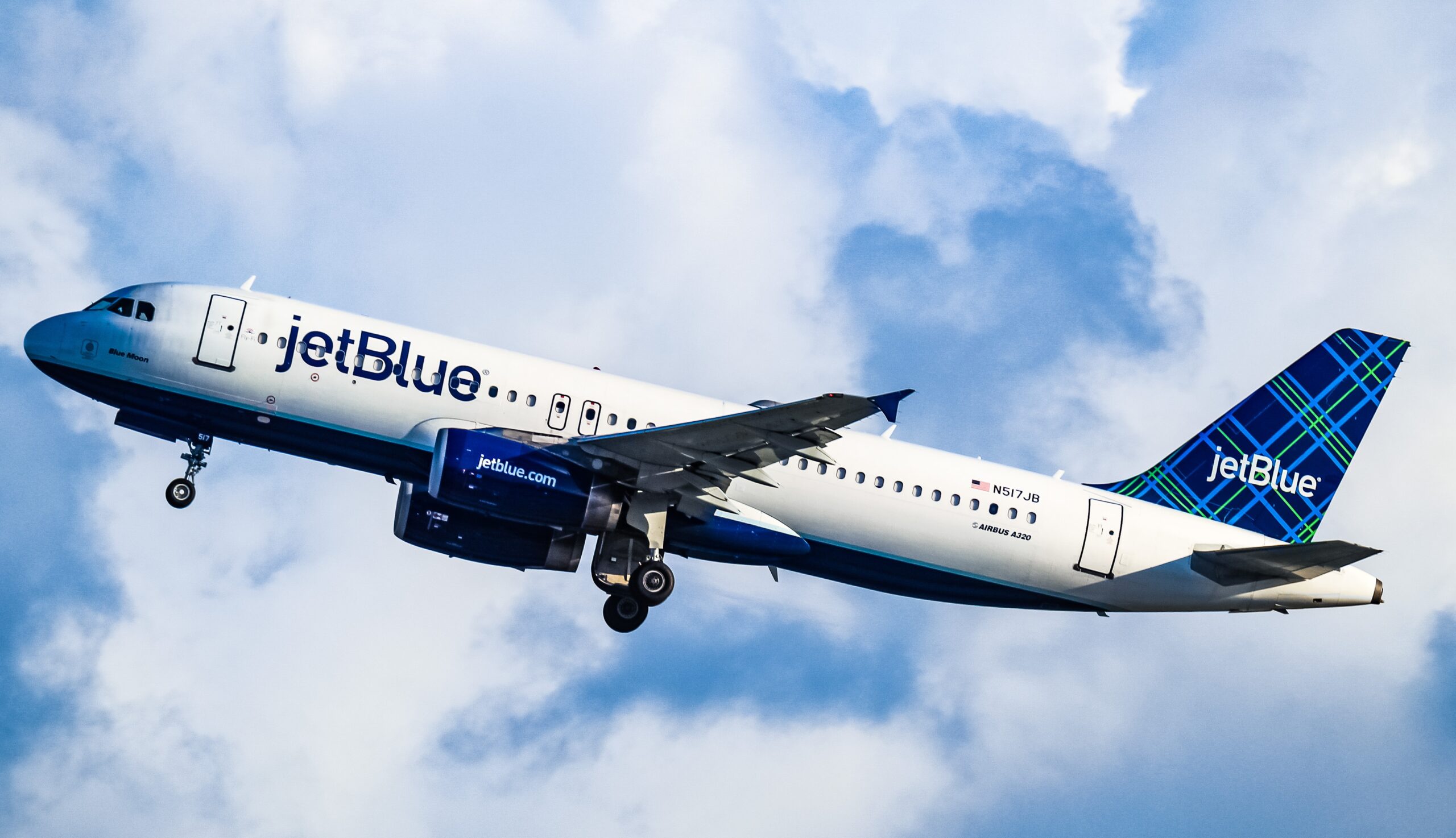
APEX EXPO 2025: JetBlue to Deploy Quvia Grid as Part of its Next-Gen Fly-Fi System

APEX EXPO 2025: JetBlue to Deploy Quvia Grid as Part of its Next-Gen Fly-Fi System
Image via JetBlue

During APEX Global EXPO in Long Beach, California, Quvia announced that JetBlue will integrate the company’s AI-powered network management solution, Quvia Grid, into its next-generation Fly-Fi in-flight connectivity (IFC) solution, which is due to take flight in 2027.  

The news follows hot on the heels of JetBlue announcing it is the first airline in the world to sign on with Amazon’s Project Kuiper. The airline will roll out its advanced low-Earth orbit (LEO) satellite broadband network on approximately 100 aircraft that are currently using its original Fly-Fi solution. JetBlue also recently confirmed it will adopt Viasat’s Amara Ka-band IFC solution on new aircraft.

Quvia Grid provides a single platform that will be used to manage the in-cabin network across JetBlue’s fleet. This includes the ability to configure and control onboard network settings, monitor access points, troubleshoot issues in real-time and maintain a consistent performance for customers.

Furthermore, Quvia Grid will enable JetBlue to balance traffic across the aircraft, thereby managing service level agreements more effectively.

“Passenger satisfaction is closely tied to connectivity, yet few platforms can both measure performance accurately and act on it independently.”

Partnering with Quvia on these aircraft also creates the option to use Grid for satellite connectivity orchestration. The company says Grid functions across any combination of connectivity, whether it is one or more service providers, satellite orbits and terrestrial networks. 

Quvia Founder and CEO Benny Retnamony said, “Passenger satisfaction is closely tied to connectivity, yet few platforms can both measure performance accurately and act on it independently. We built Quvia to be open, agile and adaptable, which gives JetBlue the ability to pair real-time performance data with control of its onboard network environment. That opens the door to a wider range of operational capabilities as their digital strategy evolves.”

As part of its broader partnership with Quvia, JetBlue has been using Quvia Pulse to measure and monitor IFC QoE in real time for the past several quarters. With Pulse, the airline gains insight into network performance from gate to gate. The solution breaks down results by flight, route, time of day and regional demand patterns, while also accounting for factors such as location, fleet type and onboard usage. 

A Quvia spokesperson explained, “JetBlue uses Pulse to gain real-time visibility into passenger connectivity experiences across flights and fleets. That insight helps surface patterns and reliability trends and is a key enabler on how Grid will manage the onboard traffic. This combined solution supports Jetblue to have informed conversations with service providers about how to tailor performance to passenger needs as new satellite networks come online.”

Earlier this year, Quvia also announced a partnership with ThinKom Solutions to integrate Quvia Grid with the ThinKom’s ThinAir Plus terminal.

APEX EXPO 2025: Studios Address In-Flight Streaming Rights Challenge

APEX EXPO 2025: Studios Address In-Flight Streaming Rights Challenge
(Pictured left to right): APEX Group CEO Dr. Joe Leader; Paramount Pictures VP Theatrical Sales Vince Cruz; BBC Studios SVP Out of Home & BBC News Commercial Development Zina Neophytou; Sony VP Sales and Marketing Richard Ashton; and Disney Vice President of Platform and Distribution Sales Christopher Hill. All photos: Caught in the Moment Photography

The mounting tension between passenger expectations for streaming and the intricate legal frameworks that govern content rights dominated the stage at APEX Global EXPO. Leaders from Disney, BBC Studios, Paramount Pictures, and Sony joined APEX Group CEO Dr. Joe Leader to tackle one of the industry’s most pressing questions: how can airlines satisfy demand for seamless digital entertainment while still protecting the financial value of premium content in the sky?

Passengers increasingly expect the cabin experience to replicate their living rooms, yet the legal ground rules for distributing content at altitude remain far stricter than those at home. Streaming has reshaped consumer behavior on the ground, but its rules in the air continue to evolve. Dr. Leader framed the conversation with clarity, stressing that industry stakeholders must respond quickly to prevent costly missteps.

“The consumer misconception is, ‘If I can stream it at home, I can stream it in the air,” he said. He went on to remind the audience that no major streaming platform currently grants in-flight access under standard terms and conditions. “Airlines are treated as a broadcast venues, and the rights holders have the rights to actively defend their inquired channels.”

“The consumer misconception is, ‘If I can stream it at home, I can stream it in the air.”
– Dr. Joe Leader, APEX

While a formal recommendation from APEX approved by an antitrust legal panel is forthcoming, Dr. Leader suggested airlines avoid promoting unrestricted streaming until consensus on licensing standards develops. To further advance the industry for the future, APEX has introduced STREAM (Standardized Technical Rights Enforcement for Airline Media), a framework designed to gather perspectives from airlines, studios, content service providers (CSPs), and connectivity companies. STREAM aims to clarify the licensing landscape and reduce uncertainty around in-flight streaming.

The panel explored not only the risks of bypassing licensing requirements but also strategies for collaboration between airlines, technology providers, and studios to create an in-flight entertainment (IFE) experience that balances legal compliance with passenger delight.

Balancing Revenue and Passenger Expectations

Pictured (left to right): APEX group CEO Dr. Joe Leader; and Disney Vice President of Platform and Distribution Sales Christopher Hill

Disney Vice President of Platform and Distribution Sales Christopher Hill emphasized the commercial importance of in-flight licensing both as a revenue channel and as a showcase for the company’s global portfolio.

“We’re in 160 different countries, we spend $24 billion a year on content,” Hill said, describing what he called Disney’s ‘macro-strategy.’ “This is an important industry for us to secure the revenue, but there’s a lot of value for both sides of the equation, from NPS on the airline side to us being able to show our content in some advanced windows.”

Hill underscored that while IFE distribution alone cannot greenlight new productions, it plays a meaningful role in long-term financial planning. “It’s the whole revenue chain we’re worried about,” he explained, noting that the ripple effects from theatrical releases, home viewing, and in-flight licensing all flow back to creative stakeholders.

He cited James Cameron’s Avatar franchise as an example of how these chains matter. “Cameron is […] very important, and that [in-flight] monetization goes back to the actors, goes back to directors. So it’s something that if we’re not policing, will create problems in the industry.”

“If somebody assumes they have these rights and they don’t, it creates a negative experience.”
– Christopher Hill, Disney

For passengers, the distinction between streaming at home and streaming in-flight feels arbitrary. Hill acknowledged that confusion often breeds disappointment. “If somebody assumes they have these rights and they don’t, it creates a negative experience. It’s something that we need to think about over the next few years.” Airlines, he implied, must find ways to communicate these realities without damaging customer trust.

Historic Precedent for Protecting Rights

Pictured: Sony VP Sales and Marketing Richard Ashton

Sony VP Sales and Marketing Richard Ashton offered a reminder that airlines have enforced content restrictions long before digital streaming existed. He recalled a personal experience from the 1990s when he attempted to watch a DVD on his laptop during a flight. “I was on American West watching a DVD on my laptop, and the attendant snatched it away, saying I couldn’t do that,” Ashton said. “The awareness has been around for a long time.”

That vigilance, Ashton argued, carries even greater weight in today’s streaming environment where the financial stakes run exponentially higher. “Back with DVDs, it was ‘If you did a public performance of this, it’s a $250,000 fine.” He predicted penalties for unauthorized streaming could climb into the millions. “So there is a very sizable risk. Hopefully the industry is savvy enough to navigate this.”

Ashton stressed that just as airlines once enforced DVD restrictions to preserve rights, they must now establish firm boundaries for streaming. Clear communication and strict adherence to licensing rules can prevent exposure to costly fines and protect trust between passengers and airlines.

Paramount Pictures VP Theatrical Sales Vince Cruz reinforced that the industry has navigated technological transitions before without triggering antitrust concerns. “If we go back in a time machine, we’ve evolved from 16 millimeter to main screen tapes to DVDs and now digital systems, namely AVOD, and when a new platform presents itself it will require a new licensing model,” he stated. “In all the years that we’ve had systems and these licensing models, there hasn’t been any antitrust issues, and that’s because any discussions we have, we always include an antitrust attorney.”

Connectivity as a Creative Catalyst

Pictured (left to right): Disney Vice President of Platform and Distribution Sales Christopher Hill and BBC Studios SVP Out of Home & BBC News Commercial Development Zina Neophytou

The studios largely agreed that connectivity, when properly licensed, can unlock new passenger experiences and fresh ways to highlight brands.

Hill pointed to a hybrid model that blends streaming with edge caching. “We’ve heard from our airline partners that we could have a symbiotic relationship between streaming and edge caching […] I think it’s going to solve some of the problems related to rights and help airlines with net promoter scores.”

BBC Studios SVP Out of Home & BBC News Commercial Development Zina Neophytou noted that connectivity already allows BBC News to offer live programming, something no other BBC channel currently permits. “Connectivity has opened up a lot of doors for us,” she said.

Beyond live news, she pointed to the speed advantage of edge caching. “If a BBC show is broadcast today and it’s available tomorrow, that’s a fantastic USP, getting content onto airlines much quicker.”

“Connectivity has opened up a lot of doors for us.”
– BBC Studios SVP Zina Neophytou

She recalled a high-profile partnership with Emirates to simulcast Seven Worlds, One Planet. “Every Sunday at six o’clock, Emirates passengers watched the latest episode alongside its premiere in the UK,” Neophytou explained. That collaboration ran for seven weeks, underscoring the potential of connectivity to bring global audiences together in real time.

Cruz highlighted another success story involving Paramount+ and Delta. Passengers accessed streaming content through the carrier’s free in-flight connectivity, surprising and delighting them while also encouraging trial sign-ups for the platform. “It’s great brand awareness,” Cruz said. “We have deals with a number of different airlines, and all the branding is different, but it resonates with customers.”

He added that Paramount+ integrates closely with its airline partners’ systems, with security teams ensuring each deployment protects content rights. “Paramount+ will write code to protect our airline rights.”

Educating Airlines on Their Responsibilities

Pictured (left to right): Paramount Pictures VP Theatrical Sales Vince Cruz and Sony VP Sales and Marketing Richard Ashton

Although panelists agreed that APEX should take a central role in building alignment on streaming rights, Ashton emphasized that CSPs play a vital role in guiding airlines.

“CSPs play a very important role in guiding their clients to be compliant within the live space. To let it go unchallenged on the assumption of misinformation or misunderstanding could be catastrophic,” he argued. “The studios have very close relationships with the CSPs, so it’s not like we’re dropping a bombshell on them, but the challenge of the CSPs is they’re going to have a lot of pressure from their clients […] and they need to be doing the right thing so as to not let their clients fall into the wrong space.”

Airlines, he implied, may rely too heavily on assumptions or passenger expectations if CSPs fail to reinforce best practices. Misinterpretation of streaming rights could create financial exposure and legal disputes far beyond the scale of past IFE challenges.

APEX as the Standard-Bearer

Cruz reiterated that industry-wide cooperation within the bounds of antitrust law requires APEX’s involvement. “APEX must encourage the hardware and connectivity partners to have discussions with the content providers to make sure they’re asking the right questions.”

Dr. Leader reminded the audience of a historical precedent: APEX created a special Region 8 DVD code exclusively for airline use. “If you had a DVD that was authorized only for inflight use, the only DVD systems it would ever work on would be onboard aircraft,” he explained. That solution gave airlines and content owners a clear, enforceable path forward in the physical media era.

“APEX will be hiring a Director of Knowledge Development focusing heavily on this area.”
– APEX Group CEO Dr. Joe Leader

Building on that foundation, Dr. Leader announced that APEX will establish a new Director of Knowledge Development role to address streaming rights more directly. “APEX will be hiring a Director of Knowledge Development focusing heavily on this area,” he revealed. “Our job is to combine perspectives from studios, CSPs, airlines, and connectivity providers, and provide the guidance the industry needs.”

With this step, APEX signaled that it intends not just to host dialogue but also to create actionable frameworks, technical standards, and educational resources, all within the bounds of antitrust law. This new function may help transform the fragmented discussion around streaming into a clear roadmap for airlines, content owners, and passengers alike.

A New Era for In-Flight Entertainment

The session at APEX EXPO highlighted both the challenges and opportunities of streaming at altitude. Studios demonstrated that in-flight licensing remains central to revenue protection and creative sustainability. Airlines face pressure from passengers who increasingly equate connectivity with full streaming rights. CSPs sit in the middle, responsible for guiding clients through complex rules.

APEX’s historical success with Region 8 DVDs provided a reminder that antitrust compliant industry collaboration can produce durable solutions. STREAM (Standardized Technical Rights Enforcement for Airline Media) and the new Director of Knowledge Development role aim to carry that legacy forward into the digital era.

The discussion made clear that the path ahead requires compromise, innovation, and vigilance. By acknowledging the realities of licensing while embracing connectivity’s creative potential, the industry can chart a course that satisfies passengers, protects rights holders, and avoids costly disputes.

APEX Global EXPO: FlightPath3D Launches Destination Stories

APEX Global EXPO: FlightPath3D Launches Destination Stories
Images via FlightPath3D

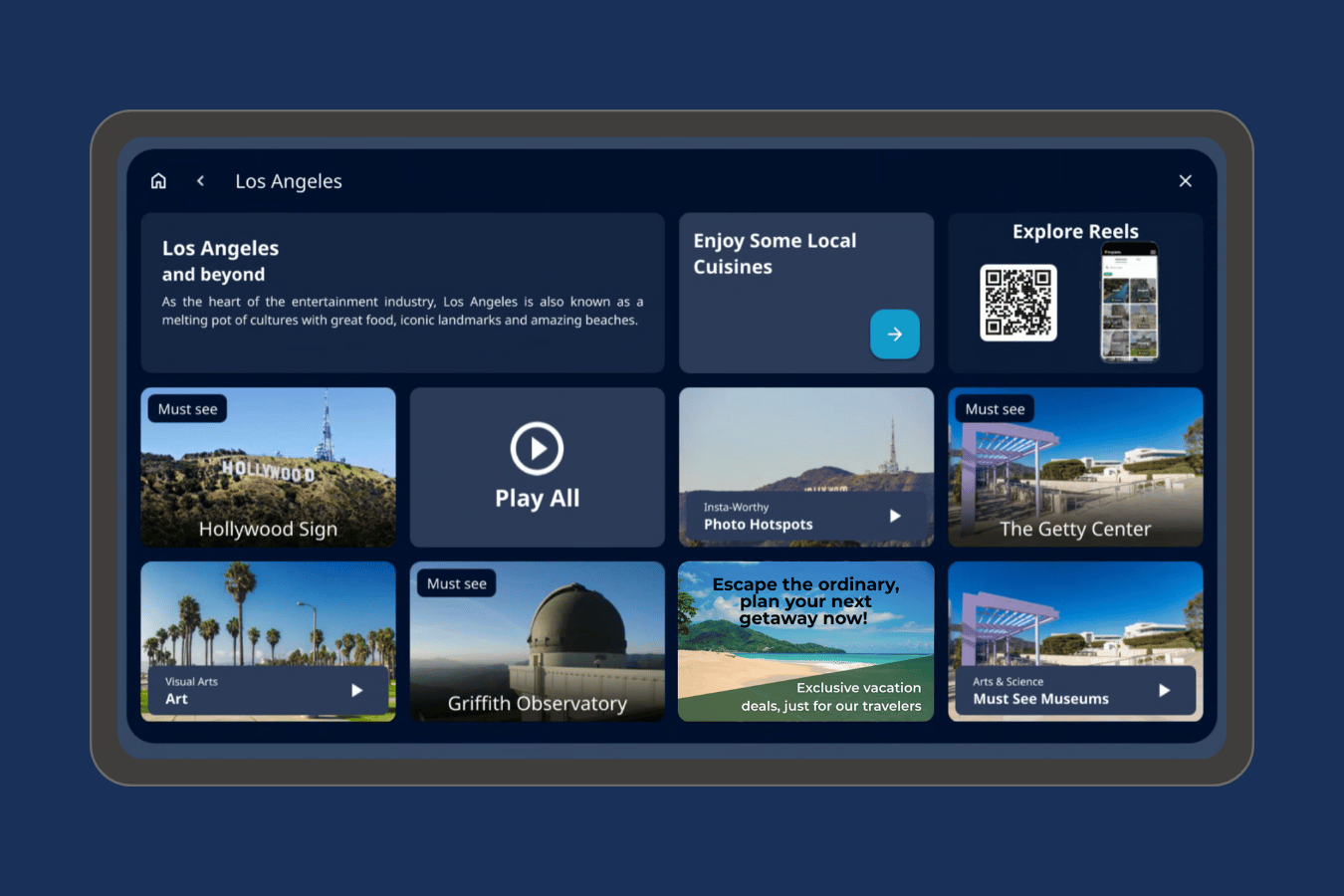
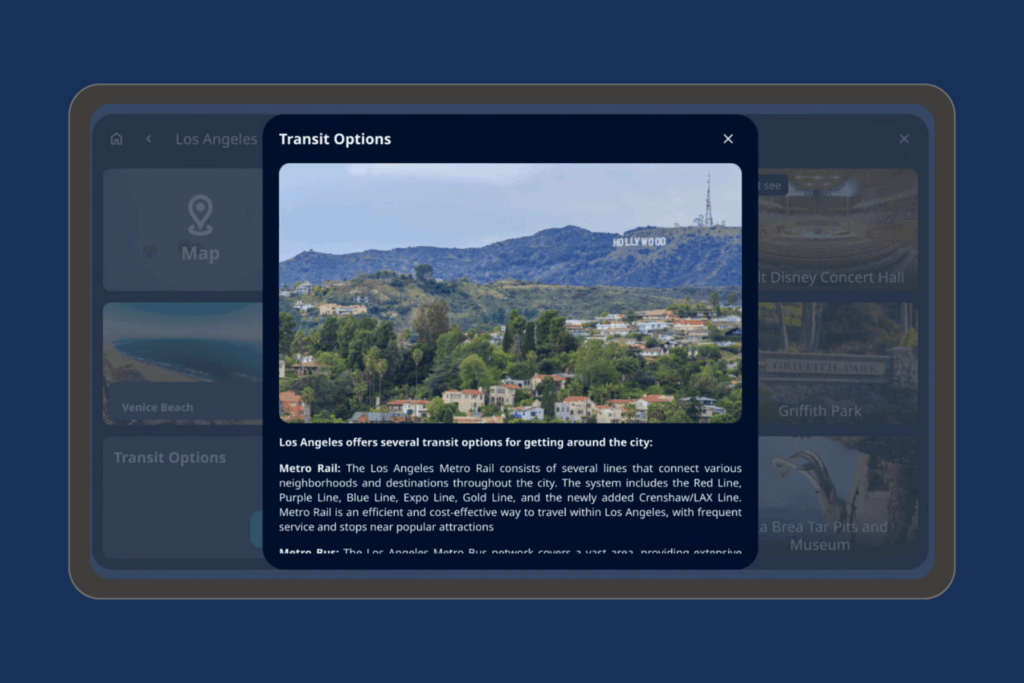
FlightPath3D has unveiled Destination Stories at APEX Global EXPO, a new way for passengers to explore and plan what to do when they land using animated previews, airline branding, AI-powered recommendations, and seamless mobile continuity. 

With Destination Stories, each city features a Destination Board – a visually rich homepage that showcases key highlights and attractions for that location. For airlines, this offers valuable real estate to embed branded content and targeted offers. For example, campaigns can promote seasonal routes, loyalty perks, or sponsored attractions.

With a single tap, users can launch this animated preview that brings each location to life complete with local tips and highlights, all guided by Luci, FlightPath3D’s AI-powered travel companion. In this way, ads and partner placements sit naturally alongside the travel storytelling. 

Passengers can choose to view an interest-based playlist, like cultural landmarks and instagrammable hotspots, or select “Play All” to watch a continuous, animated tour of must-see sights. If something catches their eye, they can also scan a QR code to explore more using their mobile devices. Users also have options to book tours, tickets, and experiences before they land. 

“Destination Stories is more than a new feature, it’s a new chapter for the inflight map,” said Boris Veksler, Co-Founder and CEO of FlightPath3D. “Our mission has always been to guide every flying passenger. This is the next step in that journey, inspiring travelers in the air and connecting them to the places, experiences, and opportunities that await when they land.”

Destination Stories is available as an upgrade for airlines currently using FlightPath3D’s Destination Guide.

At APEX Global EXPO, FlightPath3D also announced it has created the in-flight map offering for Riyadh Air.

APEX EXPO 2025: Penny Black Media Celebrates 15 Years with Expanded Film Slate, New Brand Identity 

APEX EXPO 2025: Penny Black Media Celebrates 15 Years with Expanded Film Slate, New Brand Identity 

As well as debuting a significantly enhanced film catalogue, content distribution specialist Penny Black Media has unveiled an exciting new brand identity and website to mark its 15th anniversary during APEX Global EXPO.

The company’s bespoke portfolio of films includes high-profile Hollywood releases as well as the inclusion of a revitalized World Cinema selection, which returns after an eight-year hiatus in response to shifting global appetites. 

The decision was influenced by the fact that non-English titles now account for nearly one-third of all Netflix viewing, and independent films made up over 21 percent of the global box office in both 2023 and 2024 – their strongest showing in over a decade. 

Together with the launch of a vibrant new logo and a fully redesigned website that provides airlines with intuitive access to detailed film information, streamlined downloads, and edited screeners, Penny Black Media’s VP Content Distribution Julieta Bowyer said the company has undergone “a complete evolution.” 

“Over the past year, we’ve meticulously transformed how we operate, selecting more titles than before, but also a more carefully picked selection of stronger titles with genuine global appeal,” Bowyer expanded. “Our slate is now tighter, sharper, and curated with an eye for distinctive, yet universally compelling storytelling. It’s about delivering impact, not filling slots.”

Recent communications from the company stated Penny Black Media was “closing the in-flight year with another hat trick of fantastic independent films.” All available as of December 1, these include The Cut, starring Orlando Bloom as a boxer preparing for a comeback that may cost him everything. Also highlighted is French comedy Fils De (Prime Rush), and Kyrgyz action thriller Kaçkin (Deal at the Border).

Penny Black Media confirmed that its refreshed strategy, which includes a proactive presence at premier international film festivals to pinpoint groundbreaking films before they trend, has attracted a slew of airline clients, some of whom are licensing Penny Black Media’s content for the first time.

Bowyer added, “Our commitment remains quality over quantity. Airlines face a glut of content options, and our role is to cut through that noise.”

Penny Black Media is inviting industry colleagues to celebrate its relaunch at an exclusive Happy Hour event at booth 1529 on Wednesday, September 10, from 4:00–5:00PM.

APEX EXPO 2025: Linstol Launches New Headset Created with Meridian Audio 

APEX EXPO 2025: Linstol Launches New Headset Created with Meridian Audio 
Image via Linstol

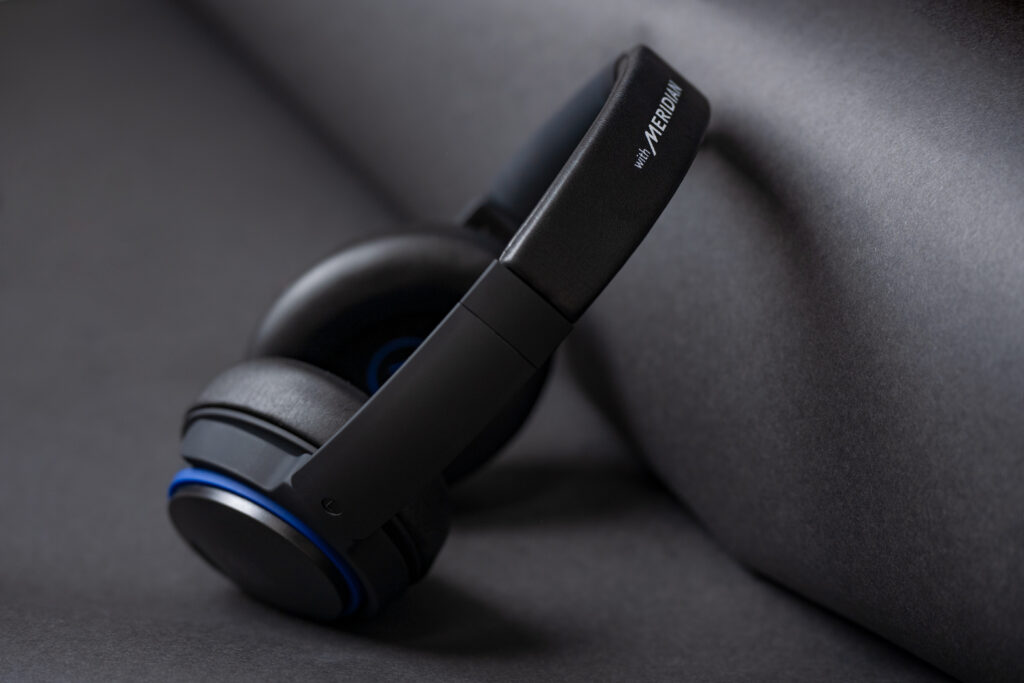
Linstol has developed an advanced noise-canceling headset for business-class passengers that is purpose-built for the cabin environment as part of a strategic partnership with British audio engineering experts Meridian Audio.

The headset has been designed with a lightweight, ergonomic fit for long-haul comfort and precision-tuned to deliver exceptional clarity, depth, and detail at every altitude. According to Linstol’s Marketing Director Elisabeth D’Antonio, “The result is a calmer, more relaxing journey, where passengers can truly switch off to arrive feeling refreshed.”

It took over a year to develop and is now flying with United Airlines. Linstol hopes the product, which leverages Meridian Audio’s four decades of sound innovation, will set a new industry benchmark for luxury audio in the sky. 

The company’s CEO Mark Russell commented, “Our collaboration with Meridian ensures passengers enjoy an unparalleled listening experience that complements the overall comfort and luxury of their journey.

“We’re proud to work alongside Meridian to bring this product to life. Together, we’ve set a new standard for in-flight headsets that reflects the innovation and collaboration at the heart of the industry.” 

Linstol also produces child-friendly headphones for in-flight use with volume-safe sound as well as earbuds for economy-class passengers.

Linstol is exhibiting a range of products, from headsets to amenity kits, at booth 925 during the APEX Global EXPO.

APEX EXPO 2025: Cinesky Pictures Showcases 2026 Titles, Including Four TIFF Standouts

APEX EXPO 2025: Cinesky Pictures Showcases 2026 Titles, Including Four TIFF Standouts
Angelina Jolie stars in Couture. All images via Cinesky Pictures

Cinesky Pictures is highlighting its 2026 film slate at APEX Global EXPO. Consisting of over 20 titles in total, the company is keen to promote four standout movies fresh from their premieres at the prestigious Toronto Film Festival (TIFF).

The first is Couture, a drama follows the lives of three women during Parisian Fashion Week, one of whom is played by Angelina Jolie. The second is thriller Dead Man’s Wire from acclaimed director Gus Van Sant, which recounts a true hostage drama from 1977 and features an all-star cast lead by Bill Skarsgard, Al Pacino, Coleman Domingo and Cary Elwes.

The third, Charlie Harper, is a charming romantic drama starring Nick Robinson and Amelia Jones on their journey to find love in the big city; and finally, there is the epic sci-fi fantasy film Eternal Return starring Kit Harington, which is about a love that transcends time and space.

Dead Man’s Wire

“These titles are on Deadline Hollywood’s ‘Toronto hot list,’ so we’re incredibly proud to bring these exceptional films to the in-flight entertainment market,” said Cinesky Pictures Head of Worldwide Sales Mark Horton. “These are the kind of unique, high-calibre stories that resonate with audiences, and we’re confident they’ll be a hit with airline passengers.”

Furthermore, Cinesky Pictures is offering Tinsel Town, a new romantic comedy starring Kiefer Sutherland and Rebel Wilson, to airlines from December 1 simultaneously with its theatrical release. 

Tinsel Town

The film tells the story of Jack Sterling (Sutherland), a washed-up Hollywood action star who unwittingly signs up for a stage production in England and finds he is starring in a small-town British pantomime. He clashes with the show’s fiery choreographer, Rosie Jones (Wilson), but finds unexpected charm in the quirky town and its residents. 

Tinsel Town is PG-rated and features a stellar supporting cast of British actors, including Sir Derek Jacobi, Alice Eve, Meera Syal, Lucien Laviscount, and Asim Chaudhry. 

Horton continued, “We’re really excited to be offering Tinsel Town to airlines ‘day and date’ as it releases in the cinemas. It’s a seasonal movie that will be perfect for December and its PG rating make it perfect for passengers of all ages.” 

Airline buyers are invited to watch the screener for Tinsel Town and to find out more about Cinesky Pictures’ 2026 titles at booth 1353 during APEX Global EXPO.

APEX EXPO 2025: FlightPath3D Creates Immersive In-Flight Map for Riyadh Air

APEX EXPO 2025: FlightPath3D Creates Immersive In-Flight Map for Riyadh Air
Image via FlightPath3D

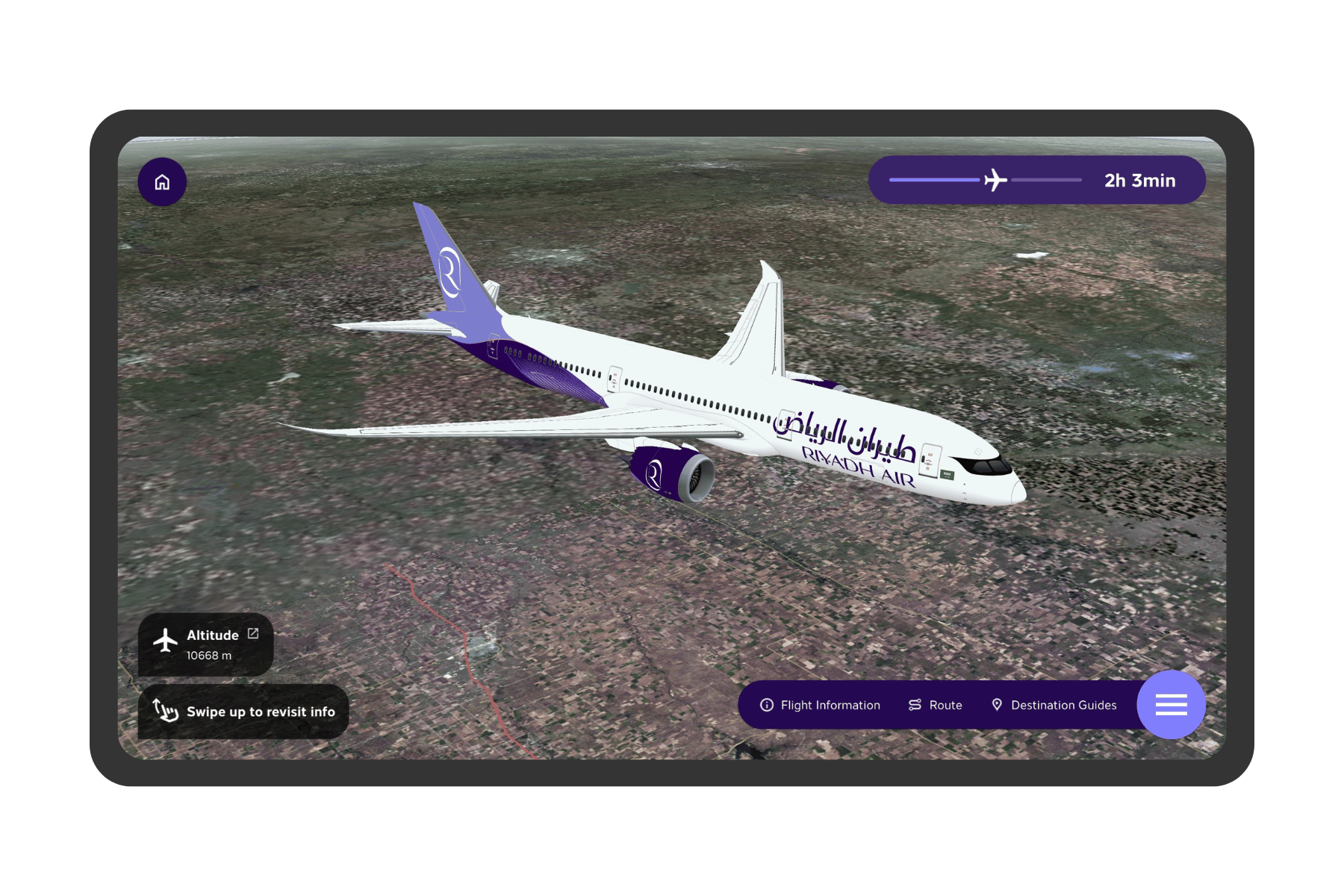
FlightPath3D has created a unique in-flight map experience for Riyadh Air, the new national carrier for the Kingdom of Saudi Arabia, which will debut on the carrier’s Boeing 787-9 Dreamliner fleet. 

The company’s President Duncan Jackson commented, “Riyadh Air challenged us to reimagine what an in-flight map could be.” The resulting product offers passengers access to their full flight path as well as real-time speed and altitude updates, plus a host of other features. 

“For Riyadh Air, we designed a map with a clean shortcut and menu system, their full network displayed in the route map, and destinations brought to life through visual guides. It’s a guest-first design that feels more like a companion that mirrors Riyadh Air’s digitally native brand,” Jackson explained. 

He added that the map was designed in response to Riyadh Air’s choice to install Panasonic Avionics Corporation’s Astrova in-flight entertainment system on its Dreamliners, an announcement made this time last year at the 2024 APEX Global EXPO. 

“Riyadh Air challenged us to reimagine what an in-flight map could be.”
– Duncan Jackson, FlightPath3D

“We absolutely engineered the new experience with Astrova’s 4K OLED screens in mind. The visuals, animations, and transitions are built to take advantage of high-resolution displays, ensuring crisp rendering, smooth performance, and vivid color detail,” Duncan confirmed.

The collaborative process of creating an in-flight map solution for Riyadh Air lasted over a year. Duncan explained, “From the earliest design stages, our teams worked closely to align on Riyadh Air’s brand values and guest-first vision. Together, we deliver[ed] something that feels both innovative and uniquely Riyadh Air.”

Riyadh Air placed an order for 72 Boeing 787-9 aircraft in March 2023, including 39 firm orders and 33 options. The carrier said it intends to operate flights to more than 100 destinations around the world by 2030. While no official launch date for the airline’s first commercial flight has been set, it is understood Riyadh Air’s first Dreamliner will enter commercial service later this year. 

APEX EXPO 2025: Moment Survey Highlights Importance of IFEC, Onboard Retail in Boosting Profits and PaxEx

APEX EXPO 2025: Moment Survey Highlights Importance of IFEC, Onboard Retail in Boosting Profits and PaxEx
All images via Moment

Moment has released findings from a new study that highlights how passengers spend their time and money in the air, and examines the role of in-flight entertainment and connectivity (IFEC) in shaping the passenger experience, unlocking ancillary revenue, and fueling long-term sector growth.

Passenger Engagement Highlights Value of IFEC

During the first quarter of 2024 alone, the European air travel market recorded 198 million travelers, marking an 11.5 percent increase year-on-year. With this surge, airlines face mounting pressure to differentiate through innovation, and Moment’s latest study shows why airlines should continue to use IFEC as a way to stand out in a competitive market.

On medium-haul flights of around five hours, the report showed passengers spend 20 percent of their time interacting with the IFE platform, which is an average of 58.4 minutes. For airlines, this window represents an opportunity to build brand commitment and influence the overall travel experience.

When it comes to IFE content itself, 72 percent of surveyed passengers said that video-on-demand was their top content preference, outpacing games and music. Within this segment, films and series dominate, with 92 percent of surveyed passengers choosing them as their preferred format. Unsurprisingly, passengers showed a clear preference for blockbuster titles – Barbie was the most requested film on aircraft equipped with an IFE system in 2024.

Interestingly, the survey showed that 97 percent of travelers prefer using their own devices over seatback screens or laptops. Almost 95 percent of users were on their phones, with only 5 percent using laptops. As such, charging outlets have become essential, though more than half of surveyed passengers expressed frustration with limited availability – 59 percent of respondents said they had no access to charging facilities during their flights.

The Rise of Connected Cabins and In-Flight Shopping

Beyond movies and shows, the survey reveals a growing appetite for shopping in the sky. Ancillary revenue generation is considered a top priority by 26 percent of airline executives, with current passenger spend averaging $90 per flight. That figure is expected to reach $120 by 2030.

“Passengers today demand seamless digital experiences wherever they are, from streaming movies on their own devices to discovering personalized shopping offers in real time.”
– Tanguy Morel, Moment

The most popular duty-free products include official airline merchandise, electronics, spirits, and perfumes, but connected digital platforms are also changing what can be sold, as airlines are starting to sell large or valuable items onboard.

These products are not stored on the aircraft due to storage limitations; instead, they are delivered directly to passengers’ homes or destinations. This trend will accelerate as more cabins go online. While one-third of aircraft were connected in 2024, half of the global fleet is projected to be connected by 2030.

Real-time purchasing will become increasingly commonplace, enabling more secure and personalized shopping. Moment identifies that AI-driven personalization is also poised to play a larger role, with targeted recommendations expected to boost engagement and conversion rates.

Shaping the Future of the Passenger Journey

Moment’s survey frames these findings within a wider commercial outlook. As Tanguy Morel, CEO and Co-Founder at Moment, explained, “Passengers today demand seamless digital experiences wherever they are, from streaming movies on their own devices to discovering personalized shopping offers in real time. The journey must be as exciting as the destination, and IFEC is no longer a secondary service. Still, it becomes a strategic driver of emotions to re-enchant the journey and airline profitability.”

The company concludes that the commercial outlook for both entertainment and retail is robust. It says the global IFE market is forecast to double by 2030, reaching $12.37 billion, while the in-flight retail market, valued at $3.5 billion in 2024, is projected to surpass $5 billion by 2030.

The report identifies that airlines prioritizing IFEC will be best positioned to capture this growth, maximize ancillary revenue, and deliver more competitive passenger experiences.

APEX EXPO 2025: Encore Inflight Expands Lifestyle Offering with Matt D’Avella’s IFE Debut

APEX EXPO 2025: Encore Inflight Expands Lifestyle Offering with Matt D’Avella’s IFE Debut
Image via United Airlines

In-flight entertainment (IFE) distributor Encore Inflight (Encore) has announced a partnership with award-winning filmmaker and YouTuber Matt D’Avella. The collaboration represents an ongoing trend in the IFE space as airlines continue to onboard lifestyle and wellness content.

Encore Brings Matt D’Avella Onboard for the First Time

Under the deal, Encore Inflight, which works with carriers including American Airlines, China Southern, Turkish Airlines, Etihad Airways, LATAM, and United Airlines, will bring two wellbeing series by Matt D’Avella to airline passengers. This marks the first time his work will be available in-flight.

The content maker has amassed nearly four million subscribers on YouTube, with his videos generating more than 320 million views. Furthermore, his 2015 documentary called Minimalism: A Documentary About the Important Things, available on Netflix, played a key role in spreading the minimalist movement worldwide. 

D’Avella is become a modern guide for slowing down in an age of distraction. His work resonates with young people, digital natives, and frequent travelers seeking practical ways to simplify their lives. These themes carry particular relevance for passengers in-flight, who have space for reflection away from their everyday routines.

Image via Netflix

This partnership comes as Encore continues to innovate within the IFE sector by adding engaging, relatable content to its extensive catalog and demonstrating its commitment to enhancing the passenger experience. The inclusion of D’Avella’s work reflects the growing appetite for lifestyle-driven programming from creators that audiences already follow and trust.

The first series, Create a Simple Life with Matt D’Avella, is a six-part exploration of how to live with less and focus on what truly matters. Through storytelling, humor, and practical tips, D’Avella examines themes such as minimalism, fitness, family routines, and mindful living. The six episodes include: “10 Rules That Changed My Life,” “Why I’m Still a Minimalist After 14 Years,” “Why I Eat the Same Thing Every Day,” “I Cut My Training By 70% (And Got Better Results),” “9 Ways We Keep Our Home Organised,” and “We Tried Minimalism with Kids.”


The second series, Habit Experiments with Matt D’Avella, also features six episodes, each centered on a 30-day or 100-day challenge. D’Avella tests new habits ranging from cutting sugar to adopting a “dumb phone” with curiosity, humor, and honesty. Each challenge reveals unexpected lessons and outcomes that resonate with viewers. The six episodes include: “I Quit Sugar for 30 Days,” “I Took Cold Showers for 30 Days,” “I Tried Intermittent Fasting for 30 Days,” “I Used a Dumb Phone for 30 Days,” “I Tried Powerlifting for 100 Days,” and “I Put 27 Habits to the Ultimate Test.”

The addition of creators like Matt D’Avella to IFE offerings underscores a new editorial role for airlines. Where once inflight catalogs centered on Hollywood blockbusters, airlines are now curating selections that align with passenger lifestyles, values, and aspirations. This shift signals a broader redefinition of entertainment in the skies, one that blends leisure with meaning.

APEX EXPO 2025: Invitial to Launch IFEDB Platform to Streamline Tracking IFE Avails

APEX EXPO 2025: Invitial to Launch IFEDB Platform to Streamline Tracking IFE Avails
Image via Invitial

Technical business solutions provider Invitial is launching its new online platform for showcasing and discovering the latest in-flight entertainment (IFE) content at APEX Global EXPO 2025, and is inviting the industry to both discuss their experiences and provide feedback on the product at the event. 

The Inflight Entertainment Database, known as IFEDB, has been designed to allow everyone from airlines to content service providers, distributors and tech vendors to know what’s available, when, and where. Invitial Solutions Architect Dan McInerney said it was created in response to long-held industry frustrations with tracking IFE title availability across numerous spreadsheets, disconnected databases, and even by word of mouth.

IFEDB is powered by IFE Data, Invitial’s bespoke application built with over 25 years of industry experience. It provides details on versions, languages, territory rights, and metadata, all of which are filterable and searchable. 

“Our roadmap is to get people starting their content discovery journey with IFEDB and then make it easier to source metadata.”

McInerney explained, “IFEDB is an application developed over the last three months, but in reality it is a new, simpler window into our IFE Data application and database. IFE Data is our original complete workflow solution that we are also exhibiting at APEX. The IFEDB platform is focused specifically on the start of the workflow, which is aggregating and viewing the upcoming latest avails for IFE licensing and exhibition. So, we’ve designed a separate, simpler, standalone platform and approach for this – a new front-end to our existing engine.”

The company doesn’t charge distributors and content partners to list and manage their titles to IFEDB, but there is a monthly subscription fee to access the platform. McInerney commented, “We are keen to get as much avails data as reasonably possible, so we’re hoping that as people subscribe, it will encourage more distributors and content partners to submit their data to us.

“At launch we’re focusing purely on upcoming movies as the avails windows and titles here are more clearly defined, but we plan to include episodic, audio, and other content. We have nearly 10,000 titles with IFE rights that we’re thinking of opening up as a separate subscription tier,” he continued.

Image: Mohamed Hassan via Pixabay

One of the biggest benefits Invitial foresees for those using the platform is a reduction in the duplication of resourcing on metadata. “It’s crazy for every airline/CSP to be copying the same synopses, then paying to translate them, etc. when we could do that once in IFEDB and have everyone access it. We see this as an efficiency tool for the industry.

“Our roadmap is to get people starting their content discovery journey with IFEDB and then make it easier to source metadata: either downloading from it IFEDB in OEM shapes (for the hardware vendor systems), copying and pasting it out manually, or using our API.”

Further features coming down the pipe for IFEDB include a new ratings system that uses custom algorithms to gain insight on performance and opinions before providing a specific IFEDB rating to help users identify the most suitable content for their audience. There will also be the ability to create shortlists and collections, and the option to access multiple synopses for each title based on different use cases. “These capabilities are already part of our IFE Data engine, so it’s a case of bringing them into the simpler UI of IFEDB and making them more easily accessible,” noted McInerney. 

“We’re hoping that as people subscribe, it will encourage more distributors and content partners to submit their data to us.”

He confirmed, “Alongside any features and changes requested at the EXPO, we’ll be releasing them all throughout Q4 2025.”

In terms of feedback, McInerney said Invitial are looking at two areas in particular: “One is fields/features/changes that will help with discovery. The other is on different types of content, or specific regions and distributors that are not currently present. This is a great opportunity for smaller independents and regional companies to get their content alongside the big ones, and to be discoverable by the masses.”

Invitial will be showcasing both its IFE Data solution and the new IFEDB platform on Booth 1435 at the APEX Global EXPO taking place in Long Beach, California from September 9-11, 2025. 

TPN Enhances Shield Tier System to Strengthen Content Security, Creates Free Industry Resources

TPN Enhances Shield Tier System to Strengthen Content Security, Creates Free Industry Resources
All images via Trusted Partner Network (TPN)

The Trusted Partner Network (TPN), a global content security initiative created by the Motion Picture Association (MPA) for its studio members, has strengthened its Shield system to include remediation and created a range of security-related resources the industry can access free of charge.

The aim of these changes is designed to increase transparency, elevate security standards, and drive continuous improvement for content security across the media and entertainment supply chain.

Under the “Classic” TPN Shield structure, MPA members would receive a Blue Shield if they published their self-reported responses to a TPN questionnaire. To achieve a Gold Shield, they would need to publish an assessment carried out by a TPN-accredited assessor that reviewed the evidence against their responses. Finally, members must then provide their own remediation plan.

With the new four-tier system, meeting the criteria for the classic Gold Shield will instead gain members a Silver Shield. To achieve a Gold Shield now, members must complete all “best practice remediation items” in line with TPN’s newly released version 5.3.1 of its Content Security Best Practices, something which then needs validation by the TPN itself. 

The highest Shield members can achieve is a Gold Star Shield, which is reserved for those who, as well as the above, implement additional recommendations that are also validated by the TPN too.   

The new v5.3.1 questionnaire and four-tier Shield system will launch on September 9, 2025, but Classic Gold Shields will remain valid until their expiration.

TPN President Terri Davies explained that the introduction of a remediation process to its Shield system “is a very big deal” considering that “96% of [its] security assessments uncover security gaps.”

“Security resources and standardized assessments help ensure consistent protection across all stakeholders, reducing weak spots.”
– Terri Davies, Trusted Partner Network

In terms of how long it takes to complete the remediation process, Davies said it can vary: “It depends on the size of the company, the number of sites or applications, and the scope of security gaps identified. Some providers with minor findings can remediate in weeks, while others may take several months if structural or process changes are required. The key is that TPN’s framework recognizes progress at every stage so that companies don’t have to wait until everything is perfect; they can move up the Shield tiers as they remediate, with “Gold Star” representing full remediation.”

TPN’s complimentary resources include security policy templates across topics ranging from AI security to disaster recovery, translations of the MPA Content Security Best Practices into 10 languages and more. 

Davies noted that “as new threats emerge, whether through advances in AI, social engineering, or evolving cyberattacks, [the TPN] will continue to expand those resources. The goal is to ensure that no company is left behind, and that the industry has practical tools to meet tomorrow’s challenges.

“IFE is a complex global supply chain as content passes through multiple processes, vendors, platforms, and technical handoffs before it reaches passengers,” Davies continued.  “Each link in the chain must be secure, especially since airlines often host pre-release, high-value titles. 

“Security resources and standardized assessments help ensure consistent protection across all stakeholders, reducing weak spots. For airlines and the studios who license the content to them, this means greater confidence in licensing premium content and safeguarding passenger trust, even in environments where connectivity and infrastructure may be more challenging than on the ground,” she concluded.

To access these resources and find out more about taking part in TPN’s Shield program, companies need to sign up for a free TPN+ account on the TPN website.

Immersive Skies: APEX FTE EMEA Panel Explores the Potential of Mixed Reality Onboard 

Immersive Skies: APEX FTE EMEA Panel Explores the Potential of Mixed Reality Onboard 
Pictured left to right: Panel moderator and APEX Airline Engagement Director Antonio Penim; Meta Reality Labs Sales Manager Kasia Holthouse; Camillo Stark, MSM.digital Deputy Managing Director AR/VR Labs; TUI Head of Customer Experience Dagmar Fischer; and Emirates Head of Digital Platforms Sebastian Blumenthal. Photo: Grant Pritchard

Yesterday, during a panel discussion at APEX FTE EMEA focused on in-flight innovation, thought leaders from Meta and its partner MSM.digital, Emirates and TUI examined how immersive technology, especially mixed reality, could redefine in-flight entertainment (IFE). Anchored around an introduction to Meta’s in-flight experience program, the session emphasized a future where the passenger experience transcends screens to deliver seamless engagement, personalized content, and even onboard productivity.

Meta Reality Labs Sales Manager Kasia Holthouse ignited the panel with a sweeping vision of spatial computing’s place in aviation, before MSM.digital Deputy Managing Director AR/VR Labs Camillo Stark followed with a demonstration of immersive content experiences already reshaping how passengers relax, work, and play at altitude. Their presentations prompted sharp engagement from industry leaders including Emirates Head of Digital Platforms Sebastian Blumenthal and TUI Head of Customer Experience Dagmar Fischer.

While much of the conversation focused on future potential, panelists consistently returned to the fact that the technology exists today, and adoption depends not only on innovation but on scaling smartly and solving logistical concerns.

A New Layer in the Sky: Meta’s Immersive Vision

Holthouse opened her presentation by describing how we are on the edge of the transition to “spatial computing.” She defined Meta’s spatial computing platform, which combines the metaverse, AI and AI glasses, as “one that you perceive, not only with your eyes and your ears, but with everything that surrounds you, and one that’s accessible and stylish with a comfortable form-factor.”

She shared how this bold new frontier is already being trailed by the industry, highlighting a pilot program run by Lufthansa that sees Meta’s Quest 3 headsets used for IFE as part of the carrier’s Allegris business-class offering. 

Meta’s immersive in-flight initiative is not about replacing traditional IFE, but about adding a new dimension. With its Quest 3 headsets and a growing content library, Holthouse argued passengers can now watch films on private virtual cinema screens, play spatial games, or take a virtual tour of their destination before landing.

“Passengers want more than just movies on screens,” she emphasized. “They want clever entertainment, they want high-quality experiences, and they want something that resonates with their digital lives.” 

Excitingly, she shared that Meta is currently in the process of onboarding five launch airline partners to embrace the opportunities offered by the company’s mixed reality offering as part of its “Meta Immersive In-Flight Experience Program,” and encouraged delegates to get in touch if interested in participating. 

Meta Reality Labs Sales Manager Kasia Holthouse presents Meta’s vision for mixed reality-powered in-flight entertainment onstage at APEX FTE EMEA. Photo: Grant Pritchard

Making Mixed Reality Work In-Flight: Logistics and Long-Term Value

The panel did not shy away from practical hurdles. MSM.digital’s Stark acknowledged the steep challenge of initial implementation, particularly distributing and managing headsets.

“We’re in phase one,” he explained. “Airlines need to handle logistics. But there are ways. And this phase is necessary because phase two is coming, which is when passengers bring their own headsets.” For that to succeed, he said airlines must ensure their content ecosystem remains relevant.

Stark’s message was clear: without branded, meaningful content, airlines risk losing their role in the passenger’s digital experience. “If you don’t build services now,” he warned, “passengers may simply log into something else and your touchpoint disappears.”

Stark outlined a two-stage strategy. In the short term, he said airlines need to distribute headsets onboard and create bespoke content designed for the airline seat environment. In the long-term, as headset ownership rises, he said airlines should shift to delivering value through exclusive content and tailored experiences. 

“Passengers want more than just movies on screens. They want clever entertainment, they want high-quality experiences, and they want something that resonates with their digital lives.” 
– Kasia Holthouse, Meta Reality Labs

From IFE to IFX: Delivering an Immersive Content Experience

Stark then reframed the discussion around not just hardware, but what passengers will actually experience. His company, partnered with Meta, builds content that harnesses Quest’s mixed reality capabilities, from wellness modules to interactive marketing.

“We’re not replacing screens,” Stark clarified. “We’re adding a new layer. Just like your car might still have a radio, but now it also has a smart display.”

Stark walked attendees through the potential onboard journey. After takeoff, a headset is handed to the passenger, requiring no wires or instructions. Upon activation, users receive a quick orientation and then encounter a branded digital interface offering entertainment, wellness, and productivity options, all accessible via intuitive hand gestures.

He emphasized that content, not technology, would make or break adoption. “Hardware and software might be king,” he said, “but content is King Kong.”

Stark’s presentation showcased use cases like immersive concerts and movies and AR product demos. He underscored that these experiences also introduce monetization opportunities, enabling airlines to build branded environments or partner with sponsors for unique promotions.

Scaling Smart: Emirates’ Approach to Implementation

Emirates’ Sebastian Blumenthal praised the innovation but grounded the conversation in the airline’s priorities: scaling effectively and maintaining quality. “Don’t forget the basics,” he cautioned. “This all needs robust connectivity underneath, even when some of it runs offline.” 

He highlighted Emirates’ dual focus: improving foundational connectivity while also integrating immersive tools into training and premium-class enhancements. Emirates recruits approximately 120 cabin crew members weekly, an operational reality where VR training already creates efficiencies. The next step involves enriching Emirates’ extensive business-class product suite using mixed reality.

For Blumenthal, success hinges on matching innovation with infrastructure. “We’re investing heavily to make connectivity stable across the fleet,” he said. “That’s the table stakes. Once we have that, the immersive layer becomes not only possible but powerful.”

Emirates recently started using virtual reality to train its cabin crew. Image via Emirates

TUI’s Take: From Seatback to Destination

TUI’s Dagmar Fischer TUI emphasized mixed reality’s ability to turn the flight itself into the start of a passenger’s holiday.

She explained that rather than focusing purely on entertainment, TUI aims to create seamless transitions between onboard experience and destination services. As an example, the group recently introduced excursion booking via its onboard streaming platform, enabling passengers to plan holiday activities mid-flight.

“The holiday should start on the aircraft,” Fischer asserted. “We’re looking at how to expand this offering across our fleet, with more personalized services.”

Fischer’s insights highlighted that the use of immersive technology need not center on cinematic experiences but instead on utility, using spatial computing to make travel more connected and convenient.

“Hardware and software might be king, but content is King Kong.”
– Camillo Stark, MSM.digital

Embracing New Technology Quickly, but Carefully

All speakers agreed on a central premise: the future of in-flight engagement hinges on delivering intuitive, connected, and value-added experiences.

Blumenthal reflected on Emirates’ approach. “We see VR as an addition, not a trade-off. It’s about giving passengers more choice and making sure it works beautifully.”

Fischer echoed that sentiment with an emphasis on personalization. “If we can offer the right experience at the right moment, whether that’s before, during, or after the flight, we increase value for everyone,” she said. 

Malthouse stated the importance of acting quickly to embrace the new technology: “This isn’t about someday. It’s about now. Mixed reality on flights is no longer a question of possibility – it’s a question of who leads.”

For more content from APEX FTE EMEA 2025, click here.
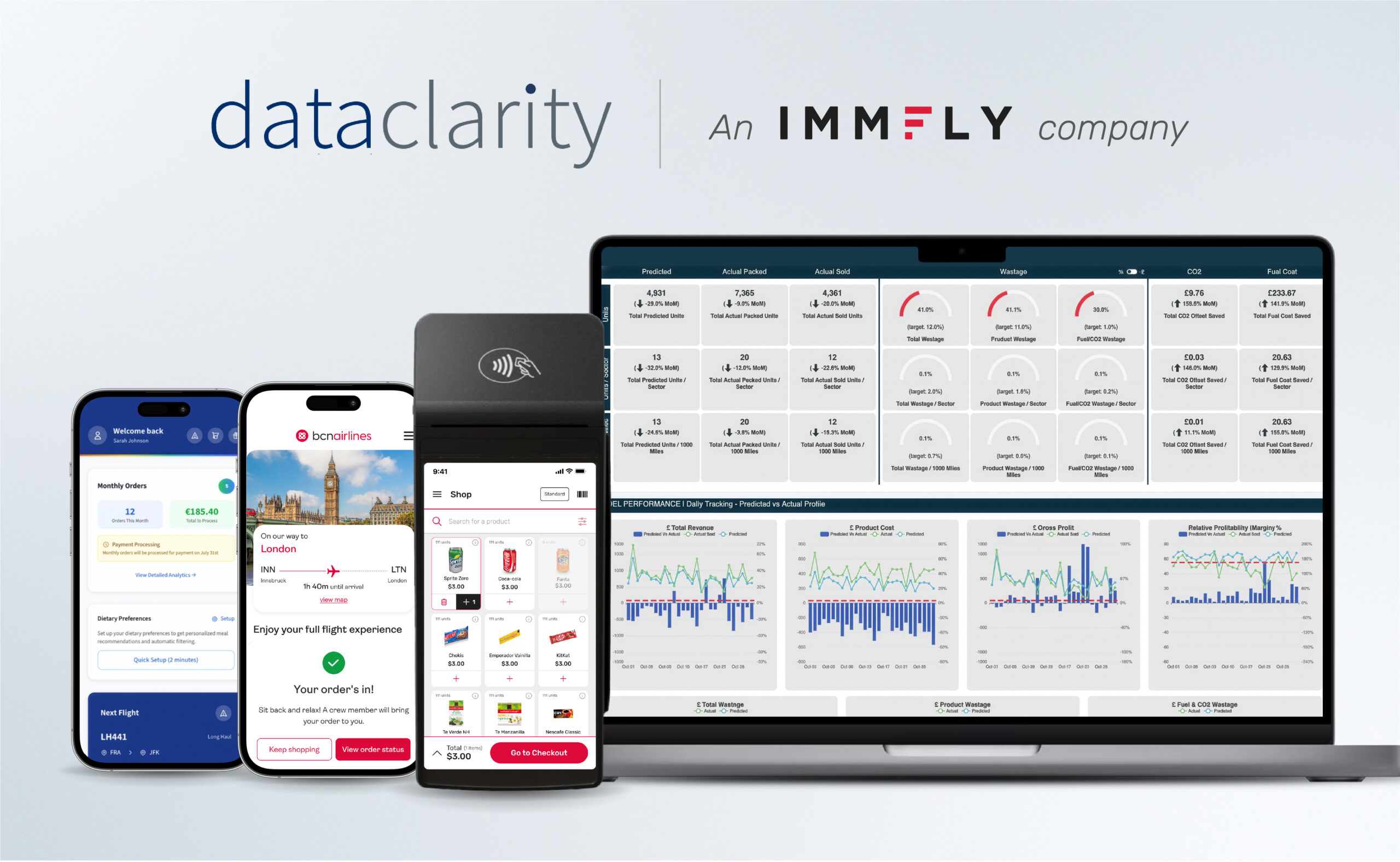
Viasat Showcases In-Flight Advertising Potential at SXSW 2025

Viasat Showcases In-Flight Advertising Potential at SXSW 2025

At South by Southwest (SXSW) 2025 in Austin, Viasat made a bold statement about the future of in-flight advertising, showcasing how brands can connect with air travelers in a way that is both targeted and scalable. Positioned just outside the festival’s advertising hub, Viasat’s activation drew global advertisers, airlines, and marketing professionals eager to explore the company’s ad-supported connectivity solutions.

On Sunday, March 9, 2025, APEX Insights discussed Viasat’s innovations with Viasat Director of Product Marketing for Aviation & Advertising Solutions Kelsey Goodman and Viasat Senior Marketing Manager for Aviation Isabella Lenhoff, focusing on how the company is revolutionizing in-flight advertising.

“We’re here connecting with like-minded brands,” Goodman explained. “South by Southwest is an awesome opportunity to meet people who want to do things differently in advertising. Viasat Ads is a great example—bringing connectivity into the in-flight space and allowing advertisers to serve a more dynamic, targeted experience to passengers.”

Viasat’s ad network enables brands to reach travelers across multiple airlines, offering a scalable alternative to individual airline advertising programs. The company currently works with 12 airlines, including American Airlines, JetBlue, Virgin Atlantic, Aeroméxico, Azul, Breeze, Porter, and Neos.

A Global Approach to In-Flight Advertising

Viasat’s presence at SXSW highlighted the increasing demand for targeted, data-driven advertising within the airline industry. The company’s ad platform allows brands to reach travelers based on their destinations, making it a valuable tool for marketers looking to engage a high-income, captive audience.

“We’ve been incredibly impressed by the global audience we’ve encountered here,” Lenhoff shared. “For example, Azul is one of our airline partners, and we’ve met multiple Brazilian advertisers. Being able to intentionally match advertisers with airlines ensures that we’re bringing the best possible partnerships to the industry.”

Expanding the reach of in-flight advertising. Viasat Senior Marketing Manager for Aviation Isabella Lenhoff (left) and Viasat Director of Product Marketing for Aviation & Advertising Solutions Kelsey Goodman (right) explore the capabilities of Viasat’s audience targeting platform at SXSW 2025. The tool helps advertisers understand how they can connect with passengers based on their routes and destinations.

Unlocking Free Wi-Fi Through Sponsored Ads

One of the most compelling aspects of Viasat’s ad-supported model is its ability to offer passengers free in-flight Wi-Fi in exchange for engaging with sponsored content. This approach benefits both travelers and airlines while giving advertisers a unique opportunity to reach consumers in a focused setting.

“Just as a human who travels every single week, I find it fascinating to hear people’s reactions when we say, ‘You can unlock free Wi-Fi with an ad,’” Lenhoff noted. “For many, that’s a game-changer—whether it’s avoiding another travel expense or keeping kids entertained on a flight. The ability to provide this experience in a way that benefits everyone is really exciting for us.”

This aligns with broader trends in media consumption, where ad-supported models have become mainstream across streaming services and digital platforms. Viasat is now bringing this familiar model into the airline industry, allowing passengers to access connectivity while brands gain premium exposure.

The future of ad-supported connectivity. Viasat’s activation at SXSW included an interactive display demonstrating how brands can target airline passengers based on their destinations. Viasat Senior Marketing Manager for Aviation Isabella Lenhoff (left) and Viasat Director of Product Marketing for Aviation & Advertising Solutions Kelsey Goodman (right) discuss the potential of in-flight advertising.

The Viasat “Wheel of Adventure”

One of the standout features at Viasat’s SXSW exhibit was the “Wheel of Adventure,” an interactive display showcasing the variety of ad formats available to brands. From sponsored internet access to pre-roll ads in in-flight entertainment, the platform provides a range of options for advertisers looking to engage airline passengers.

“Our activation is all about showing advertisers the wide variety of ways they can connect with passengers,” Goodman explained. “For example, if a brand wants to target all red-eye flights or travelers heading to a specific destination, we can facilitate that in a way that makes sense for both the advertiser and the airline.”

The wheel also highlighted the seamless integration of Viasat Ads across its airline partners, ensuring brands can reach the right audiences without requiring individual deals with each airline.

Spinning the future of in-flight advertising. Viasat Senior Marketing Manager for Aviation Isabella Lenhoff (center) and Viasat Director of Product Marketing for Aviation & Advertising Solutions Kelsey Goodman (right) discuss the impact of ad-supported connectivity with APEX Group CEO Dr. Joe Leader (left) at SXSW 2025. Viasat’s “Wheel of Adventure” highlights various advertising opportunities available through its platform.

Expanding the Reach of In-Flight Advertising

Viasat’s ability to connect advertisers with travelers extends beyond just digital ads. The company’s new “Audience Explorer” tool enables brands to map out potential advertising campaigns based on flight routes.

“We’ve been able to walk our advertising partners through the process and ask, ‘What’s your dream destination? What’s your dream ad campaign?’” Lenhoff explained. “If an advertiser wants to target every flight into Los Angeles, we can show them exactly how many routes could be connected for a more intentional ad strategy.”

This level of targeting provides a major advantage for brands, particularly those in the travel, hospitality, and luxury goods sectors. Airlines also benefit from the additional revenue generated through ad-supported connectivity, which can help offset operational costs and enhance the passenger experience.

Bringing brands and travelers together. Viasat’s advertising network spans 12 airlines, including major carriers like American Airlines, JetBlue, and Virgin Atlantic. At SXSW, Viasat showcased how brands can target travelers with destination-based advertising campaigns, enhancing engagement and monetization opportunities for airlines.

A Growing Ad Network with More to Come

As Viasat continues to expand its in-flight advertising network, the company remains focused on delivering value to airlines, advertisers, and passengers alike. While specific case studies on advertiser success have yet to be publicly released, Goodman hinted that more data would be available soon.

“We’ve got several more airlines coming online this spring, which is really exciting,” she said. “The interest from brands and advertisers has been incredible, and we’re just scratching the surface of what’s possible in this space.”

With airlines increasingly looking for new revenue streams and travelers expecting more personalized experiences, ad-supported connectivity is poised to play a major role in the future of in-flight entertainment and broadband.

“Air travel audiences are highly valuable for advertisers,” Goodman emphasized. “We know where passengers are coming from, where they’re headed, and that they’re in a unique mindset while traveling. That makes in-flight advertising an instantly recognizable and highly desirable market for brands.”

The Solution to Mitigating In-Flight Turbulence

The Solution to Mitigating In-Flight Turbulence
Images via SkyPath

Turbulence is not only scary for passengers, but it can also be dangerous. The aviation industry has been trying to mitigate turbulence issues—especially clear air turbulence (CAT)-for over thirty years. In nonfatal accidents, in-flight turbulence is the top cause of injuries to airline passengers and crews, per the Federal Aviation Administration (FAA). What’s more, turbulence can cost airlines millions of dollars in fuel, passenger safety, crew safety, maintenance, and greenhouse gas emissions.

Previously, there were not adequate tools that could accurately report and predict turbulence. Even meteorological forecasts are inaccurate almost 85% of the time, not to mention that weather radar can not detect clear air turbulence. Pilots report and receive information from air traffic control about turbulence, which is often subjective and sporadic, leading to pilots not using the most available tools in practice.  Today, there is technology that can help solve the problem of turbulence. Meet SkyPath, whose technology helps mitigate turbulence issues. 

SkyPath’s Technology 

For years, the aviation industry has been looking for a tool that can detect CAT and provide the necessary information, such as where the turbulence begins and ends and the severity level. This is where SkyPath comes in, as it is a tactical tool that is the first source of reliable and accurate alerts about the location and severity of the turbulence. According to CEO Maya Shpak, SkyPath’s “integrated product ecosystem offers a holistic approach to aviation travel, seamlessly connecting operational teams, flight cabin, and sustainability initiatives to enable smoother, safer, and greener air travel.”

According to Shpak, “SkyPath started in 2019 with one of the major US airlines and had around 100 users per day,” meaning 100 planes were flying with SkyPath, reporting data and using the data to predict and mitigate turbulence. “Today, that number has grown to 30,000 users per day with SkyPath’s technology being utilized by major US carriers and other major airlines around the world,” Shpak said. 

SkyPath’s technology is similar to Waze’s in that it utilizes crowdsourced technology. As such, SkyPath’s technology can only be used once the first aircraft encounters turbulence, and only then can it relay that information to all the other aircraft in the network. Through its application, which can be added to pilots’ electronic flight books (EFBs), pilots can log where they expect turbulence and alert other pilots flying through the same area. Similar to a car in a traffic jam, it will provide the data to all others. However, this does not predict clear air turbulence; it only notifies incidents that occur. 

The second of SkyPath’s technologies is its unique machine learning model, which encompasses the information and data observed from the sensors. According to Shpak, “The granularity of the information that Skypath provides is 1,000 feet and 10 by 10 miles,” and the resolution is very high, which creates accurate data. The machine learning platform updates each hour and considers the different meteorological parameters- of which there are over 100, such as the temperature and overcasting of the jetstream. It then compares these parameters with the data collected from the sensors and can predict clear air turbulence. Thanks to SkyPath’s precise level of accuracy, pilots using SkyPath can either turn the seatbelt sign before they reach the turbulent areas or even avoid the area by requesting to be rerouted from ATC.

Enhanced Passenger Experience 

The company’s approach is to work with the airline to bridge the data from the flight deck and the operational side to the passengers. The ecosystems of products enable a link between the flight deck and the cabin crew. For example, when the product in the flight deck gets a notification about upcoming turbulence, it can also notify the cabin crew through the cabin crew interface, enabling the crew to be more prepared for any upcoming event. SkyPath’s upcoming product will provide a digital path for passengers. This new product will have a direct link to the passenger app, so the airline can relay information to the passengers, such as if the flight will be bumpy or calm. 

The annual average cost of turbulence in the United States alone is around $500 million. SkyPath anticipates that it can save an average airline an average of $10 million in fuel, incidents, and maintenance reductions on the efficiency and operational side. On the customer side, Shpak believes that “SkyPath can increase customer satisfaction or (NPS) Net Promoter Score by increasing their confidence in the airline operation.” Airlines can increase their revenue by providing real-time data to the cabin.

Delta Showcases IFEC and AI Innovations at CES 2025

Delta Showcases IFEC and AI Innovations at CES 2025

Delta Air Lines revealed a series of transformative in-flight entertainment and connectivity (IFEC) advancements on Tuesday during CES 2025, held at the iconic Las Vegas Sphere. The airline introduced upgrades that included next-generation seatback systems, cloud-based technology, and artificial intelligence (AI) tools designed to enhance personalization and streamline the passenger journey.
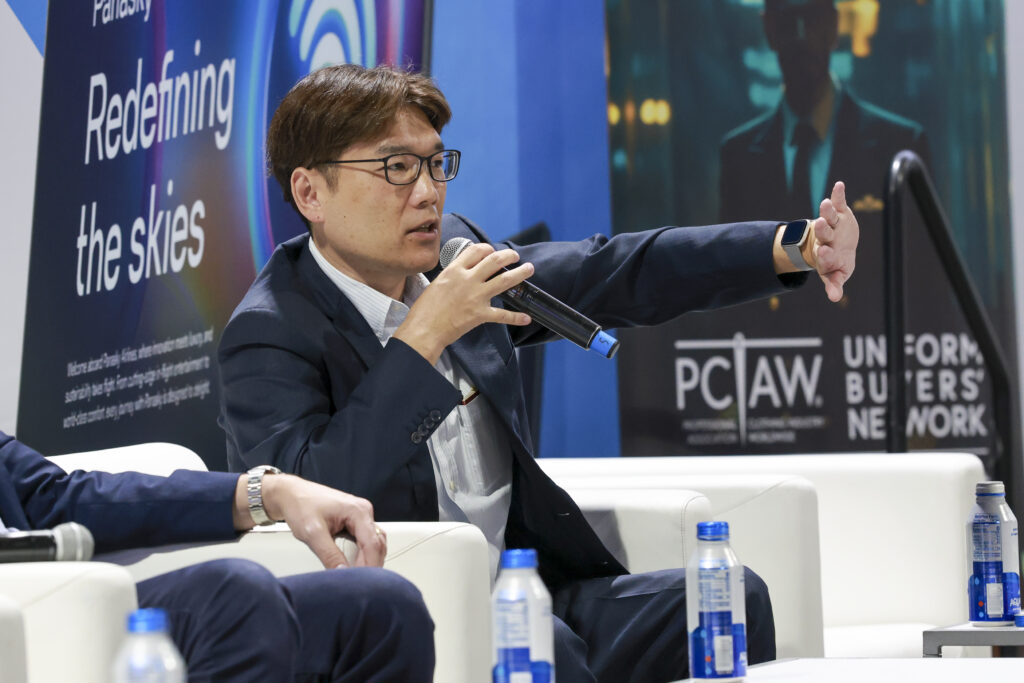
Image Source: © 2025 Delta Air Lines, Inc.

Next-Level In-Flight Entertainment Systems

Delta’s new collaboration with Thales has resulted in a significant update to its next-generation in-flight entertainment system. Set to launch on select aircraft beginning in 2026, the new system features 4K HDR QLED seatback screens, delivering cinema-grade visuals at 35,000 feet.  “Technology has the power to transform travel and create moments for our customers to enjoy the journey as much as the destination,” said Delta CEO Ed Bastian.

At the core of this innovation is the system’s cloud-based architecture, supported by an Onboard Data Center (ODC) with a staggering 96 terabytes (TB) of storage. This represents 50 times the capacity of Delta’s existing systems, enabling the airline to maintain a vast library of movies, TV shows, music, and games. Passengers will benefit from frequent content updates that occur during regular aircraft turnaround, eliminating the need for lengthy ground-based system refreshes.

Image Source: © 2025 Delta Air Lines, Inc.

“We’re delighted to be at the forefront of innovation alongside Delta,” Thales Executive Vice-President of Avionics Yannick Assouad said. “Through our collaborative partnership, we’re bringing Thales’ state-of-the-art cloud-native IFE system on Delta aircraft as part of the Delta Sync experience, and with it endless opportunities to connect and engage travelers on their journeys.”

The inclusion of Bluetooth connectivity further enhances the system, allowing passengers to pair wireless headphones seamlessly. Personalized entertainment profiles synced with SkyMiles accounts ensure passengers can resume movies, shows, or playlists on future flights. This blend of features highlights Delta’s focus on providing a more immersive and user-friendly in-flight experience.

Ad-Free YouTube Streaming Onboard

Delta’s partnership with YouTube marks a first for commercial aviation, offering SkyMiles Members ad-free access to the platform’s content during flights. Passengers will have the ability to enjoy an extensive library of creator-driven content, podcasts, and music without interruptions.

The collaboration leverages Delta Sync technology, seamlessly integrating with the new in-flight entertainment system. Passengers with SkyMiles accounts can log in and receive tailored content recommendations based on their viewing habits. The interface, built into the seatback system, ensures a streamlined and intuitive user experience.

“As technology evolves, our customers expect their travel experience to adapt and evolve with them. They want it to be intuitive, contextual and seamless in a way that supports and guides them so that they can move through life with confidence,” Delta SVP of Customer Experience Design Ranjan Goswami explained, “To stay ahead of those expectations, Delta is committed to continuously evolving our industry-leading digital experiences across channels to ensure the sky is never the limit – it’s only the beginning.”  

For travelers accustomed to on-demand entertainment, this partnership with YouTube bridges the gap between ground-based streaming services and in-flight options. The ad-free feature enhances overall satisfaction, catering to evolving consumption habits while maintaining consistent quality across flights.

“People want access to their favorite content – whether that’s on TVs, on their phones – or even onboard a plane,” YouTube Chief Business Officer Mary Ellen Coe said. “We’re thrilled to partner with Delta to bring YouTube creators, podcasts and music directly to their in-flight entertainment [system screens] so travelers can enjoy everything they love about YouTube while they fly.”

AI-Powered Enhancements Through Delta Concierge

Delta’s introduction of Delta Concierge represents a step forward in using AI to improve the travel experience. Embedded within the Fly Delta app, this AI-powered tool offers real-time updates and personalized assistance, acting as a virtual travel companion for passengers.

Delta CEO Ed Bastian explained, “The Delta Concierge will give customers a personal assistant in their pocket, providing timely, customized support throughout their travel journey.”

Passengers can receive notifications on gate changes, weather-related disruptions, and baggage status. The integration of Delta Concierge with Delta Sync ensures updates are available on seatback screens, keeping passengers informed throughout their flight.

Image Source: © 2025 Delta Air Lines, Inc.

The AI system is designed to predict and address common travel disruptions, providing solutions before they escalate into larger issues. By reducing uncertainty and stress, Delta Concierge enhances the overall passenger experience while showcasing the potential of AI in aviation.

“Delta’s ability to host 50 times more licensed content on-board, dynamically updated on demand, showcases the extraordinary impact of their 96TB cloud-based system,” APEX Group CEO Dr. Joe Leader stated. “With tools like ad-free YouTube streaming turning an IFE system into a web browser and AI-powered travel assistant, Delta demonstrates how technology can redefine the expanding expectations of in-flight entertainment.”

Airlines Soar with Embedded IFE: The Key to Profit and Passenger Satisfaction

Airlines Soar with Embedded IFE: The Key to Profit and Passenger Satisfaction
Pictured: United Airlines’ Economy Plus seating, featuring embedded in-flight entertainment. Photo via United Airlines

In a fiercely competitive industry, airlines investing in embedded in-flight entertainment (IFE) systems dominate, capturing the lion’s share of profits and achieving top customer satisfaction and Net Promoter Scores. Airlines like Aeromexico, Air Canada, Delta, Emirates, JetBlue, Qatar, Singapore, United, and many others prioritize passenger experience using advanced IFE systems, leading to increased revenues and customer loyalty.

United Airlines’ shift regarding seatback IFE in the past few years exemplifies this strategy’s effectiveness. As United CEO Scott Kirby remarked last week, “[In 2016,] I was president of American, and we were putting seatback entertainment systems on every one of our airplanes. Everyone in American thought that was a stupid idea. The day after I left, they reversed it and they spent money to take it off the airplanes because it would reduce weight and save fuel burn. We put it on at United. We’re putting it on every single airplane.”

The Forbes article featured another quote where Kirby further emphasized the impact of IFE: “[On my last United flight,] as I always do when I fly on one, I walk from back to front. Two thirds of the customers on the airplane are watching movies.“ He said that when customers are pleased with the movies, they rank United higher in other areas, including flight attendants, gate agents and even their TSA experience. The carrier also posted strong financial results for the first quarter of 2024 compared to the same time last year.

This shows how cutting-edge IFE systems not only help to retain customers but also attract new ones, significantly contributing to airlines’ bottom lines.

Elevating Passenger Expectations

Passengers now demand more than just a seat; they seek a comprehensive in-flight experience, and airlines recognizing this shift reap substantial benefits, so United’s recent success can no doubt be somewhat attributed to its investment in state-of-the-art IFE systems, offering passengers a wide range of entertainment options, high-speed internet and personalized content.

For the most part, the US airline industry has embraced this strategy wholeheartedly. Delta Air Lines’ Director of Onboard Product and Brand Experience Ekrem Dimbiloglu emphasized, “We know how much our customers value entertainment on board. That’s why we have installed seat-back screens in over 700 aircraft and continue to forge partnerships with entertainment giants . . . to bring more diversity and variety to the entertainment options we offer in flight.”

Passengers engaging in a “Watch Party” courtesy of JetBlue’s “Blueprint” personalized IFE experience. Image via JetBlue

In its renaissance under newly appointed CEO Joanna Geraghty, JetBlue has also showcased its commitment to IFE. “JetBlue has always been an innovator as the first to have seatback screens . . . [by] launching Blueprint by JetBlue, we are doubling down on our commitment to help customers create an in-flight experience tailored to their needs and preferences, making their flight as comfortable as their own living rooms,” JetBlue’s Head of Marketing and Customer Support Jayne O’Brien recently stated.

It’s the same for premium carriers in the Middle East. Celebrating over 30 years of IFE leadership, Emirates’ SVP Retail, IFE & Connectivity Patrick Brannelly echoed similar sentiments on the importance of IFE to passenger satisfaction: “When Emirates introduced personal screens on every seatback in 1992, it was considered a massive industry innovation. Other airlines questioned the sense of this huge investment, estimated at about US$15,000 per seat at that time, but we quickly realized that our customers loved being entertained throughout the flight. It made their journeys feel shorter and fostered customer satisfaction and loyalty.”

Transforming Low-Cost Carriers

Interestingly, the trend extends beyond full-service airlines. By the end of this decade, leading low-cost carriers (LCC) and ultra-low-cost carriers (ULCC) will likely incorporate embedded IFE screens nearly as thin and light as seatback plastic.

This technological advancement will enable these carriers to offer enhanced passenger experiences without compromising on cost efficiency. The integration of even more lightweight, durable, and easily swappable IFE systems will allow LCCs and ULCCs to maintain competitive pricing while significantly improving customer satisfaction.

Revolutionizing In-Flight Technology

Thinner, lighter IFE screens revolutionize the airline industry. These innovations reduce aircraft weight, leading to fuel savings while providing passengers with seamless, enjoyable in-flight experiences. The new generation of IFE systems, designed to be more energy-efficient and user-friendly, further enhances their appeal to airlines and passengers alike.

Airlines failing to invest in IFE technology risk falling behind. The clear correlation between IFE investment and financial performance underscores the importance of staying ahead in technological advancements.

A shot of the screen that allows passengers to pair their personal devices with their seatback IFE screen. Photo via Delta Air Lines

Strategic Imperative for Airlines

The evidence proves overwhelming: investing in embedded IFE systems stands as a strategic imperative for airlines aiming to secure a competitive edge. Success stories of airlines like Delta, Emirates and United highlight the significant impact that enhanced passenger experiences have on profitability and customer loyalty. As technology evolves, airlines prioritizing IFE innovation will dominate the industry, with those who do so enjoying sustained growth and a loyal customer base.

Conclusion: Adapting to a New Era

In summary, the airline industry’s future hinges on its ability to adapt and invest in passenger-centric technologies. Embracing advanced IFE systems ensures airlines remain at the forefront of the industry, achieving both financial success and unparalleled customer satisfaction. The stakes have never been higher, and the rewards never more significant. As Ed Bastian points out, “The airline that prioritizes the passenger experience sets itself up for enduring success.”

AIX 2024: MAYA Business-Class Suite Concept Unveiled by Collins, Panasonic Avionics

AIX 2024: MAYA Business-Class Suite Concept Unveiled by Collins, Panasonic Avionics
Image: Collins Aerospace

Collins Aerospace (Collins) and Panasonic Avionics have jointly unveiled MAYA, a new business-class suite concept focused on the next generation of millennial and Gen-Z travelers, at the 2024 Aircraft Interiors Expo in Hamburg. 

During an in-depth demonstration of the suite, Collins’ VP and General Manager of Interiors Christoph Blanc said MAYA was designed from a clean sheet with four key pillars in mind: Comfort; an immersive experience; accessibility and sustainability. 

In terms of providing comfort, Blanc explained that as well as being “ergonomically enhanced,” the seat is equipped with Collins’ active sensor system, ARISE, which “listens to the passenger’s body.” The system monitors body pressure and adjusts the seat cushions accordingly, as well as automatically utilizing the heating and cooling system based on a passengers’ body temperature.  

The immersive component is afforded by the 45-inch ultra-wide, ultra-high-definition, curved OLED Astrova display with a headphone-less directional mirror audio system and complementary haptic feedback system in the seat.

During the initial unveiling, Ken Sain, Panasonic Avionics’ CEO, announced, “The 45-inch Astrova Curve OLED display is three times larger than typical screens and the first Ultra-Widescreen CinemaScope (21:9) display in the sky – the same screen format in cinemas. Based on seat geometry and viewing angles, MAYA delivers a 50 percent more immersive viewing experience than sitting in a theater and 30 percent more immersive than an IMAX.”

“The 45-inch Astrova Curve OLED display is … the first Ultra-Widescreen CinemaScope (21:9) display in the sky.”

Ken Sain, Panasonic Avionics

Panasonic Avionics’ VP Product Management Andy Masson went on to explore the in-flight entertainment technology in more detail. “What’s great about having a 21:9 display is it creates more different ways of integrating with a show. You no longer have to exit out of the movie to go and look at a map, you can bring those other things in while you’re watching.”

With a continuing emphasis on a personalized experience that appeals to digital natives, he also outlined a new feature integrated into the moving map experience allowing passengers the possibility to edit their own journey in terms of “bringing forward breakfast” or “sleeping through dinner” through the IFE screen; a journey they can then look back on throughout the flight. 

Accessibility-wise, the suite uses an application called ADAPT that links with passengers’ electronic devices to provide full control of the seat and the IFE experience using “the same accessibility preferences you have on your phone.”

When it comes to sustainability, Blanc stated that artificial intelligence was enabling airlines to make small changes. “By looking at the passenger and seeing they’re going to rest, we can adapt the power supply consumption by turning the lights down or shutting down the screen.”

He also referenced the use of sustainable materials along with STARLight composite structures to reduce weight and improve product circularity, as well as modular design elements that would support mid-life upgrades while simplifying disassembly processes and recycling.

Collins’ STARLight structural technology, ARISE intelligent comfort system and ADAPT digital flight experience control, which all feature as part of MAYA, are finalists in the 2024 Crystal Cabin Awards. The existing Astrova IFE system has already been chosen by numerous airlines including Qatar Airways.

How Thales is Innovating in Line with Current IFEC Trends

How Thales is Innovating in Line with Current IFEC Trends
Image via Thales

Thales InFlyt Experience CTO Tudy Bedou builds on the themes arising from the 2024 APEX TECH event to spotlight how Thales is incorporating the latest in-flight and connectivity (IFEC) technology into its solutions.

During APEX TECH, APEX Insights Editor Stephanie Taylor chatted with Thales InFlyt Experience CTO Tudy Bedou, who believes “people want to have a memorable and immersive experience on their flight,” and explained how Thales is committed to providing cutting-edge IFE solutions that meet this desire.

Bedou reiterated that Thales’ AVANT Up solution features Optiq 4K QLED HDR displays with more than one billion vibrant colors, explaining that unlike OLED screens, the QLED technology will not dull or fade over time and is better in the dynamic lighting condition of the aircraft cabin. He also confirmed that Thales is now developing a range of larger Optiq screen sizes than initially announced for a major airline.
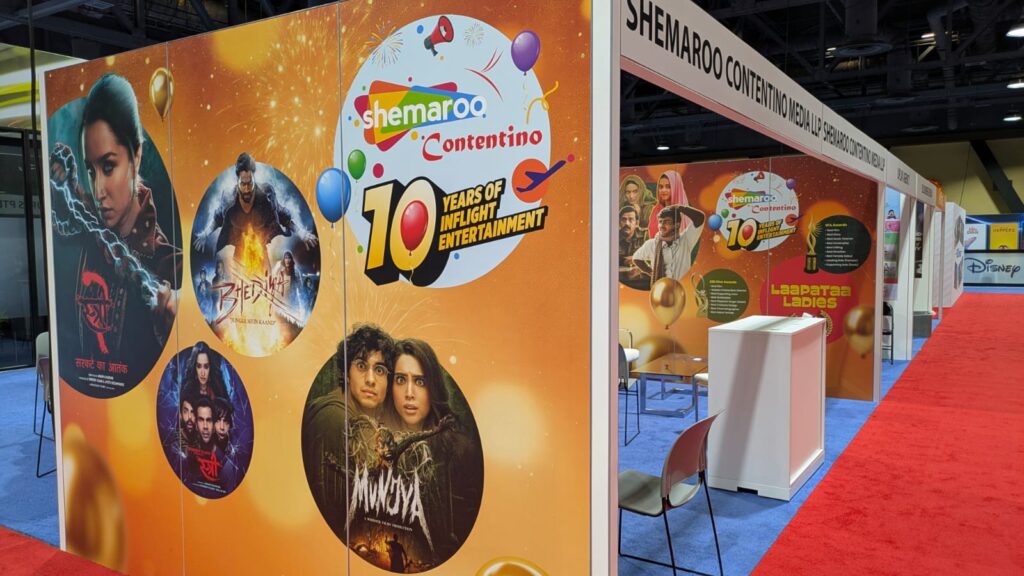
Each AVANT Up screen is designed with USB-A and USB-C charging ports, allowing passengers to fast-charge their devices during flight. They can also pair up to three devices wirelessly to the display. Behind the power ports is Thales’ award-winning Pulse power management system, which gives each passenger high-speed charging of up to 140 watts for their personal devices.

AVANT Up features many digital services, such as personalization with curated recommendations. Bedou commented that Thales is always evaluating new technologies to further enhance the passenger journey.

2024 is set to be an exciting year for Thales, with its Crystal Cabin Award-winning Pulse in-seat power solution and 4K HDR QLED Optiq monitor both set to take to the skies as part of the AVANT Up in-flight entertainment system.

The company has announced multiple orders for its AVANT Up IFE solution. Since announcing that American Airlines would become the launch customer for the product, Emirates has also selected AVANT Up and will be the launch customer for Pulse. Most recently, Thales confirmed that AVANT Up will be featured on Air India’s fleets.

“Integrating with passengers’ smartphones in a more intelligent way, including mirroring and casting, has become increasingly important.”

Tudy Bedou, Thales InFlyt Experience

When it comes to content, Bedou’s vision is to cater more specifically to passenger by geographic regions and demographics by bringing new ways to entertain onboard while improving the way traditional content is delivered. He stated, “We are looking at an interesting concept for a new content type to be brought on the aircraft in a very smart way.” In addition, Thales has increased the processing power in its screens to be able to be able to deliver advanced gaming, 3D assets and full 4K user interfaces for a completely elevated solution.

“Passengers expect to have the same multi-screen at-home experience in the air.” Bedou added, “Integrating with passengers’ smartphones in a more intelligent way, including mirroring and casting, has become increasingly important.” In response, Thales is introducing a new casting technology that will start flying next year, allowing passengers to project their content on the IFE screen.

Bedou’s desire for things to be “fully integrated” also encompasses connectivity: “We want to make sure that we’ve designed the best IFE that can easily integrate with connectivity to provide a seamless connected IFE experience. Being connectivity agnostic is key for us, which is why we’re always multiplying our partnerships.”

He continued, “connectivity is key to unlocking the full power of the new, industry-leading Thales digital services, so we see a fast and reliable connectivity as ‘must have’ for the future of IFE.”

Looking forward, Bedou is particularly enthusiastic about the possibilities presented by its Onboard Data Center (ODC), winner of a Crystal Cabin Award in 2023, which brings the power of the cloud to the aircraft. He explained, “It’s a very different hardware and software architecture as compared to traditional IFE servers. In developing the ODC, we took inspiration from how Amazon Web Services, Microsoft Azure and others designed their data centers for the cloud.”

“Bringing the cloud onboard enables us to bring the latest consumer technologies, such as streaming content, personalization and eCommerce, to passengers.” The ODC is currently flying, and Bedou was tight-lipped on the details, but confirmed that Thales is already working on imbuing it with more advanced capabilities.

Bedou concluded by saying Thales has several exciting new announcements coming this year regarding advancements in accessibility, the integration of A.I., and further work in sustainability.

APEX Regional Best in Entertainment Award Winners Announced at Content Market 2024

APEX Regional Best in Entertainment Award Winners Announced at Content Market 2024

During a short ceremony at the 2024 APEX Content Market in Lisbon, Portugal, the association announced the winners of its regional APEX “Best in Entertainment” awards.

The ceremony took place before the show’s official networking event, which included the legendary Content Market Quiz, sponsored by BBC Studios and hosted by Executive Director of Content Sales Marketing at Warner Bros. Discovery James Parker-Pettit, at the Matcha Mama restaurant within Lisbon’s trendy Lx factory. 

The “Best in Entertainment” awards were formerly known as the “Passenger Choice Awards,” and are a reflection of direct passenger feedback through APEX’s partnership with TripIt® from Concur®. The partnership allows passengers to rate their overall flight experience from one to five stars in five subcategories, including entertainment, with the whole process taking less than 15 seconds.

Before the awards were presented, TAP Air Portugal’s Chief Customer Experience Officer Sofia Lufinha, who was also on hand to receive the carrier’s Four Star Global Airline Award at the event. APEX CEO Dr. Joe Leader stated, “In recognition of the remarkable strides made by TAP Air Portugal, I proudly spotlighted in my visit to Lisbon the airline’s achievements with a presentation of the airline’s well-deserved 2024 APEX Four Star Airline award. This honor signifies an elite status achieved by only a single-digit percentage of the 600 airlines ranked by APEX worldwide.

“TAP Air Portugal’s dedication to excellence and continuous improvement has resulted in remarkable double-digit percent growth for the airline with addition of 2.5 million passengers in the past year alone, showcasing the airline’s significant growth and unwavering commitment to improving customer satisfaction,” he continued.

Following the award presentation, Lufinha made a speech that touched on promising growth in the in-flight entertainment industry. After noting that 2024 marks 30 years of TAP Air Portugal being an APEX member, she went on to say, “Grand View Research shared recently a predicted annual increase of over 8% for the in-flight entertainment marketplace by 2030. This significant growth underscores the industry-wide push to enhance in-flight entertainment, aligning with evolving customer expectations. At TAP Air Portugal, we actively respond to this trend, investing in advanced IFEC systems to enrich every customer’s journey, ensuring we not only meet but exceed the travel desires of our customers.”

The award winners are listed below:

Winner for Best Entertainment in Europe: Turkish Airlines

Winner for Best Entertainment in North America: Air Canada

Winner for Best Entertainment in South America: LATAM Airlines

These awards come in addition to those presented at previous APEX events: The award for “Best Entertainment in Greater China” was first received by Cathay Pacific at the 2023 APEX FTE Asia EXPO in Singapore; and the award for “Best Global Entertainment” was received by Singapore Airlines at the 2023 APEX Global Expo in Long Beach, California. 

Winner for Best Entertainment in Greater China: Cathay Pacific

Winner for Best Global Entertainment: Singapore Airlines

APEX TECH 2024: Day Two Content Panel Sessions, in Brief

APEX TECH 2024: Day Two Content Panel Sessions, in Brief
All photos: Adam Robertson

The second day of APEX TECH 2024 at the Sheraton Gateway in Los Angeles included three panel discussions centering on in-flight entertainment content. Topics included “AI-assisted Smart Metadata in the Content Delivery Supply Chain” along with Edge Caching and “Optimizing Passenger Journeys with Data.” Below is a round-up of the main points from each of the sessions. 

“AI-Assisted” Smart Metadata in the Content Delivery Supply Chain

Pictured (left to right): Andre Valera, VP Business Development at TOUCH; Sam Allen, Managing Director at Stellar Entertainment; Juraj Siska, Co-Founder at IdeaNova Technologies, Inc.; Michael Valdez, Manager of Strategic and Quality Initiatives at Panasonic Avionics Corporation; Hollie Choi, Managing Director at EIDR; and Rob Delf, CEO at FabricData

This panel discussion focused on which roles artificial intelligence (AI) can realistically take on within the content delivery supply chain and explored existing barriers to enhancing efficiencies, whether AI-related or not.

Panasonic Avionics’ Michael Valdez revealed the company is looking at rolling out a premium feature as part of its Metadata Management Application (MMA) for content service providers (CSPs) wherein an API would allow CSPs to provide an EIDR value for a piece of content, for example, and then automatically fetch the associated metadata. The goal would be to reduce manual Excel or .CSV uploads, with Valdez estimating it would increase efficiency by around three times.

“Airlines have different programs and these can each provide technical constraints on images and capacity. Through this API, we can predict the system’s capabilities [depending on the airline], so we can automatically truncate the synopsis with an ellipsis, or have AI generate a custom synopsis based on what’s pulled from metadata providers,” Michael explained.

FabricData CEO and panel moderator Rob Delf said that he’s heard examples of manual metadata preparations taking 45 minutes per title, so he agreed the feature had huge potential. Andre Valera also saw the value in it, citing a Nielsen study claiming there were 800,000 individual titles available in the US alone, an amount which is “impossible to curate,” but that AI can help with.

“[When it comes to AI], the risk tolerance [of the airline industry] needs to be discussed”

Andre Valera, TOUCH

The issue in creating features like this is the lack of standardization in terms of content identification and the use of platforms like EIDR. Hollie Choi, EIDR’s Managing Director, said that one antidote to this is the fact that “[CSPs] don’t have to wait for a content creator to register something,” and can do it themselves. In relation to this, she mentioned the registry is already using AI to help with deduplication so that there’s one listing for all possible edits.

In terms of its own strategy to grow the number of parties using EIDR, Choi said it “is working with data aggregators in different territories, and is tackling networks language by language to get most data into the registry.” It is buoyed up by the fact that uptake is growing outside of the US, with ITV and the BBC having joined last year, as well as networks in South America and South Korea.

Interestingly, Choi noted standardization is an issue that affects studios, as well as airlines, which is something studios are becoming aware of now they are merging and having to merge their data models. She said this is especially the case in terms of genre categorization. Valdez was buoyed by this, saying that an eventual goal would be to be able to “dynamically change what’s not being watched onboard and replace it with something else [in the same genre], for example if no-one is watching Superman then to automatically switch it for Wonderwoman.”

In terms of AI’s use when it comes to things like translations, where Stellar Entertainment’s Managing Director Sam Allen says “cultural sensitivities don’t move over,” and even sourcing metadata, the panel agreed the number one issue is data quality, with Valera opining “that the risk tolerance needs to be discussed.” He highlighted that while the data is there, CSPs and OEMs have to comply with service level agreements, so the quality check (QC) process, and the human touch, will remain strong for the foreseeable future.
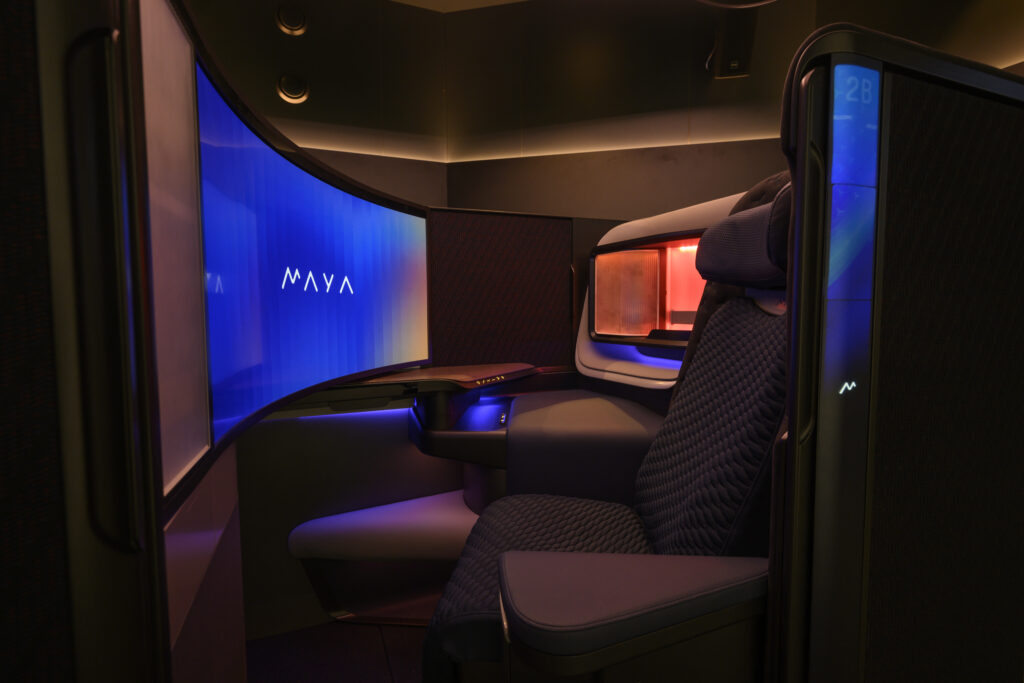
The Integration of IFE & C: Edge Caching in the Content Delivery Supply Chain

Pictured (left to right): Esdra Lamy, SVP at Warner Bros. Discovery; Estibaliz Asiain, SVP Media & Content at Anuvu; Sigfried Luft, Co-Founder & CEO at Netskrt; Jeremy Desmauts, Director of Sales & Engineering in North America, Broadpeak; Jim Nelson, CEO at Siden; and Phil Watson, Chief Systems Engineer at Panasonic Avionics Corporation

Panelists during this session agreed that with a storage capacity of one to two terabytes, airlines could use edge caching to provide a very compelling user experience, with fast startup times and no buffering on streaming content, but identified possible issues with licensing and the implications of moving away from airlines having control over IFE content – both in terms of entertainment and advertising – in favor of providing content directly from OTT suppliers via in-flight connectivity.

In practical terms, Siegfried Luft, Co-Founder and CEO at NetSkrt, used his company’s work in the UK rail market as an indicator of what could be achieved and how. “COVID was interesting because on trains, which used to block all video traffic, when passenger levels dropped to 10%, they allowed streaming and it worked,” he explained. “So, If we can shave off 90% [of streaming with the cache], then we can support that 10% and it’s a good compliment to the [other uses of] connectivity.” In the rail market, Luft said NetSkrt is achieving a 92-94% cache hit rate. 
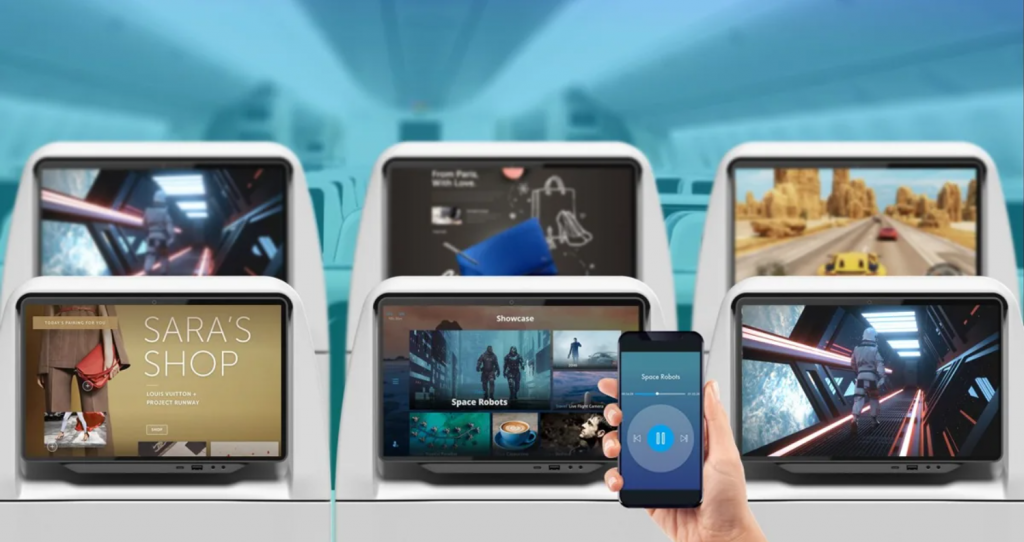
Finally, he revealed that NetSkrt is working together with Thales and an OTT provider and will have an announcement in this space later this year. 

In terms of what to cache when it comes to OTT content, Jeremy Desmauts, Director of Sales and Engineering in North America at Broadpeak, highlighted that just 20% of titles from a subscription service would potentially take up too much room. In response, Jim Nelson, CEO at Siden, said it is easy to predict what people will watch and stick to that. “We worked with an Asian content provider with a 10,000-strong title catalog, but just 17 of those titles accounted for 90% of streaming content,” he said. “When they released new episodes [of those titles] we [refreshed the cache] over the LTE network because we knew that’s what people were watching.” 

“We worked with an Asian content provider with a 10,000-strong title catalog, but just 17 of those titles accounted for 90% of streaming content”

Jim Nelson, Siden

Desmauts emphasized that cache hit rates are always higher for live TV content, and that enabling the caching of live sports events, like the SuperBowl for example, just requires extra software. At this point, moderator and Chief Systems Engineer at Panasonic Avionics Phil Watson highlighted that you could stream the SuperBowl on the ground if you had a Paramount+ subscription, so if an airline has partnered with Paramount+ on streaming in-flight, the cache would be an incredibly useful thing in that scenario.

Estibaliz Asiain, SVP Media & Content at Anuvu, raised some issues with defaulting to streaming OTT content. “In large territories like the US, the rights issue isn’t so big, but this is complicated in Europe, where you have different release dates in different countries. There are also cultural sensitivities to consider, and things like airline accidents [that wouldn’t be removed], we need to think about that.”

“Rights are the billion dollar question,” added Esdra Lamy, SVP Warner Bros. Discovery. He also said that the “curation” element of the IFE business – “narrowing thousands of titles down to 20 titles,” – will never go away. “Passengers want to discover.”

Asiain and Lamy posited the benefits of dedicated OTT-branded IFE channels, of which Lamy said HBO had 26 at one point. They believe this partnership could be complemented by edge caching, which would allow passengers to stream more content from the airline’s OTT partner to their own devices. For rights purposes, Asian noted “not all airlines will be able to work with all streaming channels.”

From Data to Destination: Optimizing Passenger Journeys with Environmental, Personal, and Behavioral Insight

Pictured (left to right): Vincent Campana, Chief Revenue Officer for Crew & Passenger at HRS Group; Kate Groth, President at West Entertainment; Richard Kroon, Director of Technical Operations at EIDR; Paul Colley, CTO at Spafax; Benny Retnamony, Founder & CEO at Neuron; and Haley Meidell, Principle Analyst at zeroG

The final panel session of the day, moderated by Principal Analyst at zeroG Haley Meidell, looked at how airlines and suppliers can harness data to improve the passenger experience. Each of the panelists agreed this was a central focus moving forward, but pointed out various challenges in making use of the reams of readily available passenger data airlines already have at their fingertips. 

From an IFE perspective, “There’s no shortage of data, it’s getting the data [that’s the issue],” explained Paul Colley, CTO at Spafax. “I would love to see the data coming off aircraft about what passengers watch in-flight be a first-class requirement from airlines.” Paul said that “data isn’t used to procure content,” and instead content “is bought and licensed on predictive methods,” which is something that needs to change. “At the moment there’s no straight line delivered between what’s being watched on the plane versus what somebody is paying for it.”

Taking the discussion one level further, Meidell commented, “ I think there’s also the question of what data exactly we’re collecting, because we’ve talked a lot about what people watch, but there is some really interesting behavioral data you see, for instance, like the browsing journey. Arguably very important is  what you didn’t choose on your way to choose the things that you did.”

Colley responded, “Yes, the negative is often just as critical as the positive. In certain configurations and systems, we can see if someone goes into the details page of a TV show and then double clicks to play, for example. And there were some interesting habits we saw around people quite often going into TV and not watching it, but when they’re going to a movie’s details, there’s a much better conversion rate.”

“At the moment there’s no straight line delivered between what’s being watched on the plane versus what somebody is paying for it”

Paul Colley, Spafax

But to work on a large scale, Director of Technical Operations at EID RRichard Kroon said the data needs to be standardized, because otherwise analyzing it can’t be automated and will only create more work for people like content service providers. 

For Founder & CEO of Neuron Benny Retnamony, the data is only so useful on its own. “We focus more on the digital experience, but what we see is silos. So there’s the entertainment silo, then there’s a connectivity silo, then there’s a whole app team and silo. What happens if a passenger comes onboard, tries to sync his phone with the seatback screen and it fails? You’re not aware of it. When it comes to experience, monitoring and management, there is a data silo problem to be solved. I think that will help airlines understand what passengers really want and unlock a whole new set of use cases.”

For Kate Groth, President at West Entertainment, the marrying up of different data points would really help to personalize the passenger journey, but acknowledged, “that gets tricky because airlines are very, very protective over their frequent flyer details.” By bringing these bits of information together, Groth said it would be “very easy to predict tastes really quite accurately across different domains, whether that’s travel, hotels, music, etc.” and therein airlines could “serve the right, meaningful ads to people at the right time, whether it’s for duty free sales or attractions at an upcoming destination.”

Vinny Campana, Chief Revenue Officer for Crew & Passenger at HRS Group, took a step back from the smaller details and said, “Technology scares people. Change management is the biggest barrier in the industry. Even if technology can take away friction, people don’t want to upset the apple cart.” He implored the aviation industry to accept and embrace change for fear it may become “a dinosaur.”

Find out what happened during Day One of APEX TECH 2024.

APEX TECH 2024: Day One IFC Panel Sessions, in Brief

APEX TECH 2024: Day One IFC Panel Sessions, in Brief
All photos: Adam Robertson

The first day of APEX TECH 2024 at the Sheraton Gateway in Los Angeles included three panel discussions centering on IFC. Topics included “The Best IFC Setup for Airlines in the Future” to “Commercializing Advanced Connectivity in Aviation” and “Most Promising Ancillary Use Cases and their Dependence on IFC.” Below is a round-up of the main points from each of the sessions. 

How Does LEO Complement GEO and Vice Versa? What is the Best IFC Setup for Airlines in the Future?

Pictured left to right: Intelsat’s SVP Engineering Patrick Walsh; Viasat’s Director, Aviation Terminal Product Management Khartik Bharathan; Telesat’s Senior Technical Product Manager Brian Kirby; ThinKom Solutions’ Chairman and CTO Bill Milroy; Oneweb’s Market Development Director Dermot Calahan; and Runway Girl Network’s Founder and Editor Mary Kirby

Moderator Mary Kirby set the scene for this panel discussion with a brief overview of GEO and LEO satellites before the panelists began discussing how the latter technology will change the in-flight connectivity (IFC) landscape.  

Director of Aviation Terminal Product Management at Viasat Karthik Bharathan was unwavering in his support of cutting-edge GEO satellites, which he said can now be designed to provide “intelligent bandwidth” using artificial intelligence and machine learning. 

In contrast to older GEO satellites that were designed “artisanally” to support a specific geography, he said that one of the satellites in the Viasat-3 constellation, Viasat EMEA, can move away from that region when extra coverage is needed other areas. 

Interestingly, he noted, “The vocabulary we’re using represents that of yield management in the network planning department at airlines. They think about the correct load factor for the airplane, and that’s how we need to think about bandwidth.” For Bharathan, this is the key to building resilience. 

The other panelists were excited about multi-orbit offerings that encompass both GEO and LEO satellites. As a self-professed “one-stop-shop” providing LEO and GEO services, Oneweb’s Market Development Director Calahan opined that there would be noticeably different experiences for users of GEO only versus a combined GEO/LEO offering, with the latter being more positive. The company will launch its aviation service this September, with Calahan confirming Oneweb is already planning on releasing new satellites in 2026 to grow capacity.

“We should be as un-sticky for a customer as possible, which is good for airlines, but not so good for suppliers.”

Bill Milroy, ThinKom Solutions

Intelsat’s SVP Engineering Patrick Walsh echoed Calahan’s opinion that the passenger experience when using LEO was a significant improvement on traditional GEO offerings. The company has been flying passengers on its experimental jet for a year, telling them there are no limitations on what they can use connectivity for. “One thing we’ve learned is that users know what network we’re on without us telling them. They know when we switch, because the experience on LEO is noticeable,” he explained. However, he continued on to say that a multi-orbit constellation is useful when dealing with peaks, so that the extra demand can be offloaded to GEO satellites.

Telesat’s Senior Technical Product Manager Brian Kirby acknowledged that his company was late to the game from a LEO perspective with its Lightspeed network, but said he hopes “the wait is worth it.” Telesat will scale up its dedicated mobility capacity from 2026. Like all other panelists, he said the company’s primary focus is on making sure its hardware offering is future-proofed to accommodate airlines’ changing wants and needs.

Flexibility is also central to a successful IFC setup for airlines in the mind of Chairman and CTO of ThinKom Solutions Bill Milroy. “There’s not only the option for a multi-orbit solution, but also a multi-constellation offering, consisting of more than one GEO supplier.” 

While there are challenges in making this a reality, he went on to explain that his company is trying to ease airlines’ anxiety about having to commit to one specific setup for too long. “The ultimate vision from the airline is that the hardware is future-proofed for when they renegotiate their contracts for LEO, GEO or both … We should be as un-sticky for a customer as possible, which is good for airlines, but not so good for suppliers,” he stated.

Elevating the Journey: Commercializing Advanced Connectivity in Aviation

Pictured left to right: Head of Mobility Business Development at ST Engineering iDirect Chris Insall; Edwin Edillon Jr, Director of Content and Digital Partnerships at Viasat; VP at Stellar Blu Solutions Stephen Rice; Associate VP Product Management & Development at DIRECTV Bob Reiter; EVP Connectivity at Anuvu Mike Pigott; and APEX CEO Dr. Joe Leader

To successfully commercialize cutting-edge connectivity products and services, the panelists in this session argued that the industry has to create flexible, future-proof mobility-specific solutions that work seamlessly to offer airlines maximum value for their investment.

Stellar Blu Solutions VP Stephen Rice set the tone when he said that rather than driving revenue, connectivity suppliers should be focused on “taking cost out” of providing the “best possible customer experience with the lowest possible total cost of ownership for airlines.”

He said this is why Stellar Blu worked with American Airlines while designing its Sidewinder electronically steered antenna, to address pain points. He noted that as a result, Stellar Blu introduced an “aircraft-friendly adapter plate that can accommodate future technology.”

Like many others working in IFC, flexibility was also the focus of Anuvu’s EVP Connectivity Mike Pigott, who highlighted his company’s work to “bring the LEO revolution to the GEO arc” both with its Dedicated Space modem technology and MicroGEO satellite network created in partnership with Astranis. 

“We’ve truly embraced the integrator spirit. Flexibility is core to our philosophy – we bake it in across our networks, our technologies, our customer experience levels. Despite our in-house offerings, we’re still willing to partner with others to meet our customers’ needs,” he said.

“We need to provide the best possible customer experience with the lowest possible total cost of ownership for airlines.”

Stephen Rice, Stellar Blue Solutions

Pigott went on to argue that the industry needed a “big data mentality” to successfully commercialize new IFC technology and to provide “realistic views on where the value is.” However, Director of Content and Digital Partnerships at Viasat Edwin Edillon Jr,  said connectivity companies will always face a challenge because “there’s a level of visibility [they] don’t have” in terms of “micro-actions [they] need to know about for quality of service” when things aren’t working, citing information like whether there a system reboot in-flight.

Edillon also said that while scaling up the capabilities of next-generation IFC was important, so was efficiency: “When dealing with Apple/Google devices and services, more bandwidth is always being used than needs be.”

He added that as IFC matures, Viasat is expecting take rates to reach above 70%. “Once we can quantify how valuable the in-flight audience is, then advertising to third parties who wouldn’t normally look at our space will be easier,” he predicted.

From a content perspective, Associate VP Product Management & Development at DIRECTV Bob Reiter said, “As we continue to provide content for free, advertising plays a tremendous part in the ROI of the screen well into the future.” He claimed that people are OK with ads because they are unwilling to pay for ad-free services, using Amazon as an example, which he said didn’t report a drop off in viewership on introducing advertising to its streaming platform. 

In terms of keeping passengers engaged with content, he foresees the need to take a “consumer first, business second” approach, wherein “it doesn’t matter where the content comes from.” In his mind, this means “breaking down the silos between in programming architectures to allow for truly dynamic, flexible content that is relevant at that time for passengers,” i.e. Basketball for four days in March, then onto something else). “This doesn’t exist anywhere else – on the ground or in hotels, but it will come in the next five years.”

Most Promising Ancillary and Passenger Experience Use Cases and Their Dependency on IFC

Pictured left to right: West Entertainment’s SVP Entertainment Asif Khan; Sales Director at AERQ Mark Smith; LEO program Director at AirFi Marco Dorjee; VP Products & Strategy at Safran Ben Asmar; VP Strategic Partnerships and Business Development for Digital and IFE at Thales Maneesha Bate; and moderator Helga Bjarnadottir, Director of Products & Service Management at Icelandair

During this panel discussion, there was general consensus that airlines, and indeed suppliers, need to change the way that they look at the value of and ROI from in-flight connectivity and consider that much, if not more, of the overall benefit comes from operational efficiencies rather than through revenue from passengers. 

“Connectivity is sold as a service to make money from passengers, but operational uses taking up a significant amount of bandwidth can be a barrier to this,” explained VP Products and Strategy at Safran Ben Asmar. “We’re not evaluating the whole end-to-end picture, we’re just looking at the bit in the middle and saying it’s too expensive, but the savings are pretty meaningful when we put it all together.”

He went on to add that IFC can be an indirect source of revenue for passengers, as it contributes to changing passenger behaviors over time. 

When it comes to the cabin, West Entertainment’s SVP Entertainment Asif Khan, went as far as saying “connectivity is more about the passenger experience than the revenues,” that really it’s becoming a “hygiene factor;” and perhaps airlines are installing it and figuring out the use cases later. 

VP Strategic Partnerships and Business Development for Digital and IFE at Thales Maneesha Bhate highlighted that this is why it’s important to have a data-driven approach. “No one has the “Magic 8 Ball,” but if we take a data-driven approach, we can check our KPIs and it gives us more control over the process,” she commented.

“We have to think about Maslov’s hierarchy of needs. 99% of passengers just want to know if their flight is running to time, their baggage is safe, and their kid is comfortable.”

Maneesha Bhate, Thales

Mark Smith, Sales Director at AERQ, extolled the virtues of A/B testing of applications and the concept of a “virtual test rack,” but said this was currently impossible because the systems in place are too “rigid and slow.” 

“Whatever we put on the aircraft, it needs the internet to be fast and affordable, and that’s not the case yet. People need to see the immediacy of benefit,” he added. “Two low-hanging fruit [in terms of generating revenue] are movie trailers and new car announcement previews, but the airlines’ need for 60-90 days lead time is not going to cut it.” Khan agreed, “No advertiser has their creative ready 30 days before launch.”

Asmar concluded, “We have innovated with the IFC technology, but not in process and practice with things like content processing. Some of the innovation will come from removing some of the legacy processes and this will pave the way for more IFC use cases.”

LEO Program Director at AirFi Marco Dorjee held a slightly different opinion, believing, “If you know who you’re serving, you’ll always be able to find an optimum model.” He said that with the “right equipment,” that allows for in-flight payment verification, for example, airlines can cut down on in-flight fraud and that, with AirFi LEO, “this could generate a return on investment in just 12 months.”

His fellow panelists agreed that just because airlines have access to in-flight connectivity, it shouldn’t be used for everything. Bhate stated, “We have to think about Maslov’s hierarchy of needs. 99% of passengers just want to know if their flight is running to time, their baggage is safe, and their kid is comfortable. This kind of personalization is important. Only then comes the need for personalized content, etc. You build a story from the bottom.”

Read more content from APEX TECH 2024.

Posts navigation

Older posts
  • Leadership
  • APEX Staff
  • Committees
    • Committees
    • Working Groups
  • Sponsorship & Advertising
  • Partners
  • Pressroom
  • Contact Us

Connect With Us

APEX Logo
  • About
  • Events
  • Awards
  • Industry News
  • Membership

Daily Newsletter

©Airline Passenger Experience Association (APEX) . All rights reserved.
Code of EthicsPrivacy PolicySite Map